Hannah Wept as Her Son Walked Away and Tobit Talked Her Back
Tobias kissed them and walked south with a stranger and a dog. Hannah went to the road every morning. She tasted nothing but tears.
Table of Contents
He kissed his father and kissed his mother. They said to him, go in peace. The young man Tobias set out with the stranger who called himself Azariah, and with the dog that had attached itself to their party, and they walked south from Nineveh toward the Tigris.
 Click for full size
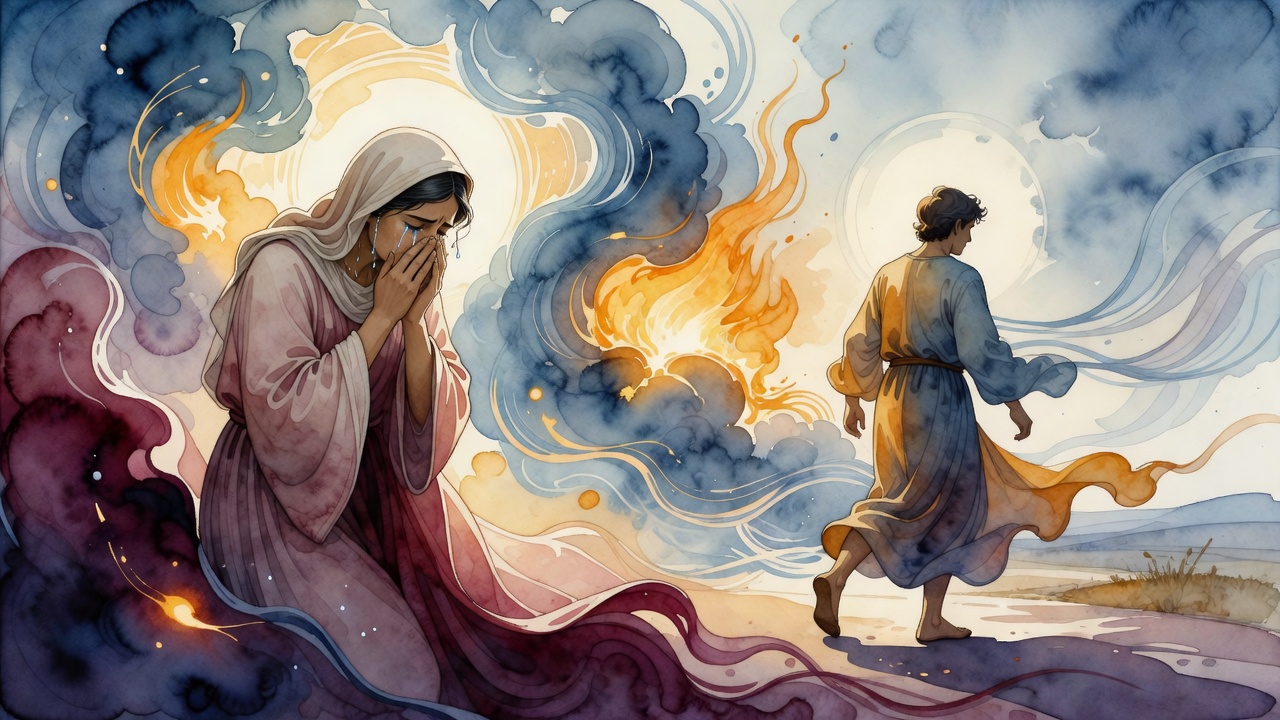
The moment they were out of sight, Hannah began to weep.
Go in Peace
She did not stop. She went out each morning to the road and watched the place where her son had disappeared, and she wept. Every day she wept from morning until evening. Every night she could not sleep. She ate no food in the daytime. She tasted nothing but tears for days and nights.
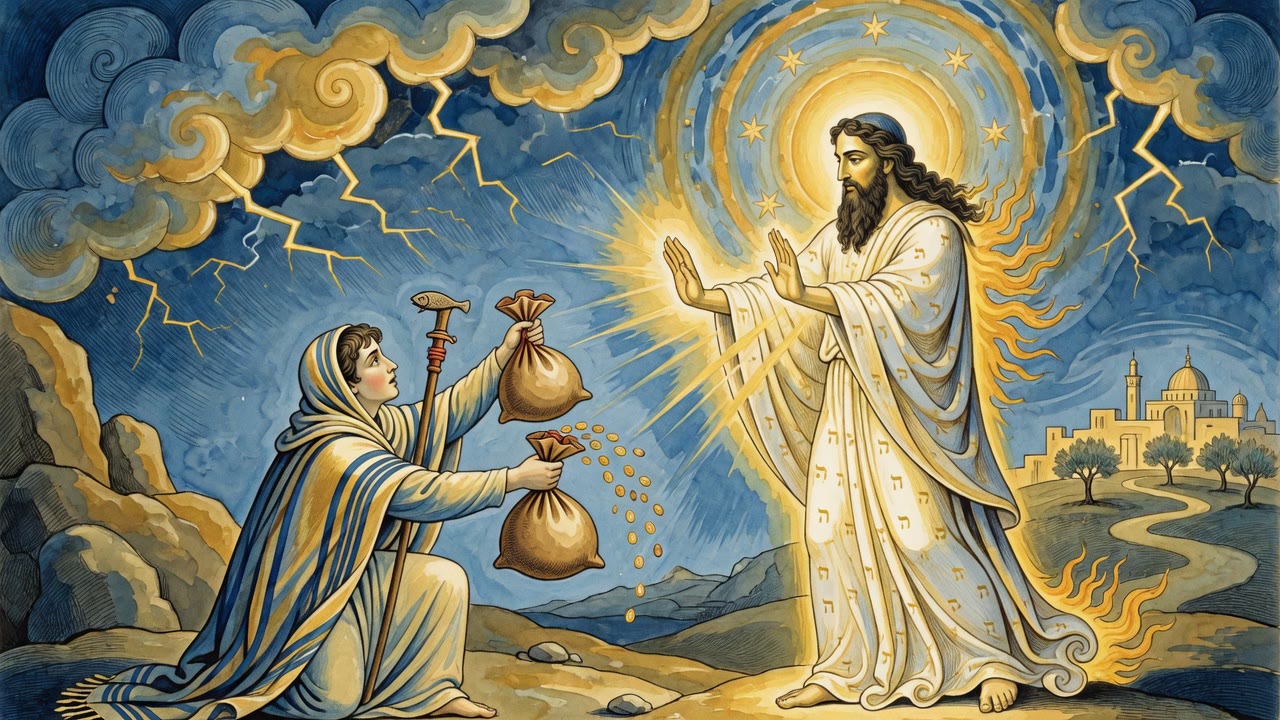
In the years before Tobias she had known empty rooms. She had prayed a boy into a house that had already learned how to be quiet. When the boy came she had not been ready to send him into a world that eats sons. Now the house was quiet again, and the quiet had a direction. South. Toward Media. Toward a man named Gabael and ten talents of silver.
Tobit had told the boy to prepare what he needed, and had asked God Almighty to lead them in peace and send his angel with them. The words were still in the air. Hannah could not live on the words. She could live on the empty place in the road.
Why Did You Not Fear
She turned on her husband. "Why did you not fear to send away our son? He is the son of our old age. He comes and goes before us. Without the money, could not our God have kept us? Why did you do this?"
She was not asking to be answered. The money Tobit had deposited with Gabael in Rages was real money, ten talents of silver, and recovering it was a practical necessity. She was weighing the money against the boy, and the calculation came out differently for her than it had for her husband. We are old, she was saying. He is all we have. The money can wait. He cannot be replaced.
Tobit answered her. "Fear not, my sister. He will return in peace, and your eyes will see him. Our God will send his angel with him, and he will prosper, and he will come back in good health. So do not fear for him."
He spoke from solid ground. He had sent Tobias with a man who said his name was Azariah. He had prayed. He had asked for an angel on the road. His confidence stood on something real. Hannah wept more.
She Went Out to the Road
Faith did not defeat grief at that road. Both responses were real. Tobit spoke from the specific knowledge that he had prayed and the road had been arranged by something larger than he could see. Hannah spoke from the specific knowledge of a mother who has watched her son walk south toward Media while she stands at the road watching the empty place where he was. Both things held at once. The angel was with the boy. The boy was gone.
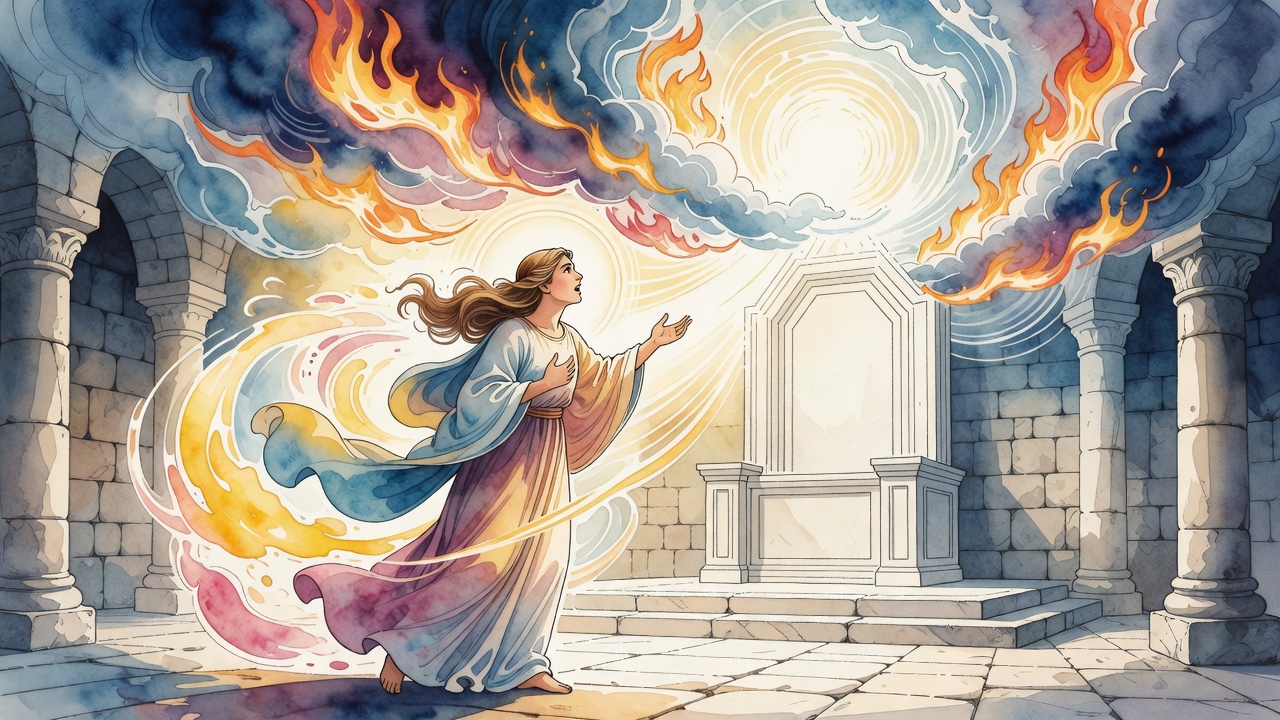
She refused to be comforted. She went out every day on the roads to see whether her son would come. Tobit counted the days and the nights with her, sorrowing that they had sent him, weeping, afflicting himself, and still he said, be silent, for he will return in peace and in joy. She would not be silent. The road was her place of prayer now. She stood in it the way another woman once stood in a sanctuary and moved her lips until a priest thought she was drunk, and then walked out with her face changed.
Hannah's face did not change. The days stacked. Far to the south, the fourteen days of a wedding ran their course, and Tobias told his father-in-law, detain me not, let me go, my father and my mother are counting the days and they look no more to see me. Reuel wanted him to stay. Tobias would not. He had a mother on a road.
The Stranger Who Never Ate
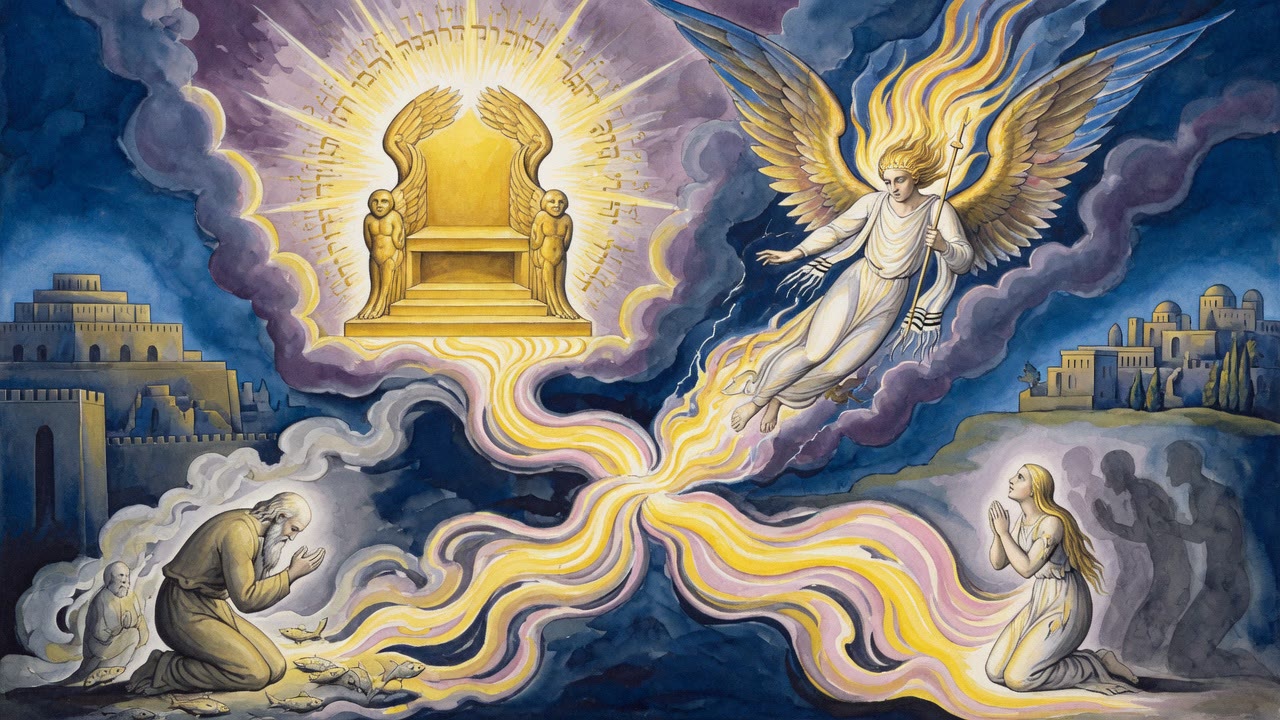
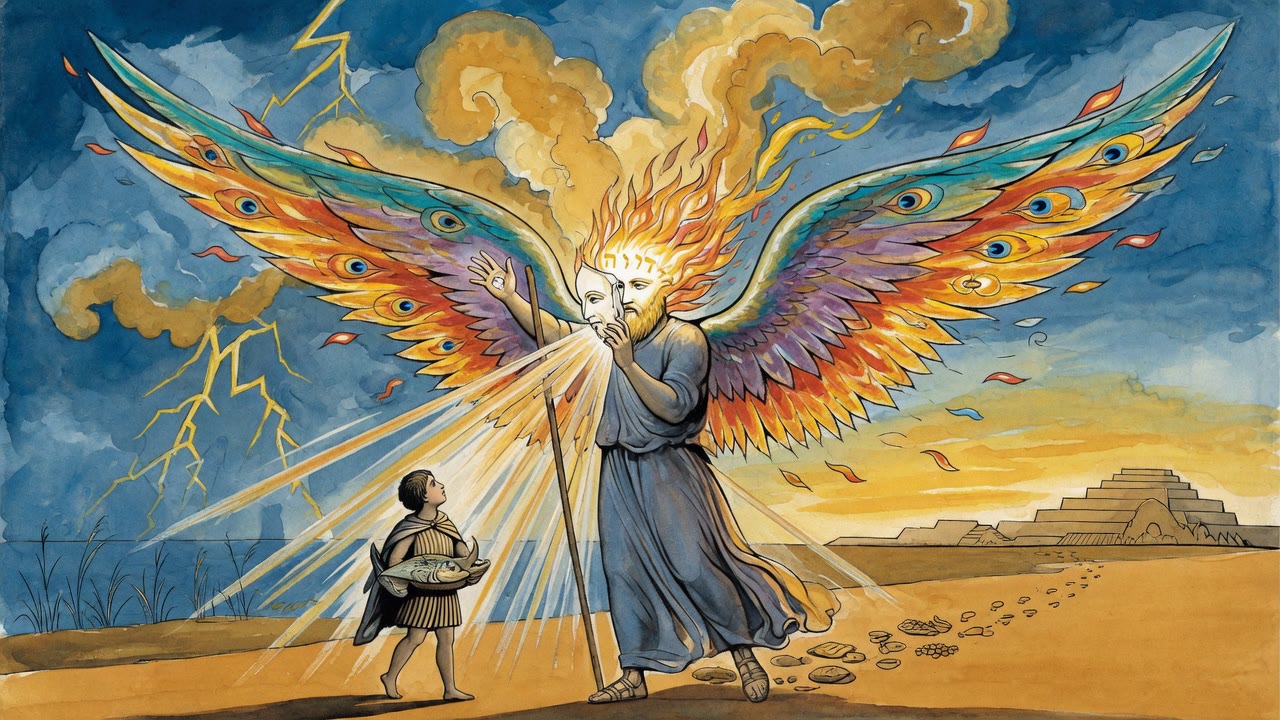
The man who walked beside the boy had never been Azariah. He was Raphael, one of the seven who stand in the presence, and all the time they were on the road the household saw him eat and drink. It appeared so to their eyes. He did neither.
Hannah could not have used that fact even if she had known it. An angel on the road does not fill a chair at breakfast. An angel does not make a mother sleep. She had the empty road and the husband who kept saying peace, and she chose the road.
When the time came to leave the wedding house, Raphael told the boy his father was waiting. Tobias ran. The dog ran ahead of him. He reached the gate before the rest of the party.
I Have Seen You, My Child
Hannah saw him coming and ran to meet him. The road she had watched for weeks suddenly had a figure in it, then a face, then a neck she could reach. She fell on him. She said, "I have seen you, my child. Now I can die and not be troubled."
She had not failed at faith by weeping. Her tears were the honest record of what it cost to send a child into the world and wait. Tobit had been right about the angel. She had been right about the cost. Both of them stood in the gate with the dog still circling, and neither had to give the other back the days they had spent in different kinds of prayer.
Later Raphael spoke in the house. Peace be unto you. Fear not. Bless the Lord for these great and wonderful things which he has done unto you. As for myself, all the time I was with you, you saw me eat and drink, for so it appeared to your eyes. I did neither. Write these things in a book. Let me go. I will go to the God who sent me.
They sent him away. He went up, and appeared no more to Tobi and his son. Hannah had already gotten what she could use. The boy was in the gate. The road was no longer empty. The stranger's true name could wait until the weeping had somewhere else to go.
← All myths