Elijah Found God in the Silence After the Earthquake
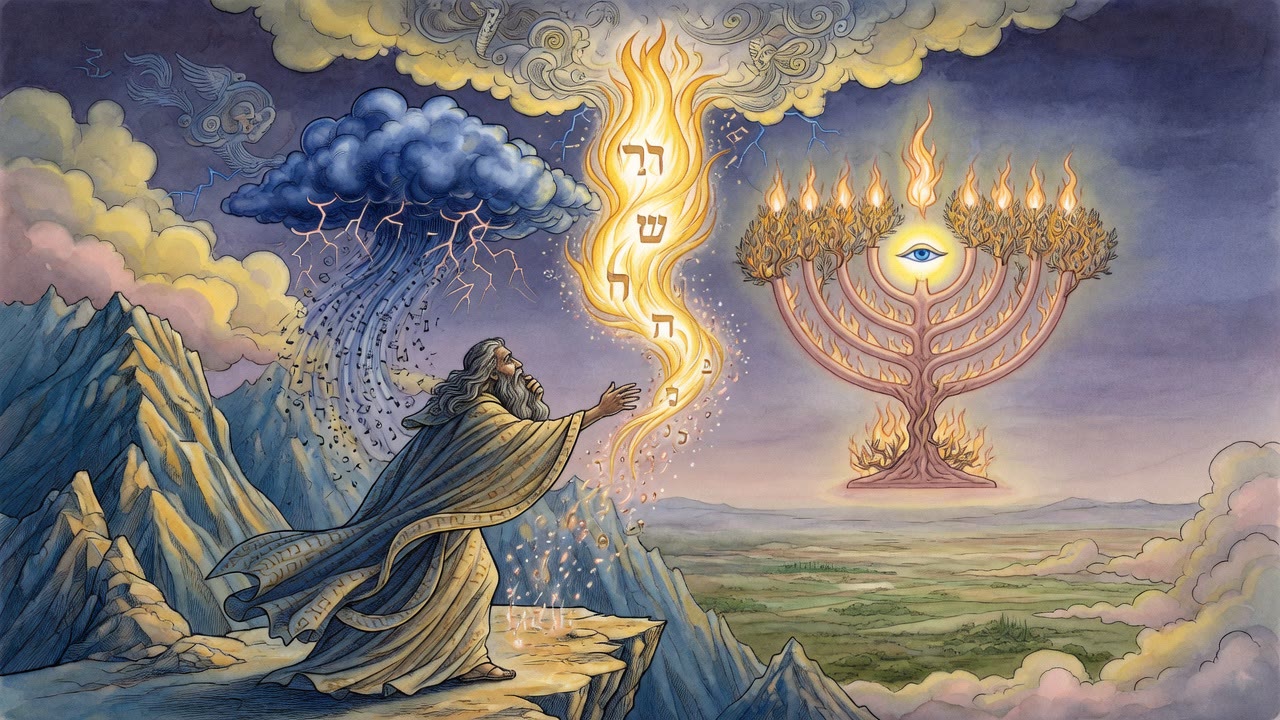
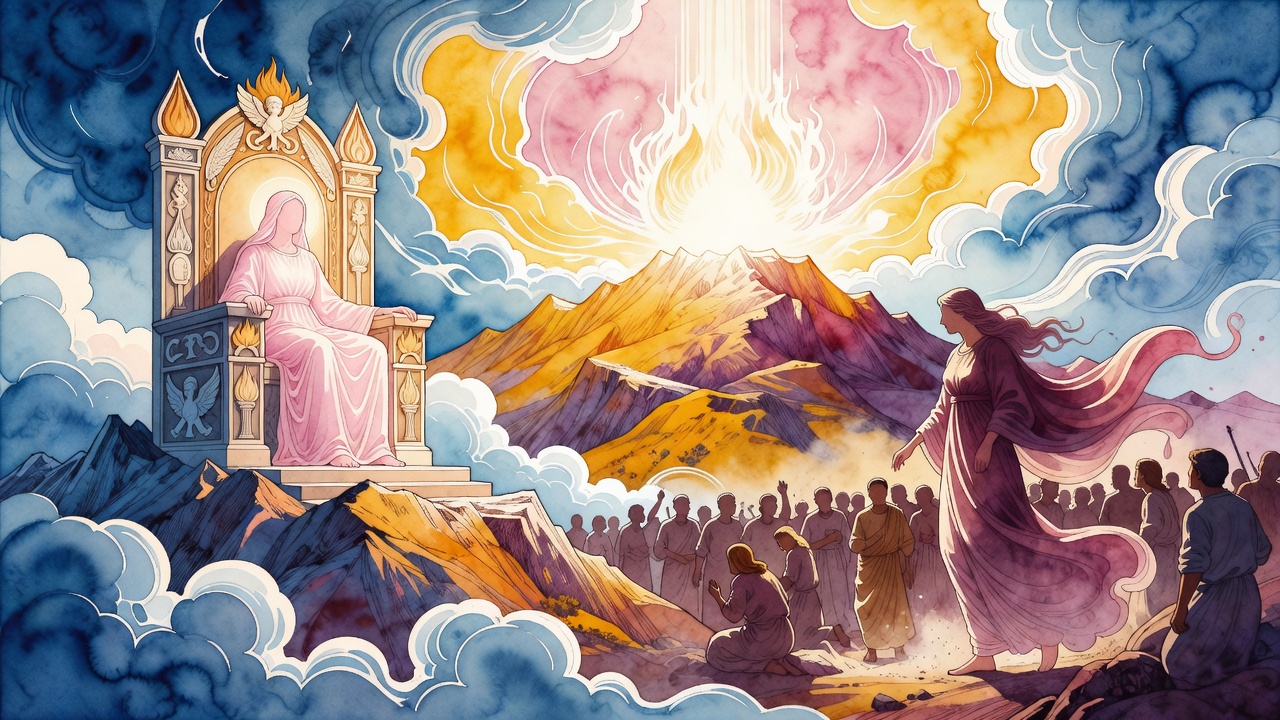
Wind split the mountains. Earthquake shook the ground. Fire swept through. In none of these was God present. Then came fine silence.
Table of Contents
 Click for full size
Elijah Hides in the Cave on Horeb
He had asked God to let him die. He was under a broom tree in the wilderness with his head down, and the prayer that came out of him was not prophetic petition but exhaustion: enough, Lord, take my soul, I am no better than my fathers. The angel came twice and fed him instead. Cake baked on coals. A jar of water. Twice the angel said: the journey is too long for you. He ate and drank and walked forty days and forty nights to Horeb, the mountain of God, and went into a cave and slept.
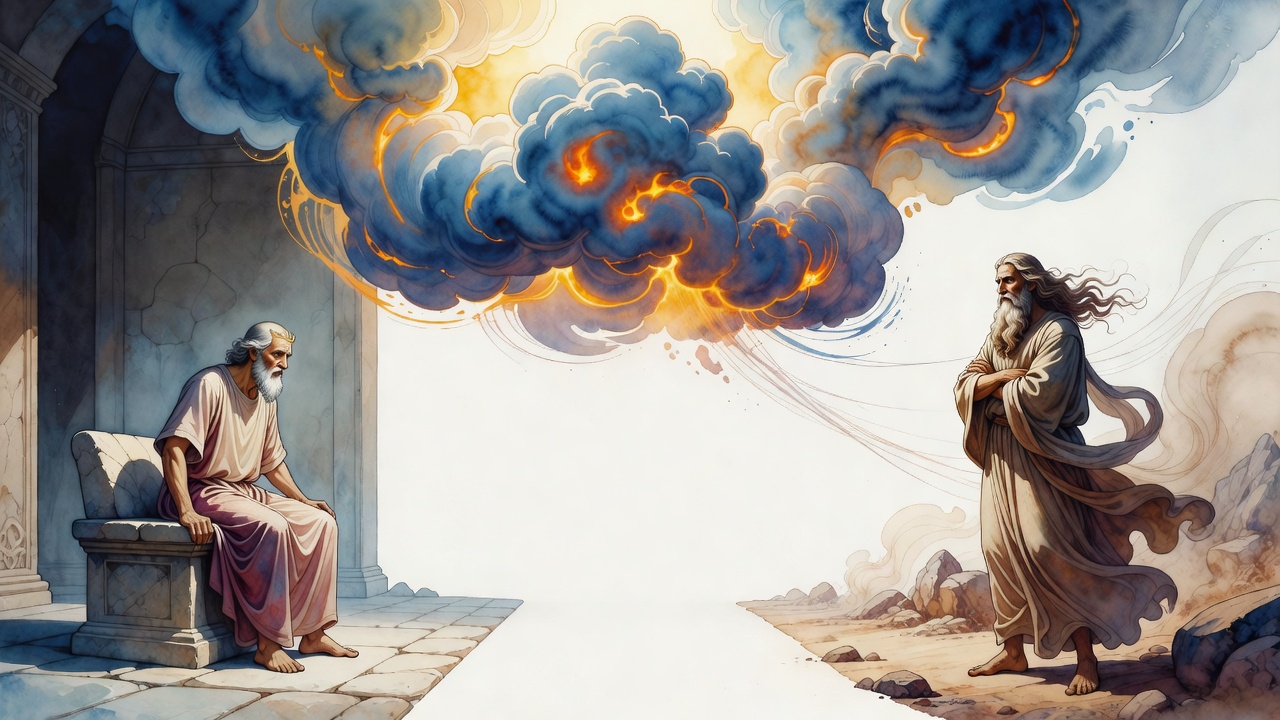
God asked him what he was doing there. Elijah recited his despair with the precision of a man who has rehearsed it many times: he had been very zealous for the Lord, the people had abandoned the covenant, torn down the altars, killed the prophets, and now he alone was left, and they were seeking his life. God told him to go stand on the mountain. God was about to pass by.
Why Force Does Not Carry Holiness
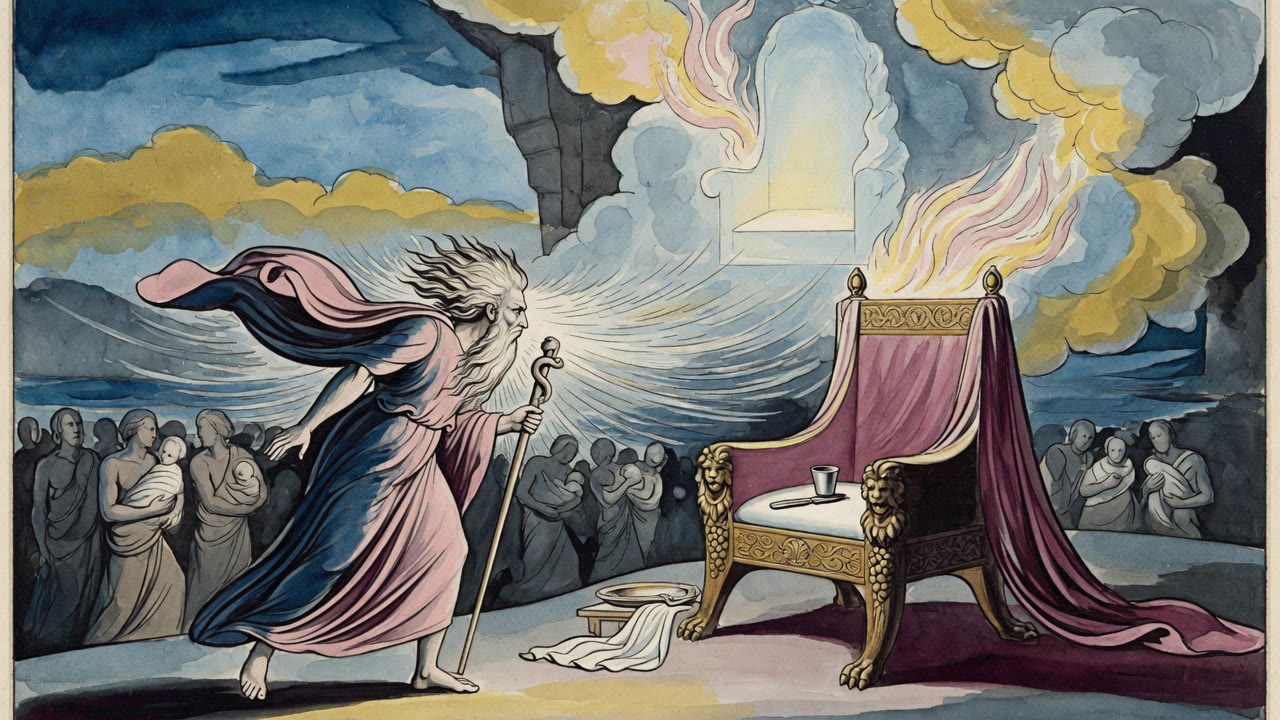
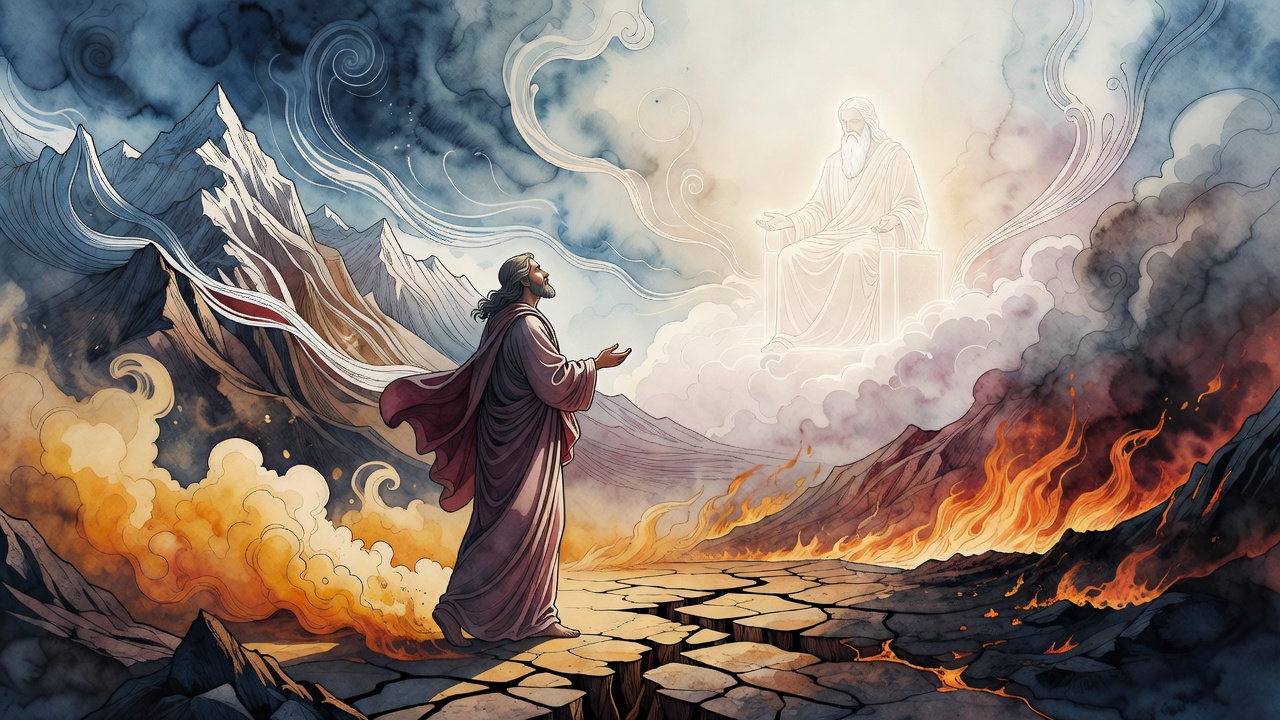
Then came a great wind, strong enough to split mountains and shatter rocks. Then an earthquake. Then fire. And in none of these was God present. The wind came and went, the ground shook and steadied, the fire swept through and left. After the fire came a sound of fine silence, kol demamah dakah, and in that silence, God was actually there.
The Tikkunei Zohar, compiled in thirteenth-century Castile, opens its analysis of this passage through a verse from Ezekiel: the sound of a great noise, ra'ash. The same Hebrew root that describes earthquake-sound also describes the sound that rushes through the system of the sefirot (the ten channels of divine energy) when the divine flow moves through judgment rather than mercy, when force rather than grace is the primary mode. The Tikkunei Zohar teaches that the great noise, the ra'ash, belongs to the left side of the divine structure, to Gevurah, strict judgment. And the left side, however real and necessary it is, is not where the divine presence rests. The wind and the earthquake and the fire are all forms of ra'ash. They are real manifestations of divine power. But power is not presence.
The Sound That Silence Makes
The Hebrew phrase kol demamah dakah has been translated as still small voice, as gentle whisper, as sound of sheer silence. The word demamah means a kind of stillness or quiet that is itself audible, the way a stopped heart is audible in its stopping, the way the moment before a threshold sounds different from the moment after. The Tikkunei Zohar does not read this as the absence of sound but as a quality of sound that exists only in the absence of force.
Holiness, the text teaches, does not travel on power. It is not carried by what shatters rocks or levels mountains. The divine presence that Elijah needed was not the presence that could end the prophets of Baal at Carmel. That kind of presence he had already experienced and survived and been undone by. What he needed, in the cave on Horeb with his request to die still fresh in the air, was the presence that moves through silence, the frequency that force cannot carry and only stillness can receive.
Elijah Covers His Face
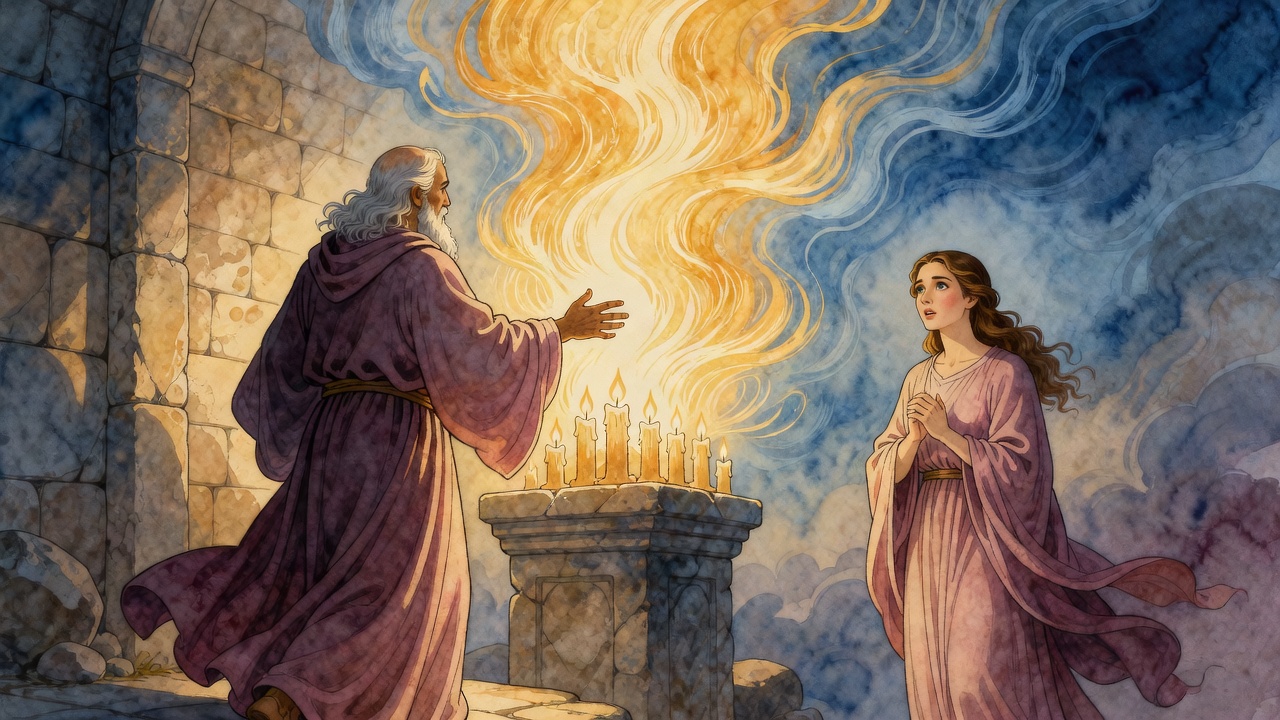
When Elijah heard the sound of fine silence, he wrapped his face in his mantle and went out and stood at the entrance of the cave. This is the only time in the story that he covers his face. He stood in the full force of the wind and the earthquake and the fire without covering anything. Only the silence required him to cover himself. This detail, which passes quickly in the text, is the Tikkunei Zohar's evidence for what it has been arguing. The great displays of power could be witnessed directly. The sound of fine silence, the actual presence, was too close to look at without protection.
Moses had covered his face before the burning bush. Isaiah had covered his lips with his own uncleanness when the Seraphim flew. Elijah covers his face with his mantle at the silence, and God asks him again, the same question as before: what are you doing here? This time Elijah gives the same answer. But now he receives different instructions. Not a request to witness more power. A commission to return to the world, to anoint kings and a prophet, to continue. The silence that carried the divine presence also carried the instructions for what came next. Force had nothing to say to his despair. Silence said everything.
← All myths