Jacob Refused to Die Until His Sons Answered Him
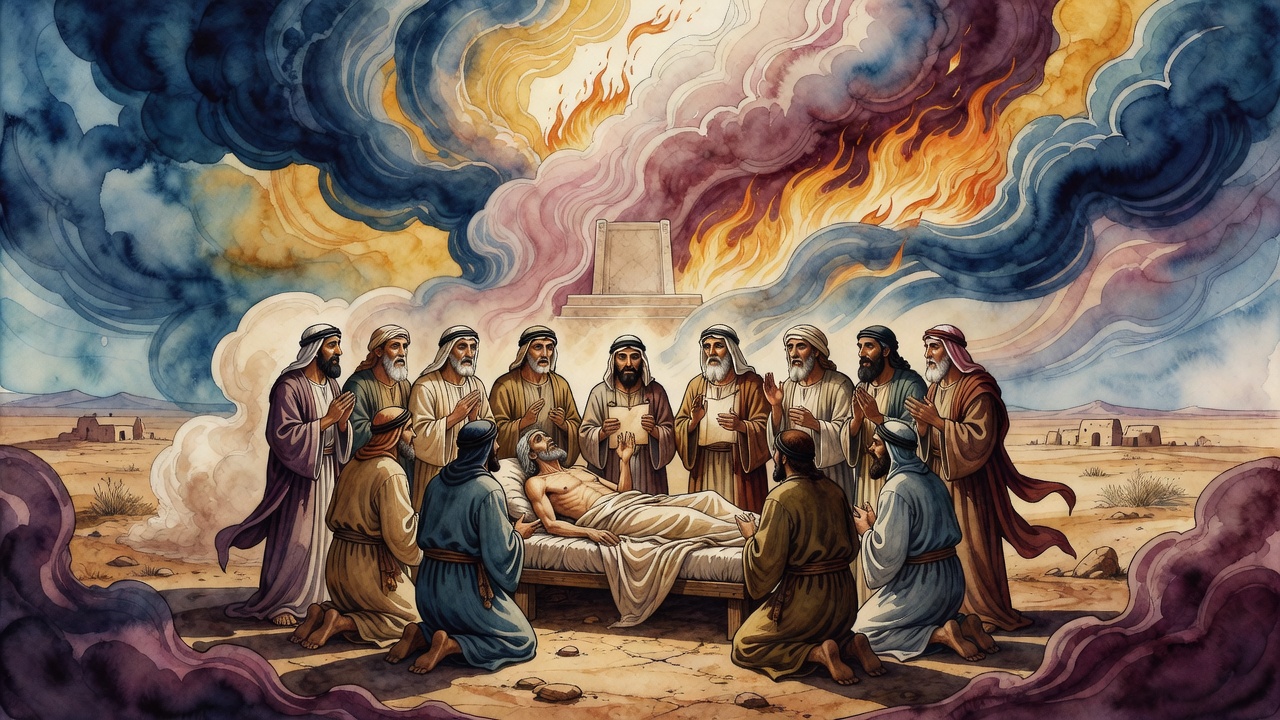
The day stood over Jacob's bed in Egypt and made a claim. He would not shut his eyes until twelve mouths said the same Name out loud.
Table of Contents
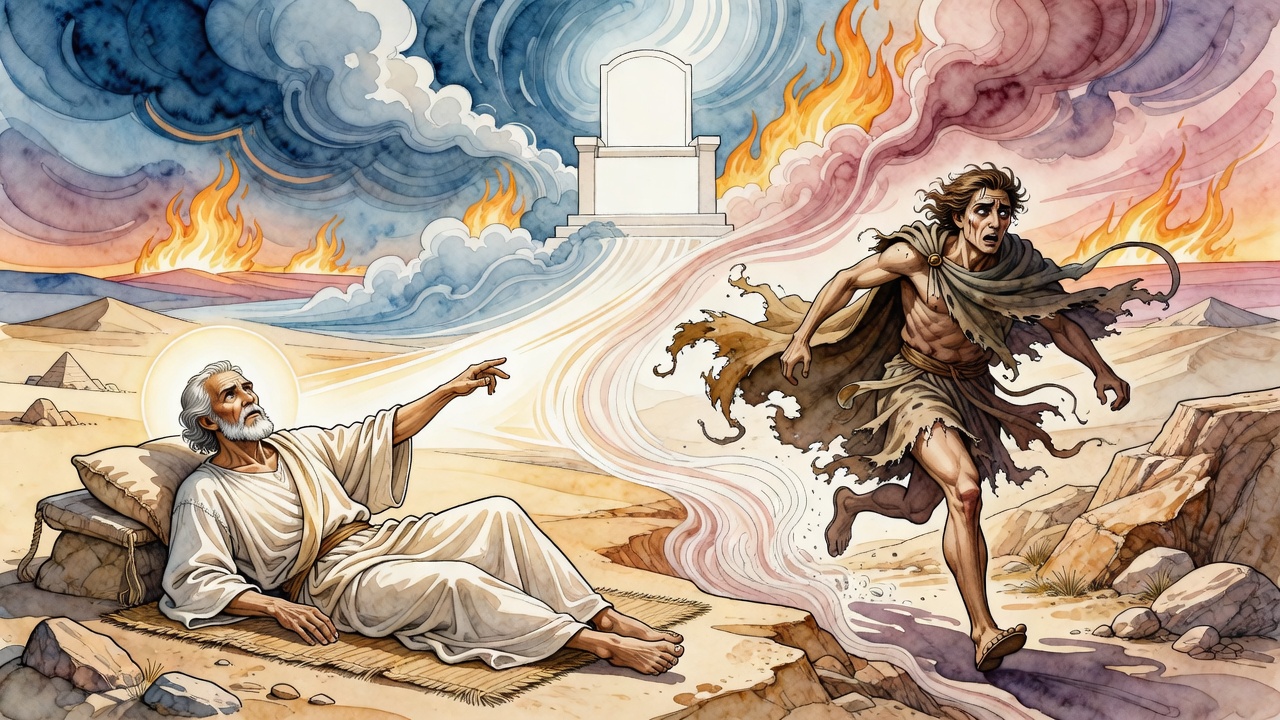
The day stood over the bed and would not leave. It had a claim. Jacob was supposed to die today, and the hours could not close until he did.
 Click for full size
He had lived seventeen years in Egypt, the same span he had lived with Joseph before the coat and the pit. His vision was failing. The sons were in the house. He kept his eyes open anyway, because he still needed an answer a grave could not carry.
The Day Made a Claim
The Torah does not say Jacob died. It says the time for Israel to die approached (Genesis 47:29). The day itself pressed in, the way a man presses a debt. Jacob held it off. He had watched Reuben, and Simeon, and Levi, and the quiet years after Joseph vanished. He loved the twelve. He did not entirely trust what they would do when the room no longer had him in it.
God had told him, in the old reading, that he would lie down but not die as other men die. His days would end. He would not. But a body still had to be placed, and a Name still had to be kept, and until those were settled the day could complain all it wanted.
He summoned the sons. Not for the blessings yet. First the question that had kept the hours from finishing.
Joseph's Hand Under the Thigh
He called Joseph alone first. "If I have found favor in your eyes, place your hand under my thigh. Do kindness and truth with me. Do not bury me in Egypt."
Joseph was the second man in the kingdom. He could have given his father a tomb any Egyptian would envy. Jacob did not want it. He wanted the double cave in the field of Ephron, the sepulchre Abraham had bought, the grave Jacob had dug for himself beside Abraham and Isaac. "Bury me near Abraham my father," he said. The land of the promise had to take the body, or the covenant would look like a story that ended in a foreign palace.
Joseph put his hand under the thigh and swore. Jacob bowed on the bed. One demand was now a vow. The other was still open in the room with the twelve.
Twelve Mouths Said One Name
He looked at them and asked, in the fear he had carried since Shechem and the pit, whether they would hold faith with God after he was gone. The room went still. A father who has watched brothers sell a brother does not ask a small thing at the end.
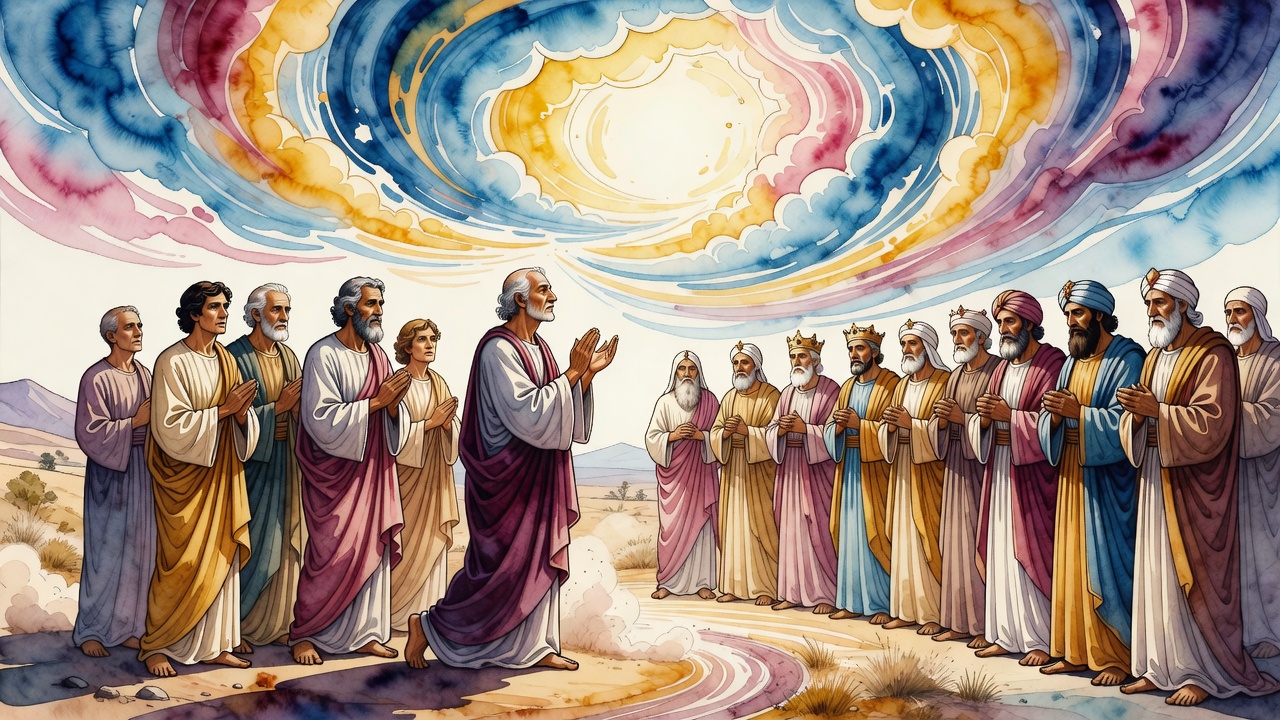
All twelve answered him together. "Hear, O Israel, the Lord our God, the Lord is One." They called him Israel. They put the Name in the air of an Egyptian house. The Shema (שמע), hear, left twelve mouths at once, and the fear that the covenant would dissolve when he did broke on that sound.
He whispered back, as his own private line, "Blessed be the name of His glorious kingdom forever and ever." Then he could hear the day again, and it was quieter.
He was not done speaking. "Practice righteousness and uprightness on the earth," he told them, "so that the Lord may bring upon you all that He said He would do to Abraham and to his seed. Love one another, your brothers, as a man loves his own soul. Honor Judah and Levi, because from them a savior will arise for Israel." He knew they would stumble later. He said that too. He still made them say the Name first.
How They Carried Their Father
He commanded three things before the blessings. No idolatry. No blasphemy of the Name they had just spoken. And the bier. No uncircumcised hand was to touch it, lest the Shechinah (שכינה), the Divine Presence, leave him on the road.
Joseph would not carry. He was a king. Levi would not carry. His sons would carry the Ark one day, and the same shoulders were not for both. Judah, Issachar, and Zebulun took the front. Reuben, Simeon, and Gad the right. Ephraim, Manasseh, and Benjamin the rear. Dan, Asher, and Naphtali the left. Three on each side, the way the tribes would later camp in the wilderness with the Presence in the middle.
He drew up his feet. The day got what it had claimed. The sons did what he commanded (Genesis 50:12). They took him out of Egypt toward the cave he had dug, and the Name they had spoken in the room went with them, twice a day, long after the bier was set down.
← All myths