How David's Prayers Pulled Angels Down From Heaven
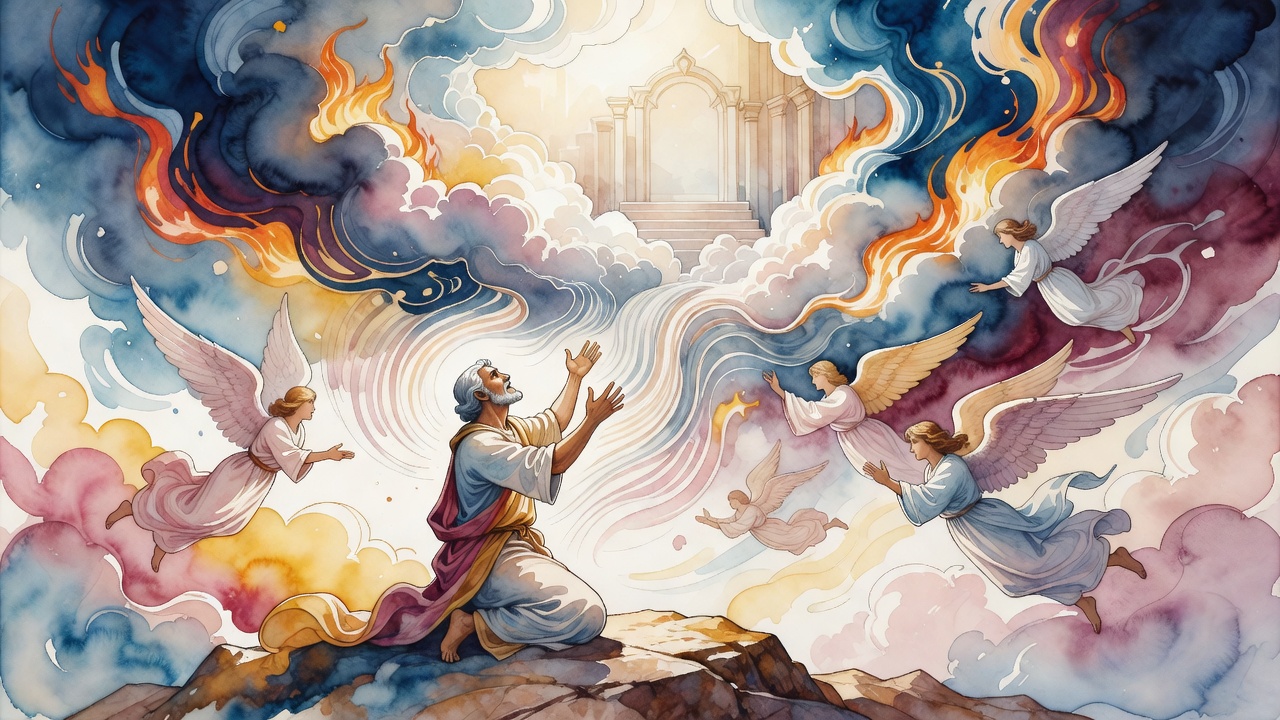
David's prayers were not petitions. The ancient rabbis said they physically altered the heavenly court and pulled angels into the world when he needed them.
Table of Contents
 Click for full size
The Fugitive and the Encirclement
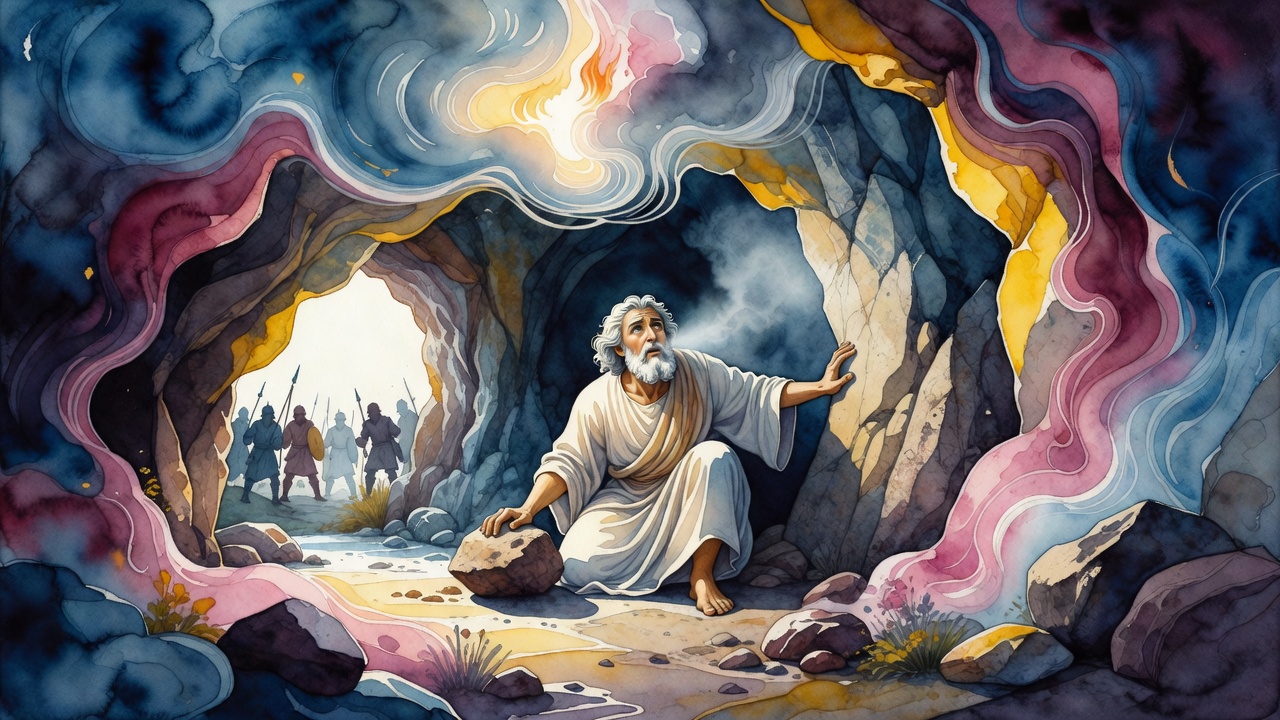
Saul had David surrounded. This was not metaphor or close call. The trap was geometrically complete: Saul and his forces had positioned themselves so that no gap existed in the perimeter, no direction offered escape, no calculation of terrain or timing produced a way out. By any military assessment, it was the end of the chase. David had run out of room.
Then a messenger reached Saul with news of a Philistine raid elsewhere in the territory, and Saul turned and withdrew. The Torah gives no angel for this escape. The Legends of the Jews, Louis Ginzberg's comprehensive compilation of midrashic and aggadic sources drawn from classical texts, gives one. An angel interrupted the encirclement. Not as a vision or a dream but as an actual interruption of the physical trap. The angel made Saul's forces move before they finished closing the circle, and David walked out through the gap.
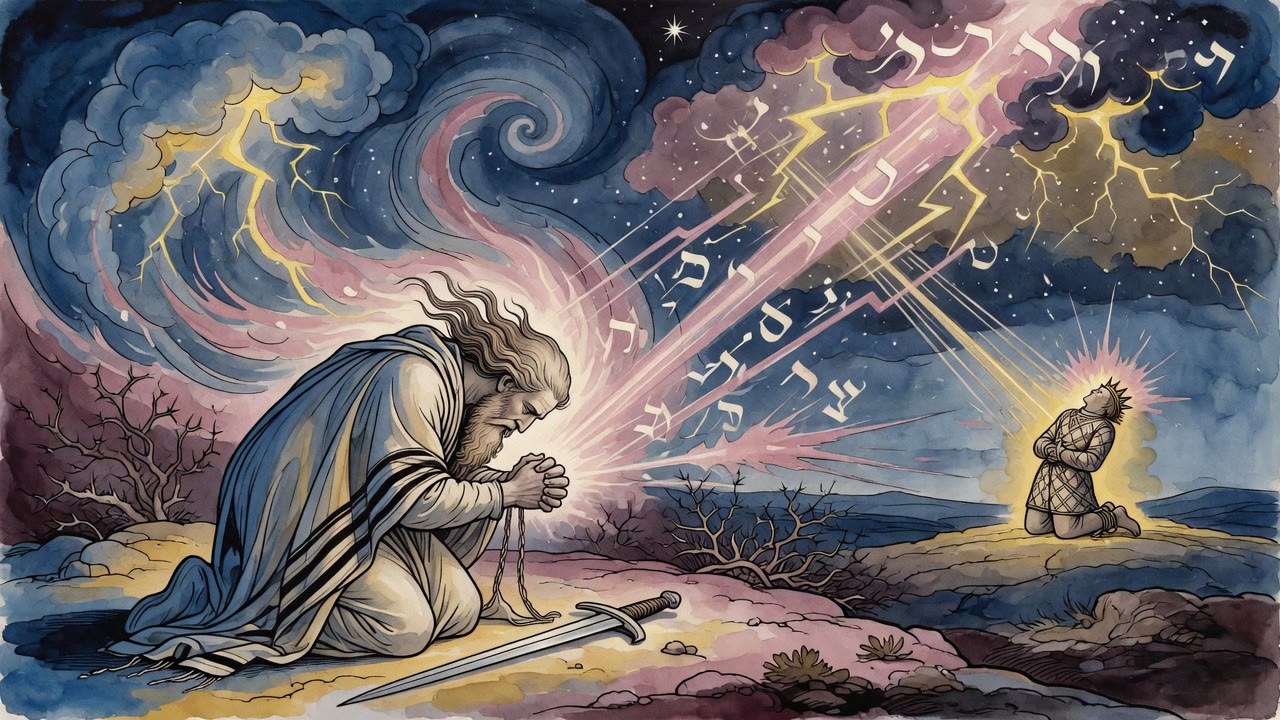
The Legends explain why the angel came: David had prayed. This was not coincidence. The prayer and the angel were causally connected, and the connection was the theological heart of everything the tradition said about David.
Prayers That Could Bring Heaven Down to Earth
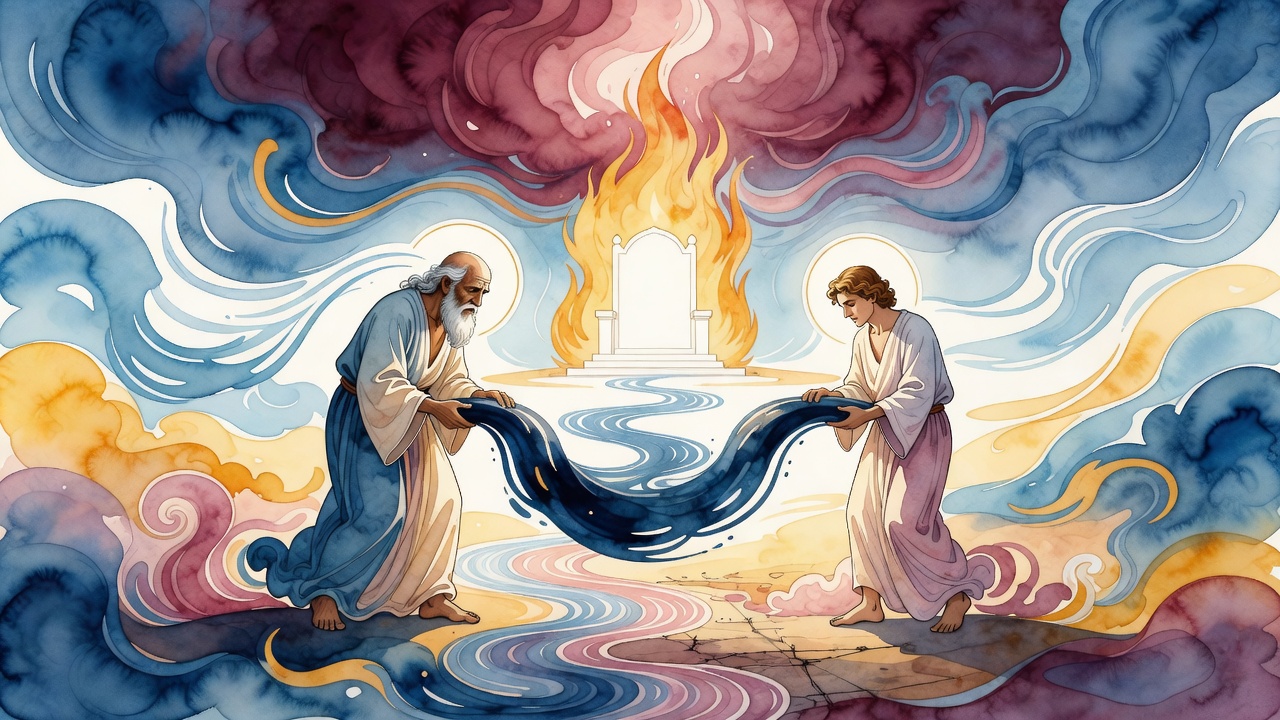
The claim the tradition makes about David's prayer is not that God listened to him favorably. Every pious person's prayer might receive favorable attention. The claim is structural. David's prayers could physically bring things in heaven down to earth. Not as a metaphor for divine responsiveness but as a description of how the celestial realm was affected when David prayed. The angels did not choose to come. They were pulled. The prayer itself operated as a gravitational force on the divine court, drawing the celestial downward into the terrestrial when David's need was acute enough.
This reading is the theological core of the entire Psalms tradition in the rabbinic imagination. The man who wrote My God, my God, why have You forsaken me and The Lord is my shepherd and Out of the depths I call to You was not merely expressing spiritual sentiment. He was performing acts that had structural consequences in heaven. Every psalm was also a mechanism.
The Angel Who Wiped His Sword on David's Garments
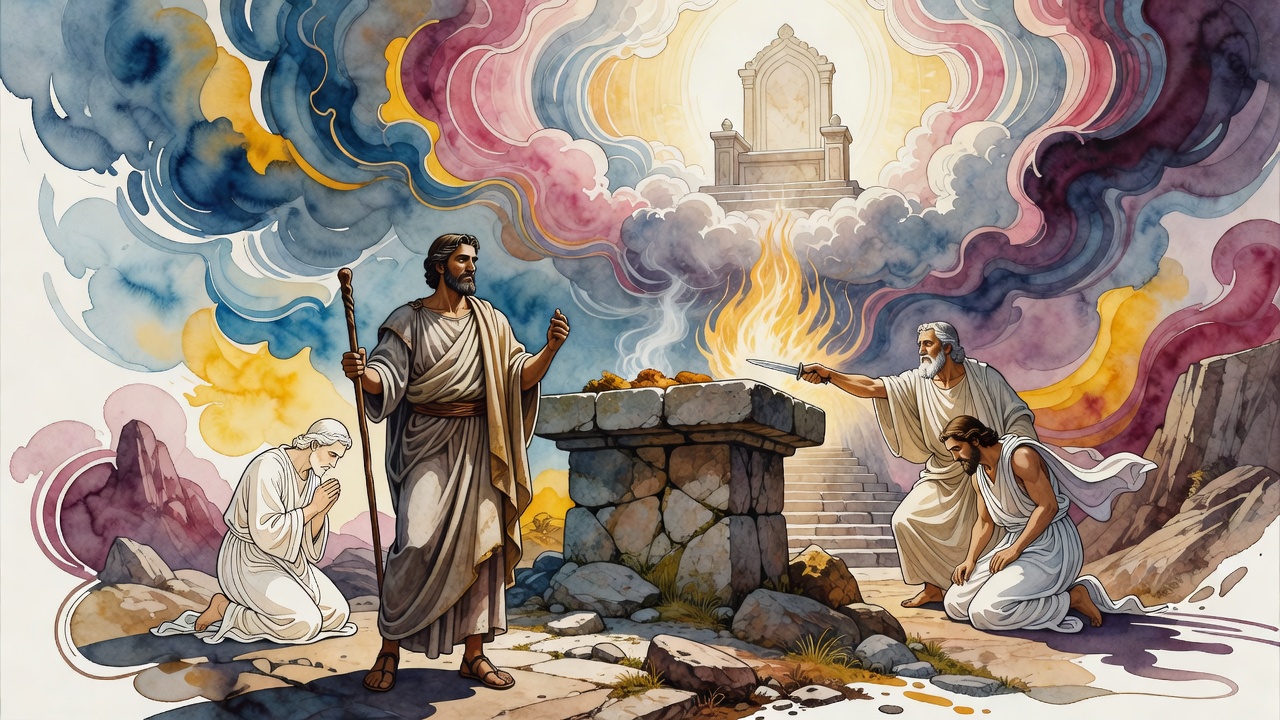
Not all the angels in David's story came to help him. The tradition preserves an encounter that went differently. An angel appeared to David holding a drawn and bloody sword, not threatening David directly, but present in his space with an instrument of recent killing. The angel wiped the blood from the sword on David's garments before departing.
This angel was not rescuing David. The tradition reads the sword-wiping as a transfer of consequence, a moment when the weight of violence performed somewhere in the divine accounting was marked against David's name. David would carry the mark of wars and killings that God had authorized and that he had performed faithfully and that still rendered him unfit to build the Temple. The angel with the bloody sword was not his enemy. It was the record keeper. The blood on his garments explained why the Temple would be built by his son's hands instead of his own.
The Day David Turned Prayer Into Judgment
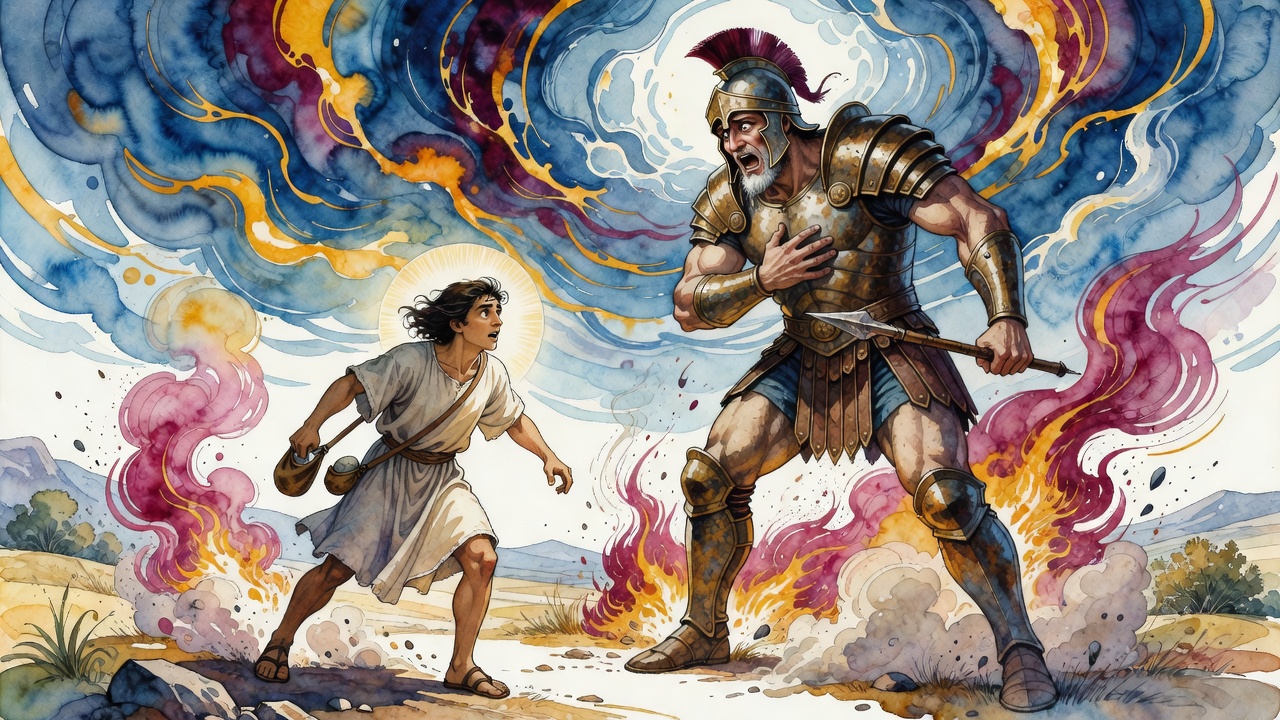
The tradition also records an episode in which David's prayer operated in the opposite direction, not pulling divine mercy down but generating a divine judgment. When David prayed against his enemies with particular force and specificity, the prayer turned the day into a day of reckoning, a moment when the heavenly court rendered verdicts on the basis of what David had asked for. The men he prayed against received what his prayer demanded. The prayer had operated as a legal brief, and the brief had been accepted.
The rabbis found this aspect of David's prayer as significant as the rescuing angels. A man whose prayer could generate judgment as well as mercy was a man whose relationship with God operated at a level of intimacy that collapsed the usual distance between petition and response. David did not ask and wait. He asked and the court moved.
← All myths