Seven Angels of Confusion Arrived at the Feast Before Esther Did
The wine sat in gold cups taken from Jerusalem. Mordecai fasted six days, then ate on the Sabbath. That was when the names arrived.
Table of Contents
They were pouring the wine in cups that had stood in the Temple.
 Click for full size
Gold made for one house, carried out of Jerusalem when the city fell, stored in a Persian treasury, now set on tables in Shushan for provincial governors to drink from. Mordecai knew those cups. He knew the last king who had used them at a party. Belshazzar had called for them in Babylon, and a hand had written on the plaster of his own hall, and he was dead before morning.
Ahasuerus was doing the same thing on a longer schedule. A hundred and eighty days of it, and nothing had written anything on any wall.
Mordecai told the Jews of Shushan to stay away from the feast. A great many of them went.
He Ate on the Sabbath
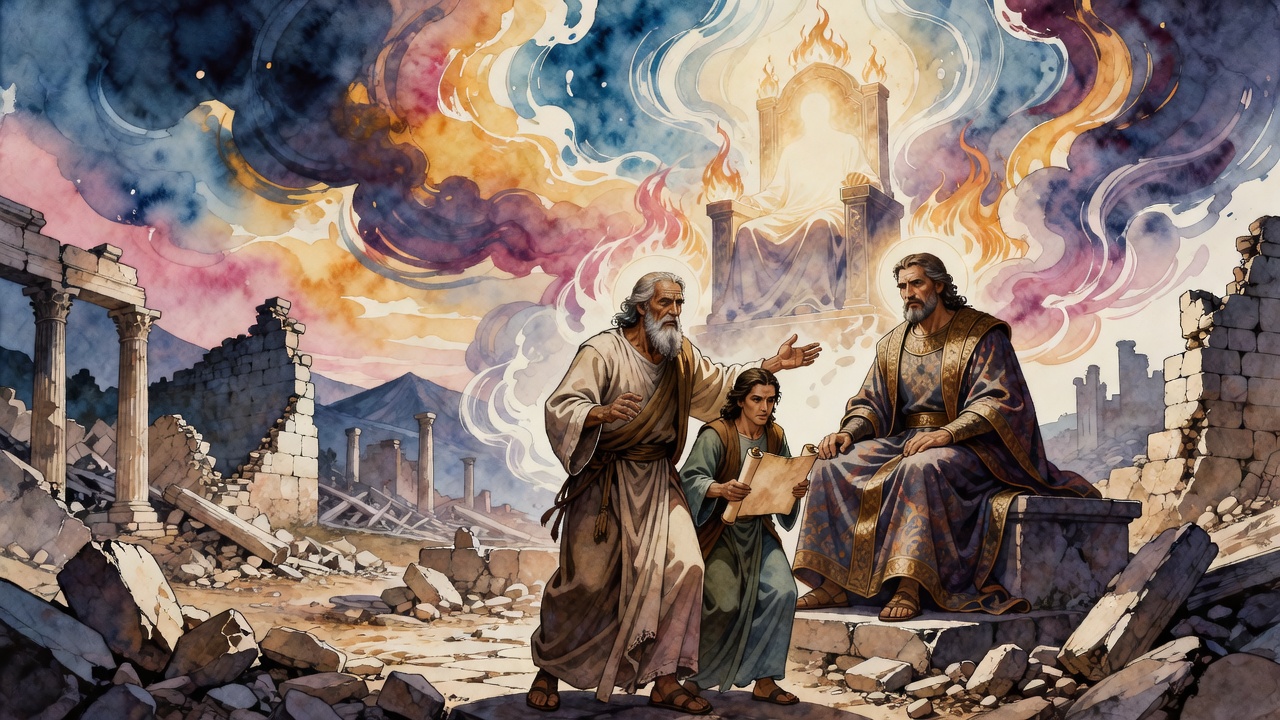
So he stopped eating and started asking for a reckoning.
Six days he kept it up, and the court of seventy elders prayed with him, and nothing in the palace changed. The drinking went on. The cups stayed on the tables. The governors kept arriving.
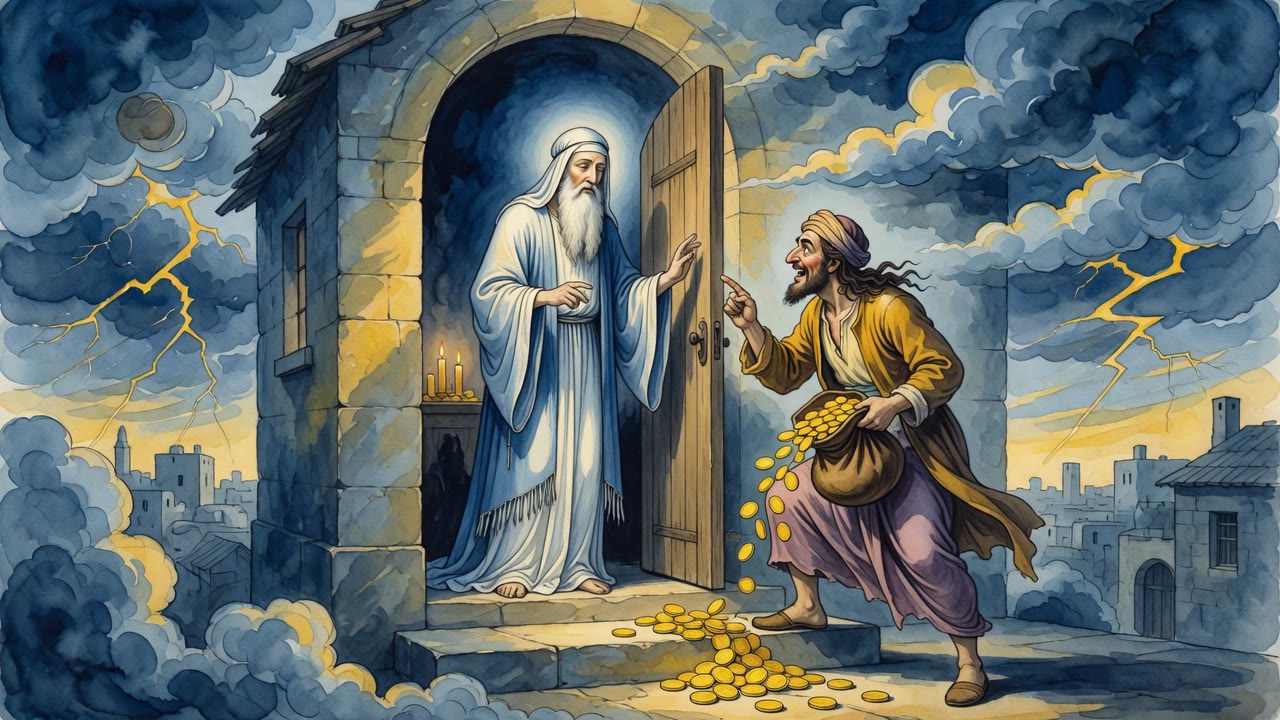
On the seventh day he broke the fast, because the day was the Sabbath and a man does not fast on it. He sat down. He ate.
That was the day the prayer was answered. Not on any of the six days of hunger. On the day he took food because the law told him to.
Seven Names Among the Couches
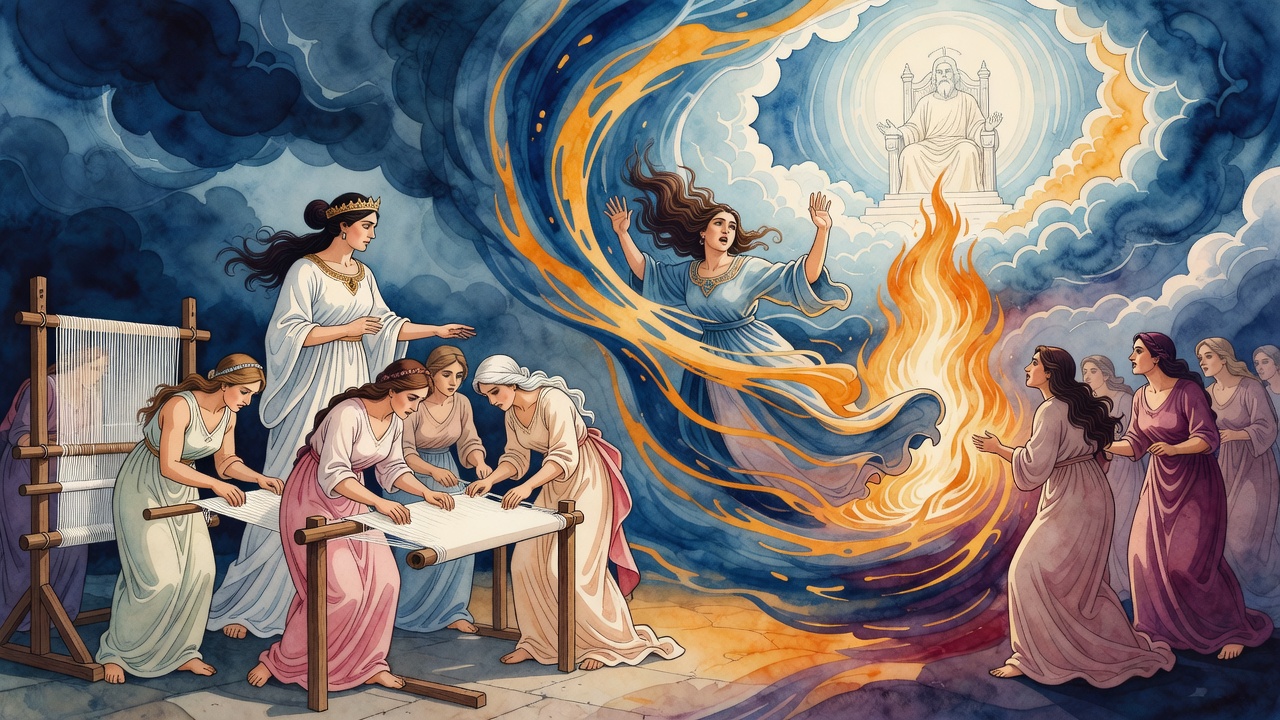
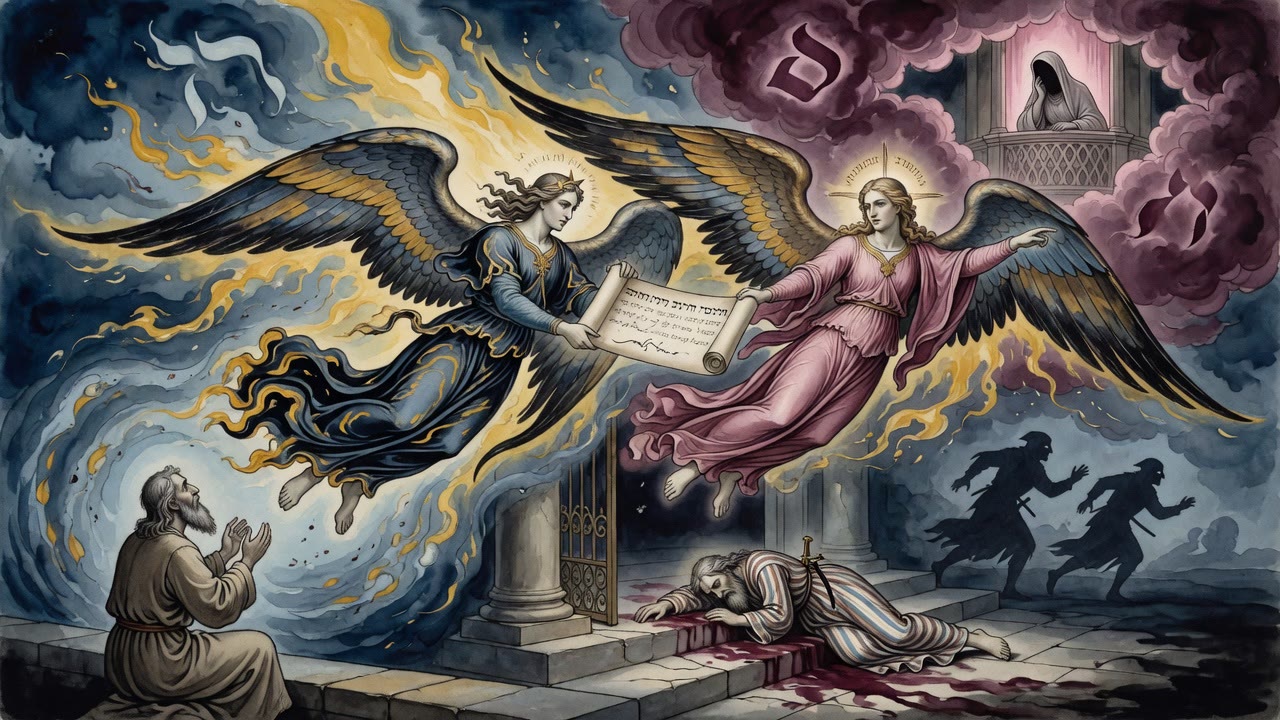
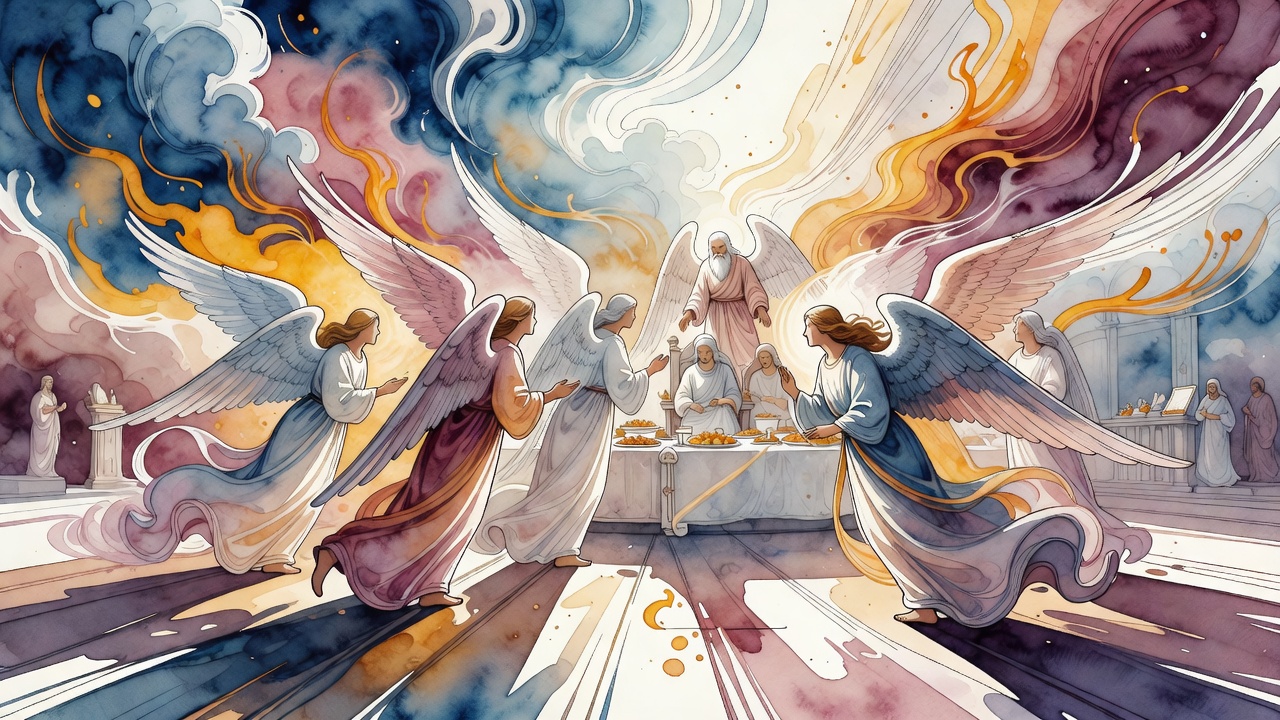
What came down on the banquet was seven angels, and their names were the work.
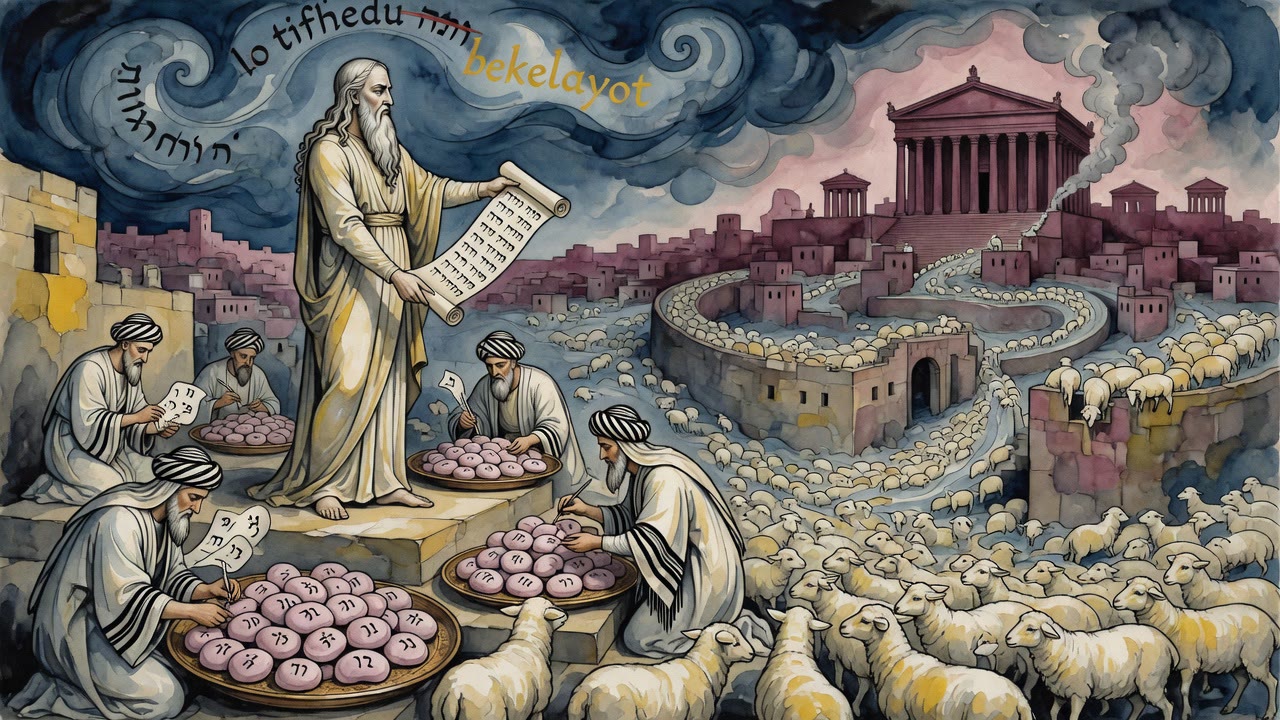
Mehuman, whose name is Confusion. Biztha, Destruction of the House. Harbonah, Annihilation. Bigtha and Abagtha, the two of them called the Pressers of the Winepress, because the court of Ahasuerus was going to be crushed the way grapes are crushed, by weight, slowly, for the liquid. Zethar, who watches for what a court does when it is drunk. And Carcas, the Knocker.
They did not break a jar. They did not show a face. They went in among the couches and the wine and the boasting and put their hands on what was already there.
Vashti Would Not Come
Ahasuerus had made rules about the drinking. He had meant to keep the room from going too far. The rules held for a while. Then the talk turned the way that talk turns.
The Persians said their women were the most beautiful in the world. The Medes said no, ours are. It went around the hall, governor by governor, until the king could not sit still under it.
"My wife," he said. "Vashti is a Chaldean, and there is nothing in Persia or Media to touch her."
Then he made the mistake the seven had come for. "Would you like me to prove it to you?"
The room took him up on it at once. The room was drunk. What the room demanded was that the queen be brought out in front of every governor of a hundred and twenty-seven provinces wearing nothing at all.
The king agreed to it. He sent seven chamberlains to fetch her.
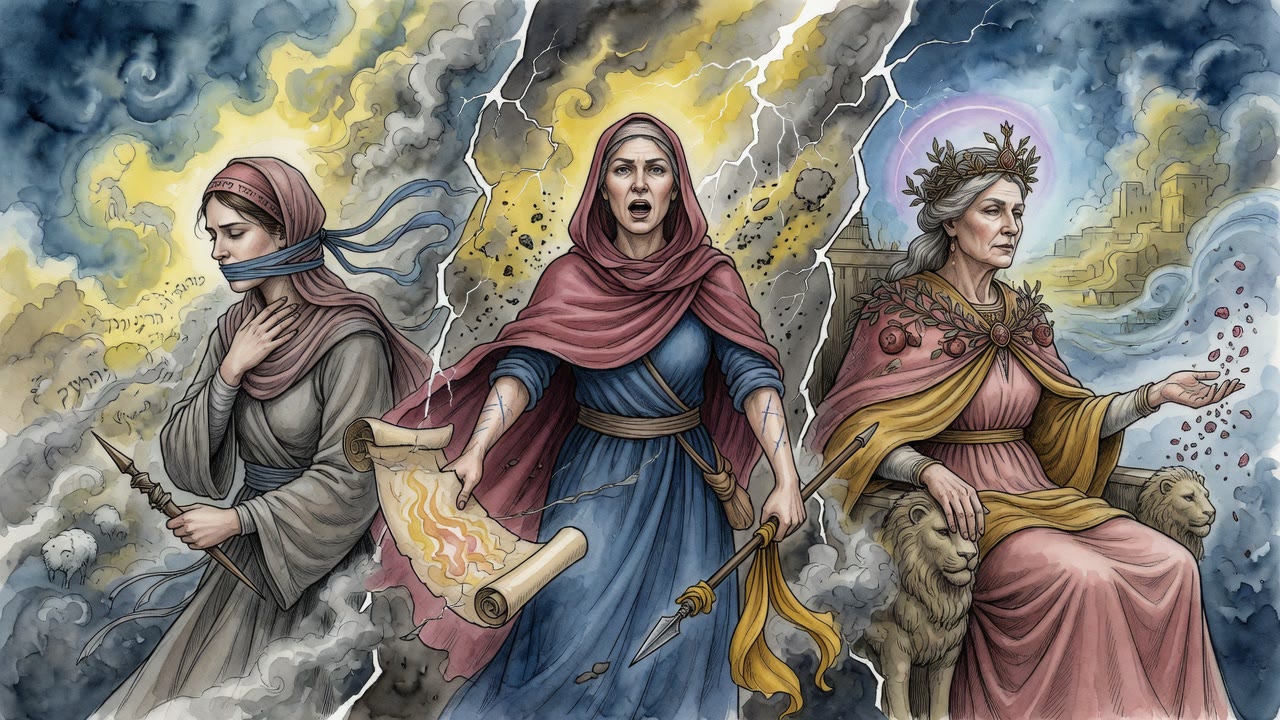
She refused to come.
The counselors were on their feet before the wine had gone down. This is not about one household, they said. If the queen can refuse the king in front of the whole empire, every wife in every province hears about it by the end of the month. Write it into the laws of Persia and Media so it cannot be reversed.
The decree went out in every script and every language. Vashti was finished. The throne beside the king was empty. The man who had emptied it woke the next day with a headache and no wife and no legal way to undo any of it.
The Chair Esther Had to Take
When his temper cooled he was lonely, and his servants had a suggestion ready. Send officers into every province. Gather the beautiful young women. Give them a year of oils and perfumes, present them, and whoever pleases the king most wears the crown.
The provinces sent their daughters the way they sent their taxes.
In Shushan there was a Jewish man raising his uncle's daughter as his own, because both her parents were dead. Her name was Esther, and she was beautiful enough that the officers came to the door.
So Mordecai, who had fasted a week to bring judgment down on a king for drinking out of the Temple's cups, watched that judgment arrive and take his ward into the palace with it. The seven had not wrecked a table. They had made one vain man say one sentence too many at one party, and the sentence had cleared a chair, and the chair was going to be occupied by a girl from his own house who would need it.
← All myths