Tobit Accused His Wife of Theft and She Answered Back
The kid cried in the dark house. Blind Tobit told Hannah to take it back as stolen. She asked where his alms had gotten him.
Table of Contents
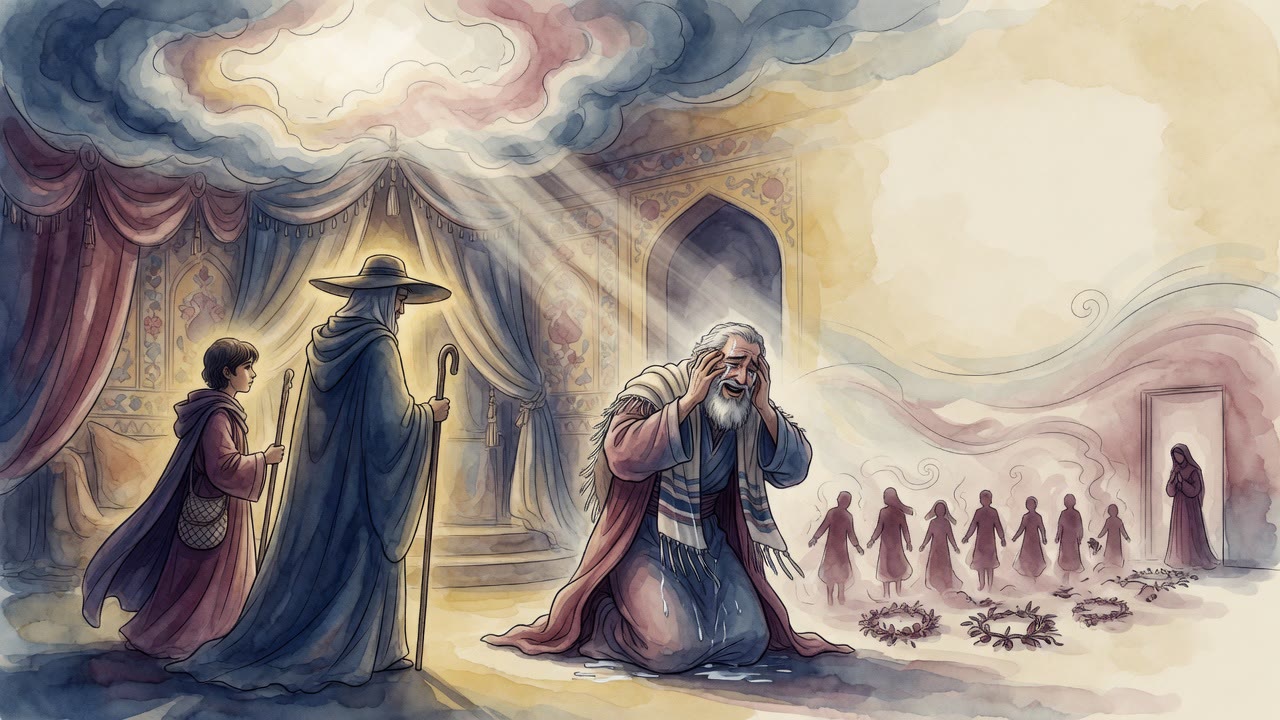
The kid cried from the floor of a dark house in Nineveh, a thin sound, and Tobit turned his face toward it.
 Click for full size
He could not see the animal. He could hear it. His wife had come in from hired work with wages in her hand, and something else had come in with her.
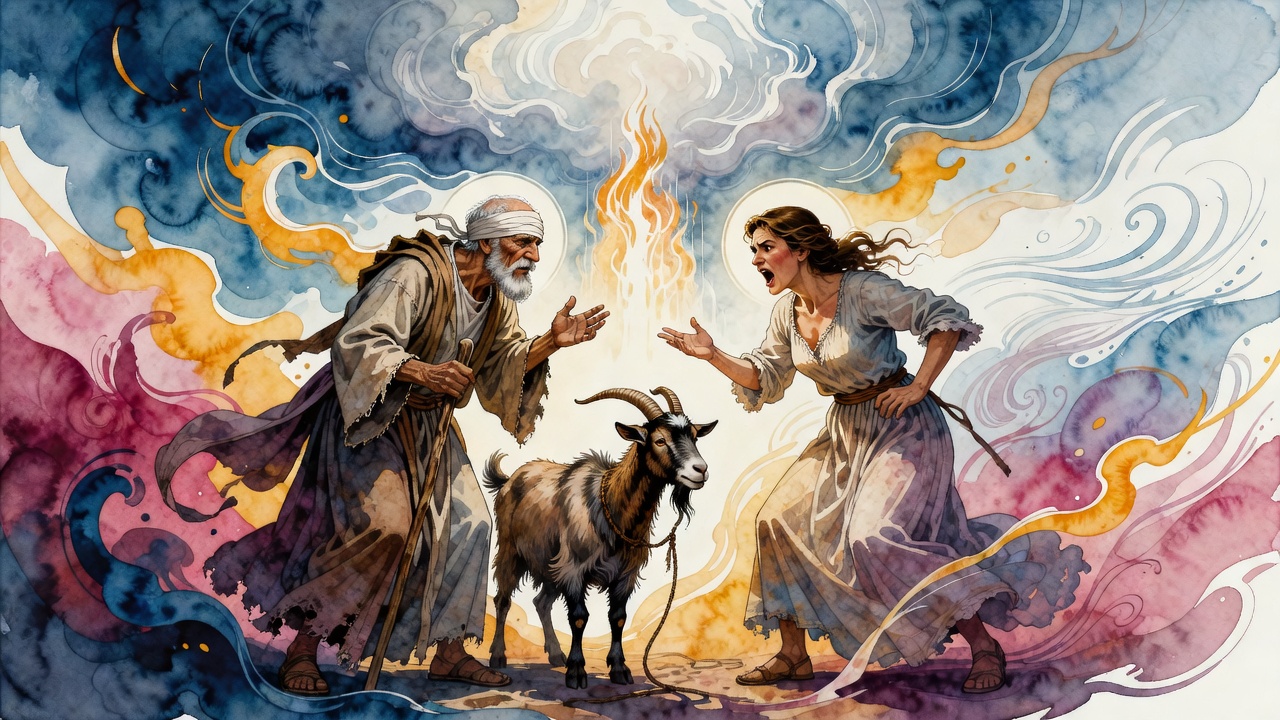
"Where did this come from? Make sure it is not stolen. Go and restore it to its owners."
The Kid Was Not Stolen
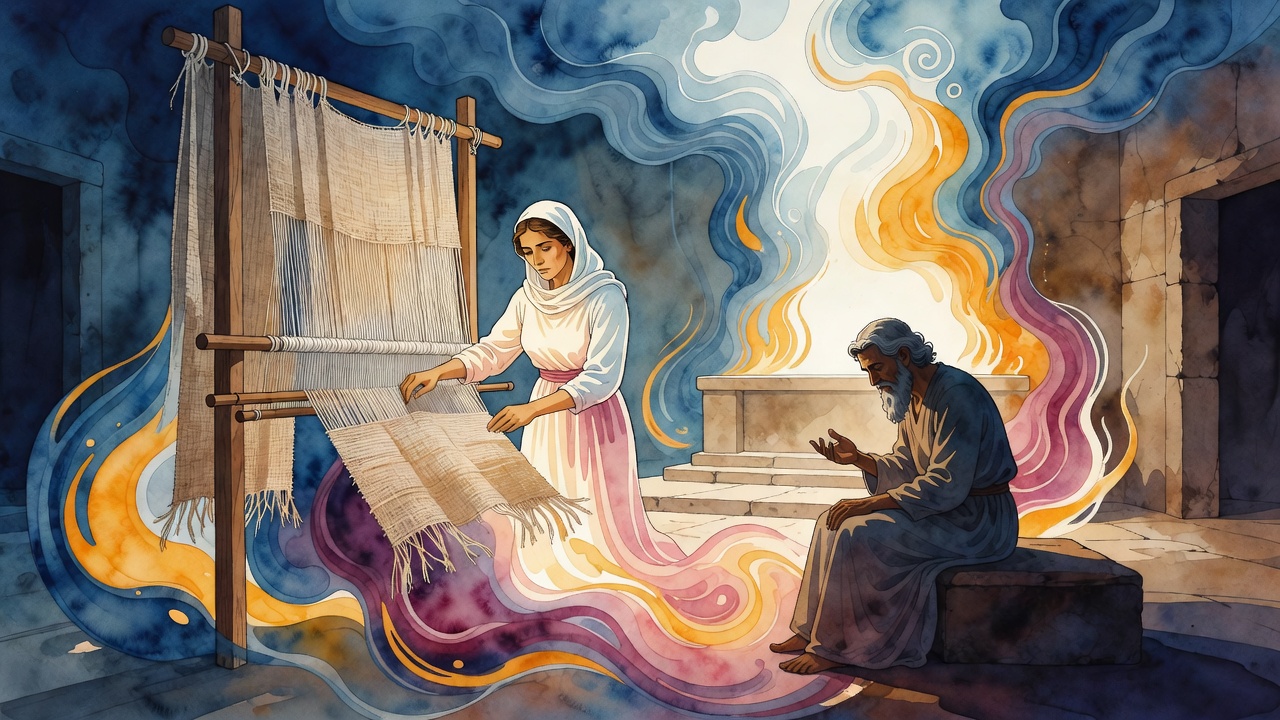
Hannah stood in the doorway with the coin still warm from the client's hand. She had been weaving curtains for other women's houses since the blindness took him. On this day they had paid her wage and added a kid goat on top of it.
She told him it was not stolen. She told him it had been given for her wages. He did not believe her. He pressed again. Restore it. Restore it to its owner.
They quarrelled over a goat in a room he could not see. The kid kept crying and bumping the furniture, looking for a corner.
He had spent years burying murdered Israelites after dark. Sennacherib had issued a death sentence for that work. Then the king died, the sentence lifted, and Tobit slept against a courtyard wall after a burial. Sparrows dropped their warm droppings into his open eyes. The white film came. The court career ended. Hannah's weaving began.
Now he sat in the dark and guarded the house against stolen meat, as if that were the last clean office left to him.
She Had Been Carrying the House
Hannah had carried them. The curtains. The coin. The food. A son still young. A husband who prayed from a chair and gave almsgiving instructions into a room he could not cross without a hand on the wall.
The goat was the first thing in a long time that had been given to her as extra. It was small. It was alive. It was hers. And the man she had been feeding called it theft.
She set the wages down on the table he could still find by touch. He kept talking toward the cry of the kid, not toward her face, because he had no face to find.
"Go and restore it."
She had already told him the truth. He wanted a truth he could inspect. He could inspect nothing. He had only the old reflex: better to send back a gift than to eat a stolen one.
Where Are Your Kindnesses
She answered him in the voice she used for work, not for prayer.
"Where are your kindnesses and your alms, which profit you not in the day of your trouble? Your reproach is known to all the world."
Nineveh already knew the story. The man from Naphtali who had been great in the Assyrian court. Who had buried the dead at night. Who had been condemned and then reprieved. Who now lived on his wife's wages while the name for righteousness hung on him like a coat he could no longer wear.
She was not calling the burials a lie. She was naming what they had failed to buy. They had not kept his eyes. They had not kept the household. She had been the one filling the gap, curtain by curtain, and he had used his last strength to accuse the one bonus she had been handed.
The kid cried again. She did not pick it up.
Take My Soul From Me
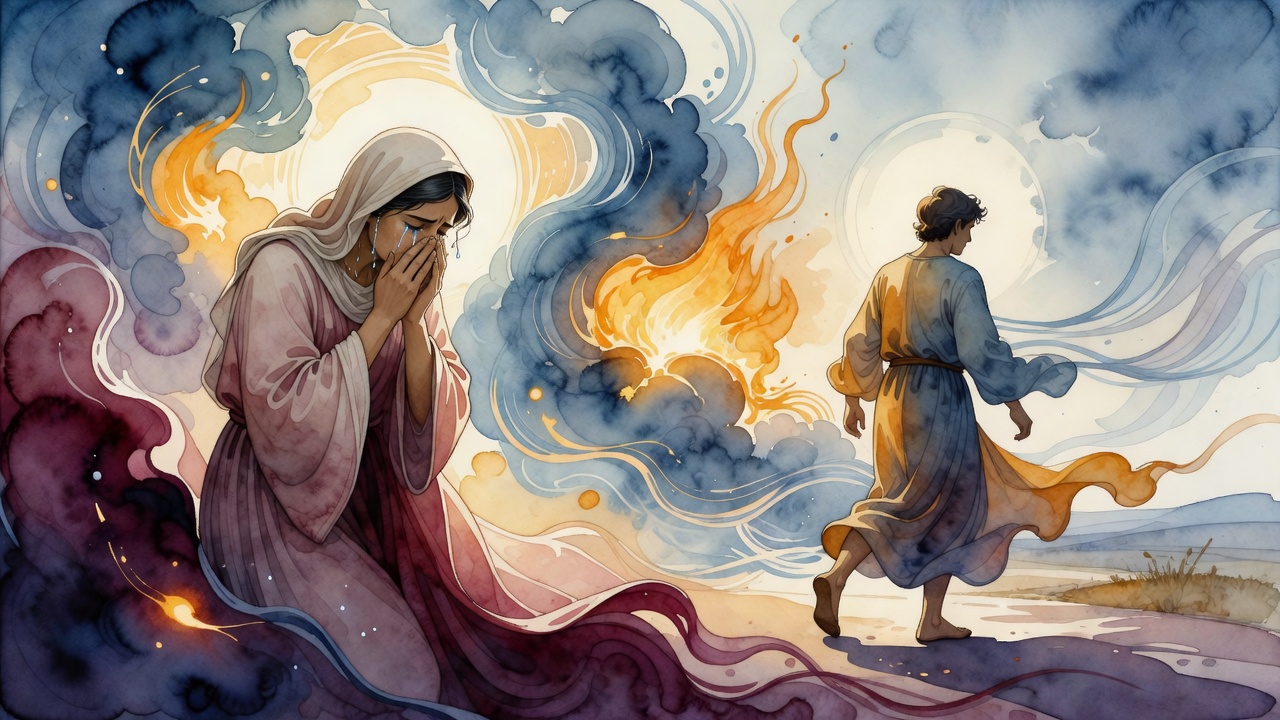
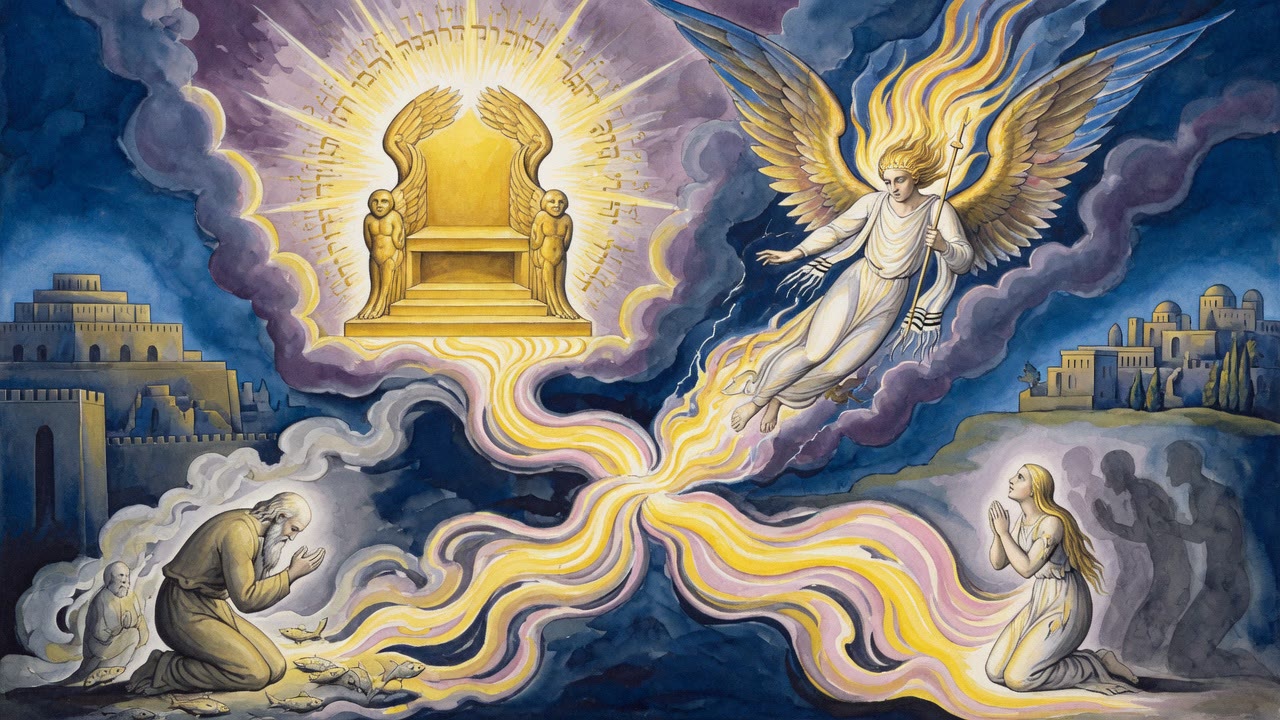
Tobit did not answer her charge. He wept. He fainted. He grew sick of the affliction and prayed before the Lord.
"Righteous are you, O Lord, and your judgment is upright. All your works are might, and all your ways are kindness and truth, and you are the judge of the earth."
He did not argue with her. He turned toward God and put his own sin in the room with the goat. "You have dealt truly, and I have done wickedly. Reward me not according to my sin, and according to the wickedness of my fathers, who cast your law behind their back."
The exile sat down inside the prayer. A proverb among the nations. A remnant left, or they would have been as Sodom.
Then he asked for the thing her words had made him want.
"Take my soul from me, for it is better for me to die than live, and I shall no more hear my reproach."
The kid was still in the house. Hannah was still in the house. He asked to leave both, because the reproach had reached a place years of blindness had not quite touched. A man who had spent his life trying to be righteous had finally heard, from the person feeding him, that righteousness had not produced what he thought it would.
He did not take the goat back himself. He could not see to do it. He asked God to take him instead.
← All myths