Abraham Kissed Jacob Goodbye and God Kept the Appointment
Abraham blessed Jacob and died that night. Later Jacob found the Shekhinah, the Divine Presence, waiting at Bethel, and night prayer became law.
Table of Contents
 Click for full size
The Flame Passed in the Dark
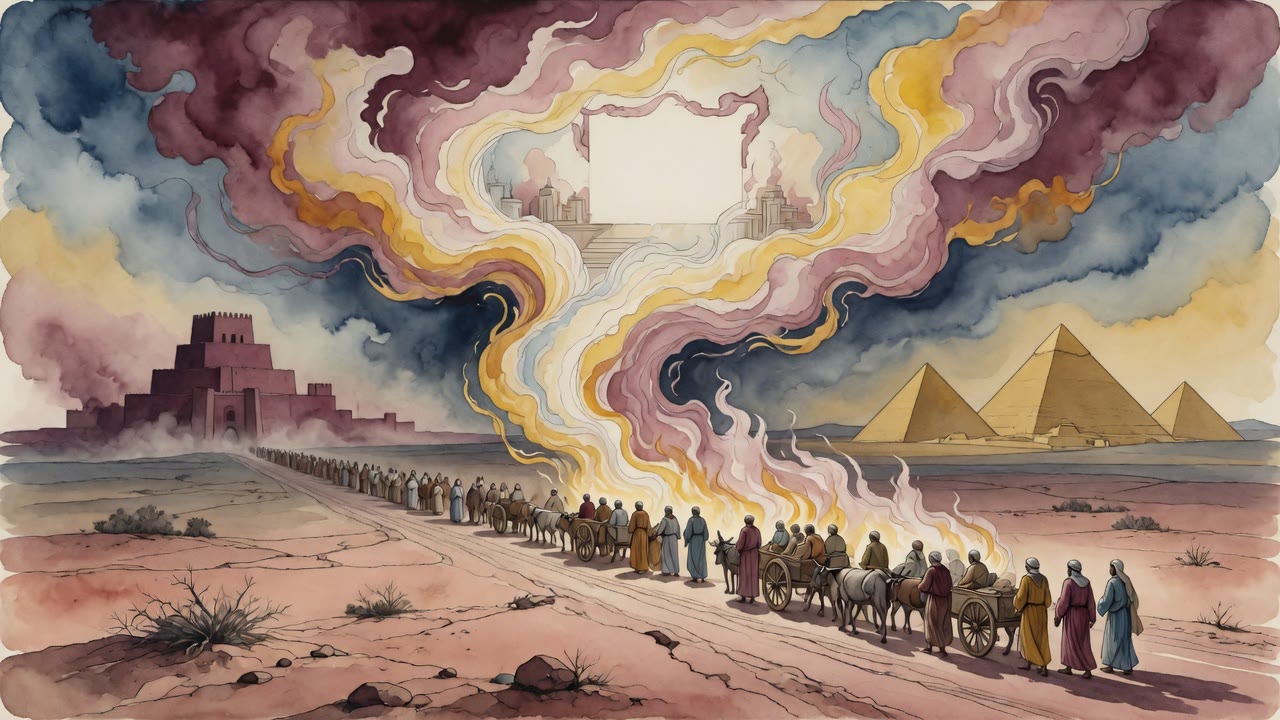
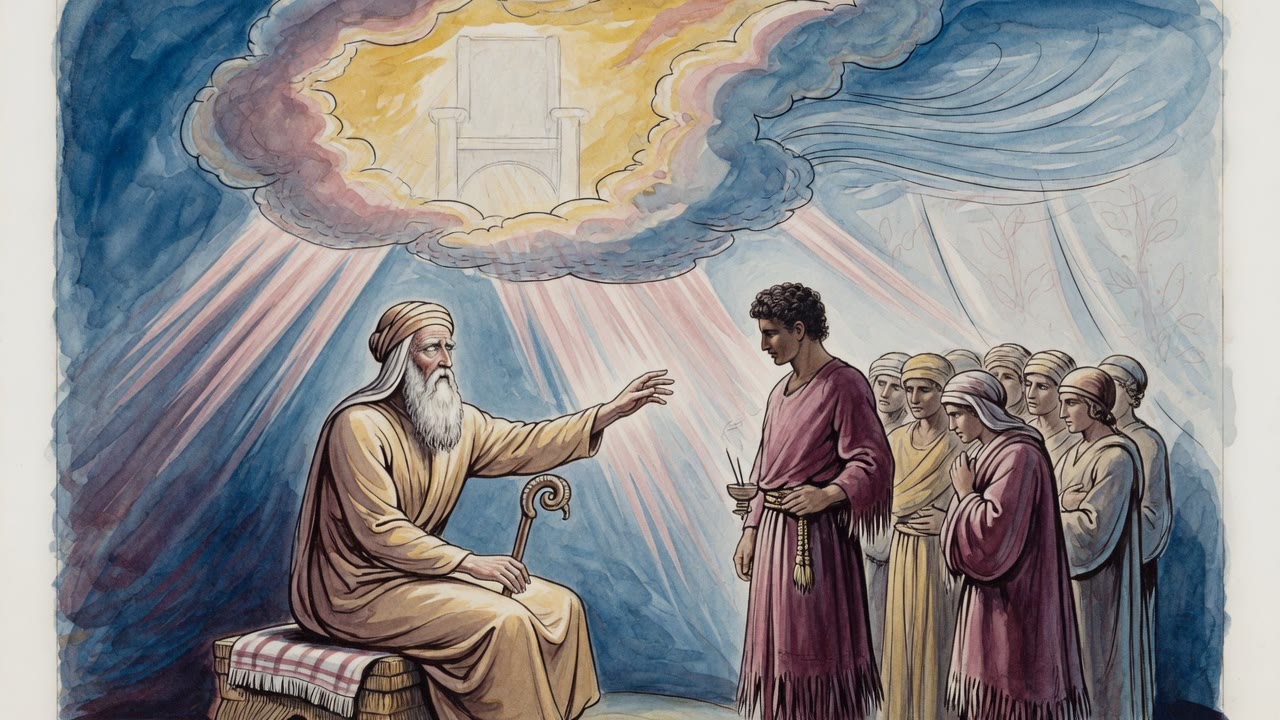
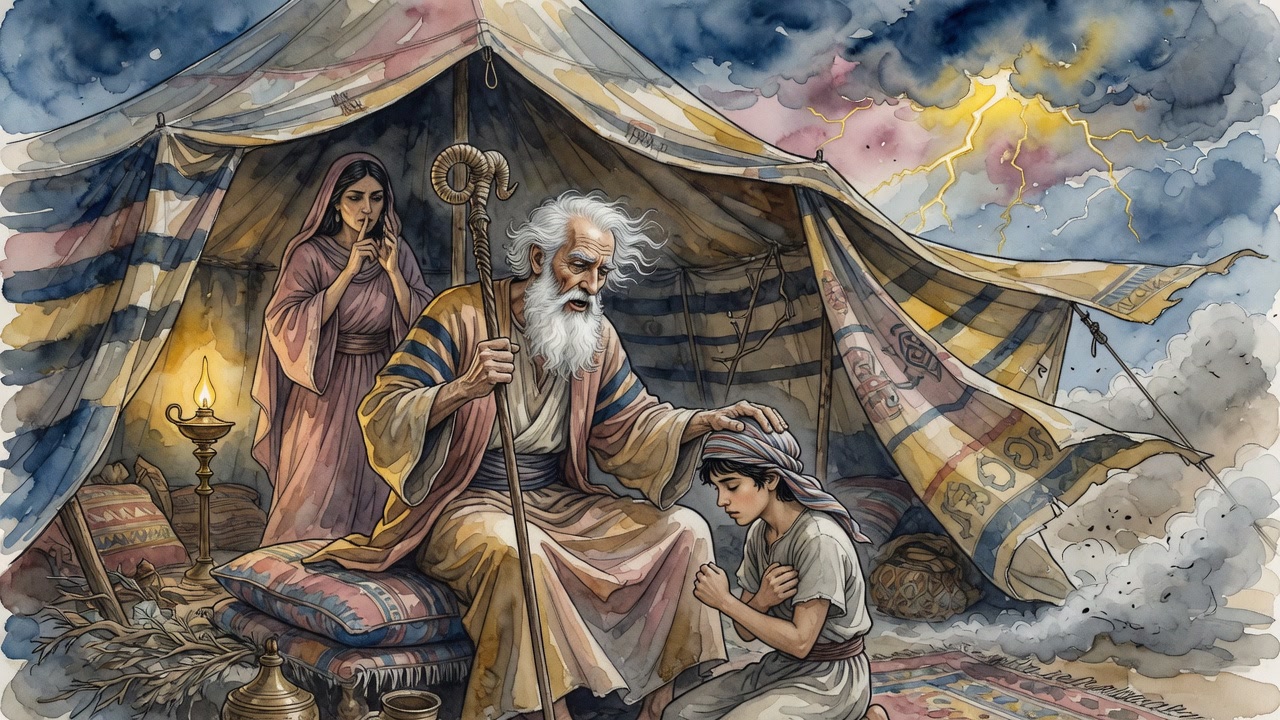
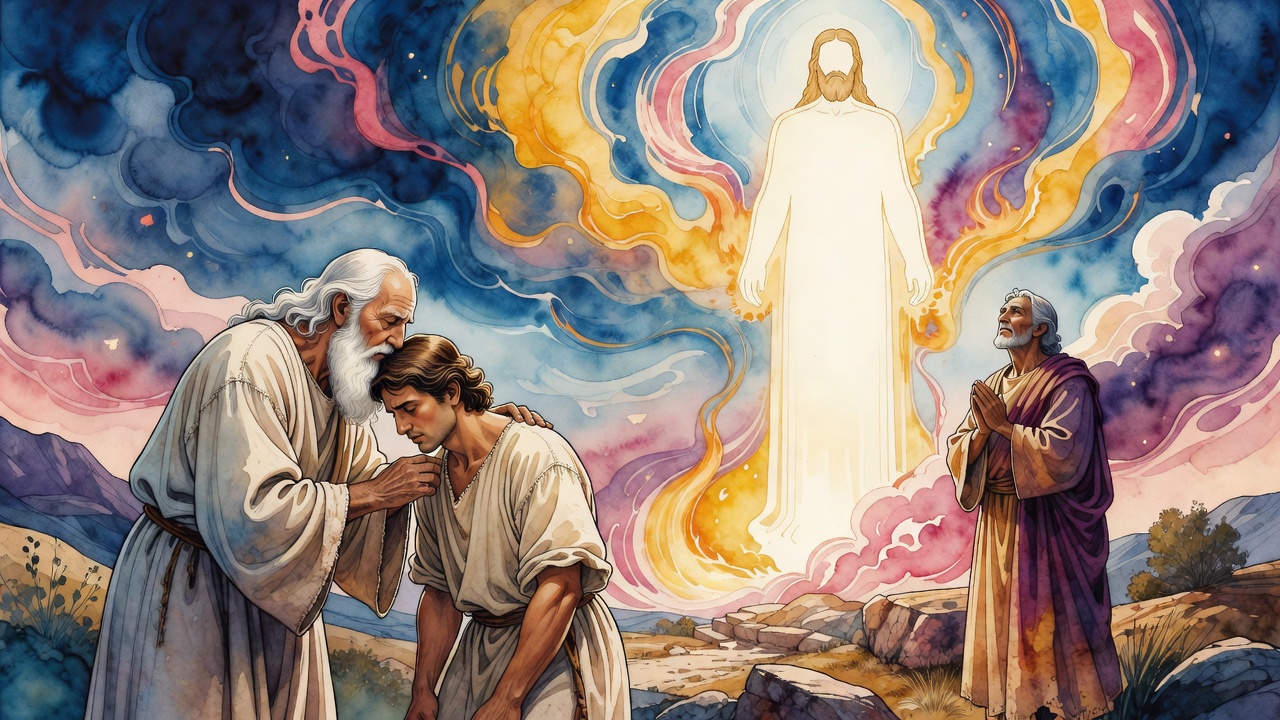
The last thing Abraham did before he died was call Jacob close. Not Isaac. Not Esau. Jacob. The Book of Jubilees, composing its account of patriarchal history around the second century BCE, stages the scene with deliberate tenderness. Abraham kissed his grandson and began to speak. Blessing after blessing, each one reaching further into the future: "May God Most High give you all the blessings of your father Abraham and the blessings of Isaac." He was not reciting a formula. He was transferring something. The tradition understood a patriarch's final blessing as a legal instrument, the conveyance of a spiritual inheritance that could not be reclaimed.
Jacob received it. He sat with Abraham as the old man died that night, sharing a single bed, pressed against his grandfather in the darkness. The most intimate death scene in the patriarchal narratives: not grief at a distance, but the body of the next generation held against the body of the last, the way a flame is passed from one wick to another before the first goes out.
What Jacob Carried Forward
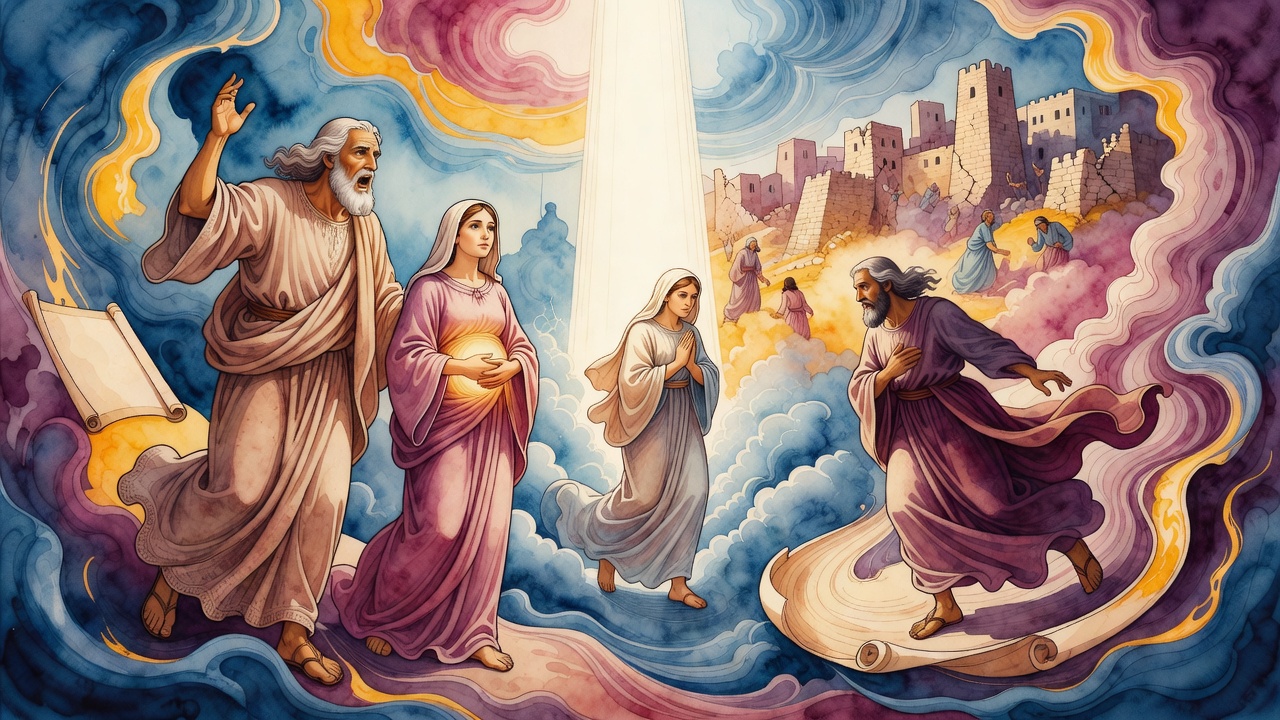
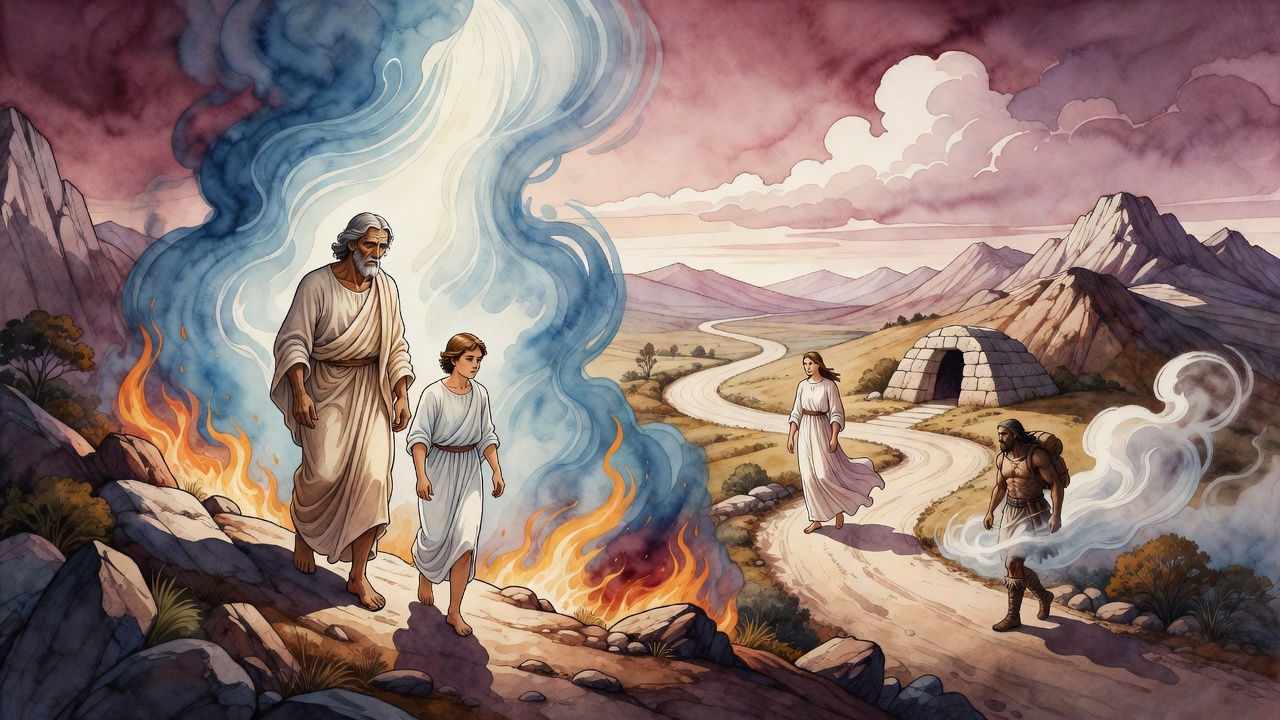
Years later, at Bethel, Jacob built an altar and returned to the place of his first vision. Jubilees 32 records that he looked back on Isaac's blessing over him and his sons Levi and Judah, and a profound joy moved through him. "Now I know that I have an eternal hope, and my sons also, before the God of all." The blessing he had received as a child sleeping in Abraham's arms had become something he could see extending forward across generations. It was not his to keep. It was his to pass on.
His son Levi received a portion of that future: the tribe that would speak the word of the Lord in righteousness, that would teach God's paths to Jacob and His ways to Israel. The blessing on Levi was not simply an appointment to priestly office. It was a continuation of the transmission that had begun in Abraham's tent, moving forward through each generation's oldest act of love.
What Esau Said at the End
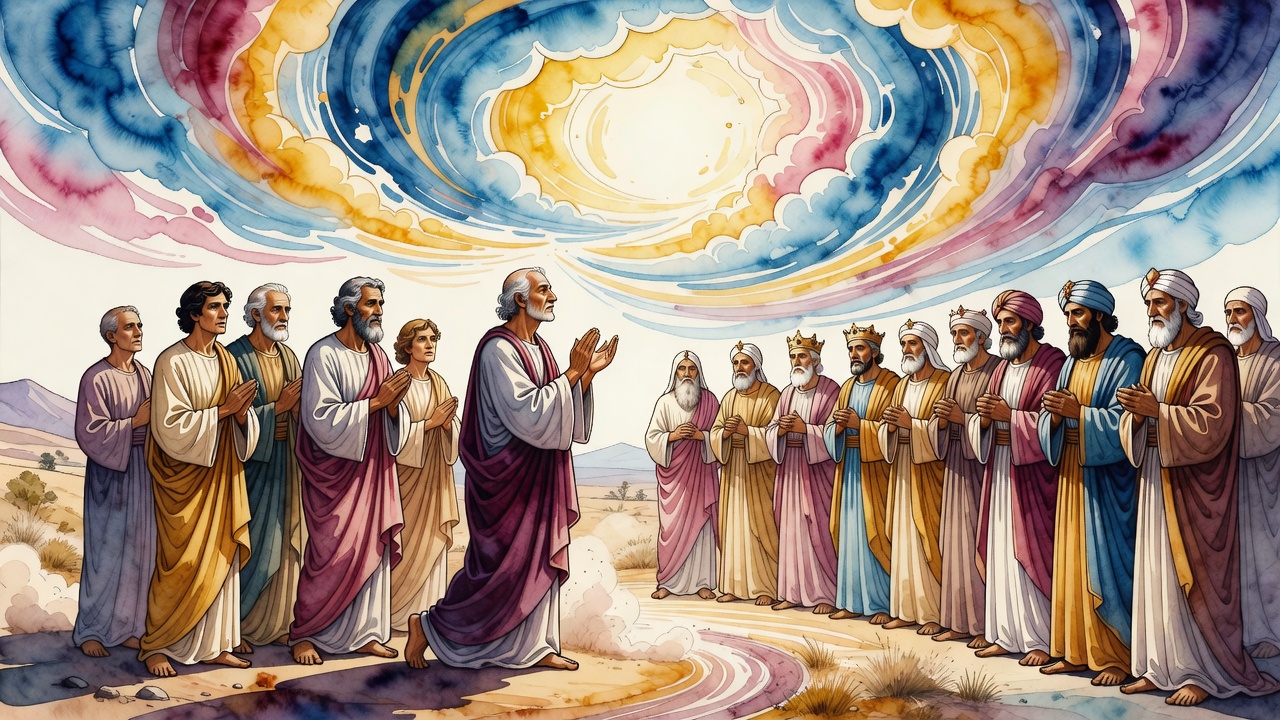
The scene in Jubilees 36 records something Isaac did near his death that could have torn the family apart but did not. He divided his inheritance. He declared that the larger portion would go to the firstborn. Esau was still alive. Esau was still the firstborn by physical precedent. But Esau spoke first: "I have sold to Jacob and given my birthright to Jacob; to him let it be given, and I have not a single word to say regarding it, for it is his." The transaction from years before, the bowl of lentil stew, the moment that had seemed impulsive and perhaps shameful, held. Esau ratified it in front of their dying father. The inheritance passed without violence.
The Shekhinah at the Moment of Night Prayer
The Tikkunei Zohar, one of the central Kabbalistic texts compiled in the late thirteenth century in Castile, Spain, looks back at the moment in Genesis 28 when Jacob "encountered the place" and the sun set. The plain meaning is that night had caught up with him. But the Tikkunei Zohar heard something deeper: Jacob had encountered the Shekhinah, the divine feminine presence that had been waiting at that location.
The Shekhinah's Master watched over her there. Jacob's presence at Bethel that night became the founding occasion for the evening prayer, Ma'ariv. Because he was there with her, and because the sun set on them together, night prayer was established as an obligation. The halakhic structure of the Jewish day, the three-prayer rhythm that would be formalized through centuries of practice, reached back through the legal tradition to this moment: a man lying down in the dark not knowing what he was sleeping on, and the divine presence that had been waiting for him to arrive.
The Inheritance Esau Did Not Contest
The Book of Jubilees preserves a scene near the end of Isaac's life that could have shattered everything but did not. Isaac called his sons in and divided his property. He said the larger portion would go to the firstborn. Esau had every legal and customary claim to contest this. He was the elder twin by birth. He had been named the firstborn in every formal sense. The moment when Isaac spoke about the firstborn should have produced conflict.
Instead Esau said: the birthright is Jacob's. I sold it to him. I gave it to him. He can have it. Not a single word of objection. The bowl of lentil stew from years before, the exchange that had seemed impetuous and possibly shameful, was ratified at the deathbed of their father. Esau had lived with the transaction long enough to accept it completely. The flame that Abraham had passed to Jacob in the dark had moved through the household without burning it down.
← All myths