Sennacherib's Army Drank the Jordan Dry Before Jerusalem
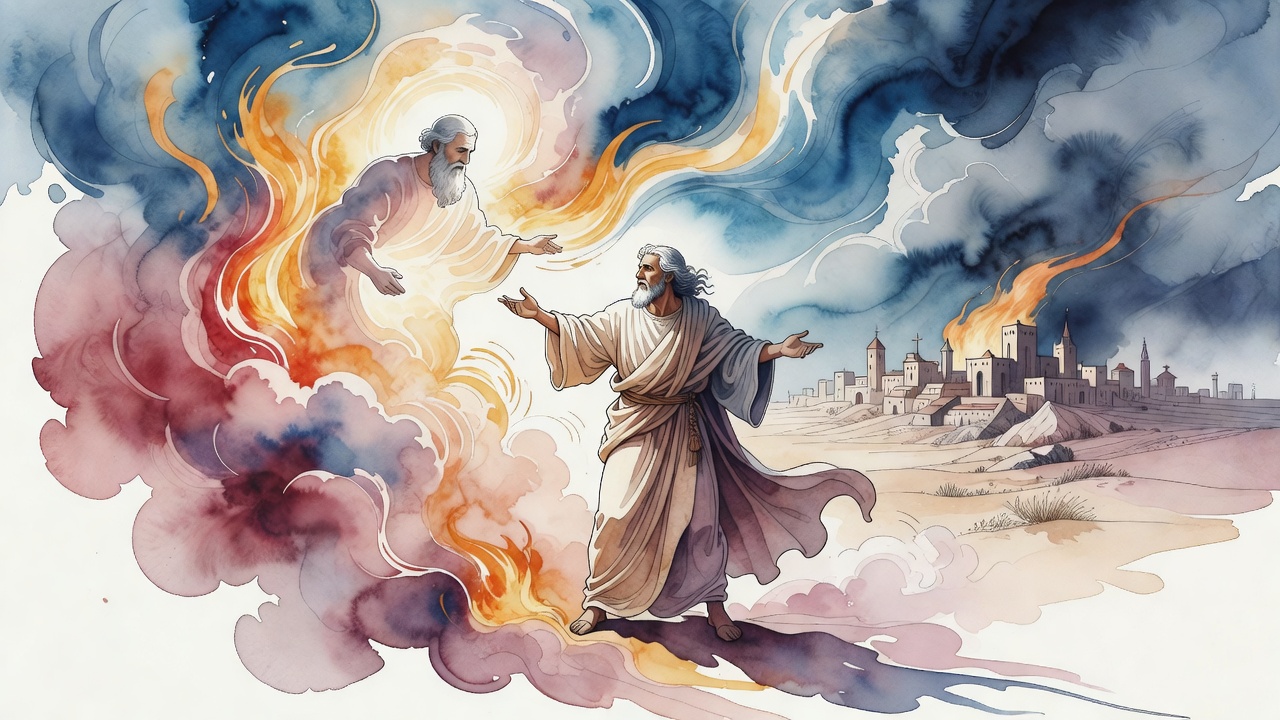
The first division drank the Jordan dry. The last kicked dust. Hezekiah spread the letter on the Temple floor and waited.
Table of Contents
 Click for full size
The River Goes First
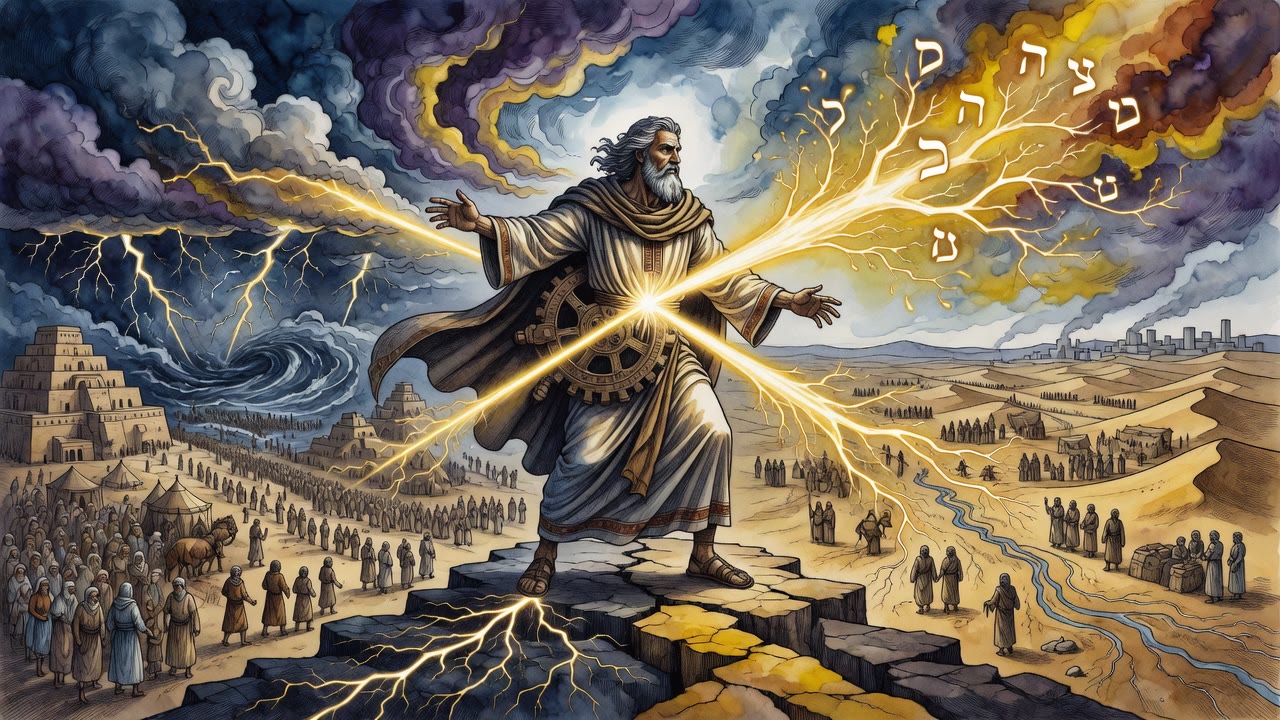
Sennacherib came with more than two and a half million horsemen. Forty-five thousand princes rode in chariots. Eighty thousand soldiers wore full armor. Sixty thousand swordsmen walked in the vanguard. The camp stretched four hundred parasangs, a walk of many days from edge to edge. The saddle-beasts stood neck to neck in a line forty parasangs long.
The host moved in four divisions. The first reached the Jordan and drank. When they had crossed, the river was nearly gone. The second division found water only in the hollows under the hooves. The third dug wells. The fourth kicked up dust and marched on dry ground.
Trees along the banks browned behind them. Fields that had drunk the Jordan all their lives stood empty. Nations around the land of Israel saw that camp and fled their places. They ran into the wilderness and mixed with the tents of Edom and the Ishmaelites, Moab and the Hagarenes, Gebal, Ammon, Amalek, Philistia, Tyre. Assyria had joined itself to all of them, and still the column kept coming.
Rings Enough to Stone a City
Sennacherib looked at Jerusalem and did not bother with a long siege in his own mouth. One sixtieth of his host, he said, would be enough for the whole land. He told the army to lie down and sleep. In the morning they would throw their rings into the city and stone it with the weight of their jewelry.
Rabshakeh, his chief officer, stood outside the wall and shouted in Hebrew, past the stones, to anyone who had climbed high enough to hear. He listed the gods of every nation Assyria had already broken. He named Israel's God as one more name on a failed list. Surrender, he said, and live in a land of grain and wine. Stay, and face what is standing outside.
The people on the wall said nothing. King Hezekiah had ordered silence. Not a word. Rabshakeh ran out of boasts against a city that would not answer.
The Letter on the Floor
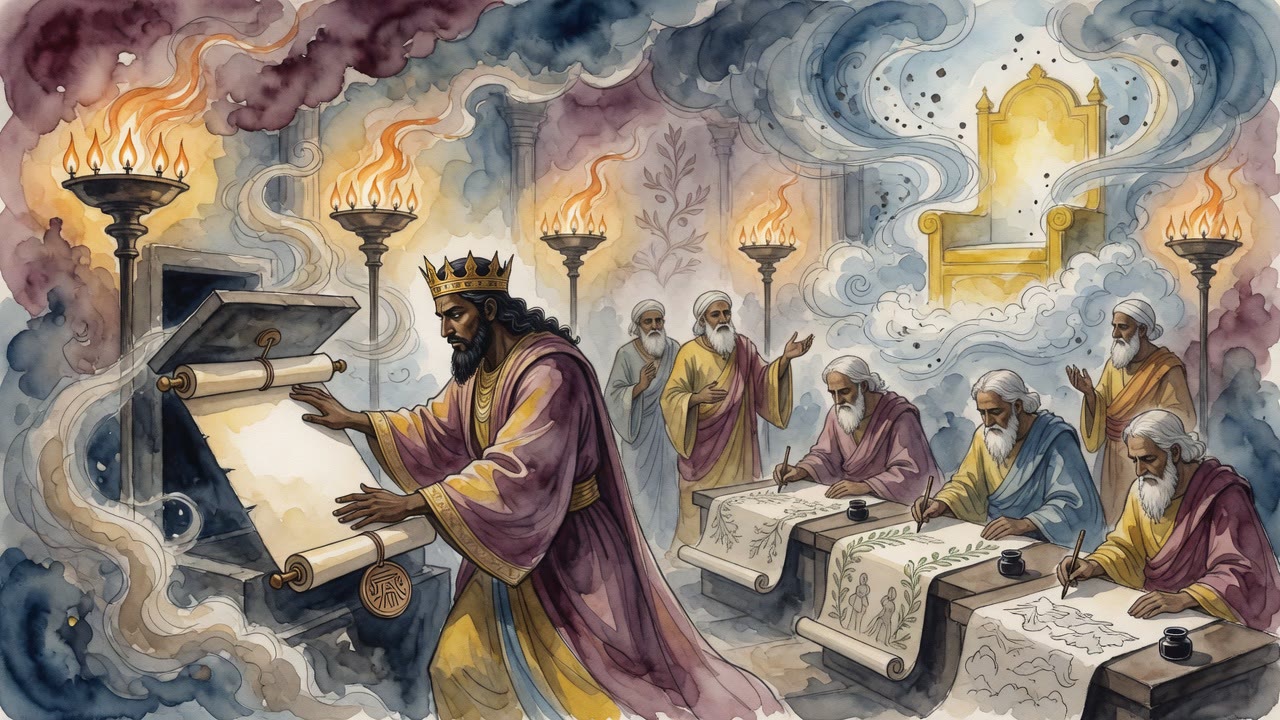
A letter came after the shouting. Hezekiah read it, walked to the Temple, and spread it on the sanctuary floor. He did not call a council. He did not read it aloud for the court. He laid the argument flat where God could see it. The letter said God could not help him. Hezekiah put that claim on the stones and asked for an answer.
Isaiah sent word. Do not be afraid. The king of Assyria will not enter the city. He will not shoot an arrow into it. He will not come before it with a shield. He will return the way he came.
Hezekiah left the letter where it lay. The Jordan was already a scar. The rings were already counted. The walls still held.
The Night the Camp Went Still
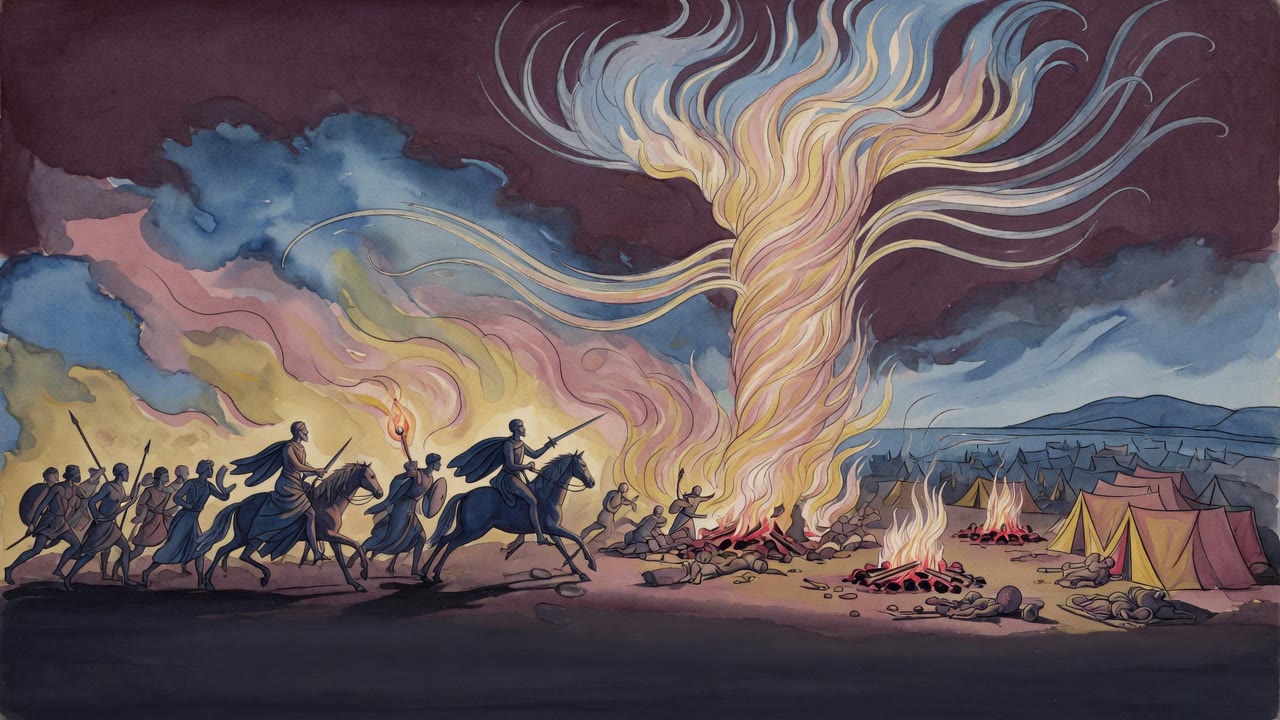
An angel went through the Assyrian camp in the night. By morning, one hundred eighty-five thousand soldiers were dead. Sennacherib woke to a field of men who would never throw a ring. He did not regroup. He turned toward Nineveh with his face in shame.
The blow was not only for the boasts of that week. When God brings punishment on a foe, the account runs back. It takes what they did, and what their fathers did, from the days of Abraham on. The angel did not stop to explain the ledger. The camp simply stopped breathing.
Jerusalem opened its gates on a morning that should not have existed. No arrow had entered. No shield had come to the wall. The army that had drunk a river dry had died without a battle.
His Own House Finishes Him
Sennacherib went into the house of Nisroch, his god, to bow. His sons watched him kneel. They had seen the camp burn and the father still pray to the thing that had not saved it. Adrammelech and Sharezer struck him with the sword while he was on his face (2 Kings 19:37).
The terrible and dreadful one fell in his own shrine. Judgment came out of his own body. The city he had meant to bury under rings remained standing. Hezekiah lived. The letter still had the crease of a king's hands in it, somewhere in the memory of the floor.
The nations that had fled into the wilderness did not return to cheer him. Dust took the hoofprints. The Jordan filled again, slowly, as if it had been holding its breath.
← All myths