Two Prayers Reached the Throne at the Same Moment
Tobit prayed for death in Nineveh. Sarah prayed for death in Media. Both prayers reached the throne of glory at once, and one angel answered them both.
Table of Contents
 Click for full size
Two Cities, the Same Prayer
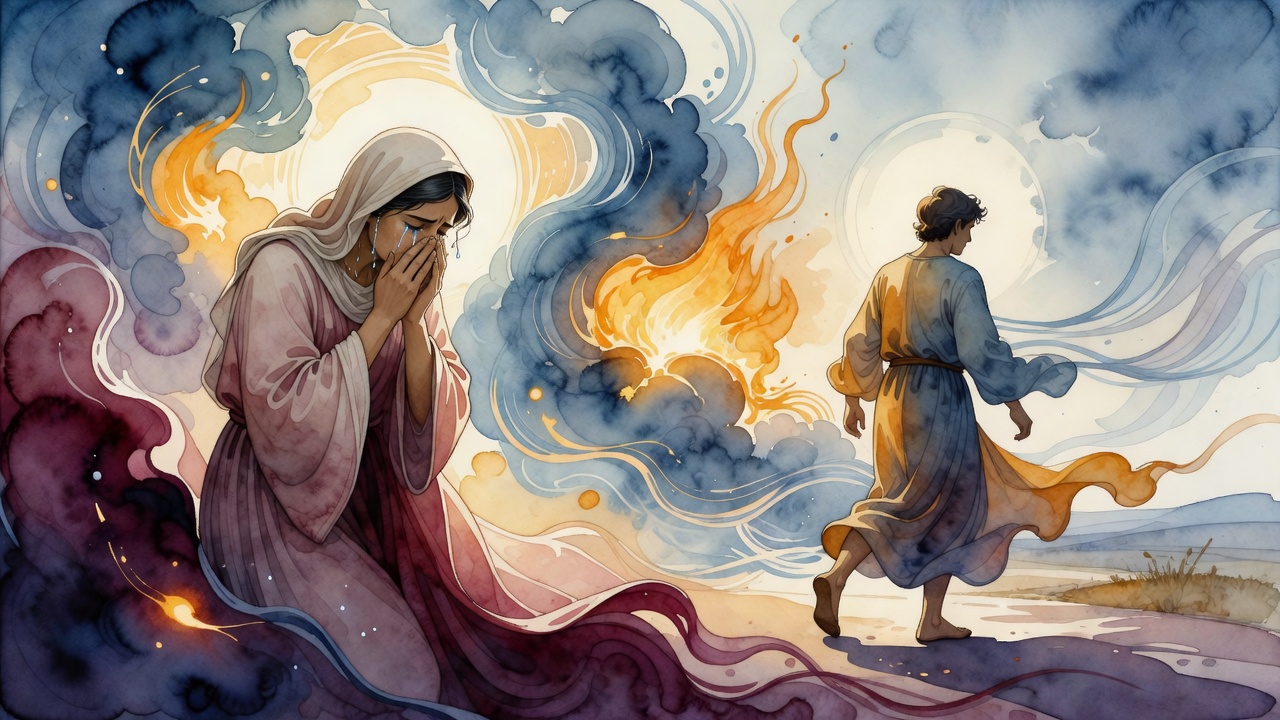
In Nineveh a blind man was weeping in the dark. In Ecbatana in Media a young woman was weeping in an upper room. They had never met each other. They did not know each other's names. They were separated by hundreds of miles of road and mountain. But they were praying the same prayer, in the same hour, to the same God, and asking for the same thing: release.
Tobit had lived his whole life trying to do what the Torah required: almsgiving, burial of the dead, fasting, the appointed festivals maintained even in exile without a Temple. He had done this while his entire tribe abandoned it. He had done it under Assyrian rule, at the cost of a death sentence and two years in hiding. He had done it until the sparrows blinded him while he slept against a wall after a burial. And now his wife was weaving curtains to keep them alive and the whole neighborhood knew it, and she had told him that his righteousness had not protected him from anything. He prayed for death because he had run out of the capacity to keep going.
Sarah in the Upper Room
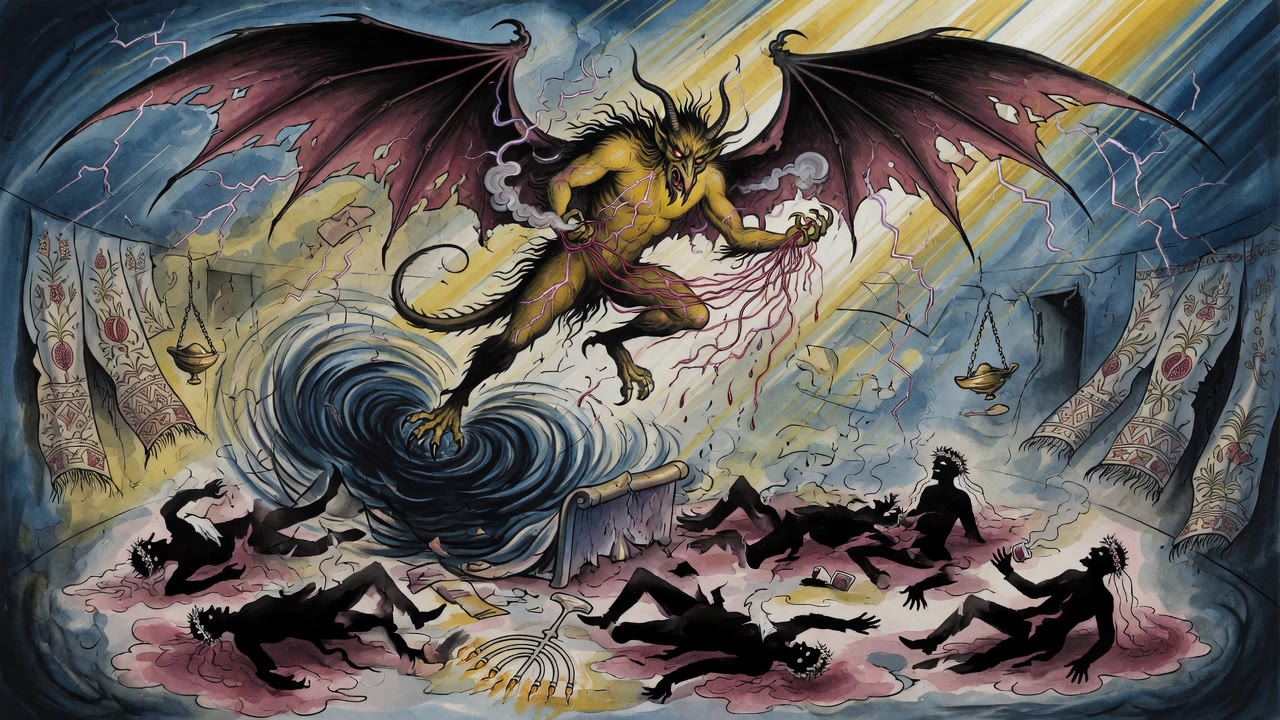
Sarah, daughter of Reuel of Ecbatana, had been given to seven husbands. All seven had died on the wedding night before the marriage was a marriage. The demon Asmodeus was killing them because he wanted her for himself. The maidservants blamed her for the deaths. Her father was old and she was his only child and she could not bear to add the grief of her death to the grief of his seven dead sons-in-law. She prayed instead: Lord, either take me away or have regard for me and let me hear reproach no more.
Two people who had never met each other, praying for the same release, in two different cities, at the same moment.
The Throne That Heard Them Both at Once
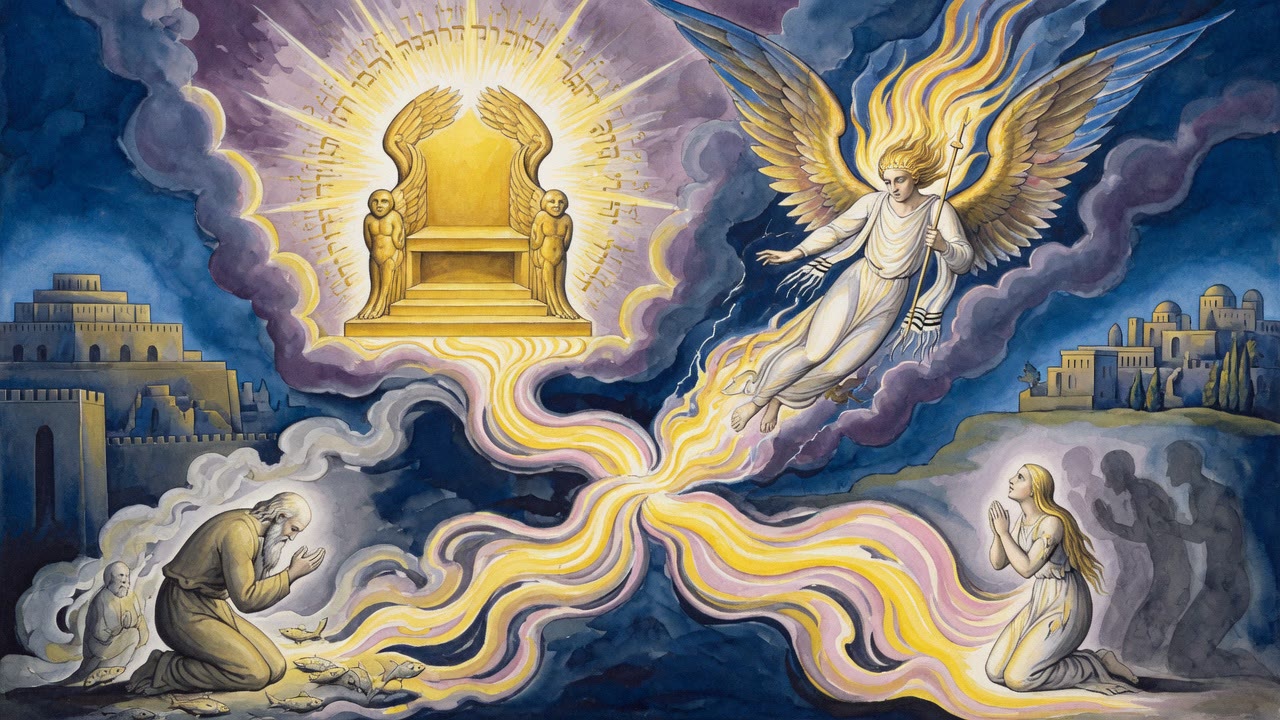
The Book of Tobit says this without elaboration: at that time the prayer of them both was heard before the throne of glory. Not Tobit's prayer, then Sarah's prayer. Not one heard and then the other. Both. At the same moment. Before the same throne. The convergence of two separate prayers for the same thing at the same moment created something that a single prayer could not have created, a shape that required both of them to become visible.
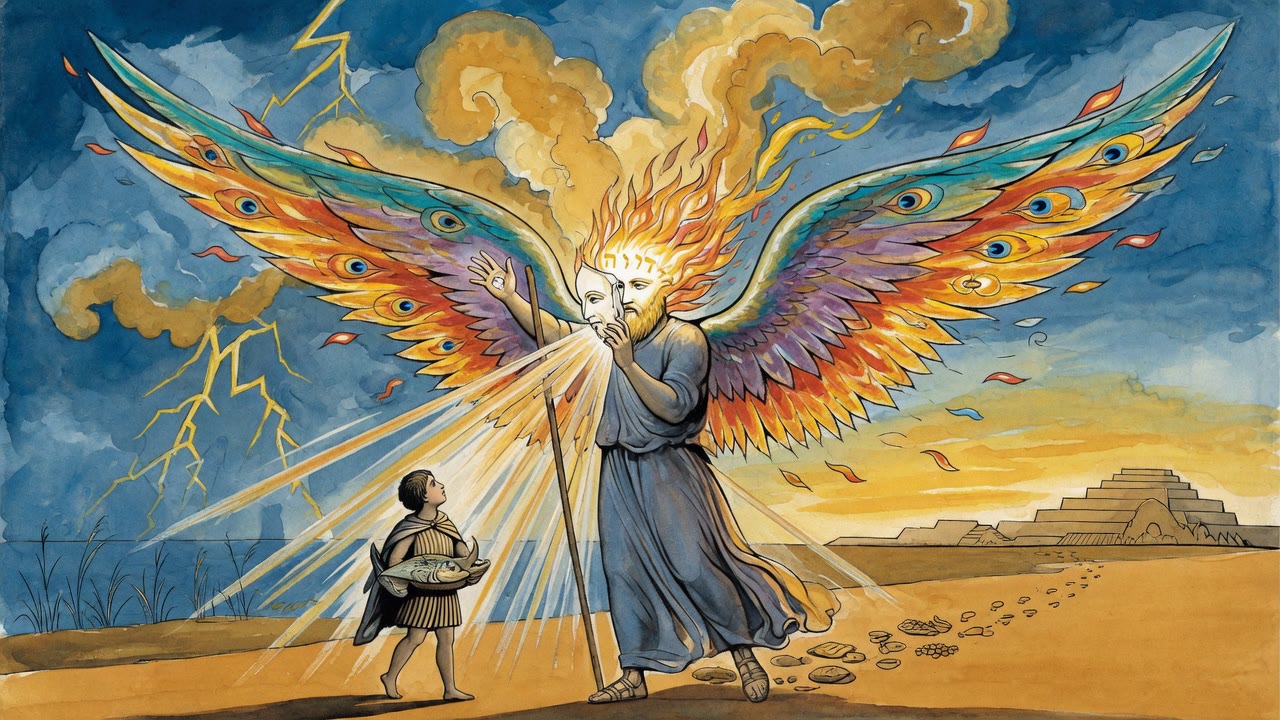
And Raphael was sent to heal them both. One angel. Two cities. Two sufferers who did not know they were connected to each other by the answer that was already moving before they finished praying.
What Raphael Carried
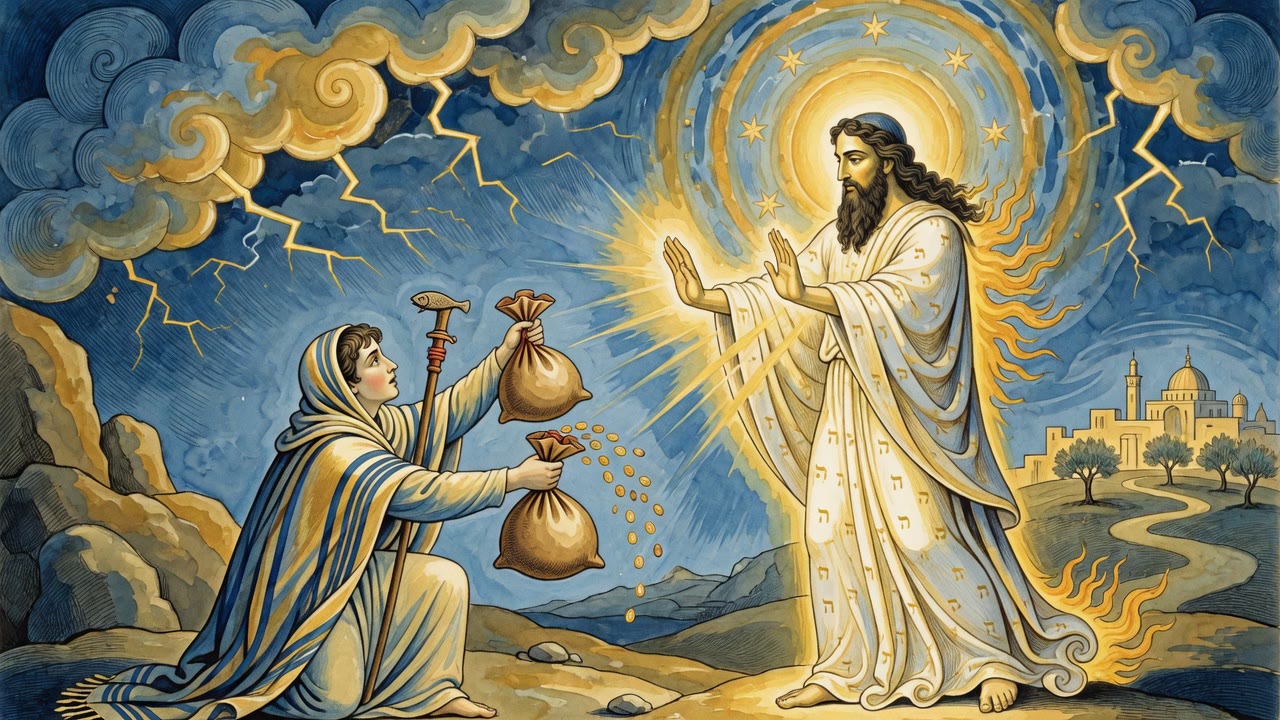
Raphael knew, when he was sent, what the solution looked like. Tobit's son Tobias needed to travel to Media. Sarah needed a husband who would not die. The debt Tobit had deposited with Gabael in Rages needed to be collected. A fish in the Tigris had organs that could drive away a demon when burned. All of this was already assembled. The angel was sent not to improvise a solution but to execute one that had been prepared before the prayers arrived.
From inside their separate darknesses, neither Tobit nor Sarah could see this. Tobit could not see anything. Sarah could see only the seven graves and the eighth grave her father would dig. They prayed from the limits of what they could know. The answer came from beyond those limits, from the throne that had heard them both at once and understood what neither of them could see from where they were standing: that the solution to Tobit's grief was Sarah, and the solution to Sarah's imprisonment was Tobias, and the solution to both was an angel willing to walk south from Nineveh dressed as a man named Azariah.
← All myths