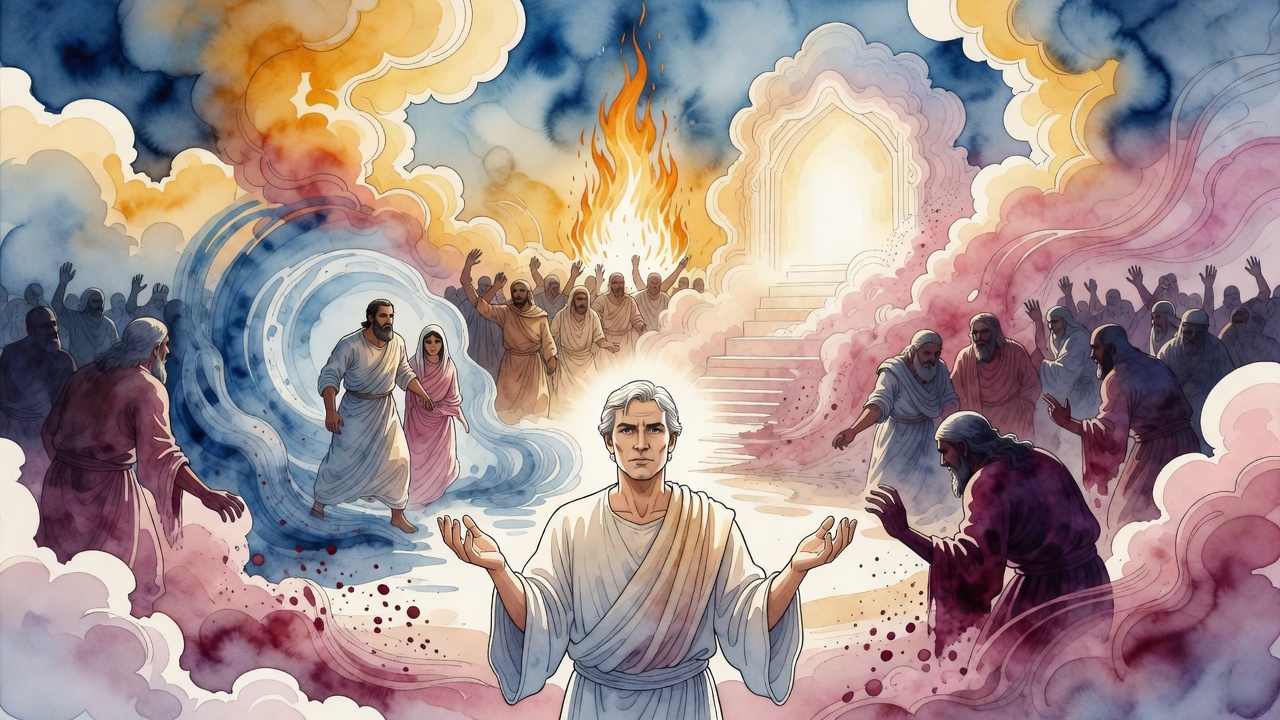
Phinehas Divided His Army into Warriors, Guards, and Prayers
Moses put the gold plate in his hand before they crossed. One third of the men would never draw a sword. They would only pray.
Table of Contents
Phinehas counted on the east bank of the Jordan. Thirty-six thousand men. He did not send them all to fight.
 Click for full size
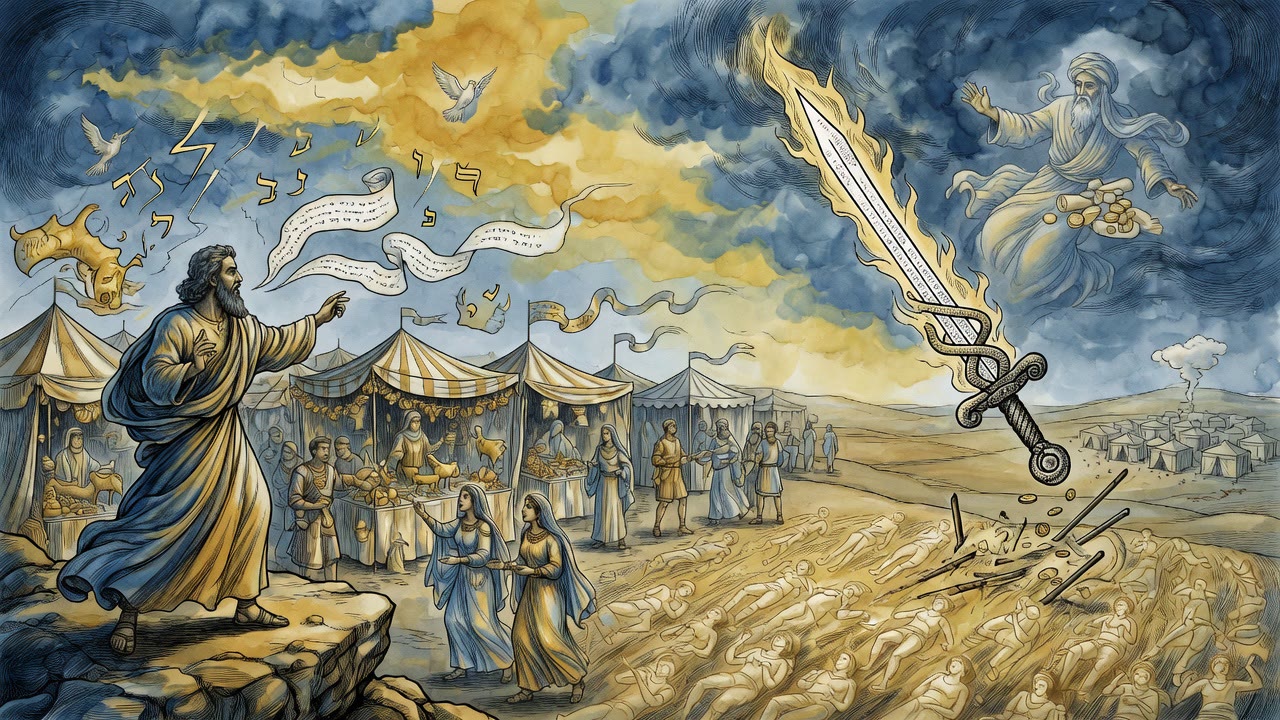
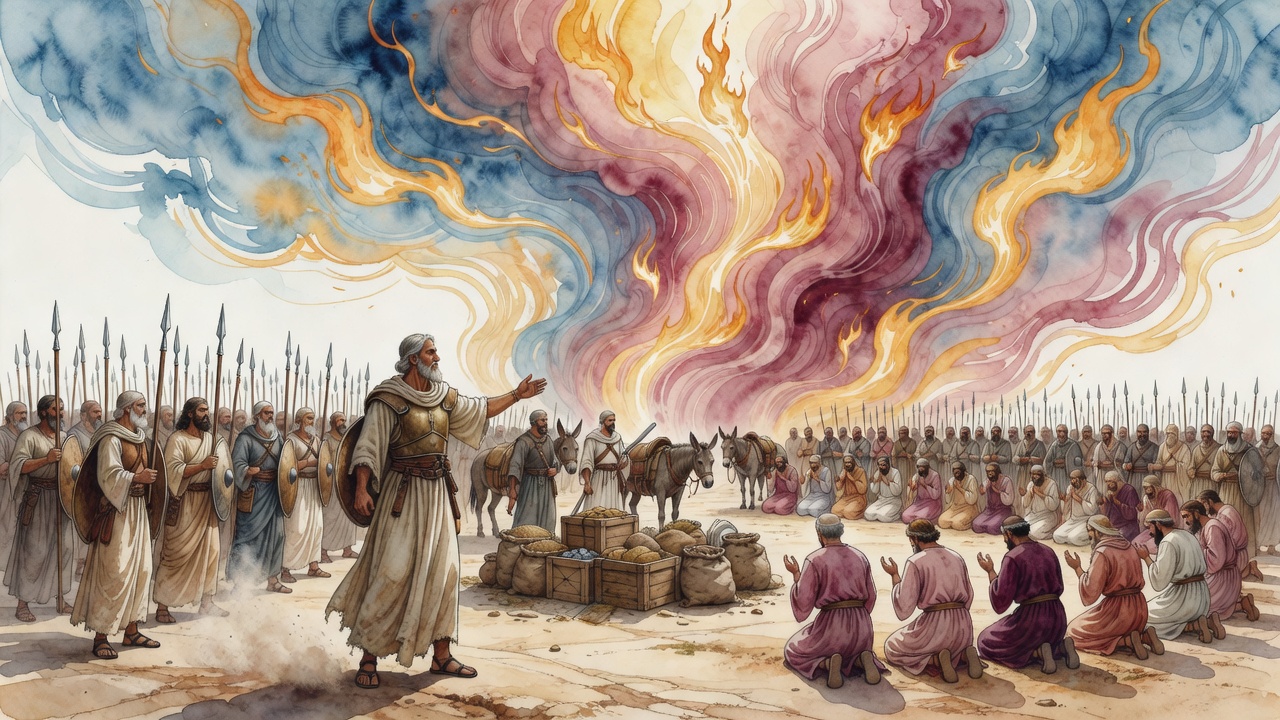
He cut the host into three. Twelve thousand would meet Midian with weapons. Twelve thousand would guard the baggage, the food, the sacred vessels. Twelve thousand would stand off the field and pray until the fighting ended. The priests in that third did not carry spears. Their work was to keep asking God for the men who did.
One Third Would Never Draw a Sword
The warriors knew the ground. Cross. Meet the five kings. Take the cities from three sides and leave one side open, so flight was still a door. Moses had been clear about that. Vengeance was commanded. A total trap was not.
The baggage guards were not leftovers. An army that loses its wagons loses the next day. They stood over the packs and the Ark's escort and did not chase glory into the smoke.
The third part did not move when the horns sounded. They named the battle. They named the brothers on the ground. They did not stop.
Moses Put the Plate in His Hand
Moses did not send a priest with a sword and a wish. He gave Phinehas the Holy Ark, which Israel takes into every war. He gave him the Urim ve-Tummim (אוּרִים וְתֻמִּים), the priestly lots, so he could ask God if the field turned strange. Then he took the gold plate from the high priest's forehead, the plate with the Name on it, and set it in Phinehas's palm.
"The knave Balaam will fly by sorcery," Moses said. "He will lift the five Midianite kings with him. Hold up the plate. They will fall to earth."
Phinehas closed his hand on the gold and crossed (Numbers 31:6).
Balaam Took Five Layers of Air
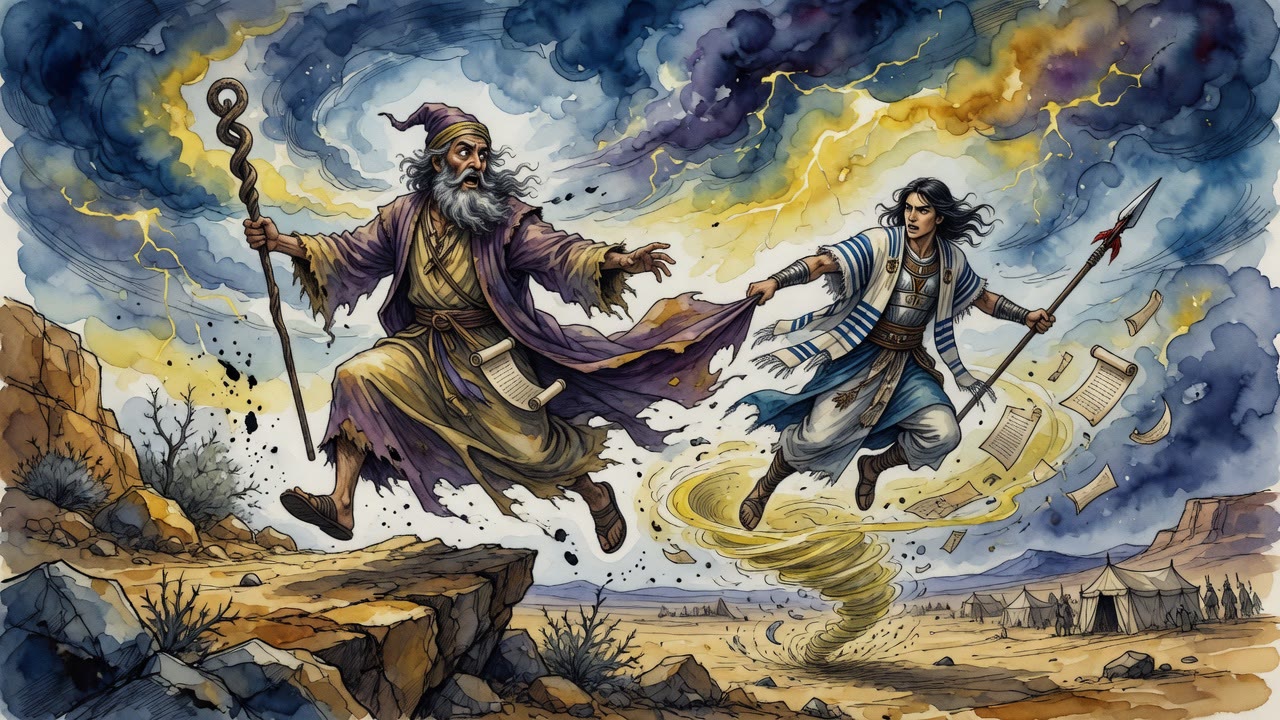
The cities fell. Temples, idols, palaces. The five kings broke. Balaam, who had told Balak to send the daughters of Moab into the camp, saw Phinehas coming and went up.
His sons Jannes and Jambres worked the air with him. He rose where spears could not follow.
Phinehas shouted to the army, "Is there any one among us who is able to fly after this villain?"
Zaliah the Danite answered. He was a master of that same craft. He rose after Balaam.
The Clouds Closed Over Him
Balaam took a path Zaliah could not take. He climbed through five layers of air until the Danite lost him. Zaliah hung in empty sky and did not know which way to turn.
Phinehas spoke. The invocation tore the clouds. Balaam showed again. Zaliah forced him down to the dirt in front of the priest.
Balaam begged. He promised never to curse Israel again.
"Art not thou the Aramean Laban who tried to destroy our father Jacob?" Phinehas said. "Then thou didst pass on to Egypt to destroy Jacob's seed. When they left Egypt thou didst incite Amalek. When the curse would not stick, thou gavest Balak the daughters. Twenty-four thousand of us died of that advice. In vain therefore dost thou plead that thy life be spared."
The Name Brought Them Down
They held up the gold plate. The Name faced the sorcery. Balaam and the five kings hit the ground.
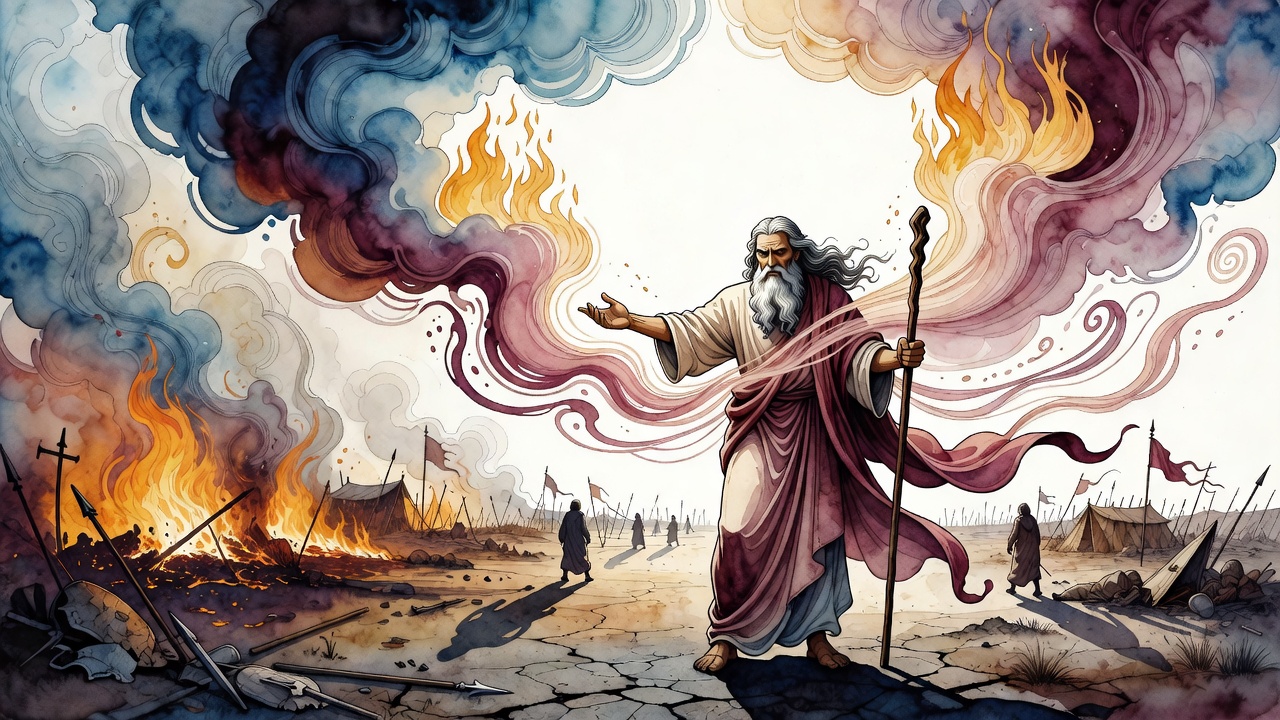
They hanged him. They kindled a fire under the gallows. They struck off his head. They dropped the body into the fire. Four deaths for one man who had spent a life trying to end a people.
Moses counted at the river. Every one of the thirty-six thousand was there. The warriors. The guards. The third that had never drawn a sword. The prayers had held for the whole time the gold plate was doing its work in the air.
← All myths