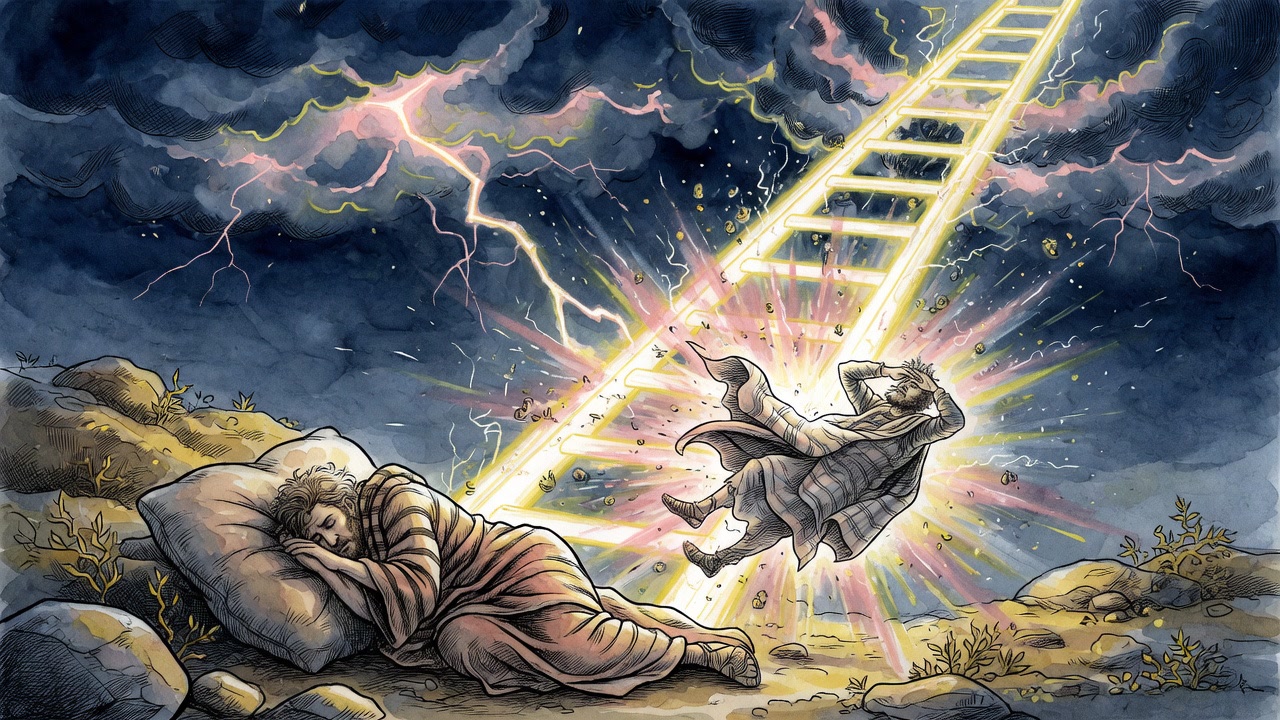
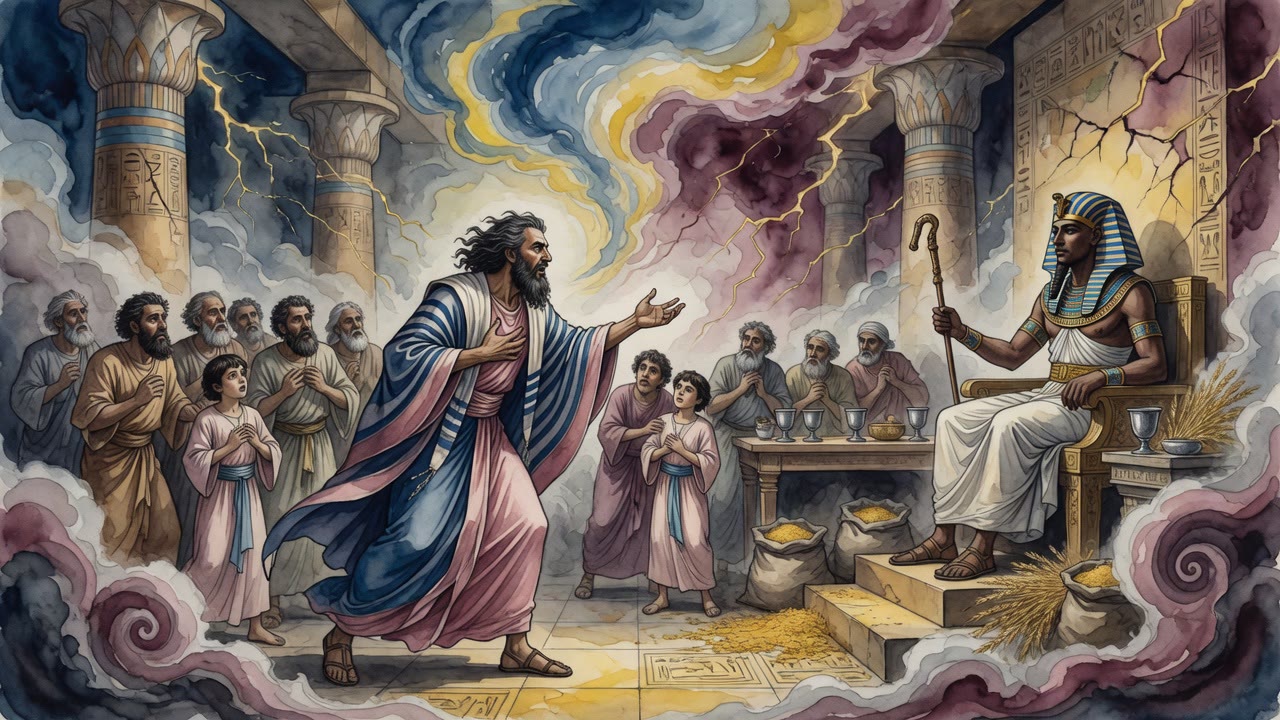
Daniel Kissed a Talking Idol and It Went Silent
The idol said, "I am thy God." Music filled the hall. Daniel asked only to kiss it, and the king smiled as if he had won.
Table of Contents
Nebuchadnezzar had tried flattery. He had tried advancement. He had set Daniel high in the court, and still the man prayed three times a day facing Jerusalem and would not face anything else. A furnace had not settled it. A decree had not settled it. So the king designed an idol that could speak.
 Click for full size
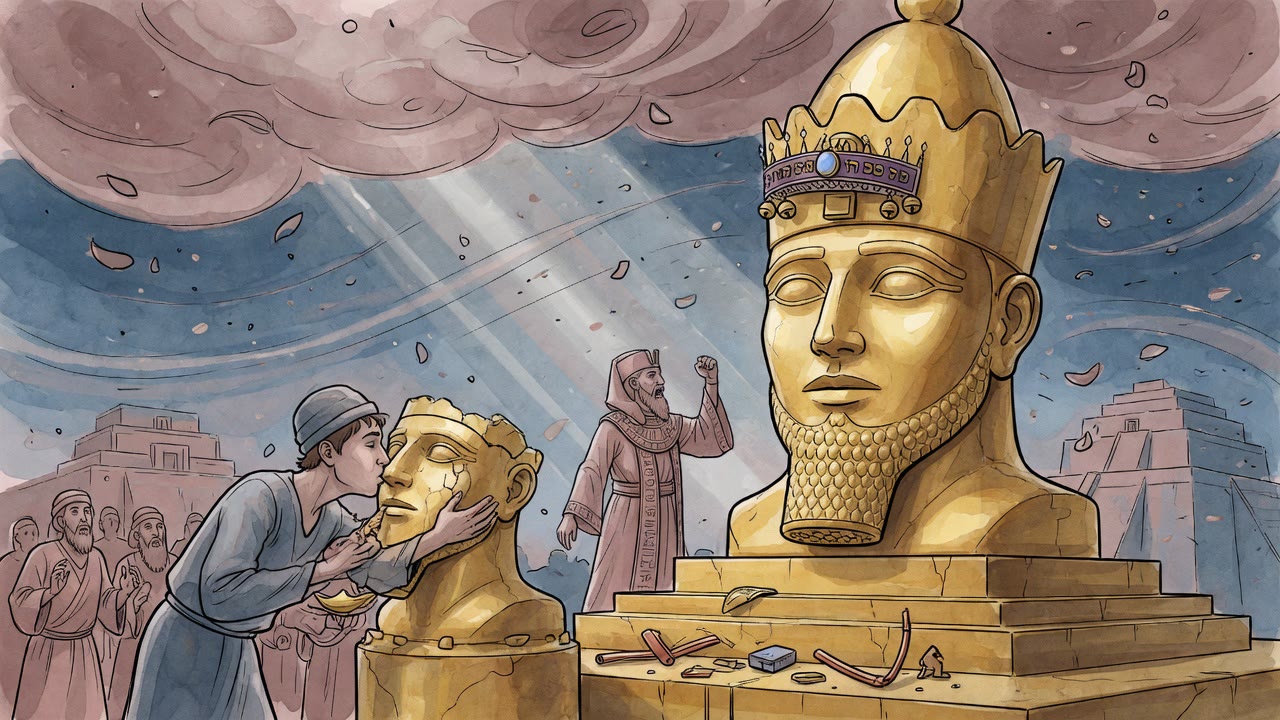
The object at the center was the golden diadem of the Jewish High Priest, the plate worn at the front of the turban when the High Priest entered the Holy of Holies on the Day of Atonement. The diadem bore the Shem HaMeforesh (שם המפורש), the Ineffable Name, in letters of gold. Nebuchadnezzar had taken it when he sacked Jerusalem. He set it in the mouth of an idol, and because of the Name the gold found a voice.
The idol said, "I am thy God."
The Name Sat in a Golden Mouth
Music played. Incense burned. The throne room filled with sound and fragrance that told everyone present something sacred was occurring. The declaration rolled through the hall, and the court bowed, because a god that speaks is harder to refuse than a god that only shines.
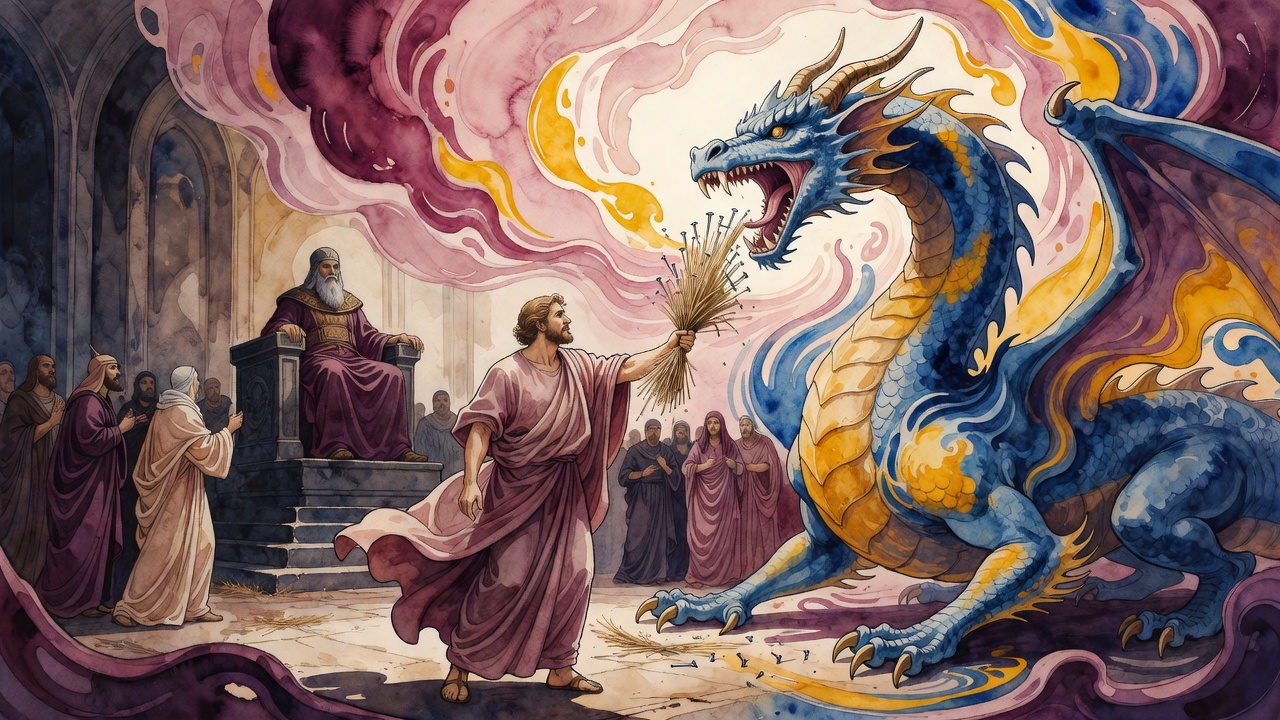
Daniel was brought forward. He looked at the idol for a long breath. Then he asked to approach it and kiss it. The king, surprised and pleased at what looked like capitulation, agreed. If the stubborn exile would put his mouth on the gold, the rest of the argument was over.
Daniel Asked to Kiss the Idol
Daniel walked forward and stood before the mouth. He laid his own mouth on it and spoke softly, not to the king and not to the court.
"I am flesh and blood," he said, "and I am also a messenger of God. Take heed that the Name of the Holy One not be desecrated. I order you to follow me."
The diadem heard him. Stolen gold has no right to keep a Name. The plate that had once faced the Holy of Holies left the idol's mouth the way a thing leaves when it has been commanded by someone who still belongs to it.
The Diadem Followed Him Out
When the heathen came back with music and song to honor the image, the mouth emitted no sound. The court had just watched a god speak. Now they watched a court official finish a kiss, and the god go dead. Daniel did not argue theology. He did not debate the nature of idolatry. He removed the thing that had been making clay seem like more than clay, so the silence did the rest.
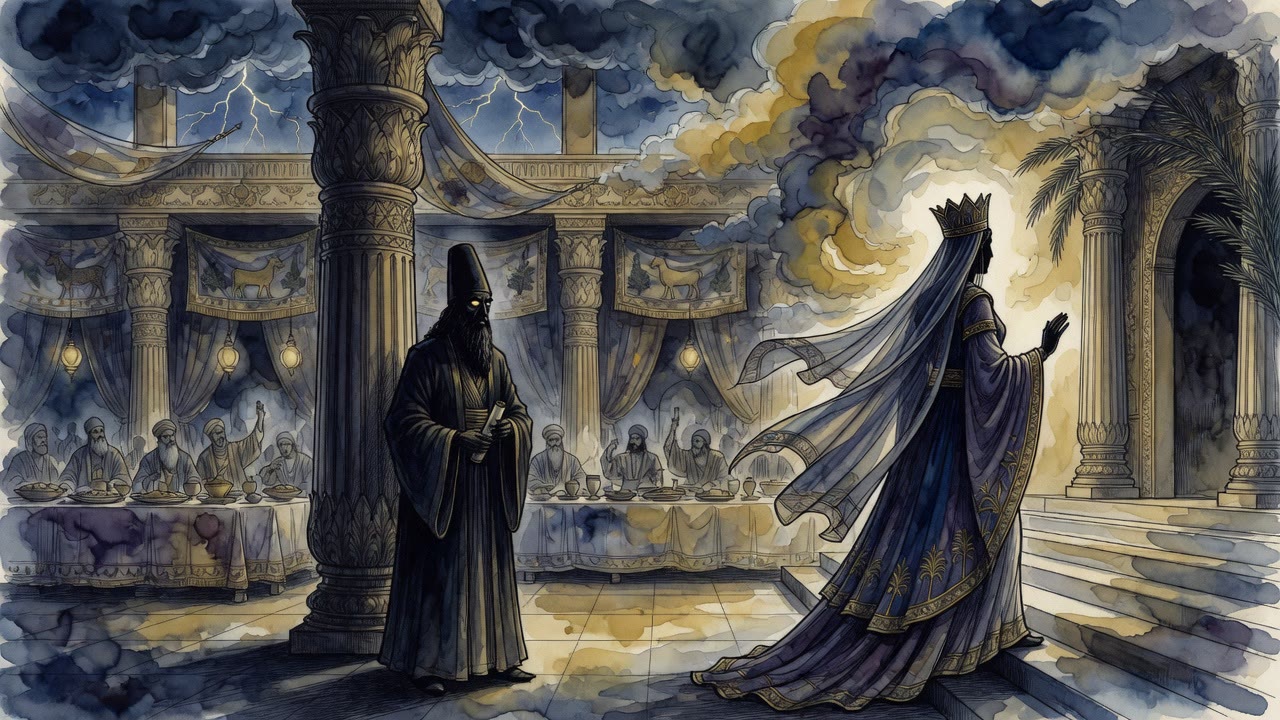
Then a storm broke loose in the hall and overturned the idol. Gold that had talked like God lay on its side like furniture. The Name was no longer in it, so it was only weight, and weight falls.
The King Called for Another Mouth
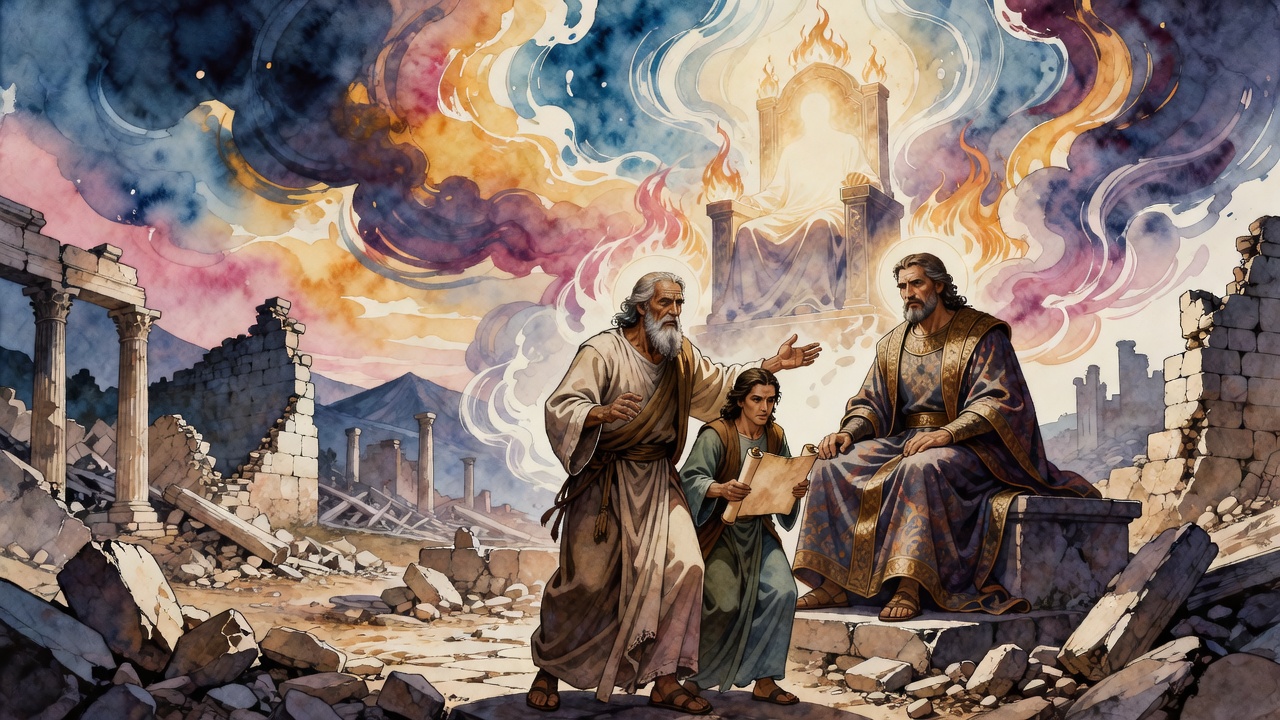
Nebuchadnezzar stared at the fallen gold and already wanted the next device. He had acknowledged Daniel's God when Daniel explained dreams. He had pulled Daniel away from Dura to protect him, then built another test. Each time something made his power look like theater, he nodded. He did not change. He rearranged his behavior around the nod, then continued as before.
Daniel walked out of the hall. Behind him the idol lay on the stones, empty as a cup. The king was already thinking of craftsmen, because a man who has seen his god fall once will build another mouth and hope the Name stays put.
← All myths