Moses Stood at the Sea Like a Shepherd at a Cliff
Trapped between Pharaoh and the sea, Moses confessed he had no plan. The same man had already written eleven psalms for Israel to pray.
Table of Contents
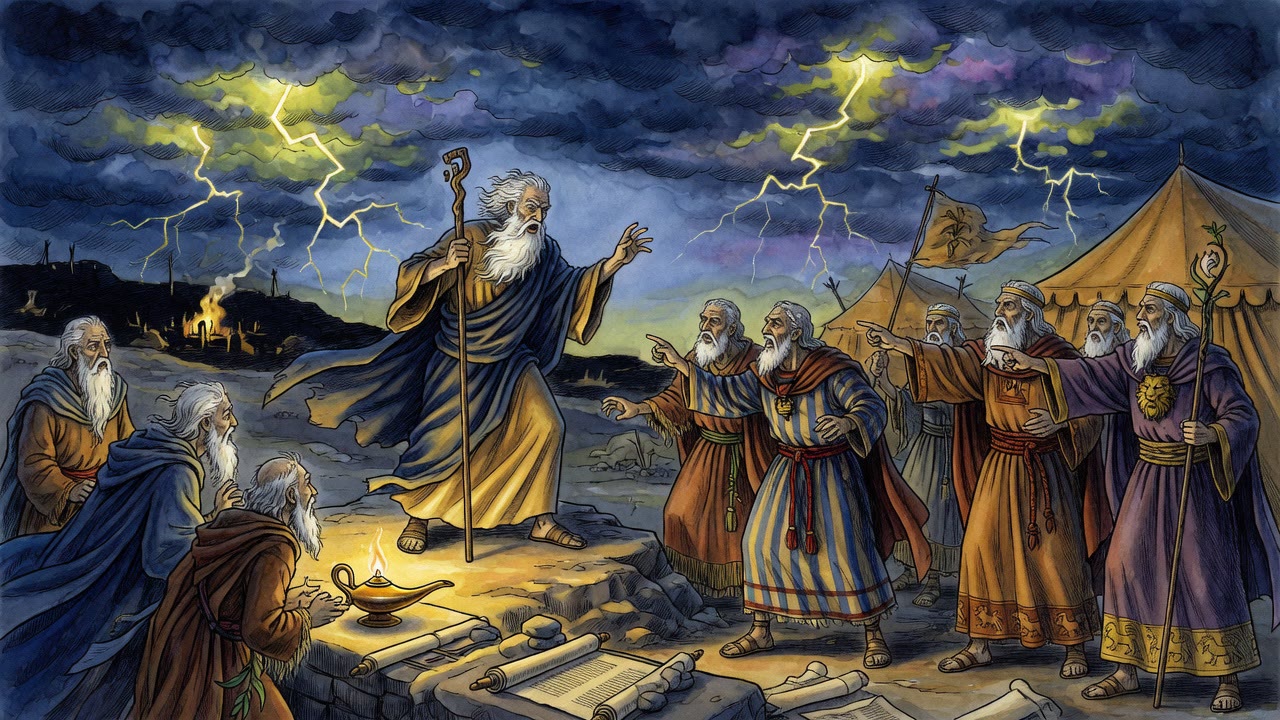
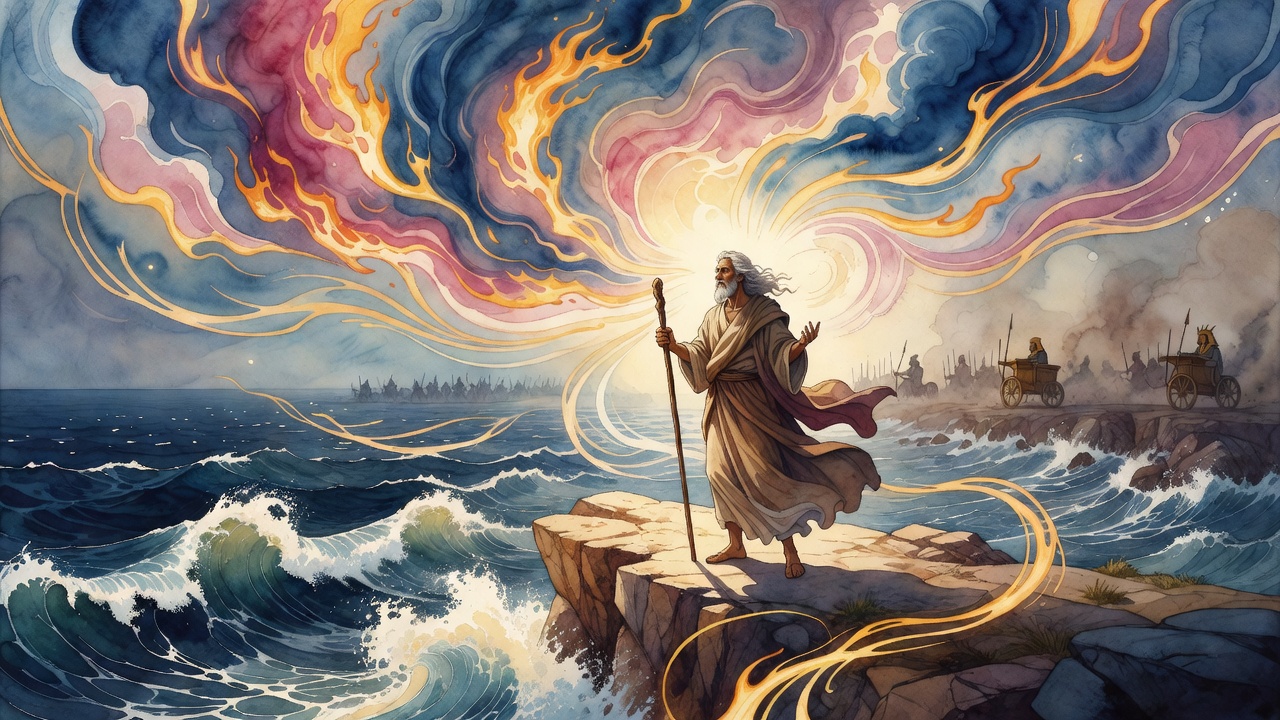
The sea was in front of him and moving nowhere. To the south sat Baal-zephon. To the north, Midgol's tower. Behind him, Pharaoh's chariots were raising dust across the plain. Moses had two million people at his back, and nothing ahead but water.
 Click for full size
He prayed the only prayer left to him: the one that admits everything. "O Lord of the world," he said, "thou knowest that it is beyond human strength to surmount the difficulties standing in our way." He did not describe a strategy. He described a shepherd who walked his flock to the edge of a cliff and found nothing below but air (Exodus 14:10-15). That was the image he offered. Not the man who had turned the Nile to blood, not the prophet who had stood before Pharaoh nine times without breaking. A careless shepherd, lost at the rim.
The Shepherd's Admission
The prayer was not short. Moses laid out the geography, the armies, the impossibility, the faithfulness of a people who had walked out of Egypt on God's word alone. He pressed the case the way a man presses it when he knows he has no other counsel. The sea did not stir while he spoke. The chariots grew closer.
Then God answered, and the answer was not comfort. It was a command. Stop praying. Move. Raise your staff over the water and walk forward. The people are in distress, the sea is ahead, and talking about it longer will not part it.
Moses lifted his staff. The waters split (Exodus 14:21). Two walls of water stood upright while an entire nation walked dry ground between them. Pharaoh's army followed and the sea returned. By morning the Egyptian dead were washing onto shore.
What the Shepherd Wrote
Long before that morning, or long after it, the accounts are not precise about when, Moses wrote. He wrote eleven psalms, each tied to a tribe of Israel, each a specific address to God from a specific place of pressure. The first began with the words that a man under judgment would say: "Thou turnest man to destruction; and sayest, Return, ye children of men" (Psalm 90:3). That psalm was later linked to the tribe of Reuben, whose forefather had sinned and returned. The connection was deliberate. A psalm about punishment and return, given to a tribe whose story was punishment and return.
Eleven psalms. Moses gave eleven blessings at the end of his life and wrote eleven songs across his years. The number held a shape the tradition recognized.
The Chorus Assembled Over Centuries
Those eleven were not shelved. They were gathered into the Psalter, the book of prayer that bears David's name as primary author, but which the tradition knows as something wider. Adam contributed a psalm. Melchizedek, king of Salem, contributed one. Abraham contributed one. Solomon, the sons of Korah, Asaph the musician, who stood in the Temple and sang, they all contributed. The Psalter is the collected voice of everyone who ever found themselves somewhere impossible and had to speak.
Moses's psalms sit inside that book without announcement. Open to Psalm 90 and the heading reads: a prayer of Moses, man of God. The opening line runs: "Lord, thou hast been our dwelling place in all generations" (Psalm 90:1). It is not a line a man writes from safety. It is the line of someone for whom every other shelter has failed, or threatened to fail, or been taken away by decree. Only the one who stood at the cliff and counted up all the things he could not do would know, in his body, what it meant to say that God was the dwelling place.
The Merit That Carried Moses Up
When Moses ascended Sinai to receive the Torah, he did not climb alone. The tradition preserves this: the merit of the patriarchs, Abraham, Isaac, Jacob, rose and descended with him like the cloud itself. The mountain was chosen not because of its height. It was chosen because of what its ground carried. Moses stood on accumulated weight. He was not a solitary receiver. He was the latest point in a chain that ran from creation forward, through every man and woman who had stood at their own version of the sea and kept moving.
The eleven psalms carry that same weight. When Moses gave the tribe of Reuben a psalm about return, he was not composing theology. He was doing what psalmists do: he was handing a prayer to people who would need it for situations he could not name yet. He had already been at the cliff. He knew how the prayer goes when there is nothing else left.
A Dwelling Place That Does Not Move
Psalm 90 moves through human time with unusual speed. A thousand years, Moses writes, are in God's sight like a watch in the night (Psalm 90:4). Human days pass like grass that sprouts at morning and withers by evening. It is not a comforting psalm, exactly. It is honest about the math of mortality. But it ends with a petition: let the favor of the Lord rest on us, establish the work of our hands (Psalm 90:17). The man who confessed at the sea that he had no plan closes with a request that his efforts amount to something anyway.
The shepherd who reached the cliff did not stop being a shepherd. He kept the flock, kept walking, and kept writing prayers for the people who would follow him into places he could not predict and they could not avoid.
← All myths