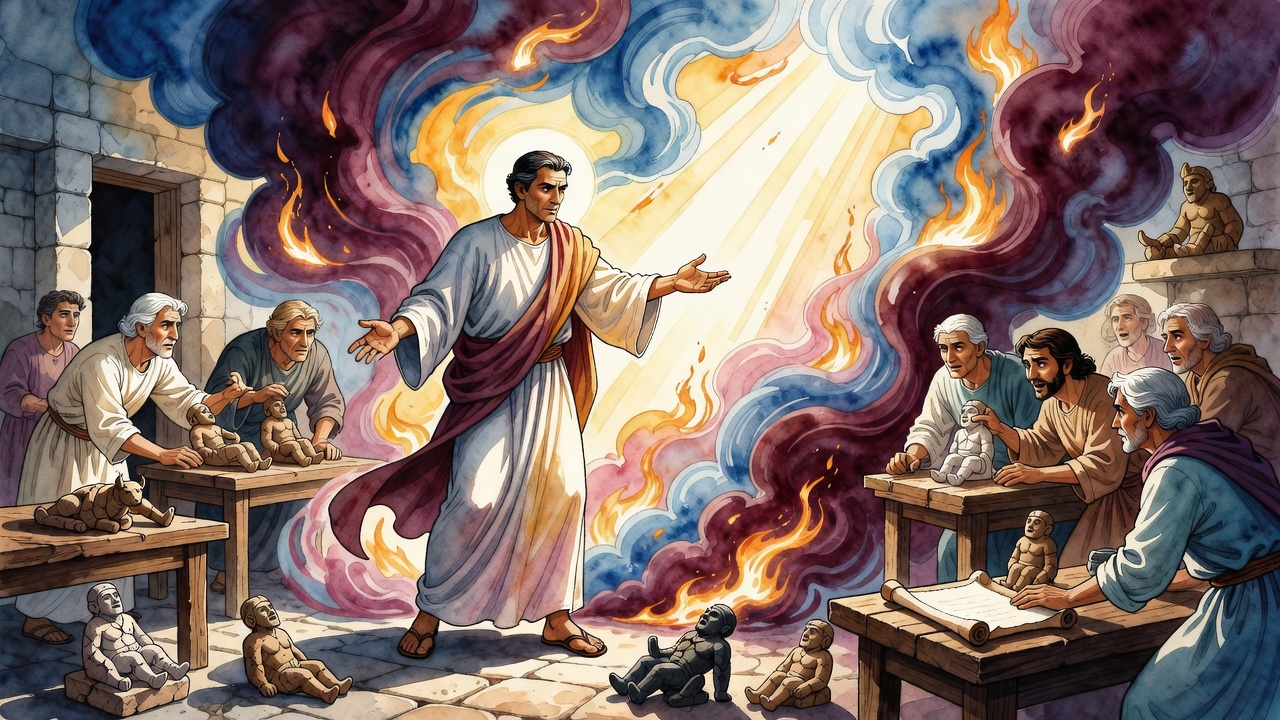
Phinehas Asked God at the Holy Ark Why They Lost
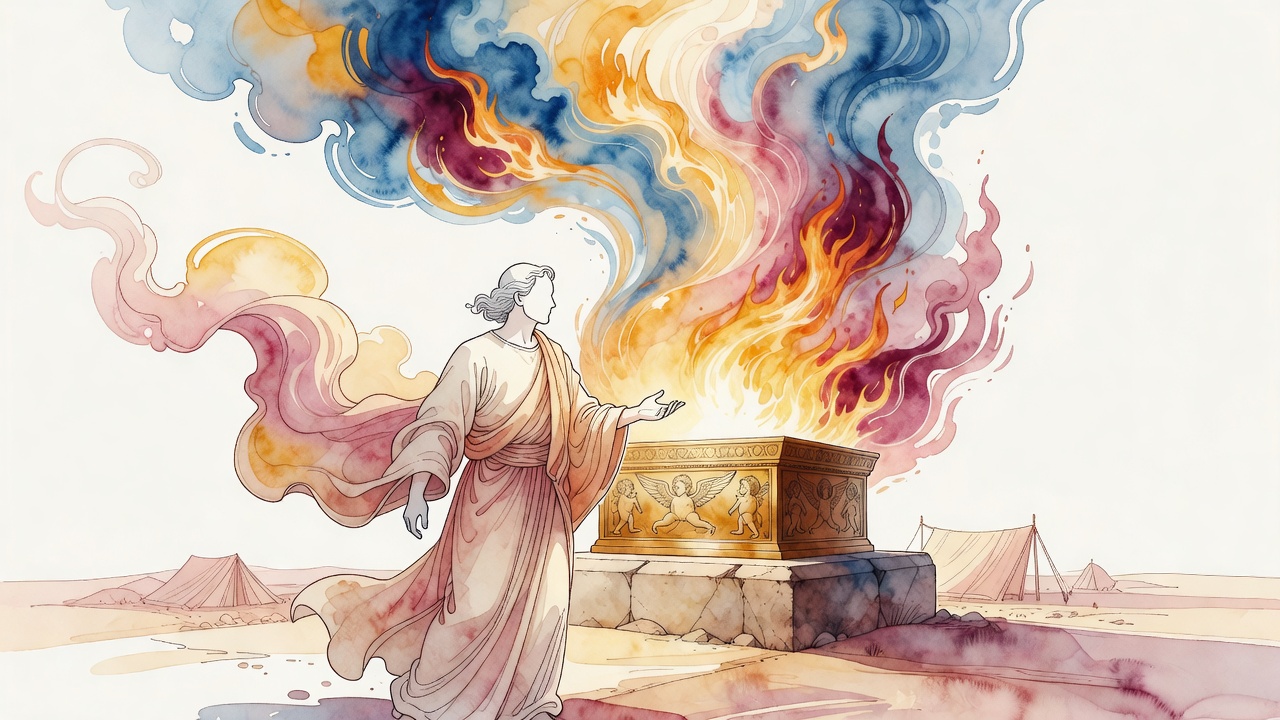
The oracle had said go forward. Two campaigns later the dead were stacked, and Phinehas stood at the Ark and asked why God had sent them.
Table of Contents
 Click for full size
The Oracle That Did Not Hold
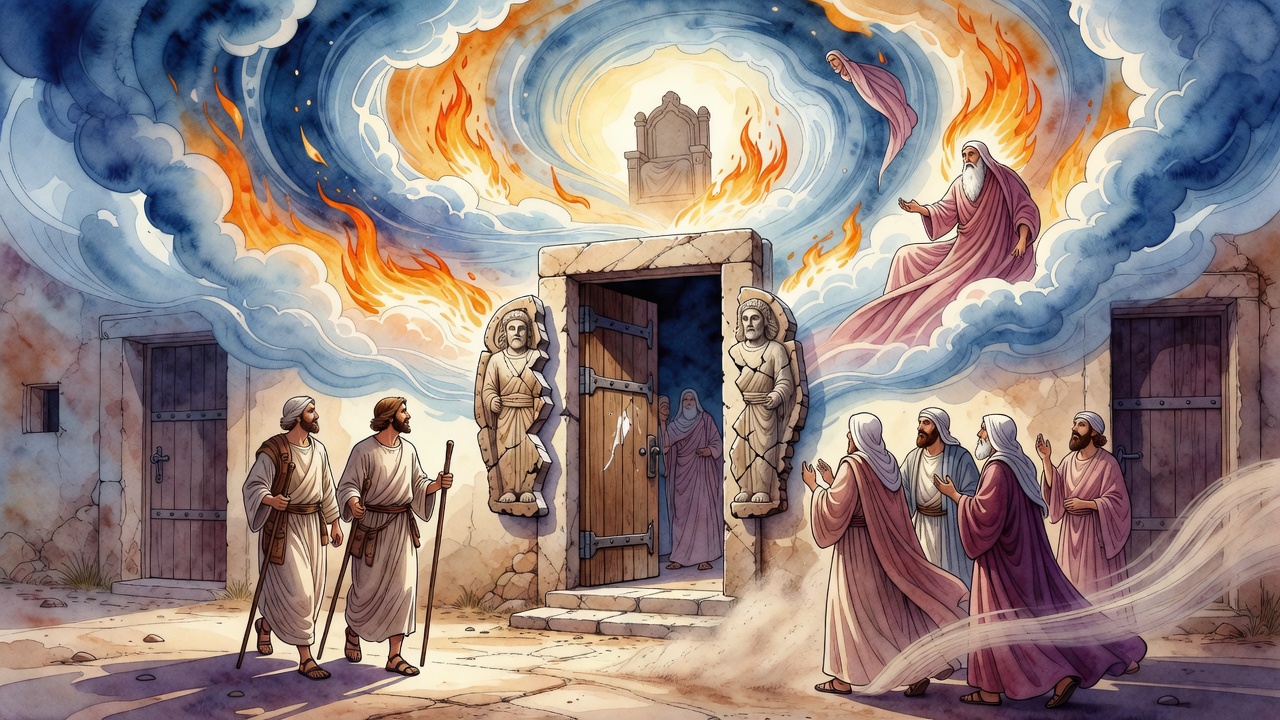
The Ark of the Covenant sat in the camp. The Urim and Thummim had been asked, and the answer had come back clean: go forward, they will be delivered into your hands. Israel went forward and was beaten. They went again and were beaten again. The dead piled up over two campaigns until silence at the tent of meeting became a kind of lie.
Phinehas stood before the holy Ark with his questions and asked why they had lost.
What Gibeah Had Done
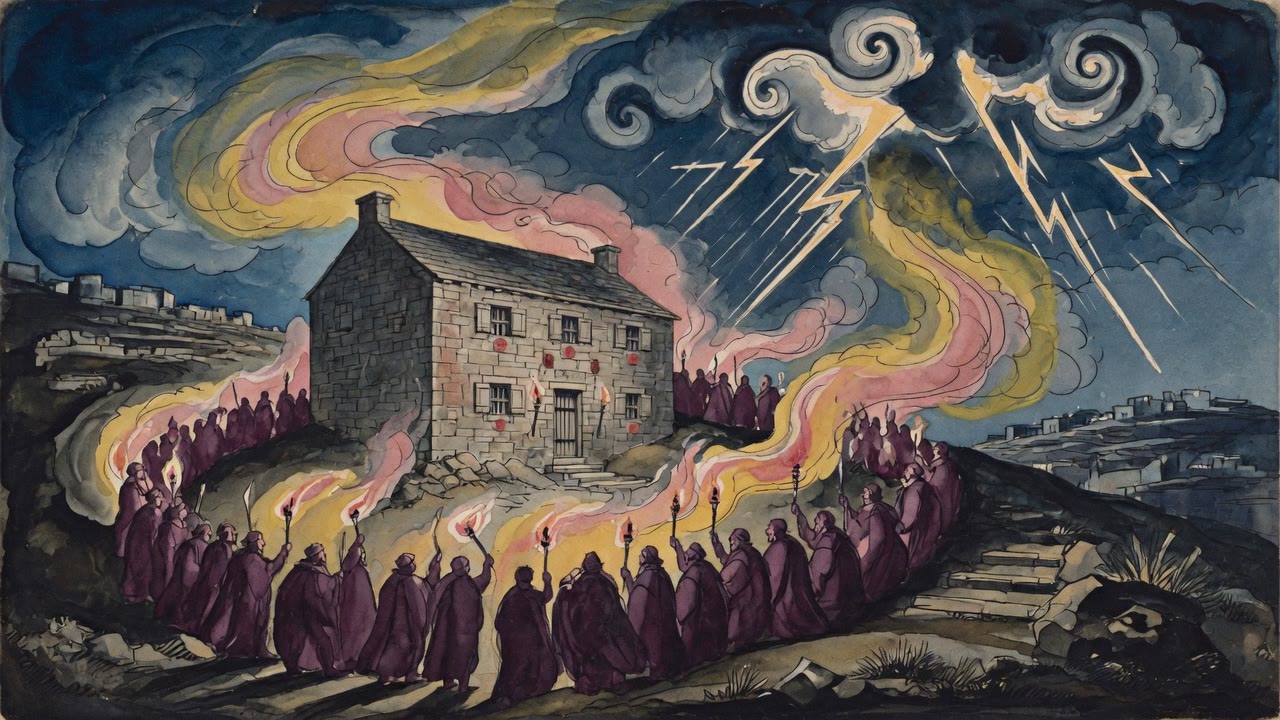
The war with Benjamin had started in a doorway in Gibeah. A Levite's concubine was taken by men of the city and used through the night until she died on the threshold at dawn. The Levite took her home, cut her into twelve pieces, and sent the pieces to the tribes. The tribes demanded the men. Benjamin refused and chose its sons over its debt to the rest of Israel. Then the camps moved.
The cause was just by any reading of the law. The tribes marched as if justice were a weapon that could not miss. After the second defeat Phinehas understood that a just cause is not the only thing God weighs when a battle turns.
The Prayer at the Ark
He did not ask for victory. He asked for the gap to be named. He named the oracle. He named the Ark's presence. He named the two routs. He asked what it meant that they had been told to go and then been dropped in the field.
"What means this, that Thou leadest us astray?" he cried. "Is the deed of the Benjamites right in Thine eyes? Then why didst Thou not command us to desist? But if what our brethren have done is evil in Thy sight, then why dost Thou cause us to fall before them?"
He reminded God of Zimri and Cozbi, of the spear he had driven in the tent, of the protection that had covered him then. Eleven tribes had gone out this time to avenge, and they were the ones on the ground. "Make it known this day unto Thy servant whether this war is pleasing in Thine eyes, or whether Thou desirest to punish Thy people for its sins."
What God Named Back
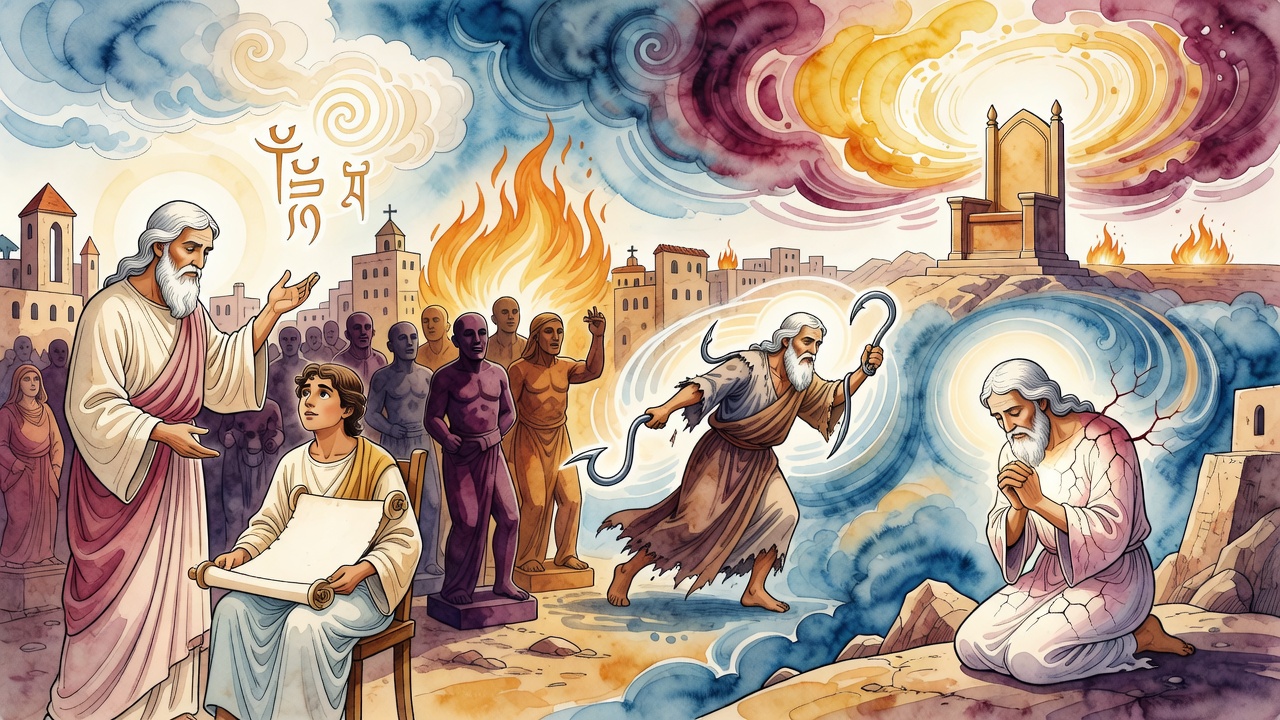
The answer did not flatter him. The tribes had been quick to avenge Gibeah and slow, for years, over Micah's idol in the hill country, the silver image a man had made from what he stole from his mother, with a priest hired to stand in front of it. That priest had been a grandson of Moses, a man who took the post to earn his bread. Israel had not moved then. They had moved for a woman's body cut into twelve and not for a house of God turned into a shrine. God had not forgotten the order of their zeal.
And Phinehas himself was named. When Jephthah vowed and his daughter walked out of the house to meet him, Phinehas had the authority to undo the vow. He did not go. Pride sat in the road between them: who should walk to whom. A girl died. Heaven had kept that silence on the ledger.
Phinehas heard both charges in front of the same Ark that had said go forward. The oracle had not lied. The people standing under it had.
Smoke Over Gibeah
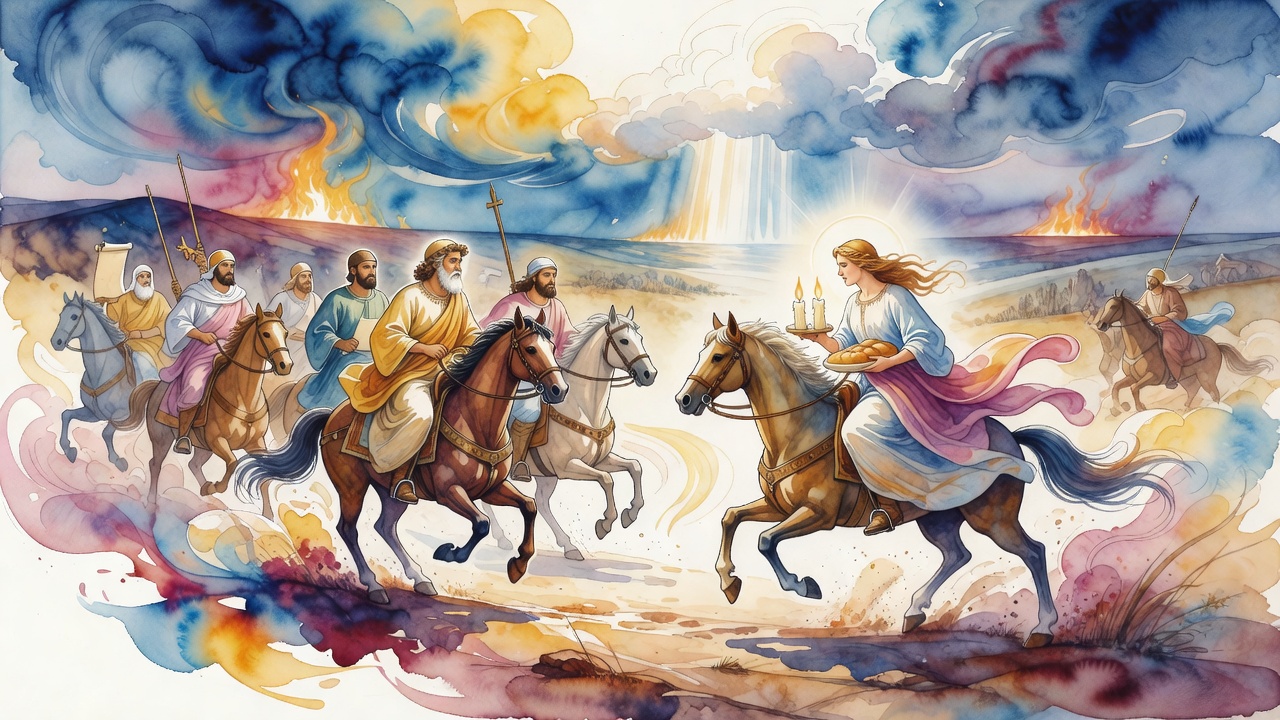
They fasted. They wept. They went up a third time. This time the ambush was a real plan: a main force drawing Benjamin out of the city, a flanking force slipping in behind, Gibeah set on fire. The smoke told the main line to turn. Benjamin was caught between the flames of its own town and the army it had just chased.
The tribe was nearly erased. Six hundred men survived. Benjamin had begun with twenty-six thousand, and seven hundred marksmen who could hit a hair without missing. One campaign that had failed twice took the rest.
The Ark had been present all three times. The words of the oracle had not changed. What changed were the men standing in front of it, and the priest who had finally asked the question he did not want answered.
← All myths