Esther Stopped in the Fourth Chamber Until Three Angels Came
Haman's sons were already dividing her jewels. Esther stood in the fourth chamber and could not take another step toward the throne.
Table of Contents
 Click for full size
She Could Not Take the Fourth Step
The first door closed behind her and did not open again. Then the second. Then the third. Once the guards of those rooms had let her through, they had no more hold on her. The next three rooms had not yet been given a reason to stop her. Esther stood in the middle of the fourth chamber, the one that opened toward the throne, and her feet would not move.
The floor was stone. Oil lamps smoked along the wall. Somewhere ahead a man sat with the power to kill her for walking in unasked. She had fasted. She had put on the crown. None of that was a step.
Her knees had locked. That was all.
Haman's Sons Divided Her Jewels
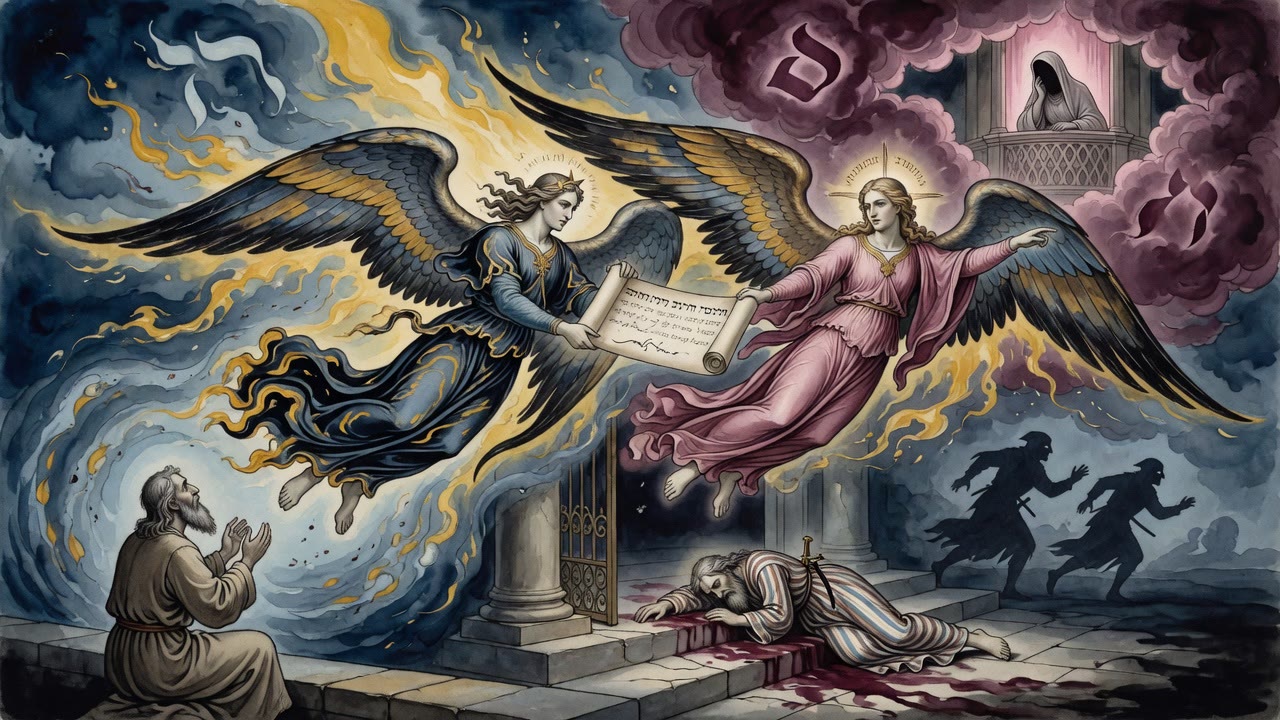
In the gallery, Haman's sons were already at work. They had her jewels in their hands. They were casting lots for the royal purple. They had watched this palace take a queen before, for a smaller defiance than coming uninvited. From where they stood this was a death walk, and they meant to have her wardrobe before anyone else thought to claim it.
A lot fell. One of them laughed, a short sound, and slid a ring into his sleeve. Esther heard it. She did not turn her head.
The sons kept counting. Necklaces. Earrings. The gold at the hem. They worked as if she were already gone.
The Cry David Left in Her Mouth
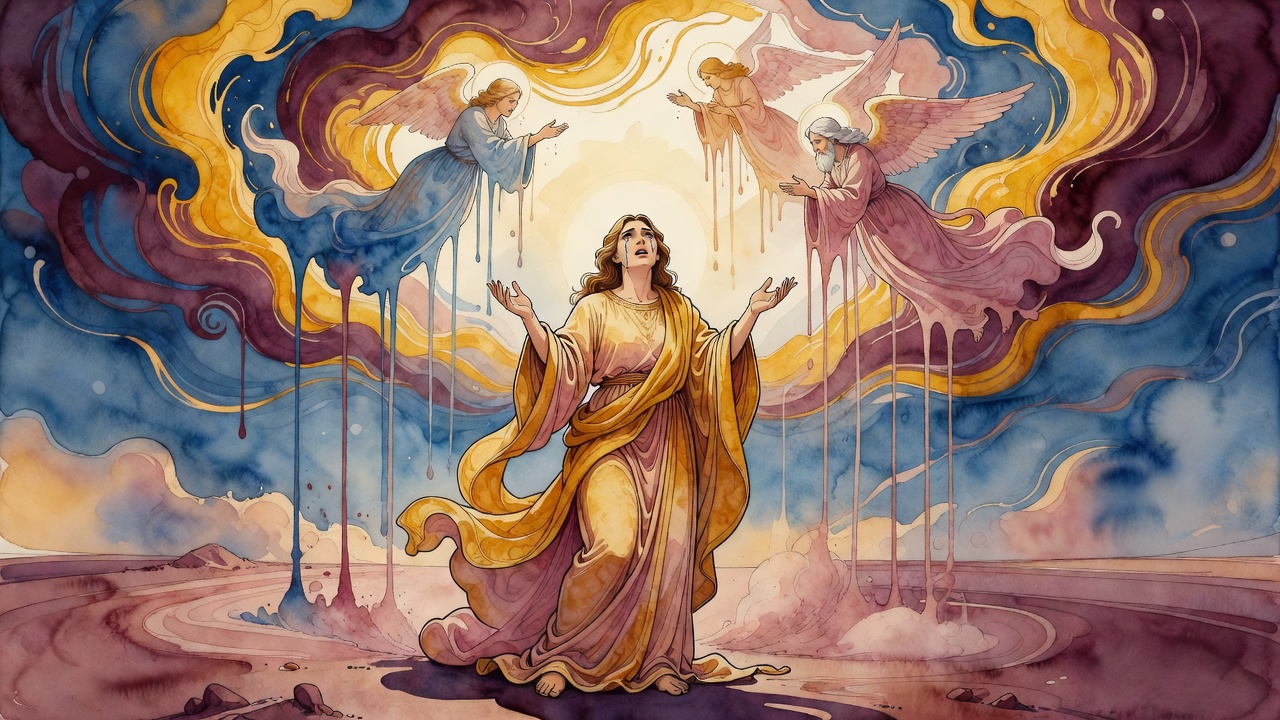
She said the words that were waiting for a moment like this. "Eli, Eli, lamah azavtani" (אלי אלי למה עזבתני). My God, my God, why have You forsaken me (Psalm 22:1).
They were David's words. His line ran through Benjamin down to her. Constructed speech had failed. This was the oldest cry she had, left in the mouth of her people for the hour when doing everything right still felt like being left alone.
The fourth chamber did not answer. The lamps kept smoking. Haman's sons kept sorting gold.
Three Angels Did Three Jobs
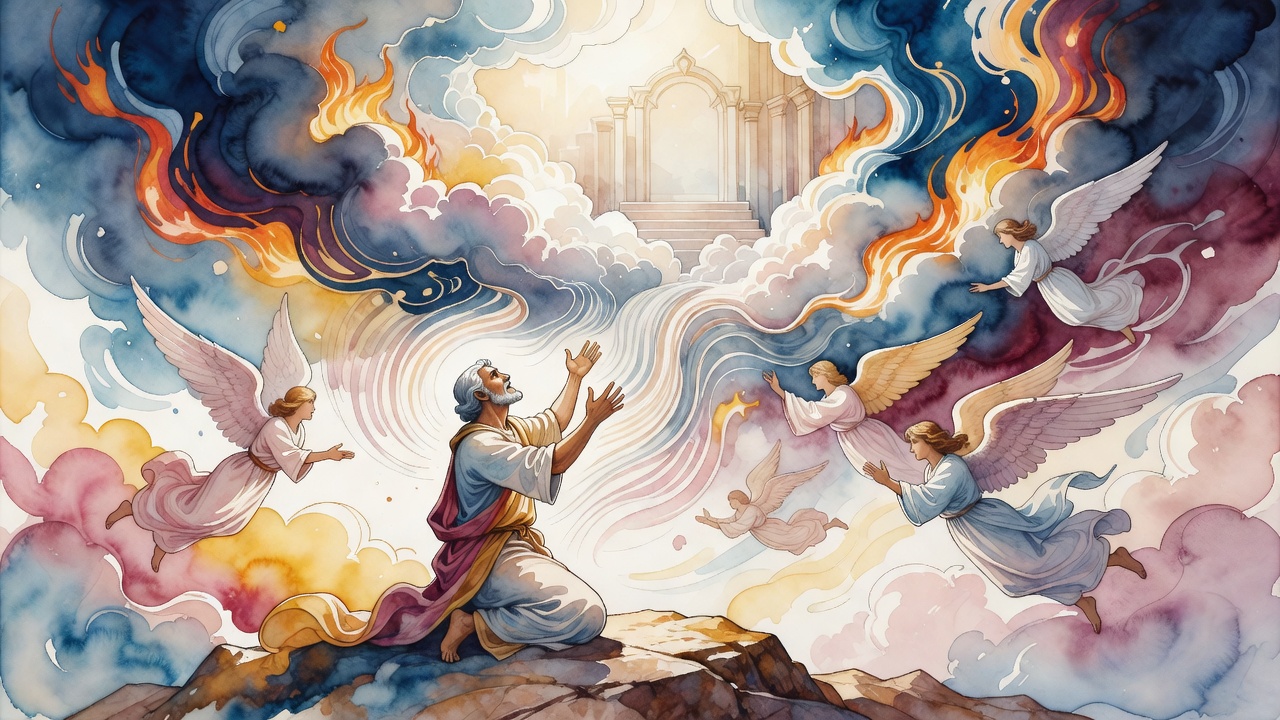
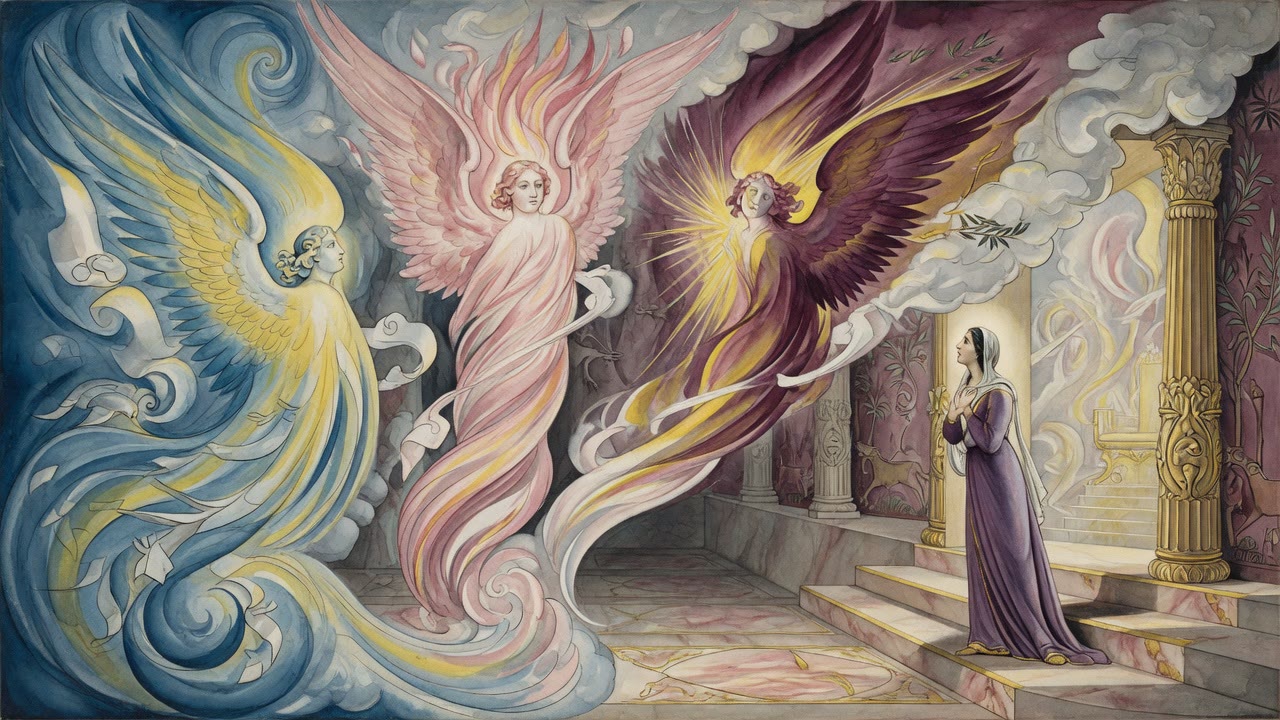
God sent three angels. One wrapped her face in threads of grace, thin as light, until the room looked at her differently. One put a hand under her chin and lifted her head, which had dropped toward the stone. One took the golden scepter in Ahasuerus's hand and drew it out, longer than a king's arm, until the metal touched her.
These were jobs. Not a mood that descended. Not a change of heart that could be argued from the king's breakfast. Face. Head. Scepter.
Esther's foot came off the stone. She took the step the chamber had refused her. The scepter was already against her palm.
The King Turned His Face Away
Ahasuerus turned his head so he would not have to see her. The law was the law. An uninvited queen was a dead queen. The angels forced his face back. He looked. The severity went out of his mouth. He held the scepter toward her. He asked what troubled her. He offered up to half the kingdom.
She asked for a banquet. The king and Haman. Today.
Haman went home glad. Then he saw Mordekhai at the gate, who would not stand, and the gladness ran out of him. He had three hundred sixty-five advisers, one for each day of the solar year. None of them could match his wife Zeresh. She went through every death that had already failed against Jews. Drop him in a furnace: Hananiah had walked out of one. Lions: Daniel had walked out. Prison: Joseph had walked out. Fire under a vat: Manasseh had prayed and lived. Wilderness: his ancestors had been born there. Blindness: Samson had killed more Philistines without eyes than with them.
Hang him, she said. No one of his people has come down from a gallows.
Haman liked that. He went to cut the wood.
Esther was still standing in the fourth chamber with the scepter against her. The jewels were still in Haman's sons' hands. The three angels God had sent had not come to make the court kind. They had come to move one woman one more step, and the step was taken.
← All myths