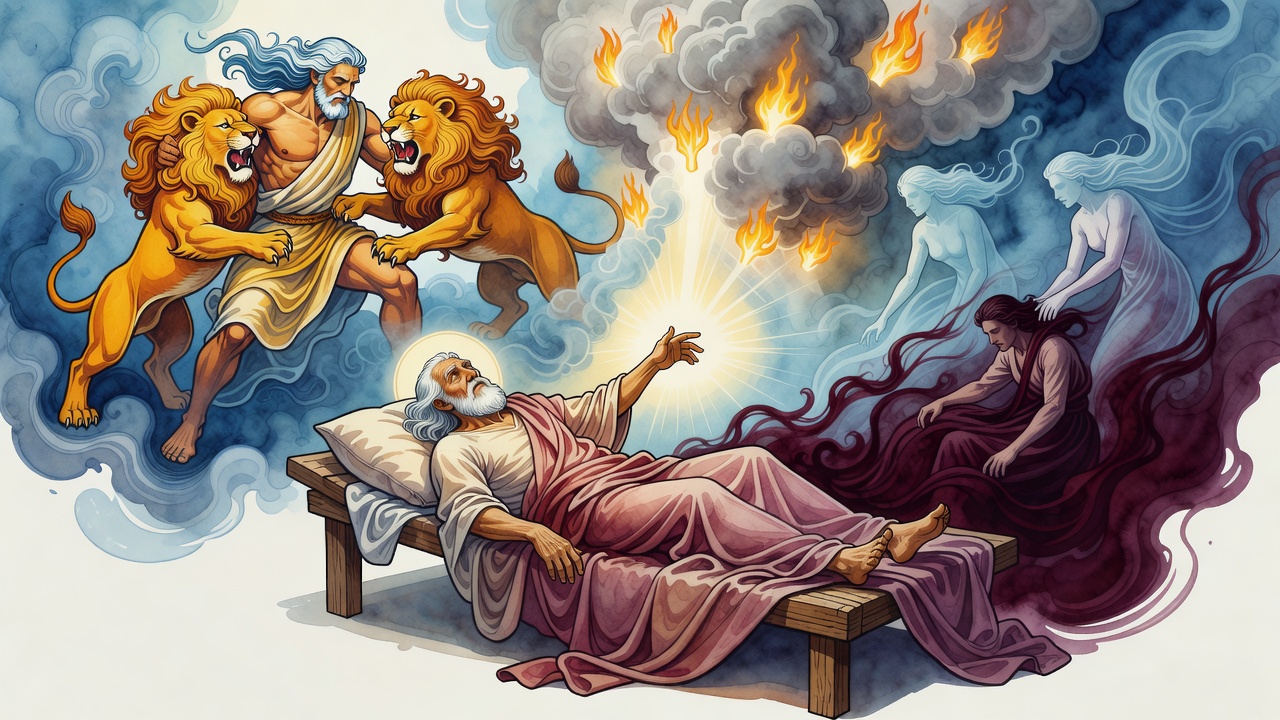
Tamar Prayed From the Fire and Judah Heard Her
Tamar stood by the stacked wood with Judah's seal in her sleeve. She sent it privately. She did not shout his name into the fire.
Table of Contents
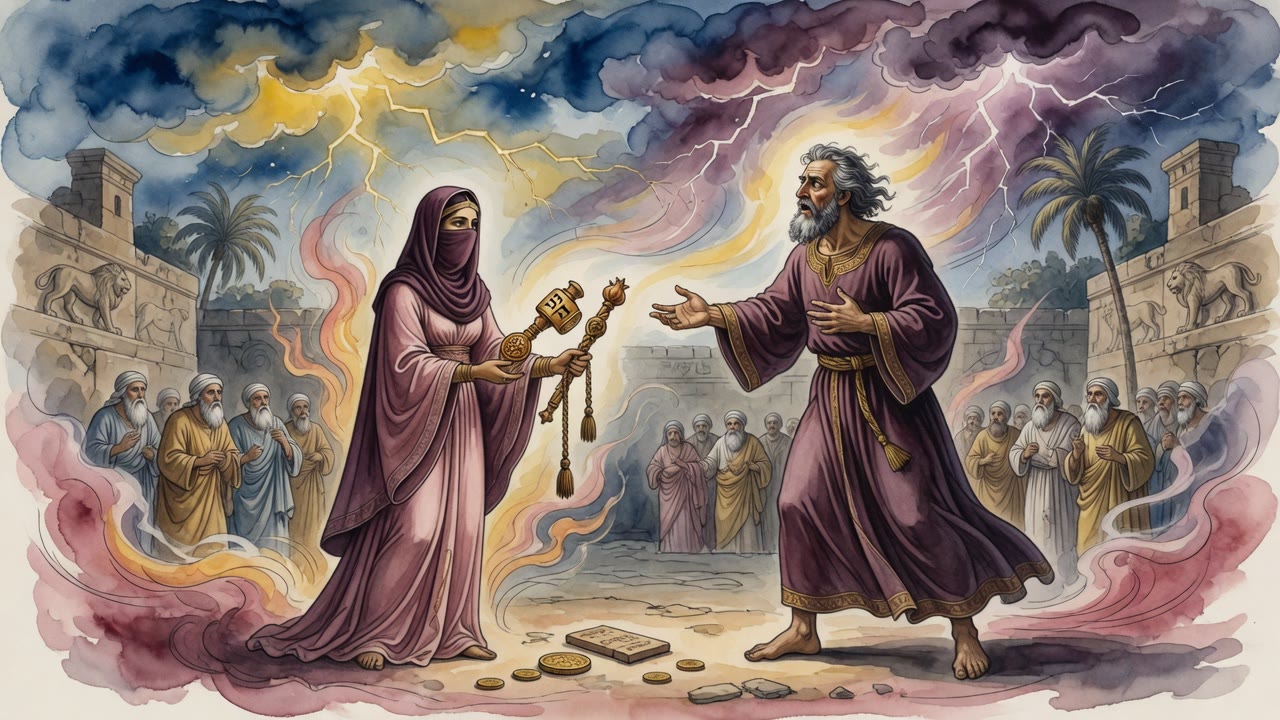
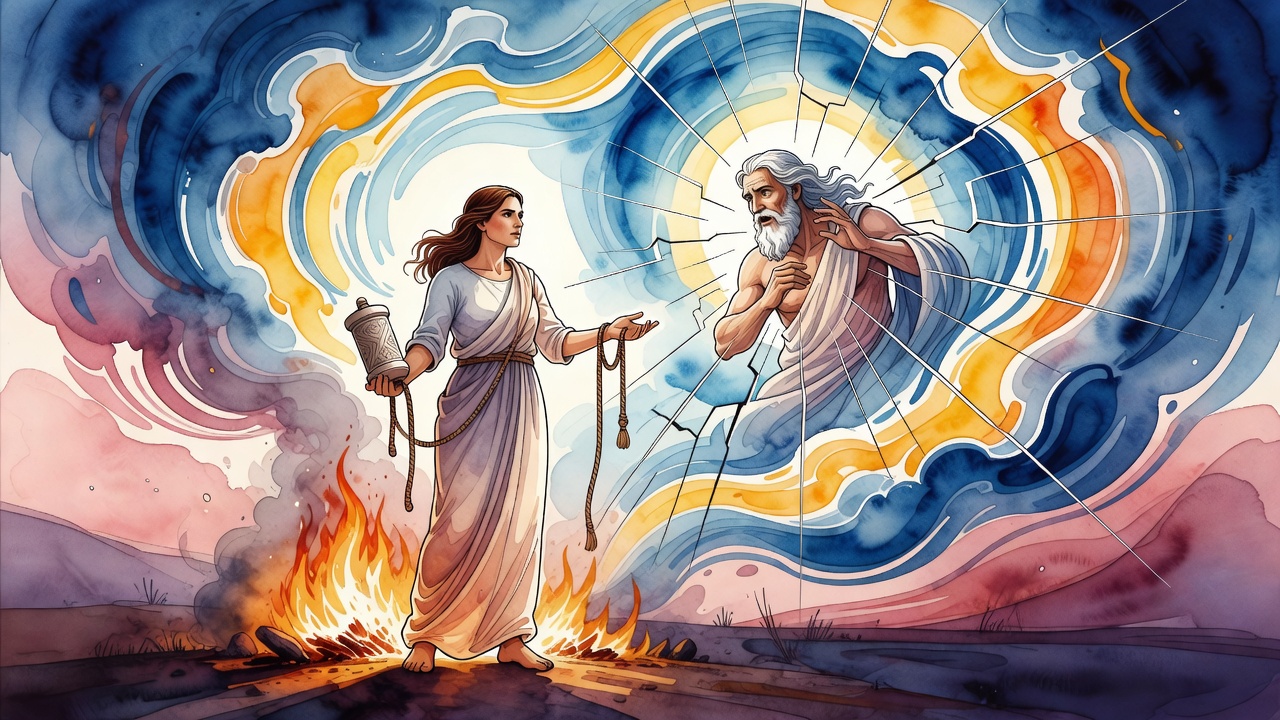
The wood was already stacked when Tamar reached into her sleeve. She had Judah's seal in there, and the cord, and the memory of the staff she had taken as a pledge at the gate of Timnah. The household had already heard his sentence. Bring her out. Let her be burned.
 Click for full size
She Did Not Lift the Seal in Public
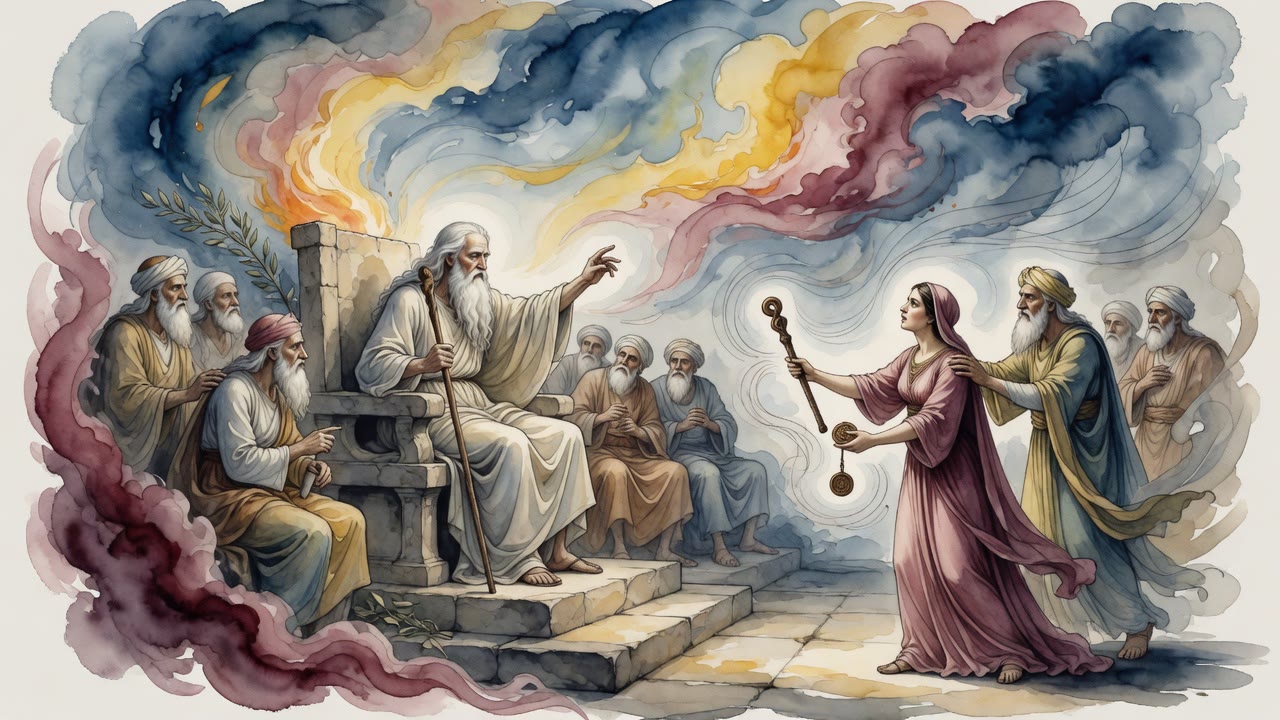
She could have held the pledge up in the yard. She could have named him in front of the servants and the sons and the men who had come to watch a widow die. She chose not to. She sent a messenger with the seal, the cord, and the staff, and a short line: "By the man whose these are, I am with child."
Then she stood near the fire and prayed. She did not ask for Judah's shame. She asked to live long enough for the child to have a name in that house. The heat pushed at her face. She kept her mouth closed to the crowd.
Judah Withheld the Third Son
Judah had already made her a widow twice. Er was wicked in the eyes of God, and God slew him. Onan spilled the seed that should have raised a name for his brother, and he died too. Judah told Tamar to wait in her father's house until Shelah grew, and he would give her to him. He did not give her. He was afraid Shelah would die as well, and he laid that fear on Tamar instead of on his sons.
His Canaanite wife died in the fifth year of that week of years. After the mourning, Judah went up to Timnah to shear sheep. Word reached Tamar. "Behold, your father-in-law goes up to Timnah." She took off the widow's garments, veiled her face, and sat at the entrance to the city.
Judah saw a veiled woman and did not know her. He had nothing in his hand but the ring on his finger, the necklace on his neck, and the staff in his palm. She took them as a pledge until the kid he promised arrived. The kid never found her. Judah said, let her keep what she has, lest I become a laughingstock. He had already begun to crack, and he did not know it.
He Called for Fire Before He Knew the Pledge
Three months later someone told him that Tamar his daughter-in-law had played the harlot and was pregnant. He said, bring her out and let her be burned. He had been studying the old boundaries with a hard mouth. A man who lies with his daughter-in-law, the sentence ran, and the woman with him, shall be burned, so wrath will turn away from Israel. He spoke that sentence over a woman whose veil he had not recognized at Timnah.
The messenger reached him with the pledge while Tamar stood by the wood. Judah saw his own seal. He saw the cord. He saw the staff. The crack went all the way through.
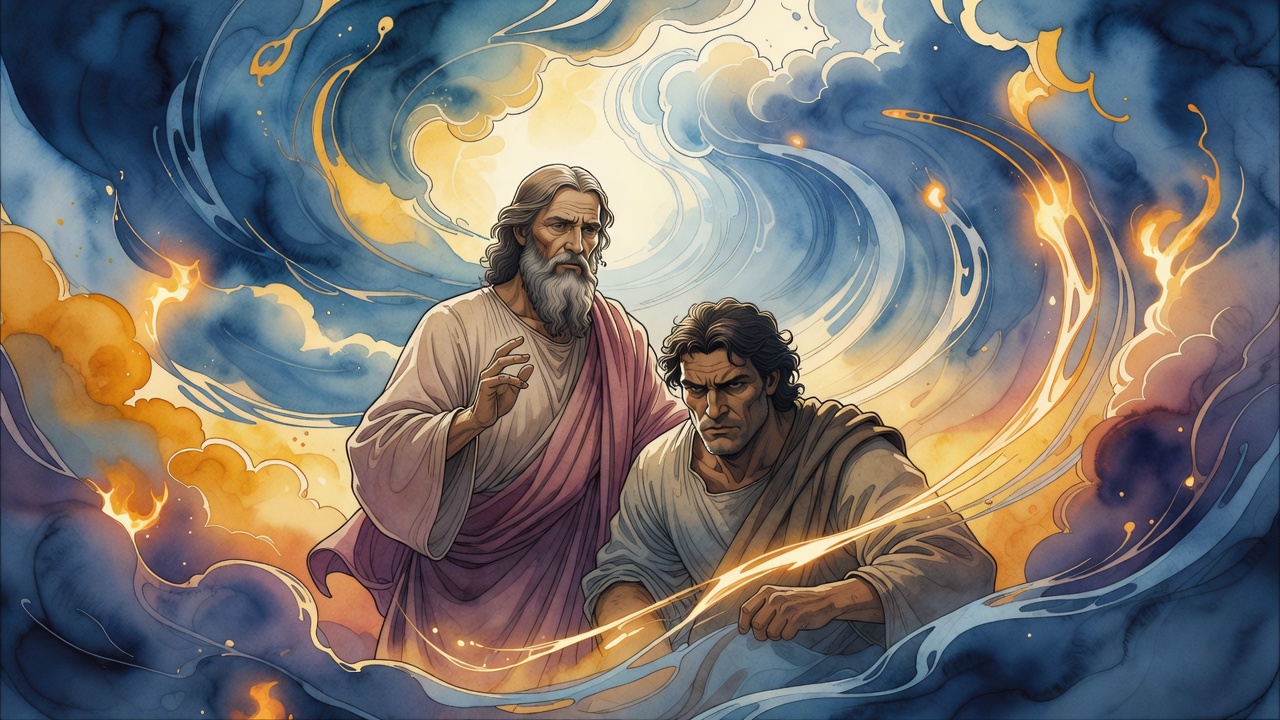
"Tamar is more righteous than I," he said. "And therefore let them burn her not."
He said it in public. He did not hide the tokens. He did not blame the veil. He named the truth that he had withheld Shelah, and that the child was his.
The Fire Stepped Back
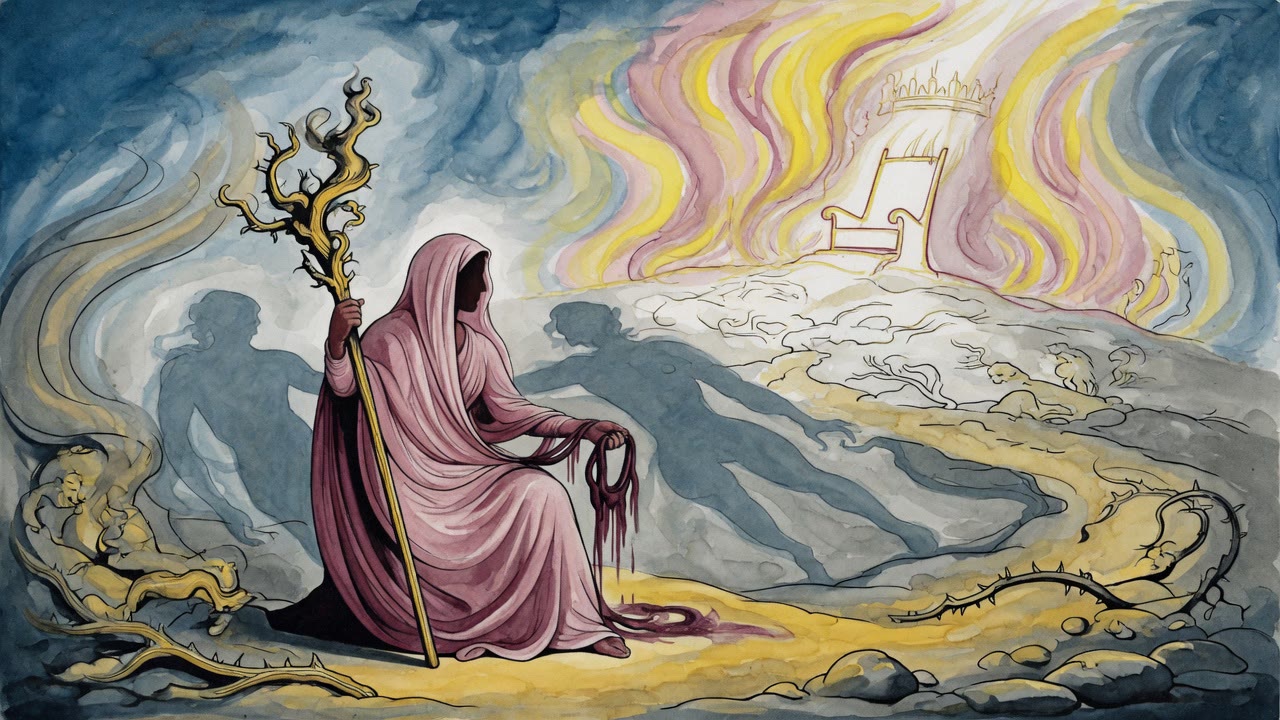
The stacked wood did not take her. The household put the torches down. In the older telling, the fire prepared for Tamar was the fire of Gehinnom, aimed at a daughter-in-law and the man who had lain with her. Judah's words turned that fire. He had not known her at the gate. His two dead sons had not raised seed with her. For that, the seed in her was allowed to stand for a second generation.
Tamar's prayer had not been a speech for the yard. It had been a closed-mouth asking while the wood waited. Judah heard it when he saw what he had left in her hand.
Two Hands at the Birth
She gave birth to twins. One child put out a hand first, and the midwife tied a scarlet thread around it to mark the firstborn. The hand pulled back. The other child came out. The midwife said, what a breach you have made for yourself, and named him Perez: breach. Then the child with the scarlet thread came after, and was named Zerah: brightness.
Perez would carry Judah's line forward. The man who had sold a brother, withheld a son, and hired a veiled woman at a gate had said one clean sentence beside a fire, and the house of kings ran through the child who broke out first.
Tamar kept the seal until that sentence. Then she did not need it. The wood cooled. The twins cried. Judah did not take the words back.
← All myths