Haman's Daughter Poured Filth on the Wrong Man
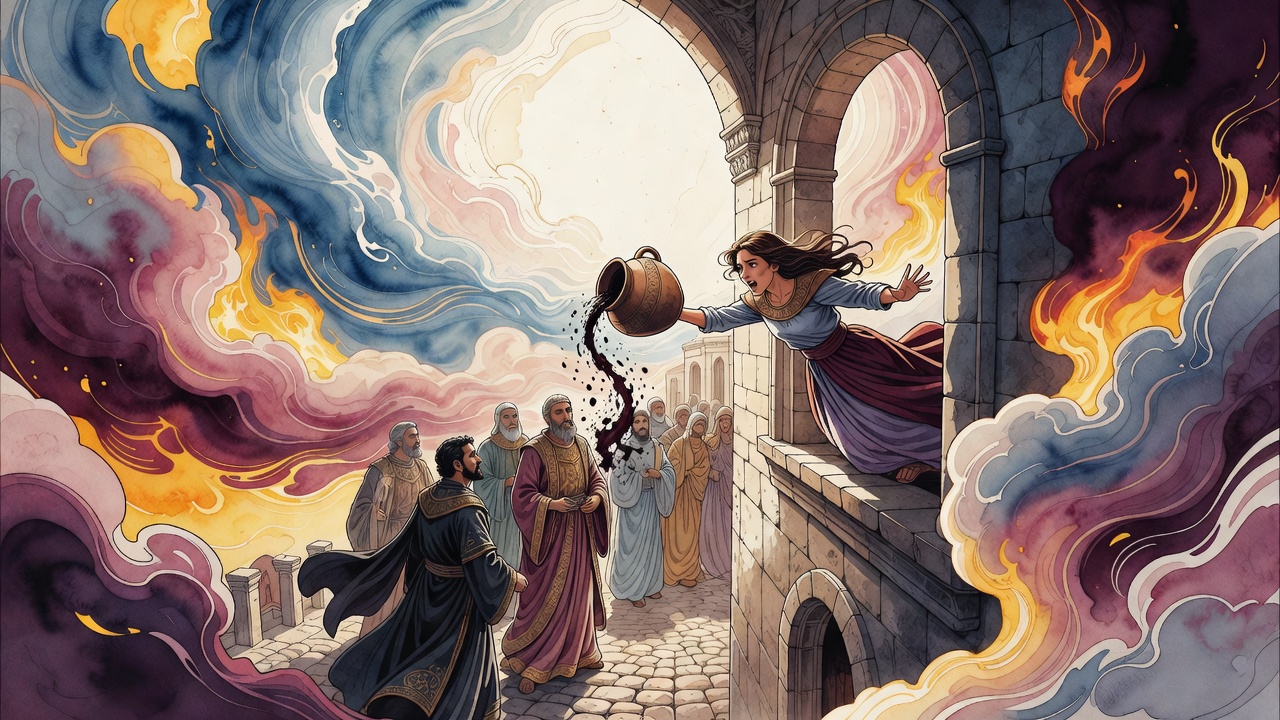
Filth ran into Haman's eyes before he found the window. His daughter was still holding the empty pot over Shushan's street.
Table of Contents
She had the chamber pot already at the sill. Below, a man in a crown rode, and a man on foot led the horse by the bridle. Haman's daughter made the only map her eyes knew. Power sits high. Shame walks. She lifted the pot and emptied it on the walker.
 Click for full size
The filth hit the man who had wanted, that same morning, to hang Mordecai.
The Contract on a Kneecap
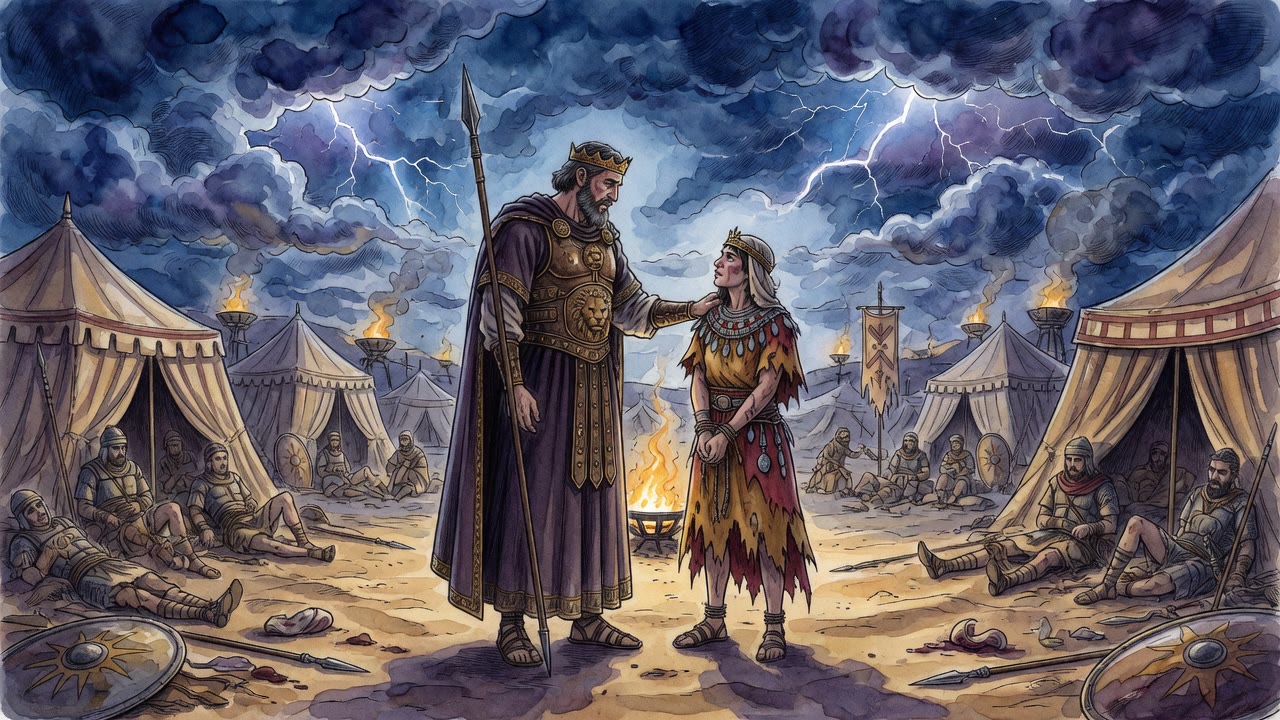
This was not Haman's first walk at Mordecai's heel. Years earlier, as a general with starving troops, he had come begging grain. The men were ready to turn on him. He offered Mordecai ten percent interest if the Jew would open the stores.
Mordecai refused the money. He named a different price. Sell yourself. Become my slave, and the grain will move.
There was no paper in that camp. They etched the agreement on Mordecai's kneecap. Haman, who loved rank more than bread, signed with his own humiliation. Every later bow he demanded from Jews had that mark under it. He had already sold the body he now dressed in pride.
He had also been Memucan, lowest of the seven princes, first to speak when Ahasuerus asked what to do with Vashti. She had refused him a seat at her banquet and once struck his face. He used a queen's fall to climb. Climbing was the only craft he trusted.
Four Jobs in One Procession
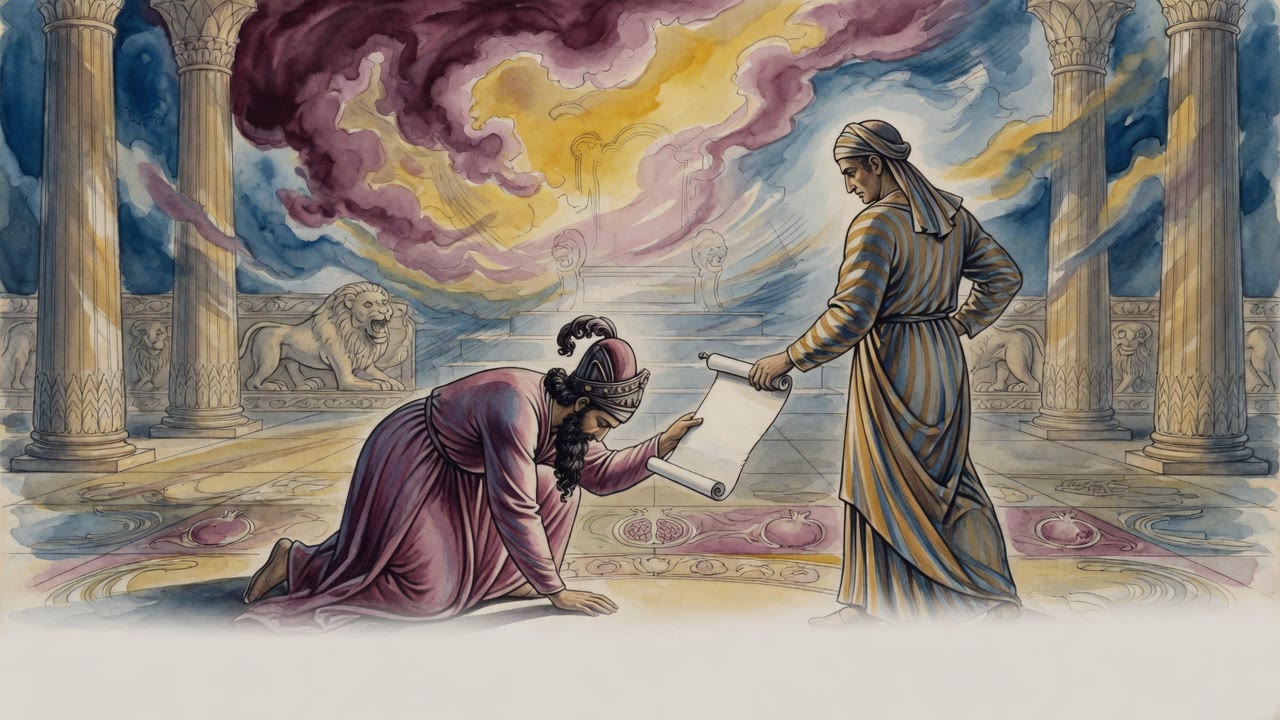
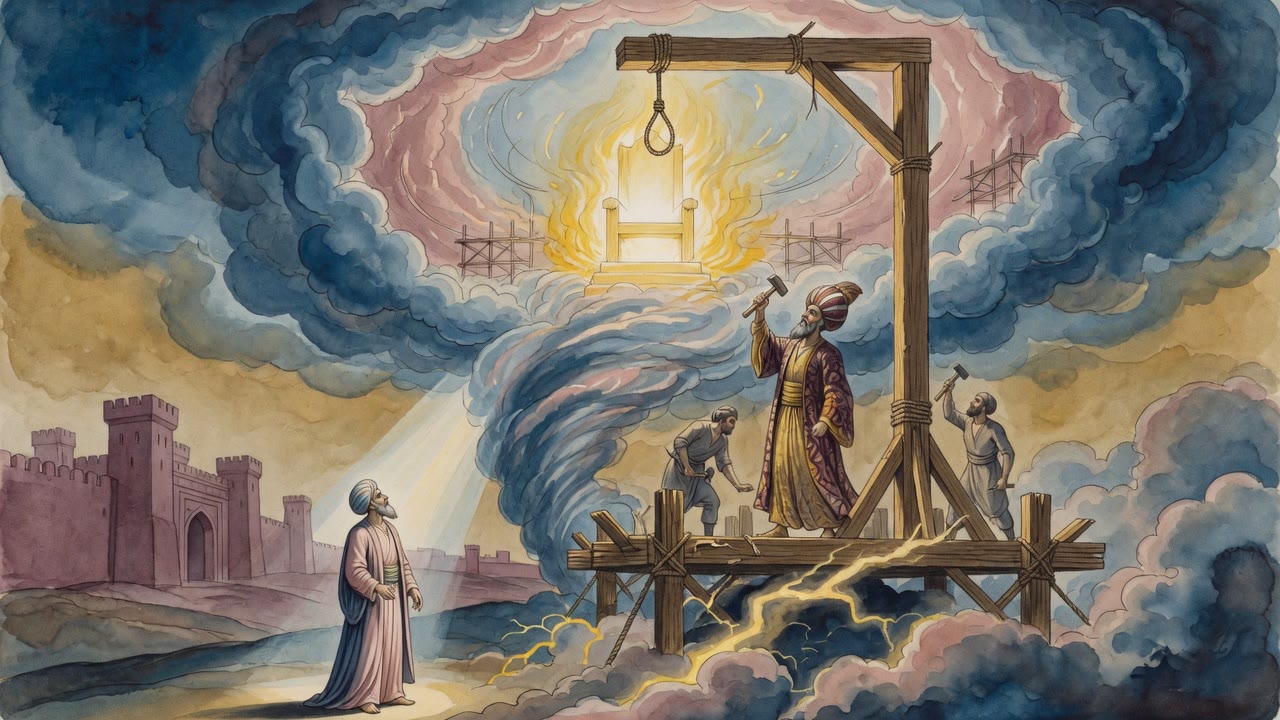
This morning he had left home early to ask the king for permission to hang Mordecai on the gallows already raised in his courtyard. Instead the king handed him a horse, royal robes, a crown, and a script. Thus shall be done to the man whom the king delights to honor.
Haman became four servants in one body. Bath attendant, washing Mordecai. Barber, trimming his hair. Orderly, dressing him. Herald, crying the honor through the streets of Shushan while his own name turned to poison in his mouth.
Faces came to doorways and rooftops. They watched the second most powerful man in the empire walk in the dust before a Jew in the king's crown. The reins cut his palm. The horse's hooves kept time with a sentence he had to shout at every corner.
The Window and the Pot
Along the route a window opened. Haman's daughter looked down to see what the noise was. She saw a man leading a horse and a man on the horse, the crowd parting around them. Her father was powerful. Mordecai was the target. The man on the horse, robed and crowned, riding above the heads of the people, must be her father in his triumph. The man walking and leading the animal on foot, head bent, must be Mordecai, broken at last.
She was wrong about everything.
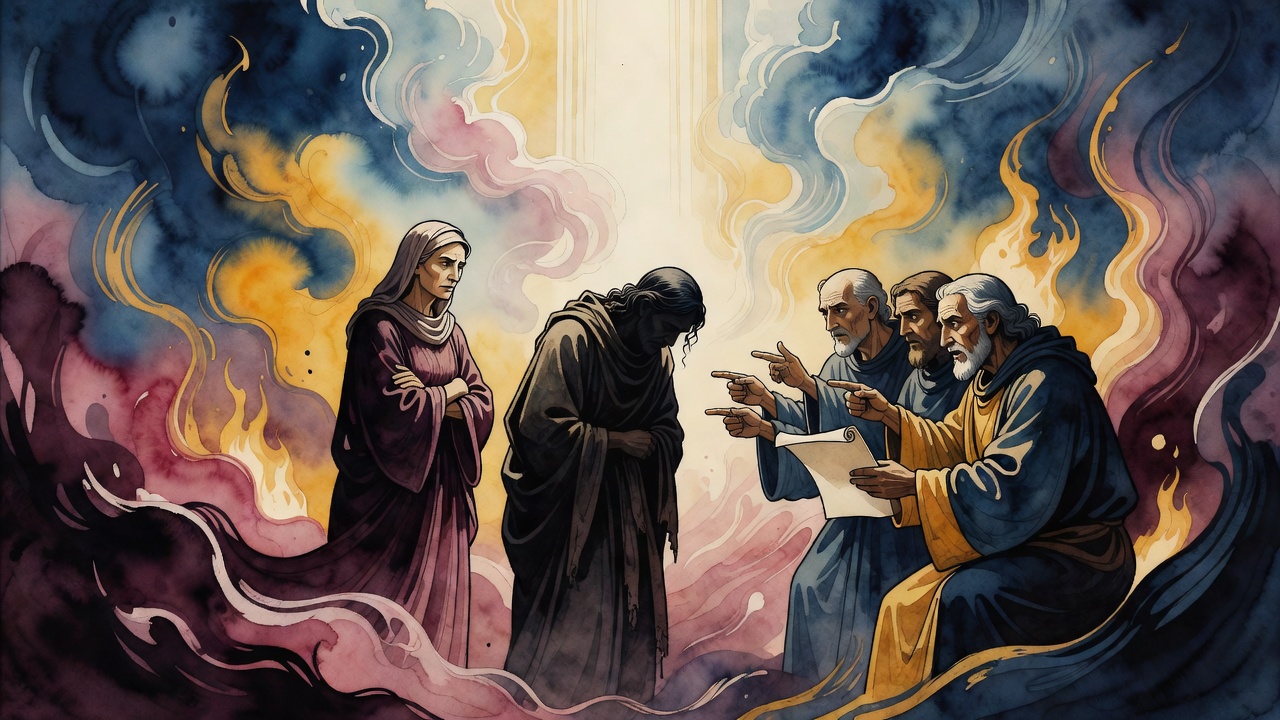
She reached for the chamber pot, lifted it to the sill, and emptied it straight down onto the head of the man walking below. The stuff ran into his eyes, his beard, the collar of the clothes he had been forced to wear as a servant. He looked up. The filth was still moving when his eyes found the window, and in the window he saw his own daughter, still holding the empty pot.
He understood in that instant exactly what had happened and who had done it. His head fell. He stood fouled and exposed in the open street before the whole city. She understood a breath later. She had aimed at the disgraced Jew and struck her own father. She threw herself from the window. She did not survive the fall.
Mourning and a Covered Head
Haman gathered the procession to its end because the script was not finished. He arrived home that evening with his head covered, in mourning, having spent the day honoring his enemy through the streets and having watched his daughter die believing, at the last instant, that she had destroyed her own father.
Mordecai returned to the king's gate as if the horse had been a brief weather. The verse says Haman hastened home, mourning and covering his head (Esther 6:12). The doubled language is two sorrows. He mourned for the daughter. He covered his head for the public disgrace. Bereavement and shame arrived in the same doorway and did not take off their shoes.
The gallows in the courtyard were still waiting. They would not wait for Mordecai.
A Line That Began With Agag
The house that emptied a daughter from a window had been marked long before Shushan. Samuel stood over King Saul's unfinished work on Agag, king of Amalek. Agag thought the bitterness of death was past (1 Samuel 15:32). Samuel told him otherwise. As the sword of Amalek had consumed the young men of Israel who stood outside the cloud, so by the prayer of the women the sons of Amalek would be slain, and their women would dwell as childless women and widows.
Saul had left Agag alive for a night. A night was enough. The line continued. Haman was born from that continuation. Esau's old injury, strange wives and incense to idols that embittered Isaac and Rebecca, had been asked to be remembered unto sons and grandsons. It was remembered.
Haman sat in a fouled robe in a house that had just lost a daughter, and the kneecap-contract of his slavery and the pot from his own window and the gallows in the yard were all one road. He had rushed to speak when he was last among princes. He had sold himself for grain. He had led a horse. He had been the wrong man under his child's aim. The street still smelled of what she had poured.
← All myths