David Feigned Madness in the Court of Achish
Goliath's brothers stood as bodyguards in Gath and asked for David's head. King Achish pointed at the madmen already living in his house.
Table of Contents
 Click for full size
A Madman in the Street and a Question
He was still keeping sheep when he asked it. A man in the lane had torn his own clothes, and children were pelting him with pebbles. David stopped. The pebbles bounced off a back that did not flinch.
"What is madness for?" he asked God. "What use does it serve?"
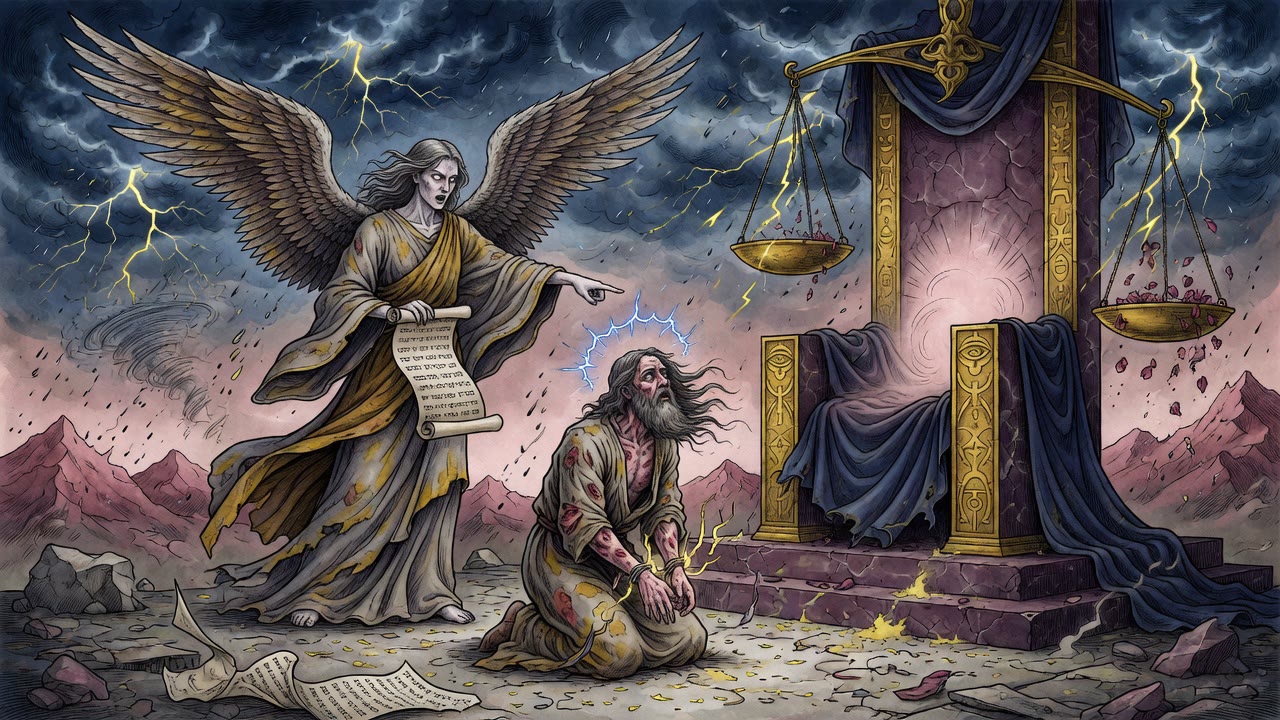
God's answer was short. "A time will come when you will beg Me to afflict you with it."
David went back to the flock. The sentence did not.
The Giant Looked Up at the Birds
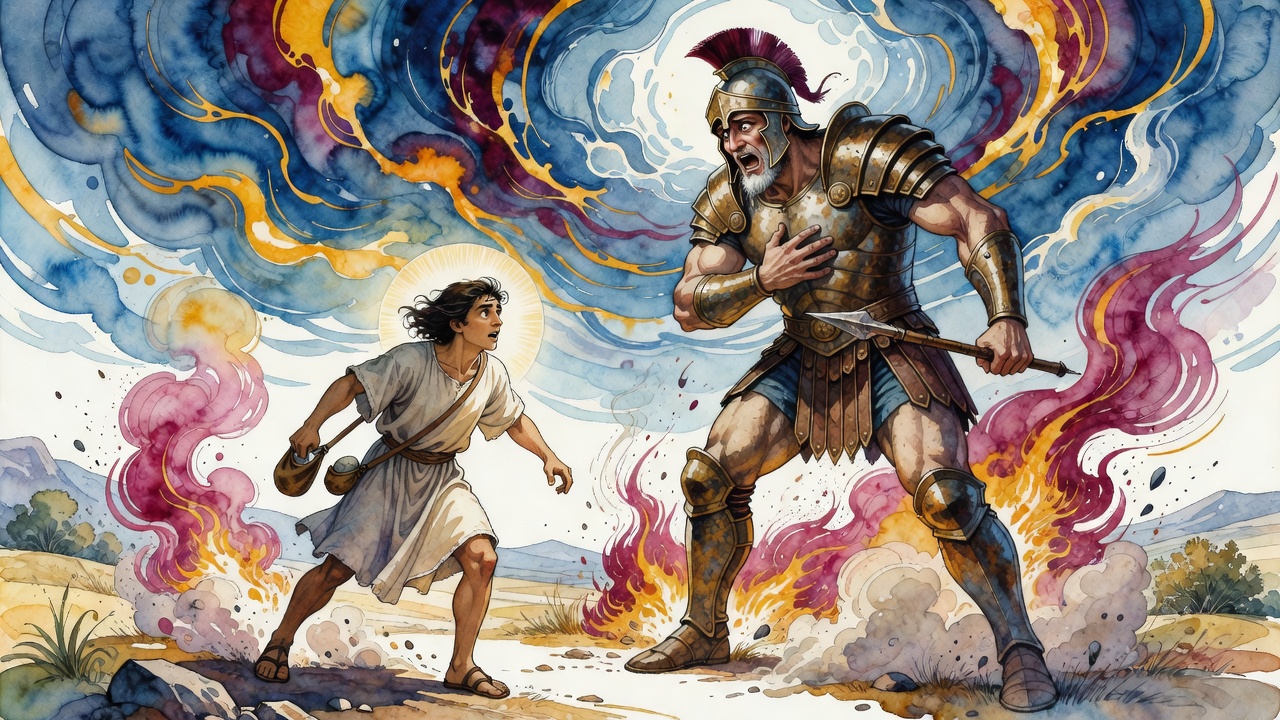
In the valley, Goliath came down in layers of bronze and a sneer. David walked toward him with a sling and five stones. His gaze landed on the giant like a blow. Leprosy whitened the skin under the armor. Goliath's feet rooted. He roared that he would feed David's flesh to the cattle.
David heard the roar and thought, He is already crazy. A doomed man talks like that.
"I will give your carcass to the birds," David said.
At the word birds, Goliath's eyes went up. The visor shifted. A strip of forehead showed. The pebble found it. An angel shoved the body face down, so the mouth that had cursed God would choke on earth. The image of Dagon on the giant's breast hit the dirt. The head came to rest between David's feet.
He had seen what madness looked like on a living face. He had not yet begged for it.
Goliath's Brothers Closed the Door of Gath
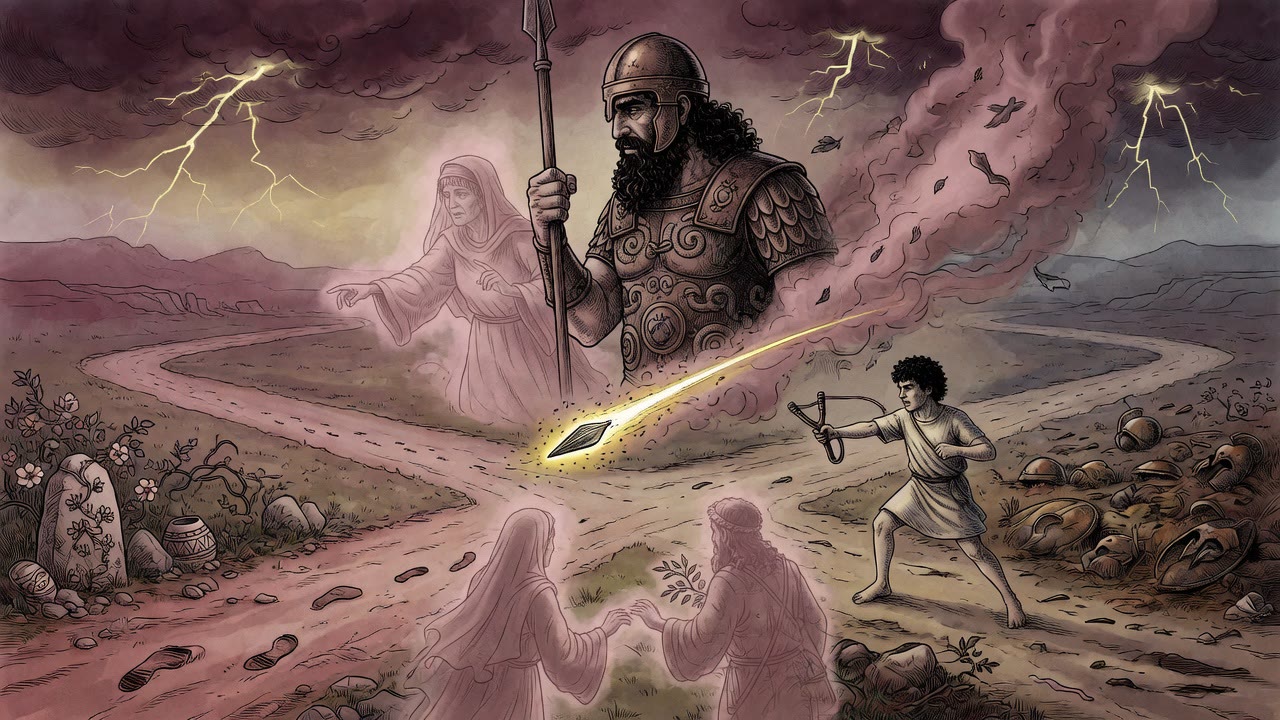
Saul's jealousy did the rest. He sent Abner to ask whether David came from Perez, the royal clan, or from Zerah. Doeg tried to throw Ruth the Moabitess in the way. None of that made Saul sleep. David ran.
He ran as far as Gath, the city Goliath had come from, because Saul's writ stopped at the Philistine line. Achish sat on that throne. Goliath's brothers stood at his shoulder as bodyguards. They knew the face. They remembered the song that gave David ten thousands and Saul thousands. They asked for his head.
Achish tried a legal point. Goliath had issued the challenge. A man who starts a fight owns the death that ends it.
The brothers had a better point, and they used it. If David lived, Achish would have to climb down. The old terms of the combat had said the victor would rule the vanquished. Keep this shepherd alive, they said, and you have already given him your chair.
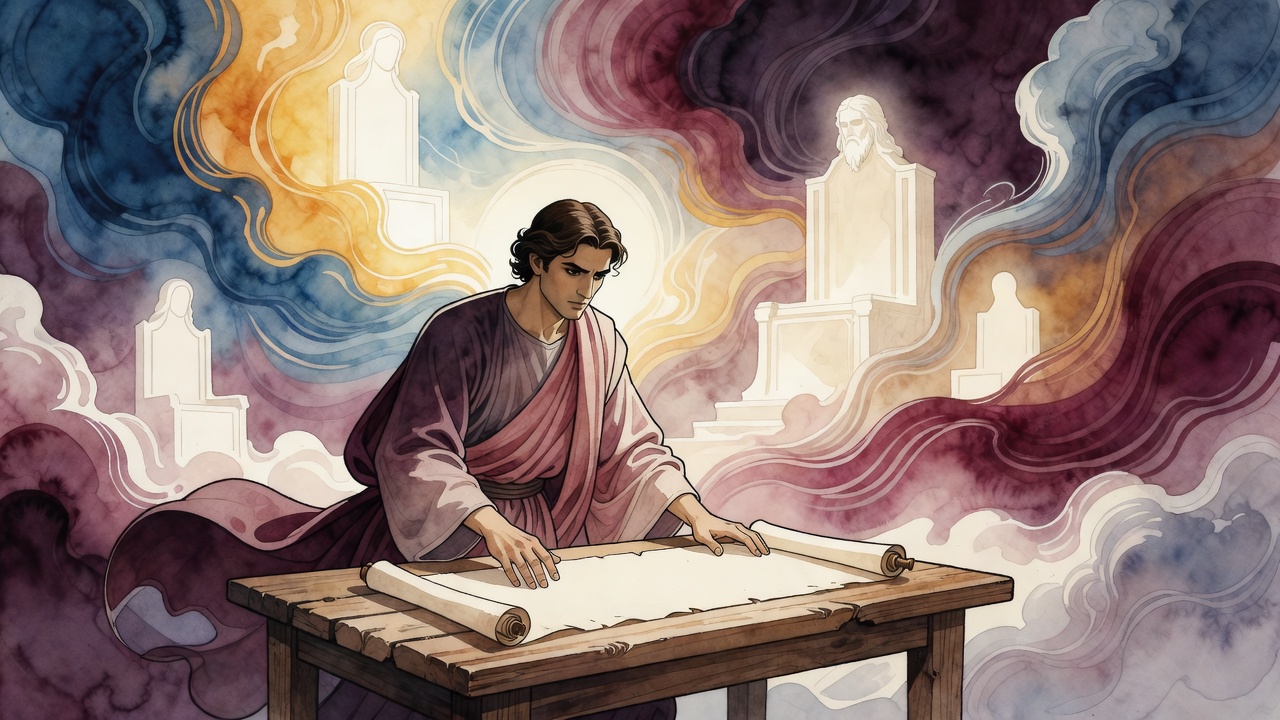
David understood the room. He remembered a sentence God had filed away in a sheepfold.
He begged.
Saliva Ran Into the Beard
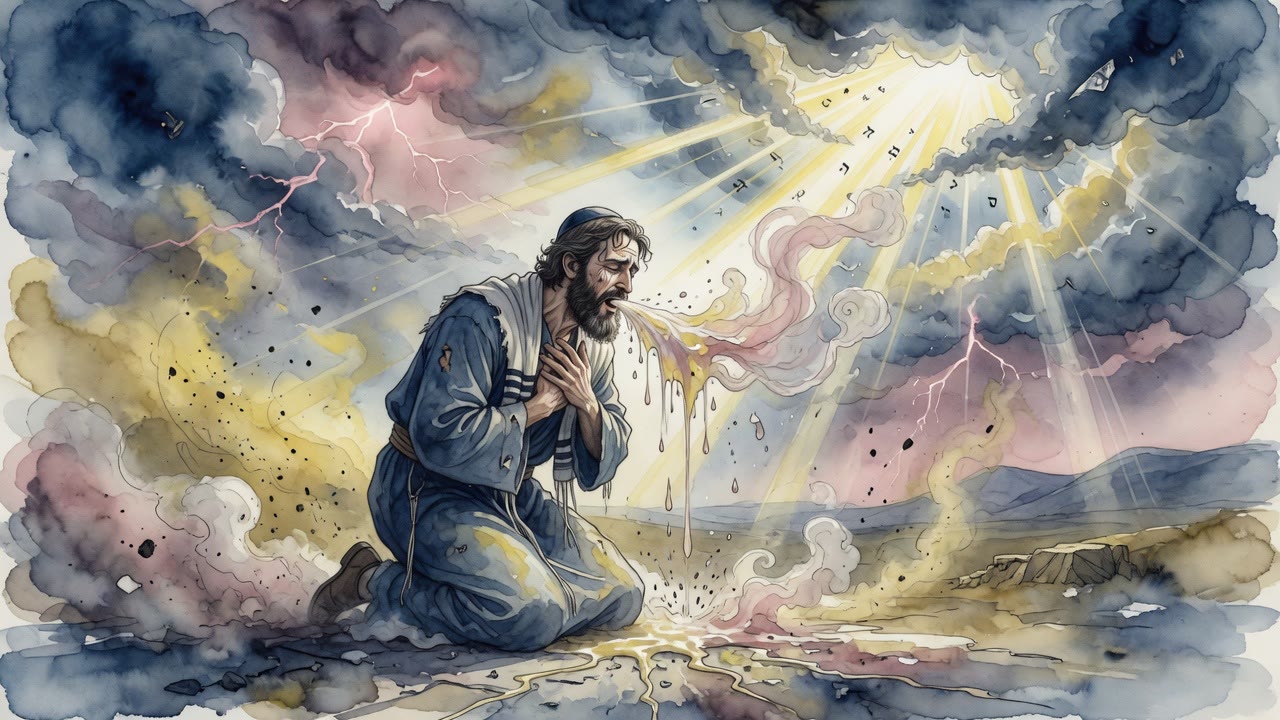
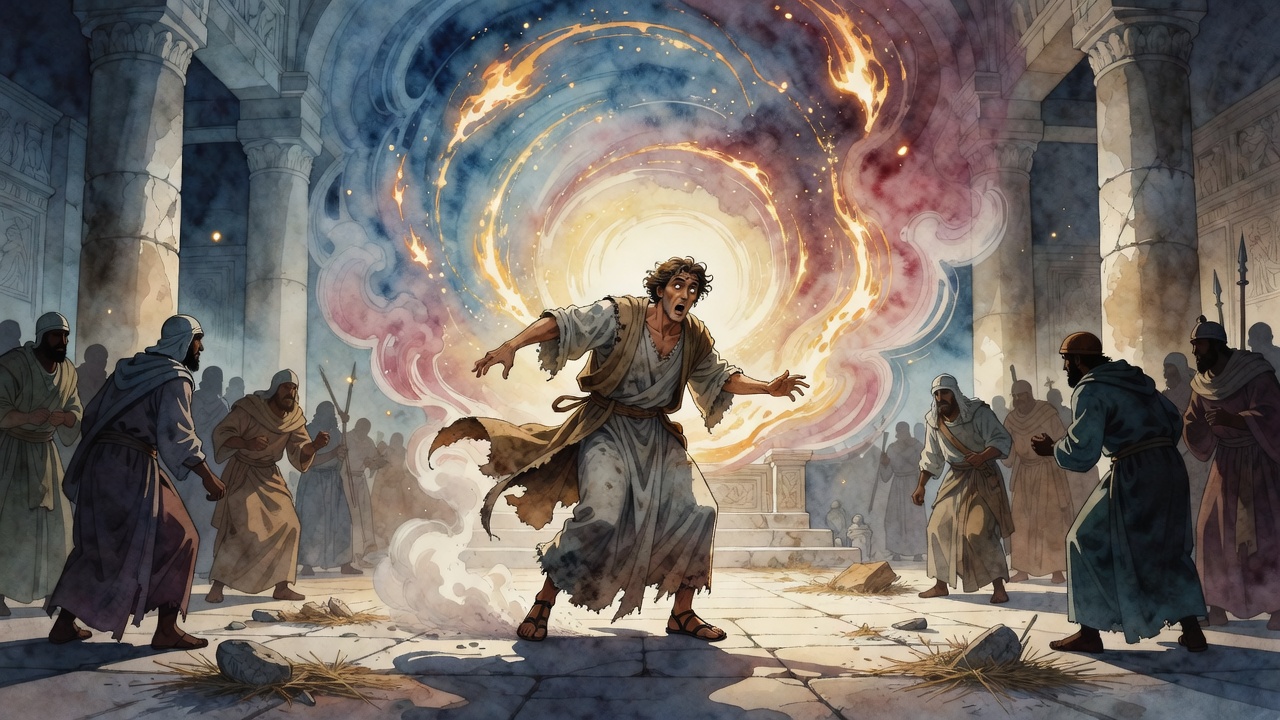
He did not wait for the prayer to do the work alone. He feigned it in Achish's court. He scratched at the gate until his nails clogged. He let saliva run down into his beard. His eyes went empty. He made the sounds of a man whose mind had stopped organizing his body into dignity.
Achish's wife was already ill in that way. So was his daughter. The king looked from his household to the drooling soldier and threw his hands up.
"Do I lack madmen," Achish said, "that you bring this one to play the madman in my presence? Why would I want a lunatic in my house?"
He Walked Out of the Palace
The brothers wanted blood. The king wanted quiet. Madness gave him an excuse that blood would not. David got up off the gate and walked. No escort. No apology. Spit in his beard and the open road under his feet.
Outside the wall he wiped his mouth with the back of his wrist. The pebbles from that first lane were a long way behind him. The sentence was not. He never asked God that kind of question again.
← All myths