Parshat Chayei Sarah5 min read

Isaac and Ishmael Buried Their Father Together

Ishmael was the older son. When Abraham died, the Torah listed Isaac's name first. The rabbis read that as Ishmael stepping back.

Curated by Arthur · Told by Maggid ·
Table of Contents
  1. The Visit Abraham Made to His Son's Tent
  2. The Order of Names at the Burial
  3. What the Rabbis Called This Act
  4. The Thirty-Eight Years Between Two Funerals
  5. What the Reunion Looked Like

The Visit Abraham Made to His Son's Tent

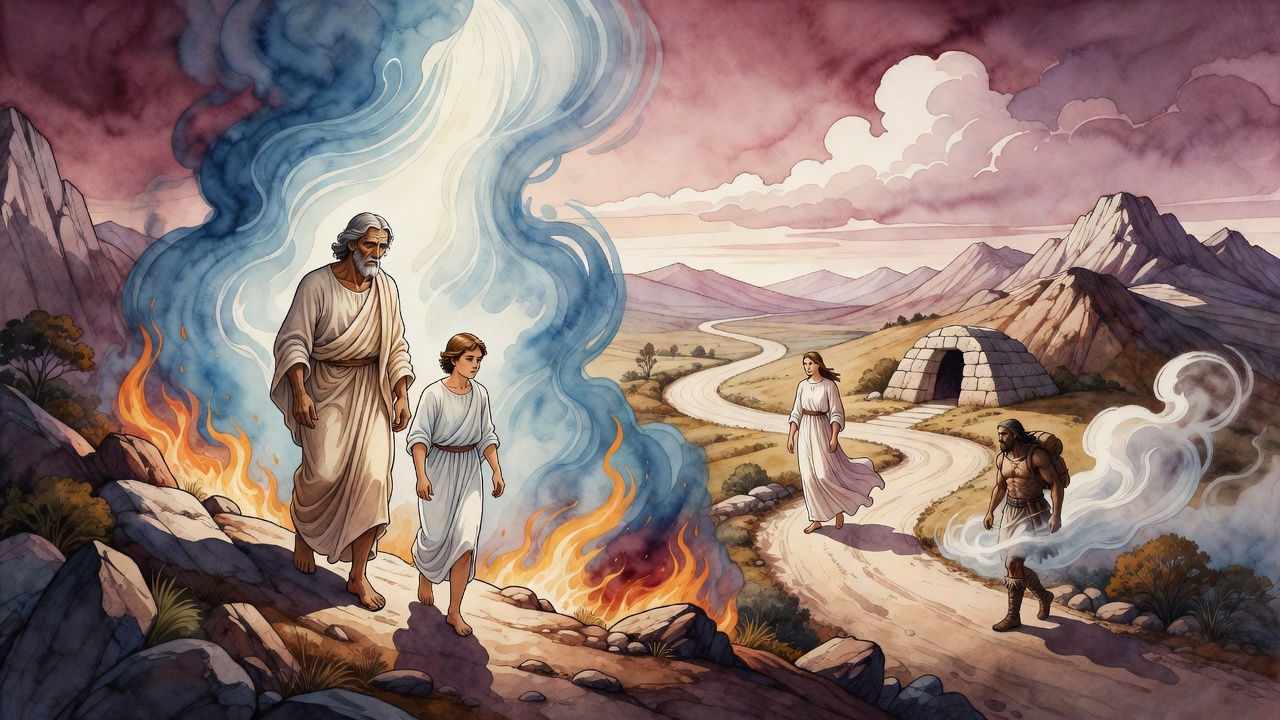
Decades before the burial, Abraham had gone looking for Ishmael. He had sent the boy away years earlier, into the wilderness with his mother Hagar, and the separation had been a wound that did not fully close. He traveled to find his son, carrying a father's need to see a face he had been forced to turn from.

When he arrived, Ishmael was not home. His wife answered at the tent door, and Abraham, not revealing himself, asked her for food and water. She refused. She was cold, resentful of a stranger's request. Abraham left a message for his son: tell him that an old man came and said the tent-peg needs replacing.

Ishmael understood when he returned. He divorced that wife and took another. Abraham came a second time, and this wife received him with bread and water, with welcome and warmth. Abraham blessed his son's household before he left, still without Ishmael having known his father was standing in front of him.

The Order of Names at the Burial

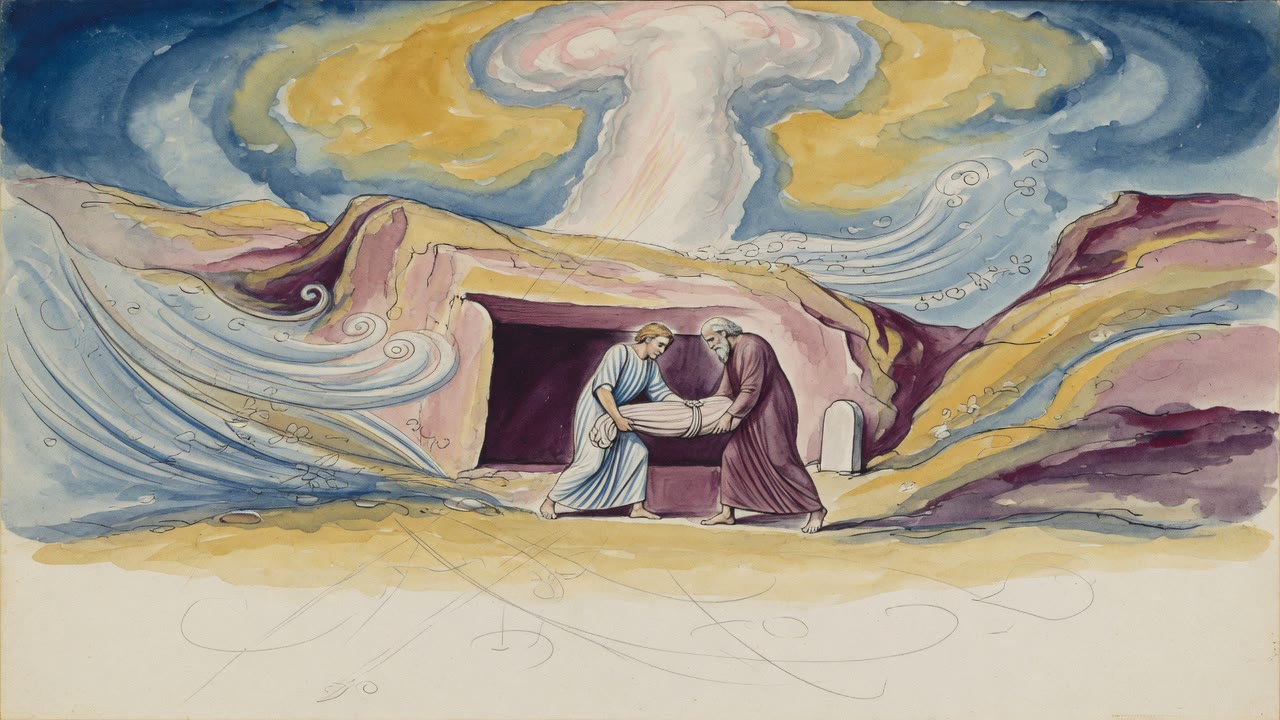
Genesis records the burial plainly: Isaac and Ishmael his sons buried him in the cave of Machpelah. Bereshit Rabbah stopped at this sentence and examined the order.

Ishmael was the older son. He was the firstborn. By every ordinary convention of how the ancient world listed names, his should come first. He was older than Isaac by more than thirteen years. He had outlived his father, had been present at the burial, had stood at the cave of Machpelah beside his younger brother over their father's body. His name should have led.

Instead: Isaac and Ishmael. The younger before the elder.

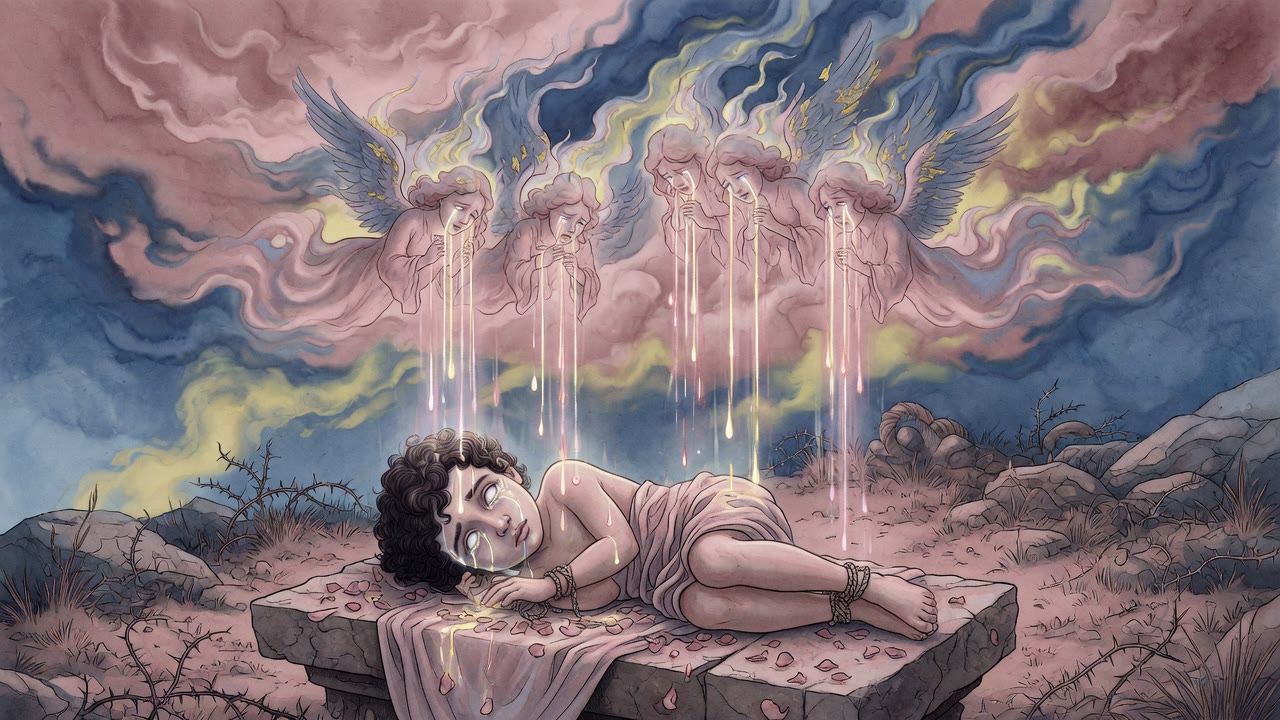
The sages read this reversal as a confession written into the structure of the verse. Ishmael stepped back. He placed his younger brother first at the entrance to the tomb, as he would at a doorway, yielding the precedence of mourning to the son whom their father had named the heir. This was not humiliation. It was a choice. Ishmael was not forced to the secondary position. He took it himself.

What the Rabbis Called This Act

The tradition was direct: Ishmael repented. The word they used was teshuvah, the same word for the full turning-back that the Day of Atonement sought and that the prophets called for from an entire people. Standing at the cave, in the presence of his father's body, Ishmael performed the most compressed and legible version of teshuvah available to him: he stepped aside.

The years of rivalry, the wound of the expulsion, the complicated feelings about the inheritance that had gone to the other son, the lifetime of distance, all of it was still present. But at the grave, Ishmael yielded. He let Isaac lead. The rabbis took the order of names in that one verse as evidence of an interior change they could not otherwise see but were determined to find.

The Thirty-Eight Years Between Two Funerals

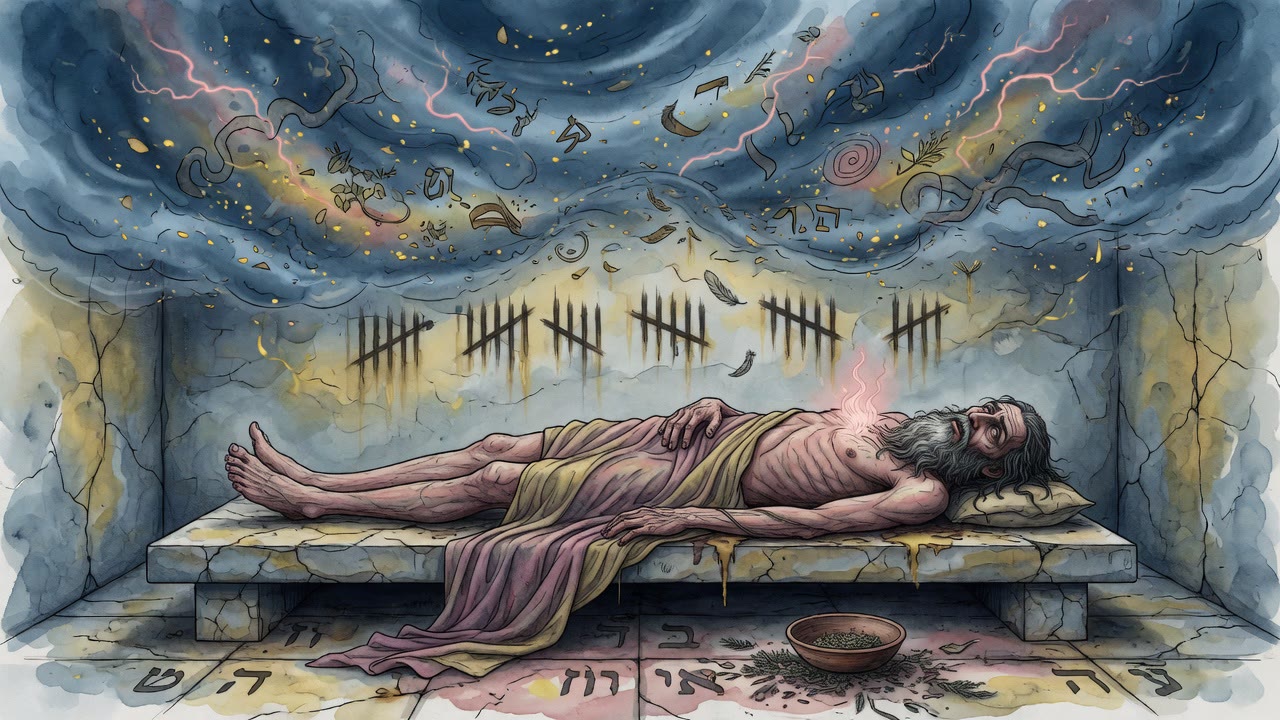
Yalkut Shimoni, the great medieval anthology of midrash arranged across Scripture, added a calculation to the burial scene. Rabbi Tanchuma counted the span of years between two deaths at Machpelah: from the burial of Sarah to the burial of Abraham was thirty-eight years. The calculation served not genealogical precision. It was to honor those who had tended to the dead in the interval, who had maintained the cave as a place of rest, who had not forgotten what was buried there.

The cave was already full of history when Ishmael and Isaac carried their father's body down into it. Sarah was there. The tradition held that Adam and Eve were buried there, that the cave was the oldest human burial site in the world, that the sweetness that clung to the air in that place was the remaining fragrance of Eden that the first humans had carried with them out of the garden.

Into this site, the two estranged brothers brought their father.

What the Reunion Looked Like

Isaac had gone searching for his father's first wife before his father died. The well called Beer-lahai-roi, the well of the Living One who sees me, was associated with Hagar. After Sarah's death, Isaac went there and reunited his father with Hagar, who was also known as Keturah. Abraham and Hagar had six more children together in his final years. The family that had been severed reassembled itself around Abraham's old age, imperfectly, with all the complications intact.

When Abraham died at one hundred and seventy-five years, having seen everything that was promised to him begin, Ishmael came to the burial and stood with Isaac. The rabbis noted that he came. The tradition was careful not to make the reunion sentimental. They did not record a conversation between the brothers, an embrace, an explanation. They recorded only the gesture: Ishmael placed Isaac's name first.

That was enough.


← All myths

From the tradition

Sources

6 sources

The texts this telling draws on, in full. Open a card to read inline, or expand it for a wider, quieter read.

Bereshit Rabbah 62:2Bereshit Rabbah

Bereshit Rabbah turns to Ishmael and Creation of Abraham.

"Isaac and Ishmael his sons buried him in the cave of Makhpela, in the field of Efron, son of Tzohar the Hittite, that is before Mamre" (Genesis 25:9). A simple statement. But the rabbis saw so much more.

The text continues, "Isaac and Ishmael his sons buried him in the cave of Makhpela" – and here, the Bereshit Rabbah pauses, drawing our attention to a subtle, yet powerful act. The text notes that Ishmael, the son of Hagar, the maidservant, accorded honor to Isaac, the son of Sarah, the mistress, by allowing him to go first. What could have been a moment of potential conflict, of vying for position, instead became an act of deference, of recognizing and respecting Isaac's status. It speaks volumes about the brothers and their relationship, doesn't it?

Then comes another verse: "The field that Abraham purchased from the children of Ḥet; there Abraham was buried, and Sarah his wife" (Genesis 25:10). And here, Rabbi Tanhuma raises a fascinating question. "Were there not thirty-eight years between Sarah's burial and Abraham's burial? And yet you say here: 'There Abraham was buried, and Sarah his wife'?" Why mention Sarah's burial at this point, so long after the fact?

The answer, according to the midrash, is beautiful: "It is to teach you that everyone who performed kindness to Sarah [in attending her funeral] was privileged to perform kindness for Abraham [in attending his funeral as well]." Those who honored Sarah in her passing were rewarded with the opportunity to honor Abraham as well. It's a powerful reminder of the enduring impact of kindness and the interconnectedness of our actions.

Rabbi Shmuel bar Naḥman adds another layer to this understanding. He says that Shem and Ever, figures of immense stature in the biblical narrative, were walking before Abraham's bier. They saw an empty spot alongside Sarah, clearly designated for Abraham, and they buried him there, "in the place that was prepared and designated for him." So, Sarah's burial is mentioned again to highlight this preordained connection, this sense of destiny fulfilled. This also reveals the profound respect for honoring the deceased, and ensuring they are laid to rest properly.

Isn’t it amazing how a seemingly straightforward account of a burial can reveal such profound insights into human relationships, acts of kindness, and the enduring power of respect? It reminds us that even in death, there are lessons to be learned about how to live.

Full source
Legends of the Jews, V. Abraham, The Two Wives Of IshmaelLegends of the Jews

His story, often overshadowed, takes some fascinating turns, especially concerning his wives.

In Legends of the Jews, that incredible compilation of rabbinic lore by Louis Ginzberg, Ishmael, son of Abraham and Hagar, had quite the journey. After being sent away into the wilderness, Ishmael eventually marries and has children. God, But there's a poignant moment, a father's yearning, that sets in motion an interesting domestic drama.

Abraham, missing his son, decides to visit Ishmael after a long absence. He travels to the wilderness, arriving at Ishmael's tent around noon. But Ishmael isn't there; he's out hunting. Abraham finds Ishmael's wife, surrounded by her children, but her demeanor is far from welcoming. Now, remember, Abraham had sworn to Sarah that he wouldn't dismount his camel. So, there he sits, a weary traveler, asking for a little water.

The response he gets? Stone-cold silence and then a flat, "We have neither water nor bread." What's worse, she's busy scolding and even cursing her children, and speaking ill of Ishmael. Abraham, witnessing this, is understandably disturbed.

Still on his camel, Abraham instructs the woman: "When Ishmael returns, tell him that an old man from the land of the Philistines came seeking him. Tell him: ‘Put away this tent-pin which thou hast placed here, and place another tent-pin in its stead.'" A cryptic message. When Ishmael returns and hears his wife's account, he understands. He recognizes his father's veiled criticism. The "tent-pin," you see, is a metaphor. Abraham is telling Ishmael to divorce his wife because she isn't honoring him or their family. And Ishmael, honoring his father, does just that.

Fast forward a few years. Abraham, still longing to see his son, makes another trip. This time, he finds Ishmael remarried. And what a difference! Ishmael is out hunting, but his new wife welcomes Abraham with open arms. She urges him to enter the tent, offering him bread and water. Abraham, though initially hesitant, accepts her hospitality, eats, drinks, and blesses Ishmael.

Before leaving, Abraham gives her another message: "When Ishmael comes home, tell him: ‘The tent-pin which thou hast is very good, do not put it away from the tent.'" This time, the message is clear: This wife is a keeper!

When Ishmael returns, his wife joyfully recounts the old man's visit. Ishmael understands that his father approves. This time, he praises the Lord and, in a beautiful act of reconciliation, takes his new wife, his children, and all his possessions, and goes to live with his father, Abraham, in the land of the Philistines. Abraham then tells Ishmael the whole story of the first wife and why he had instructed him to divorce her.

What does this story tell us? It’s a reminder that family relationships are complex, even for the patriarchs. It speaks to the importance of honoring one's spouse and the impact that a partner can have on a family's well-being. It also highlights the enduring bond between a father and son, even when their paths diverge. And perhaps, most profoundly, it shows us that even in the wilderness, hospitality, kindness, and respect can create a home.

Full source
Legends of the Jews, V. Abraham, The Last Years Of AbrahamLegends of the Jews

It turns out, the story continues in some fascinating, and sometimes surprising, ways.

In Ginzberg's retelling in, Legends of the Jews, Rebekah first saw Isaac returning from Beer-lahai-roi, the "well of the Living One who sees me," a place associated with Hagar. Why was he there? Well, after the death of his mother Sarah, Isaac had gone there to reunite his father with Hagar, who is also known as Keturah. Yes, Abraham and Hagar were together again!

Hagar bore Abraham six more sons. But these sons, alas, didn't exactly follow in their father's monotheistic footsteps. They were, as the text puts it, all idolaters.

So, what did Abraham do? Knowing that Isaac was his chosen heir, he sent these sons away during his own lifetime, "that they might not be singed by Isaac's flame," meaning that they wouldn't be consumed by the spiritual power and destiny associated with Isaac. He instructed them to journey eastward, as far as possible.

And this is where it gets really interesting. Abraham, according to the legend, built them a city surrounded by an iron wall, so high that the sun couldn't penetrate it. Now, that sounds pretty bleak. But Abraham didn't leave them in total darkness. He provided them with huge gems and pearls, whose brilliance outshone the sun. These gems, it's said, will be used in the Messianic time, "when 'the moon shall be confounded and the sun ashamed.'" (Isaiah 24:23).

But there's more. Abraham also taught them the black art! Yes, you read that right. He taught them sorcery, enabling them to control demons and spirits. It’s said that Laban, Balaam, and Balaam's father Beor all derived their sorceries from this city in the east. Talk about a family legacy!

One of Abraham and Keturah's grandsons, Epher, even invaded Lybia and took possession of the country. And from this Epher, the whole land of Africa supposedly gets its name.

The story expands even further, branching out into the origins of other nations and peoples. In his old age, Terah, Abraham's father, remarried and had a son named Zoba, who in turn had three sons. The eldest, Aram, became incredibly wealthy and powerful. He and his kinsmen, the sons of Nahor (Abraham's brother), found their old home in Haran too small, so they migrated and built a city called Aram-Zoba. Another Aram, Aram-naharaim, on the Euphrates, was built by Aram son of Kemuel, a nephew of Abraham. Its real name was Petor, after the son of Aram, but it is better known as Aram-naharaim. And the descendants of Kesed, another nephew of Abraham, established themselves opposite Shinar, founding the city of Kesed, from which the Chaldeans are called Kasdim.

Now, with all these sons and descendants, what about Isaac? Abraham knew that Isaac deserved his paternal blessing, but he withheld it, wanting to avoid any conflict or resentment among his descendants. He essentially said, "I've done what I can. Let God's will be done." And immediately after Abraham's death, God Himself appeared to Isaac and gave him His blessing.

What does this all mean? It’s a reminder that even the lives of our greatest ancestors were complex and full of unexpected twists. Abraham's story wasn't just about faith and covenant; it was also about family, legacy, and the challenges of navigating a world filled with diverse beliefs and destinies. It's a reminder that sometimes, the greatest blessings come after the hardest goodbyes.

Full source
Yalkut Shimoni on Torah 110:7Yalkut Shimoni on Torah

"And Isaac and Ishmael his sons buried him" (Genesis 25:9). The son of the maidservant gave honor to the son of the mistress. Anyone of whom "expiring" and "being gathered" are said - this refers only to the death of the righteous. But behold, of Ishmael "expiring" and "being gathered" are written (Genesis 25:17)! Ishmael repented. As it is written, "And Isaac and Ishmael his sons buried him." Now since Ishmael was the elder, what is the reason that Isaac is reckoned before him? Learn from this that he repented and put Isaac ahead of himself.

But perhaps Scripture lists them in order of wisdom? If so, then where it is written, "And Esau and Jacob his sons buried him" (Genesis 35:29), there too it lists them in order of wisdom? Rather, from the fact that it placed the other one first and led him ahead, learn from this that he repented.

Full source
Yalkut Shimoni on Torah 110Yalkut Shimoni

The passage from the Yalkut Shimoni, the sweeping medieval anthology of midrash arranged across Scripture, gathers teachings about the burial of Abraham in the cave at the field he had purchased from the children of Chet, the cave of Machpelah. Rabbi Tanchuma calculated the span of years between two funerals there: from the burial of Sarah to the burial of Abraham was thirty eight years. The point of the count is to honor those who tended to the dead. It comes to teach that all who performed acts of kindness at Sarah's burial were privileged to perform kindness again at Abraham's, so that the same righteous hands that laid the matriarch to rest were granted the merit of attending the patriarch as well.

Rabbi Shmuel bar Nachman added a further tradition about who guided that second burial. Shem and Ever, the righteous ancestors who carried the line of faith from the generations before, were proceeding before Abraham's deathbed. They beheld the proper place to direct Abraham our father within the cave, and they buried him in his own specific compartment, the chamber prepared for him beside Sarah. The unit closes by joining itself to the next verse of the Torah, "And it was after the death of Abraham, God blessed Isaac" (Genesis 25:11), marking how the blessing of the covenant passed on to the son once the father had been honorably laid to rest.

Full source
Midrash Aggadah, Genesis 25:9Midrash Aggadah

"And Isaac and Ishmael his sons buried him" (Genesis 25:9). This teaches that Ishmael repented, for Ishmael was the firstborn, yet he let Isaac go before him, because he knew of him that he was more righteous than himself. But Esau did not repent, for it does not say, "And Esau and Jacob his sons buried him."

Full source