Isaac Said He Would Not Refuse and God Said the Hour Had Come
Ishmael had been telling his brother for years that he was the braver son. Isaac was thirty-seven when he finally answered him out loud.
Table of Contents
 Click for full size
The Feast With Nothing Set Aside
The day Isaac was weaned, Abraham put on the largest meal of his life. He was a hundred years old and he had waited the whole hundred, and he fed everybody in the camp and everybody who came through it.
That night he lay awake going over it. "I was happy and I made everyone else happy," he said to himself, "and I did not set one thing aside for the Holy One. Not a bull. Not a ram."
The ministering angels had noticed it before he did, and they said so upstairs, in the tone prosecutors use.
"This Abraham. You gave him a son at a hundred years old. He spreads a table for his whole household on the day the boy is weaned. Not one turtledove. Not one young pigeon. Nothing came up here at all."
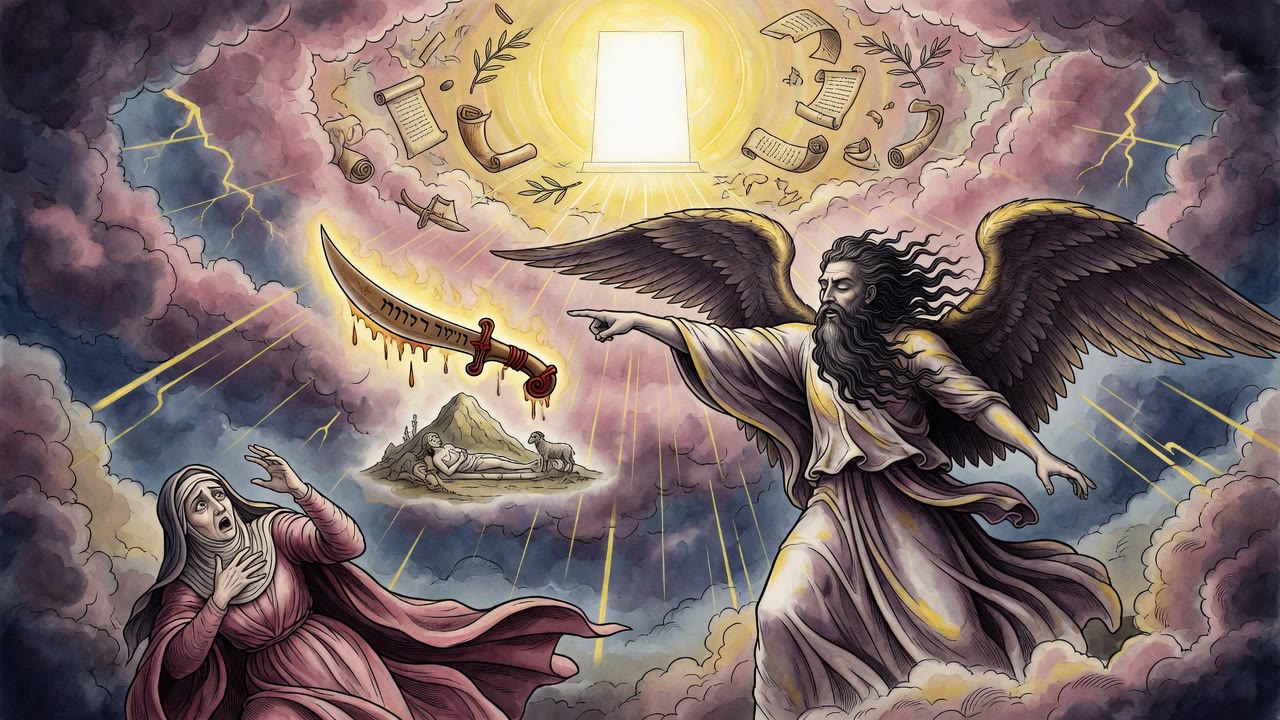
"If I told him to sacrifice his son in front of Me," God said, "he would sacrifice him."
Two Brothers Counting Their Own Blood
Down on the ground the two boys were having their own argument, and it was about the same thing without either of them knowing it.
Ishmael had the better case and he knew it. "I am greater than you," he told his brother. "I took the circumcision at thirteen years old. It was in my hand to stop it. I could have fought them off and I did not. You were eight days old. You could not have refused if you wanted to. You did not choose anything."
Isaac was thirty-seven and had been listening to this his whole life.
"You are trying to frighten me with one limb," he said. "Everything you handed over came to three drops of blood. If the Holy One asked me to cut off a limb, I would not refuse Him. If He told me to lie down and be slaughtered, I would not refuse Him either."
Nobody on earth heard the answer to that.
"The hour has come," God said.
The Letters Were Already in His Name
Years before any of it, Abraham had stood in front of God with a request he thought was reasonable. He had one son already. "Let Ishmael live before You." He did not want a second child. He wanted the one he had to be enough.
The answer was that Sarah would bear him a son, and the boy was to be called Yitzchak, because everyone was going to laugh with joy over him.
The name came with a count in it. The first letter, yod, stands for ten, and Abraham was going to be tested ten times and hold in all ten. The second, tzadi, stands for ninety, and Sarah was ninety years old when the child came out of her. The third, chet, stands for eight, and the boy was eight days old when the knife first touched him. The last, kuf, stands for a hundred, which was Abraham's age at the birth.
The trials were counted out and the number was sitting in the front of his son's name every time he called the boy in for a meal.
Two Young Men at the Foot of the Mountain
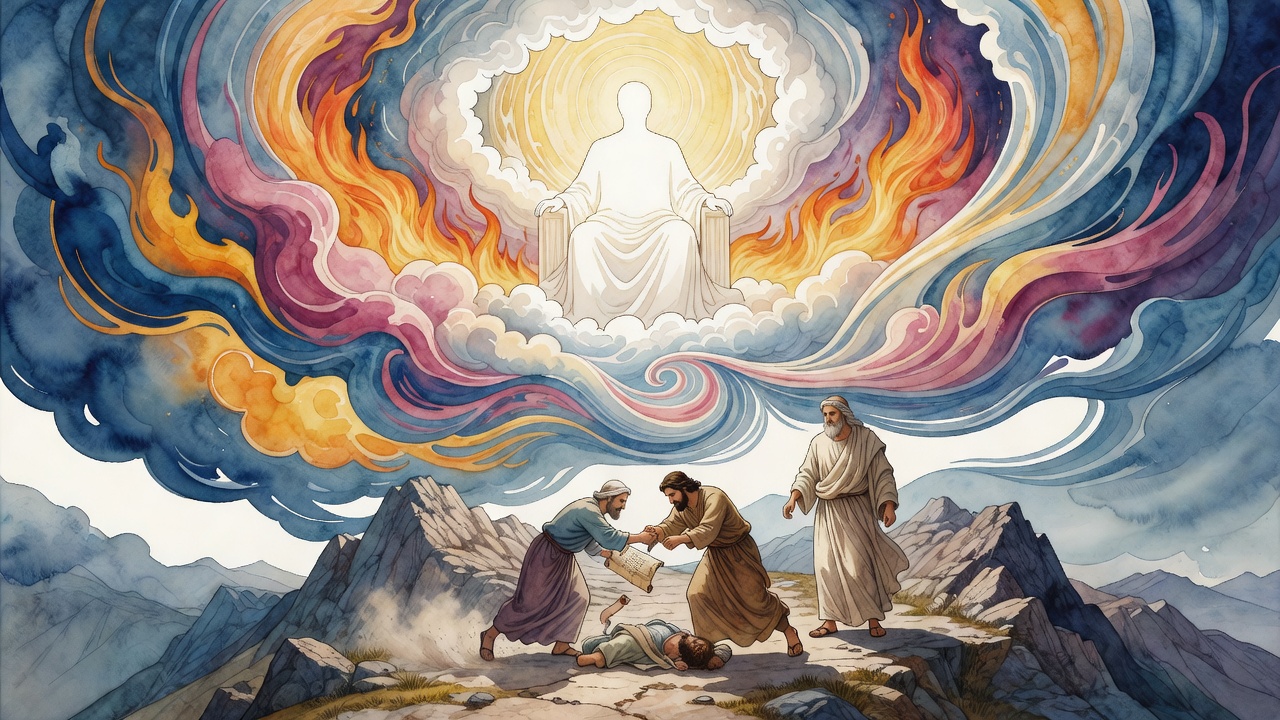
Abraham got up early, saddled his own donkey with his own hands, split the wood for the fire, and took two young men and his son and went.
On the third day he saw the place from a distance and told the two young men to stay with the donkey.
The two of them were Ishmael and Eliezer, Abraham's steward, and as soon as the father and the boy were out of earshot they started in on each other.
"He is going to slaughter Isaac up there," Ishmael said. "I am the firstborn. I inherit everything."
"You inherit nothing," Eliezer said. "He threw you out of the house years ago. I am the son of his house. I am the one who inherits him."
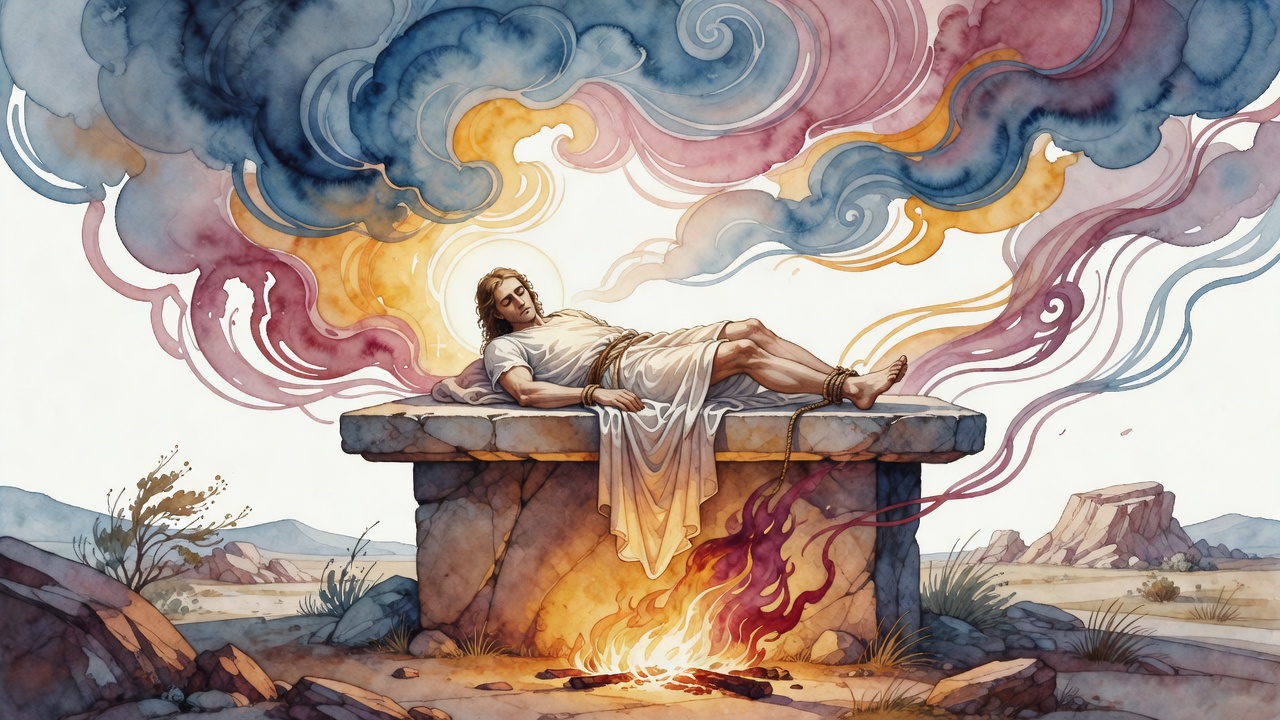
They sat at the bottom of the mountain and divided a dead boy's property between them, and above them a father was building an altar and laying the wood out on it in order.
He Came Down Alone
Abraham came back to the place where he had left them, and he came back by himself.
They looked at the empty road behind him. He had gone up with a son and there was no son. The argument they had been having all afternoon had just been settled, and neither of them said a word about inheritance.
"Where is Isaac?"
"I sent him to the house of Eber his teacher, to study Torah."
They stood up and went with him. Whatever they had thought they were watching, they believed the man in front of them, because in all the years they had known him he had never once said a thing that was not so. Ishmael walked the road down to Beersheba beside the father who had put him out of the house, next to a servant who had just told him he would inherit nothing, believing that the brother he had argued with was alive somewhere learning Torah.
← All myths