Demons Were Born When the Sabbath Arrived and God Stopped Creating
The Zohar and Pirkei DeRabbi Eliezer agree on the origin of demons: God stopped creating before their bodies were finished. The Sabbath did not wait.
Table of Contents
 Click for full size
The Work That Could Not Be Paused
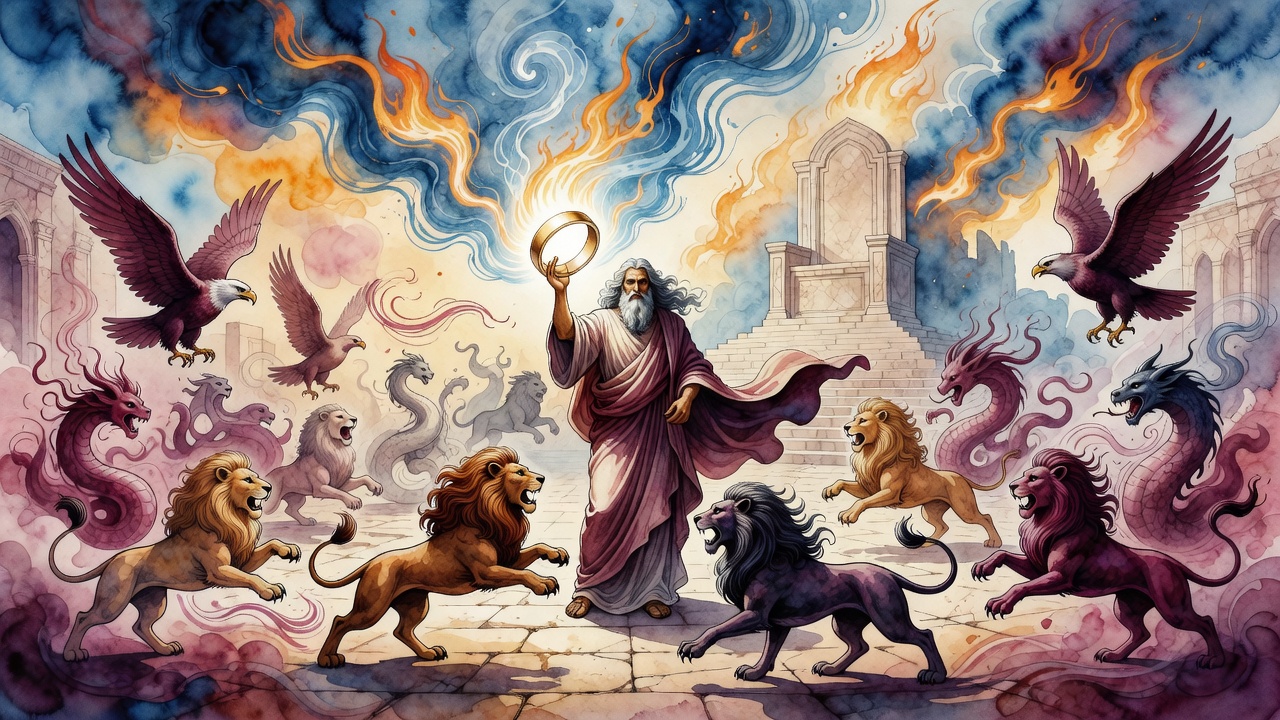
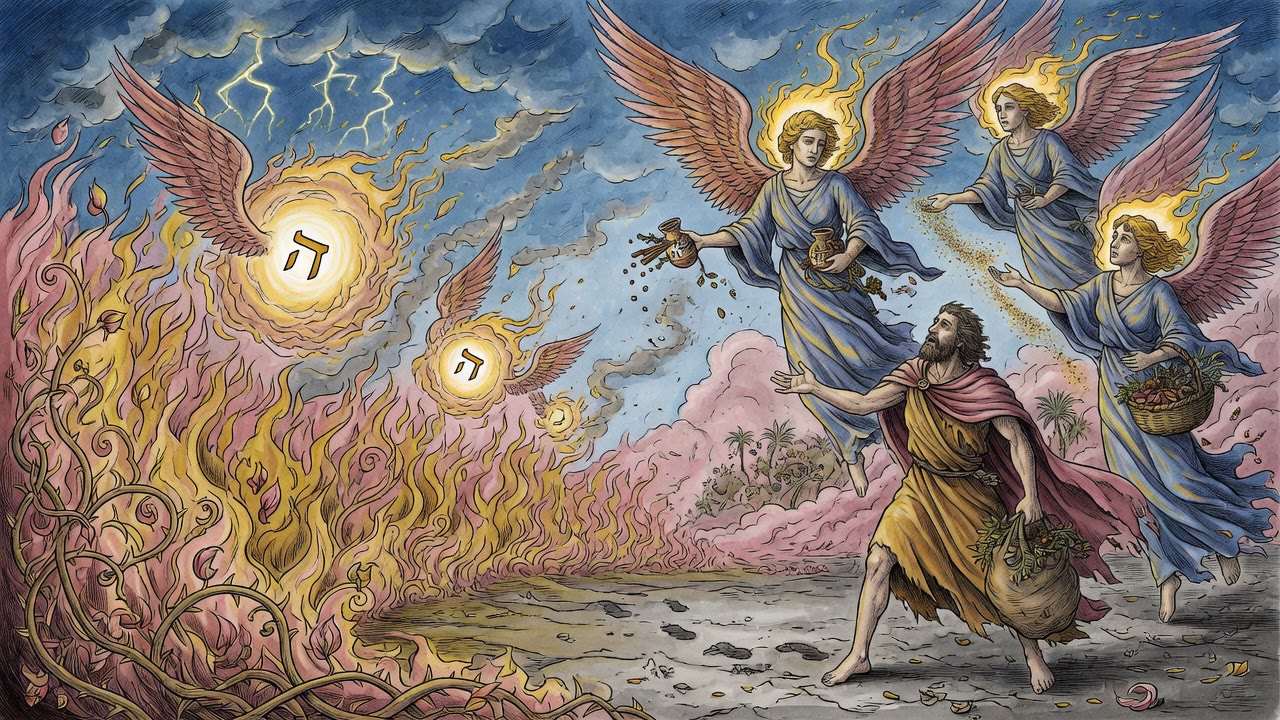
God created for six days without stopping. Every category of existence, light and dark, water and sky, land and sea, plant and animal, angel and human, emerged in sequence from the divine word. On the sixth day, in the final hours, certain spirits received their souls. The animating dimension of their being was breathed into them, the spiritual identity that would make them capable of desire and intelligence and will. Their bodies were being formed when the sun began to descend.
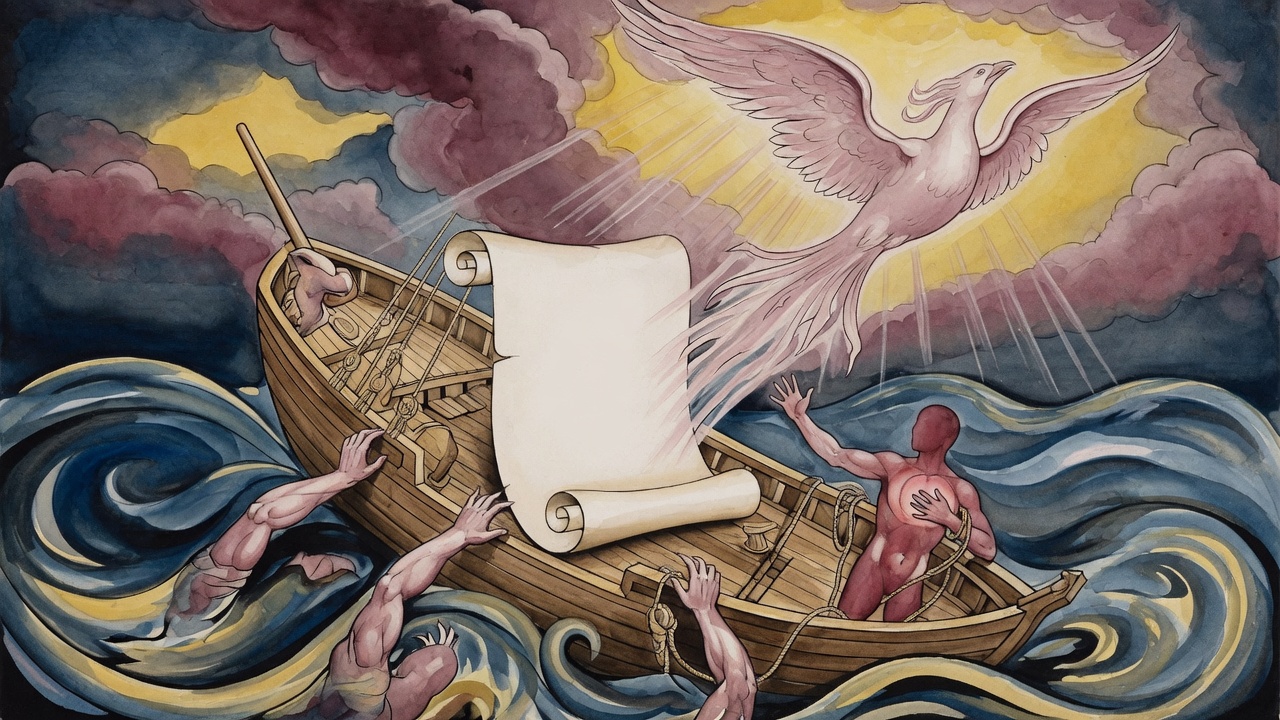
The Sabbath does not negotiate. It arrives on schedule regardless of what is unfinished. God stopped creating. The spirits were left permanently as they were: soul without body, desire without form, intelligence without shape, will without flesh to act through. They were not destroyed. They were not completed. They were sealed in that half-state, fully alive in one dimension and absent in another, and released into the world to inhabit it as best they could.
Why the Shekhinah Does Not Dwell in Them
The Zohar is precise about what this incomplete state means for the divine presence. The Shekhinah, the immanent face of God that dwells within complete creatures, cannot rest on a being without a body. There is nowhere for it to settle. The divine presence requires a vessel, a physical form that can hold the spiritual, the way the Tabernacle's physical structure held the cloud of glory. Demons, lacking bodies, are permanently excluded from this dwelling. They move through the world but the divine presence does not move with them.
This is the tradition's deepest statement about what demons are and are not. They are not enemies of God. They are not rebels. They were not created to be adversaries. They are creatures of the sixth day, made by God, given souls by God, but caught at the moment when the Sabbath interrupted the work. Their incompleteness is not a punishment. It is an accident of timing, the worst possible moment for God to rest.
Adam and the Night the Demons Came
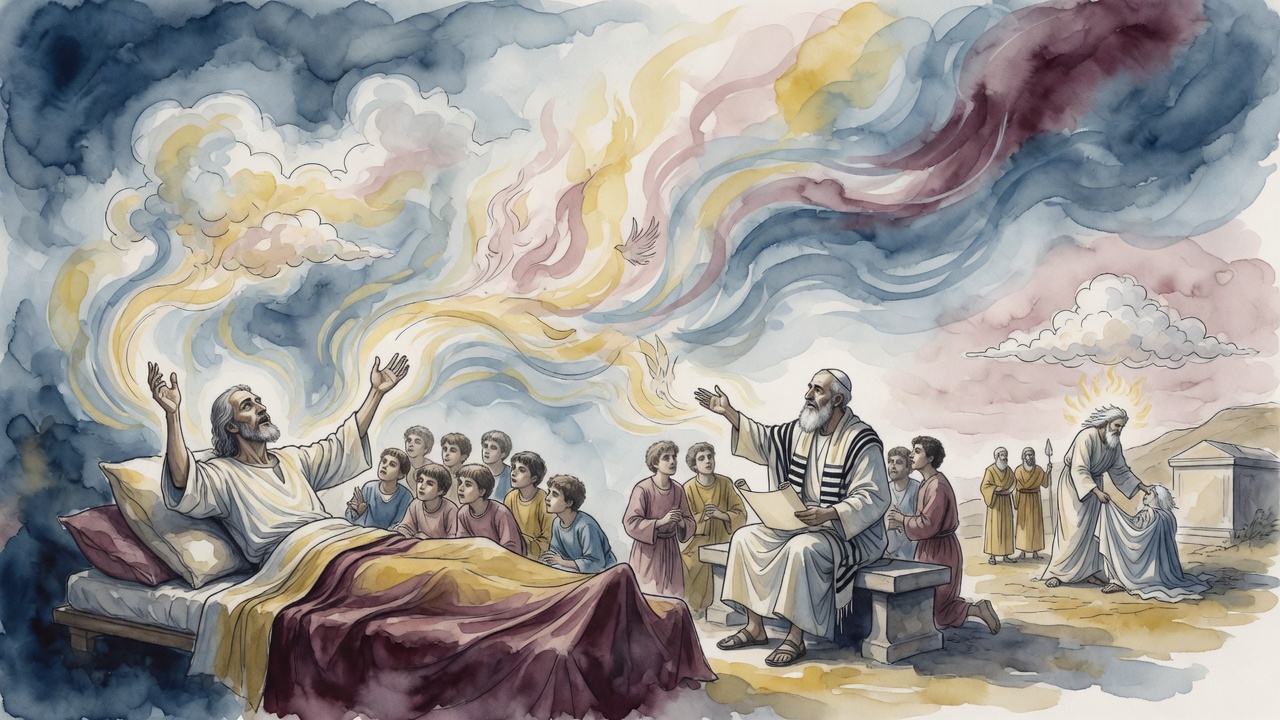
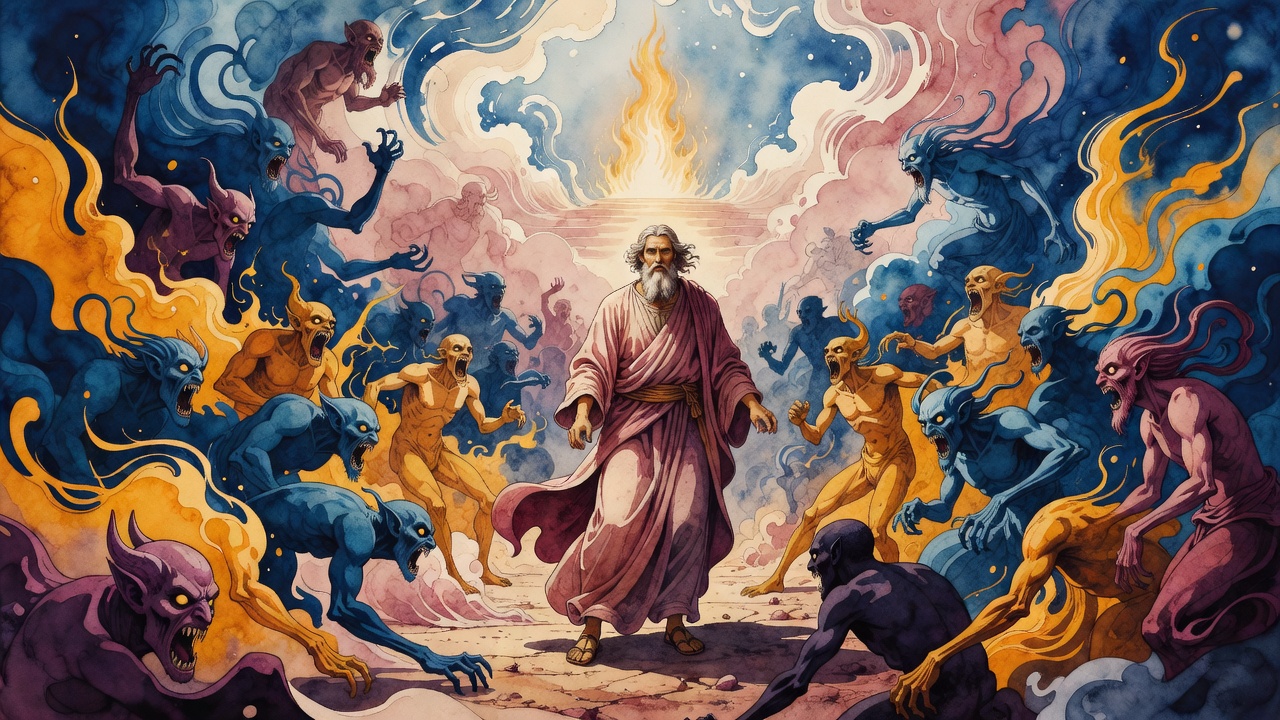
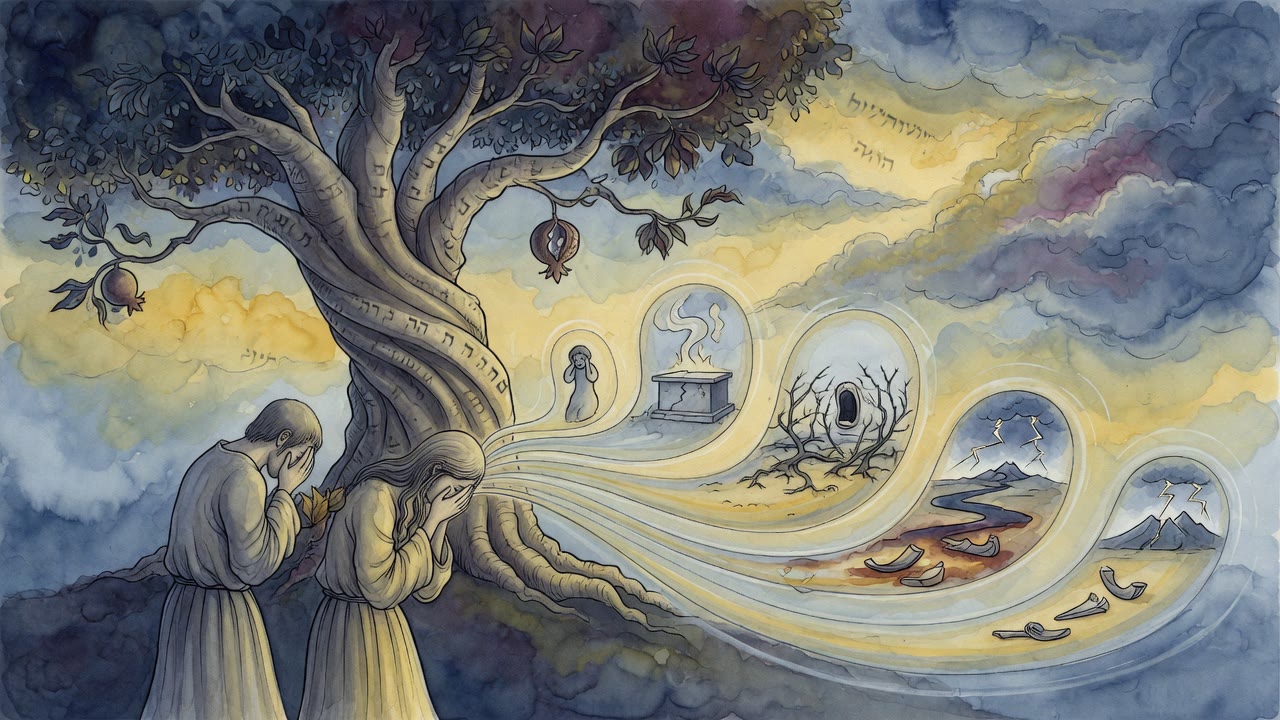
When Adam was expelled from the Garden, the tradition records a detail the biblical text omits: the demons came for him on that first night. Adam sat at the edge of the Garden as the primordial light faded and the first darkness arrived, the darkness that no human being had ever experienced before, and the beings without bodies that he had never encountered in the Garden began to press against him.
The Garden had been closed to them. The Garden's purity and the primordial light had kept them at the boundary. Once Adam was outside, he was in their territory. The world beyond the Garden was the world where incomplete creatures moved without divine constraint, where souls without bodies sought out the bodies of living beings to fill the vessel they lacked, where the half-formed sixth-day spirits pressed against the flesh of humanity looking for what they had never been given.
God sent Adam instructions. The traditions about protective formulas, about what plants and materials and words could keep the demons at bay, trace back to this first night outside the Garden, when God provided the displaced father of humanity with the practical knowledge of how to survive in a world populated by beings who had been given souls but no bodies and who therefore wanted what Adam had.
Lilith and the Boundary of the Deep
The most powerful of these incomplete beings came from the deepest strata of the pre-creation darkness. Before God divided the waters, before the firmament was stretched out, the abyss existed, and in the abyss moved something that would later be named Lilith. She rose from the deep and entered the world of the sixth day and became the queen of the demonoi, the ruler of the spirits without bodies, the one who organized their movement through the human world.
The tradition's account of Lilith and Adam in the Garden is complicated and contested. But after the expulsion, she is consistently present at the boundary of the human world and the demonic, the figure who exemplifies what the incomplete sixth-day spirits became once they had centuries of human history to develop their methods. The Zohar's treatment of Lilith is extensive and connects her directly to the unfinished corner of creation, the deliberate incompleteness that gives beings without proper forms their foothold in the world.
← All myths