Naamah Sang While Cain's Children Built the World
Zillah named her last child Naamah and said nothing else. Her brother was already at the forge, sharpening bronze for a blade.
Table of Contents
 Click for full size
Cain Built a City Around His Son
Cain was not wandering after the mark. He knew the decree. His blood-guilt would come back in the seventh generation. He meant to put a name on the earth that would last longer than that judgment.
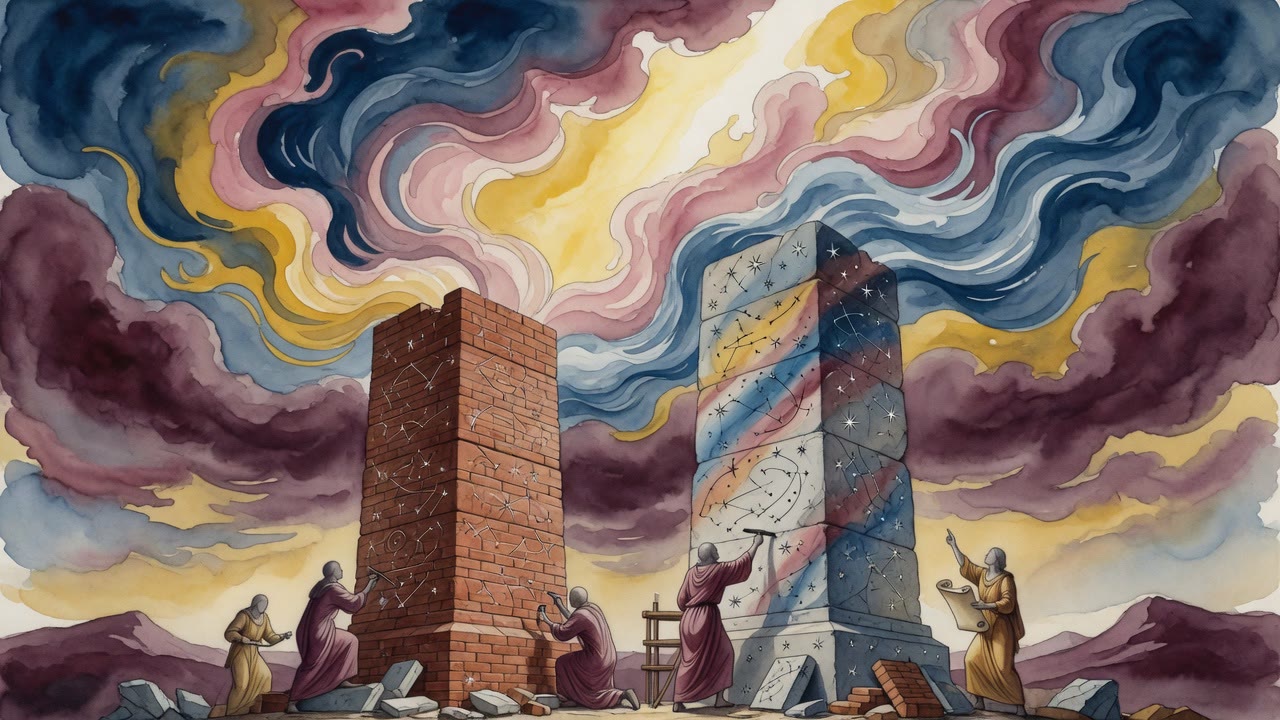
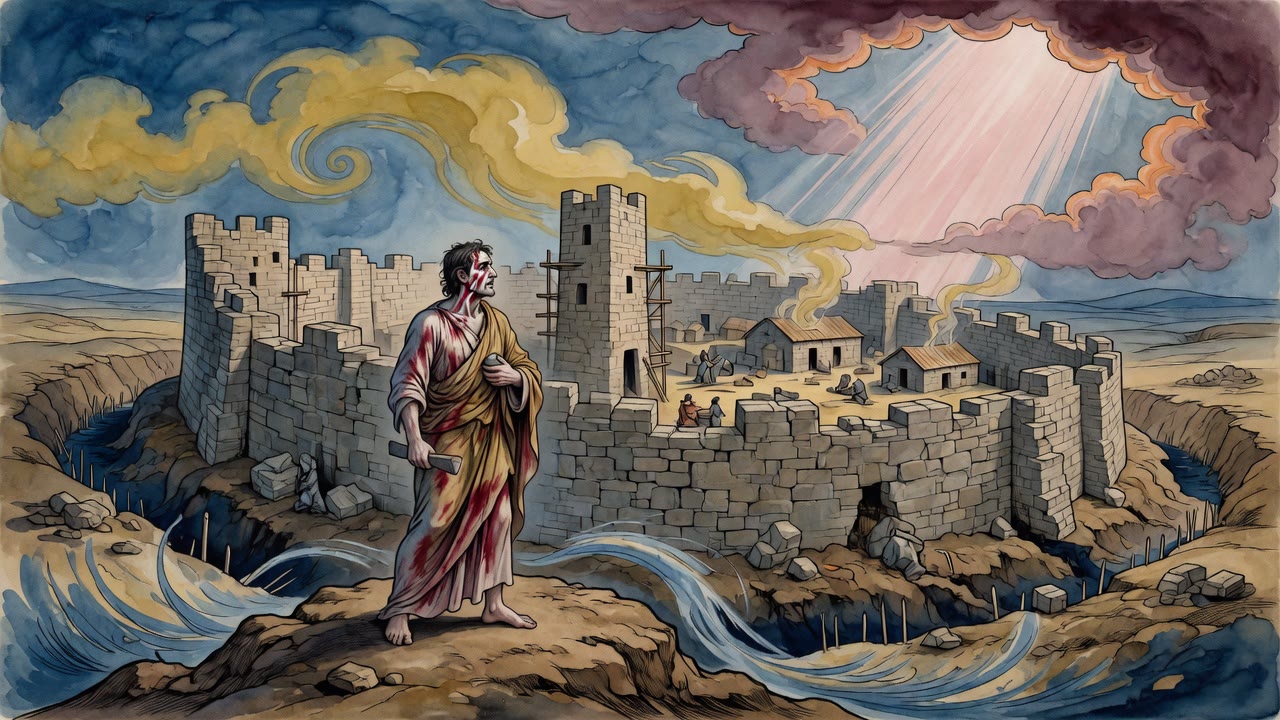
He became a builder of cities. The first one he named Enoch, after his son, because it was at Enoch's birth that he first felt a little rest. He founded six more. He put walls around them and kept his family inside. The walls were not repentance. They were a grip.
He took what he wanted from his neighbors. He taught other men to take. He brought weights and measures into a world that had lived without them, and the simple dealing of the first generations turned into craft. His children learned the lesson. They were like him.
The Forge and the Tambourine
Ada bore Jabal, who put people in tents with herds. His brother Jubal put a harp and a flute in their hands. Zillah bore Tubal-Cain, chief of every artificer who knew brass and iron. And the sister of Tubal-Cain was Naamah.
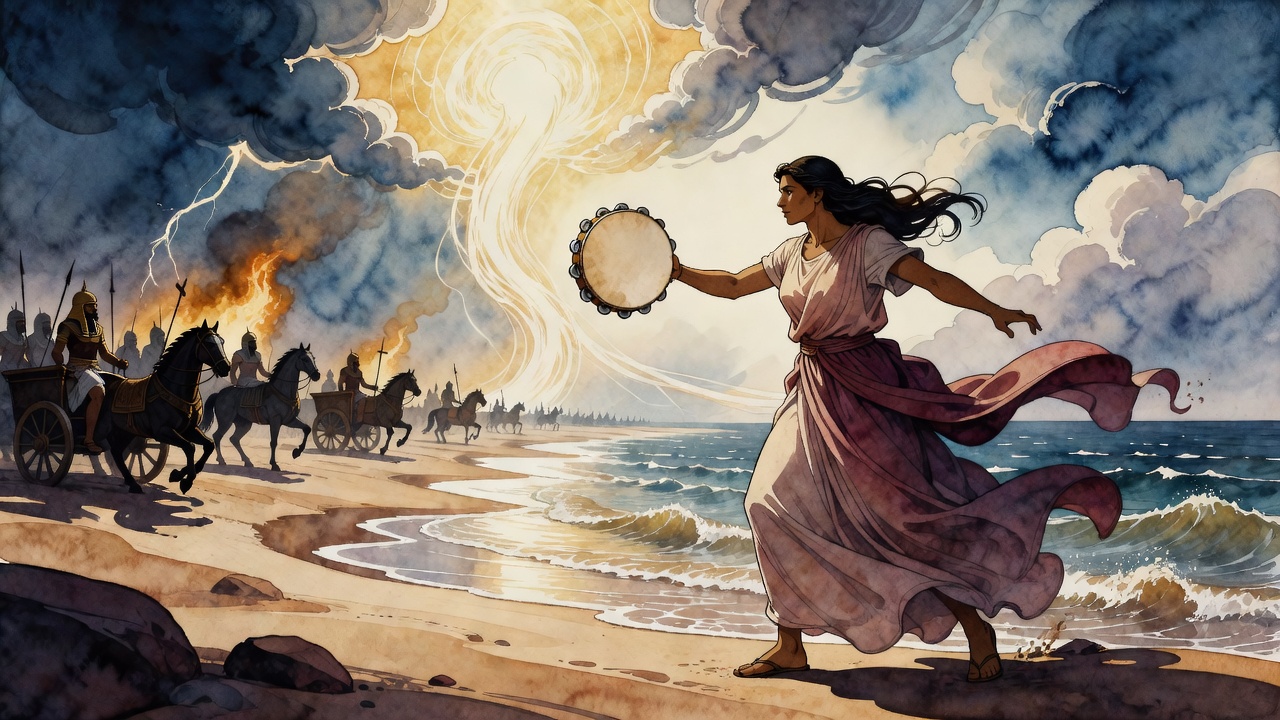
The verse stops there. The Aramaic does not. It gives her a title equal to her brother's. He is rab of the forge. She is mistress of elegies and songs. Metal and breath. One household, two ways of putting human will onto raw stuff.
Tubal-Cain improved on Cain's killing. Cain had murdered without a tool. This one sharpened bronze and iron until killing had an instrument. Naamah stood beside that fire and sang. Later some would say her actions were pleasant, and that she was Noah's wife, and so she lived. Others said she was someone else, a daughter of Cain's line, and that she played the tambourine pleasantly for idol worship, and that the Flood took her with the rest.
The music did not stay in the tents. What had been private anger at God came out into the open with harp and flute. The same family that fenced cities also taught the world how to make a loud, public noise.
Lamech Shot What He Could Not See
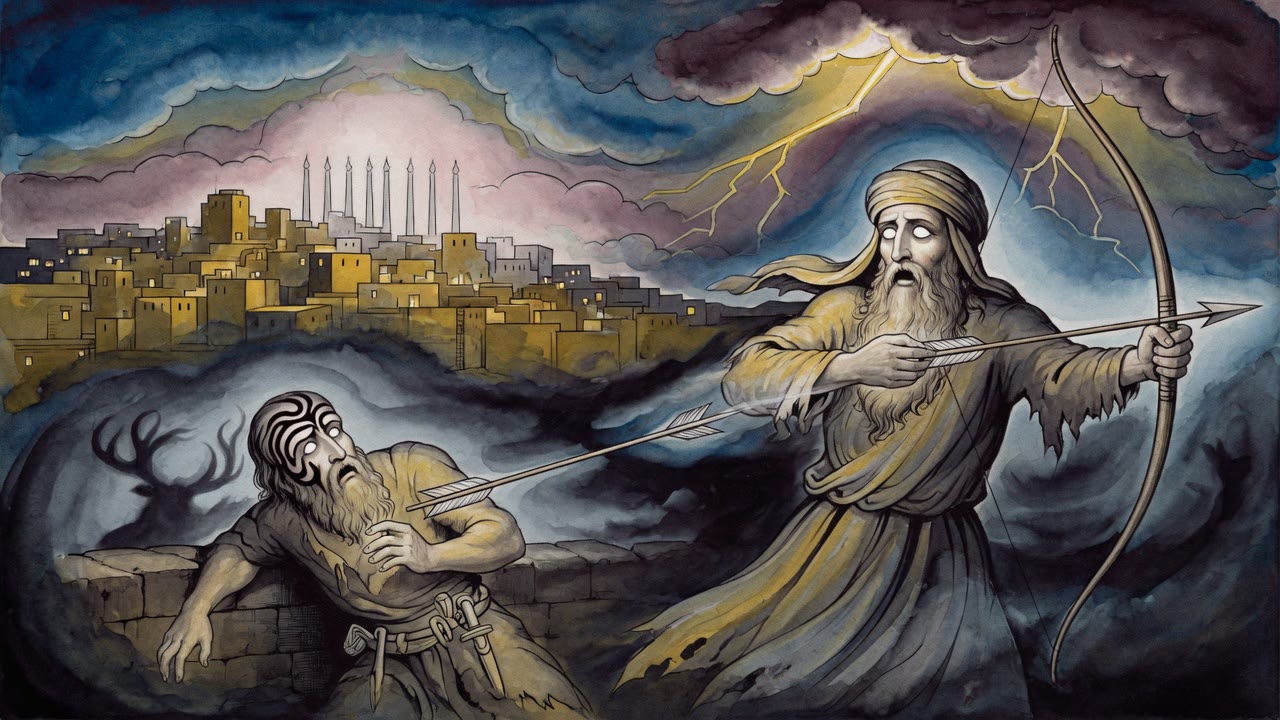
The seventh generation arrived on a hunt. Lamech was blind. His young son walked him, watched for game, and told him when to let the arrow go.
The boy saw something horned in the distance and took it for a beast. Lamech shot. The aim was good. When they came close, the lad cried out that the thing on the ground was not an animal. It was Cain, still wearing the mark, still carrying the horns the boy had read as quarry.
Lamech struck his hands together. The clap killed the boy who had guided him. Four generations of the line, Enoch, Irad, Mehujael, Methushael, went into the earth that opened under them. Lamech's wives wanted nothing more to do with him. He pleaded. If Cain, who killed on purpose, was punished only in the seventh generation, then he, who had killed without seeing, should be spared for seventy-seven. They took the case to Adam. Adam heard both sides and ruled for Lamech.
The man who invented the city died by a grandson's arrow. The girl who sang elegies was that hunter's daughter.
The Angels Came Down for Her
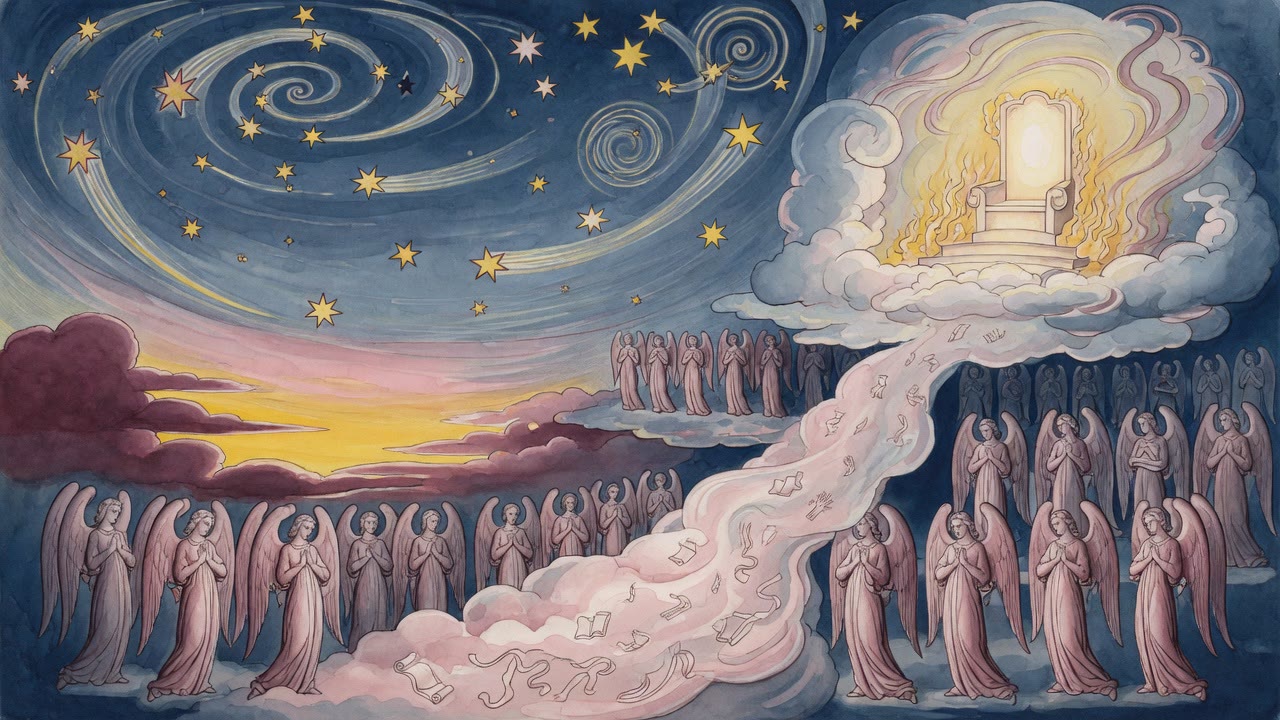
Naamah's name means pleasant. Beauty like that does not stay on the ground unattended.
Shemhazai descended, transgression in his mouth, and later hung himself between heaven and earth as a penitent, and hangs there still. Azazel did not repent. He kept leading people with the old allurements. Naamah, unlike the maiden who refused, led the angels with her face. From her union with Shamdon came Asmodeus.
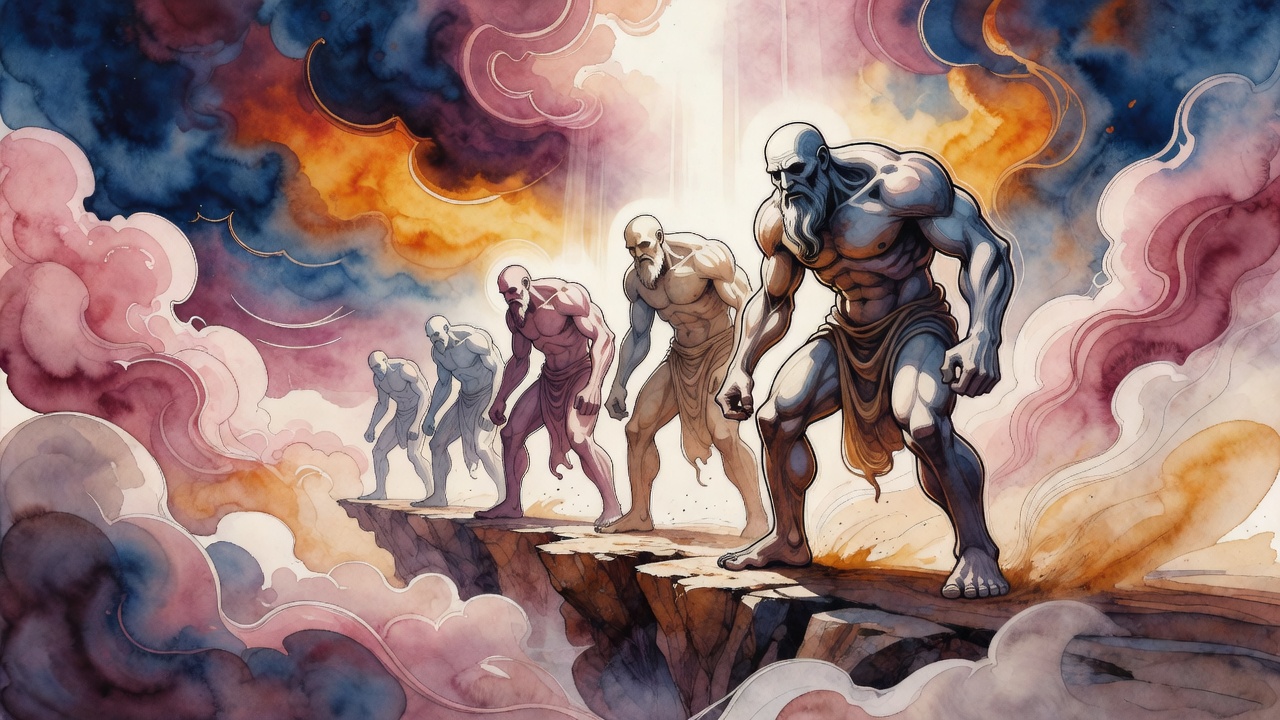
Cainite men and Cainite women walked abroad without shame. The angels who left their posts and came down lost the bodies they had worn above. They put on earthly ones. Union with the daughters of that line became possible. What came of it were giants. Emim, because they inspired fear. Rephaim, because one glance made a heart go weak. Gibborim, with a thigh eighteen ells long. Anakim, who could touch the sun with a neck. Nephilim, who brought the world toward its fall and fell with it.
The Water Took the Cities
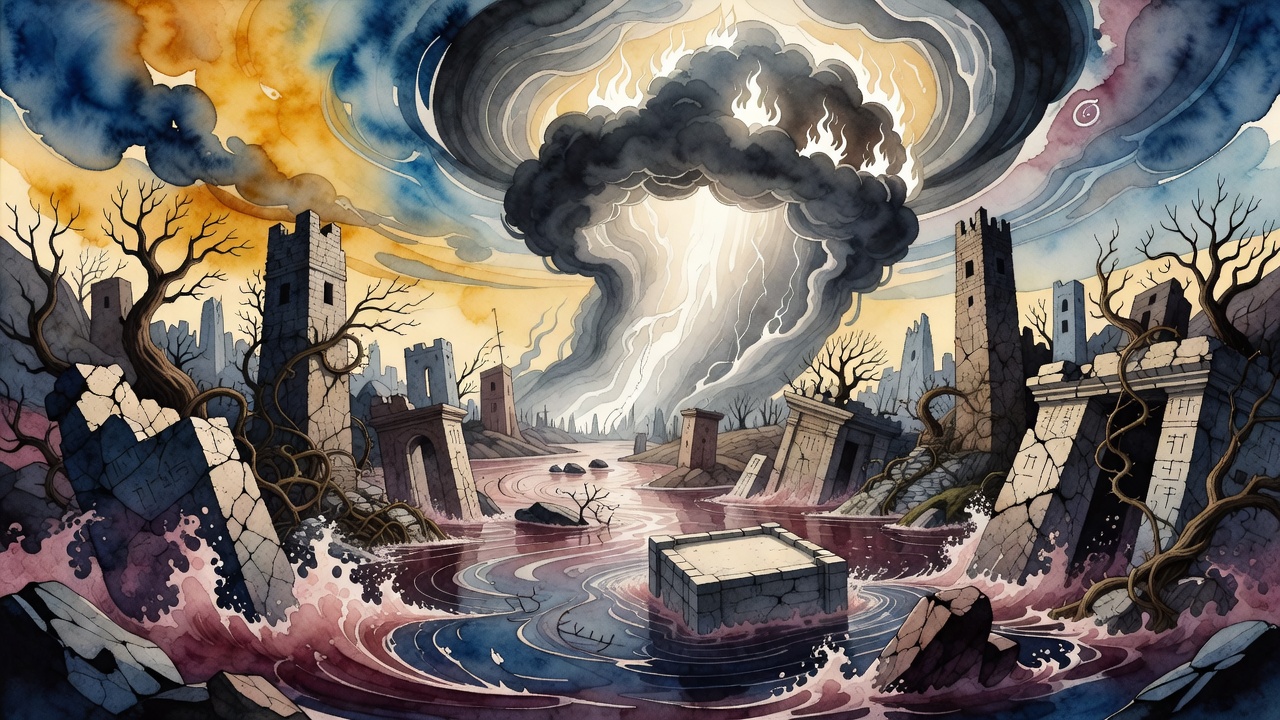
The Flood erased this world. Every wall Cain had raised. Every blade Tubal-Cain had sharpened. Every elegy Naamah had made to be carried in a mouth. All of it went under.
What survived was two of each animal and one family. The Torah does not stop to praise the civilization that drowned. The names remain anyway. Mistress of songs. Chief of the forge. A blind hunter. A city called Enoch. A tambourine in a line that knew what grief was for, and what iron was for, and could not keep either one above the water.
← All myths