Rebecca Blessed Jacob Before She Sent Him In to Deceive Isaac
She kissed him and stopped. The goatskins were still on the kids in the flock. Adam had hidden in trees. She would not hide the blessing.
Table of Contents
Adam still had the taste of the fruit in his mouth when the angel Gabriel put a trumpet to his lips and blew.
 Click for full size
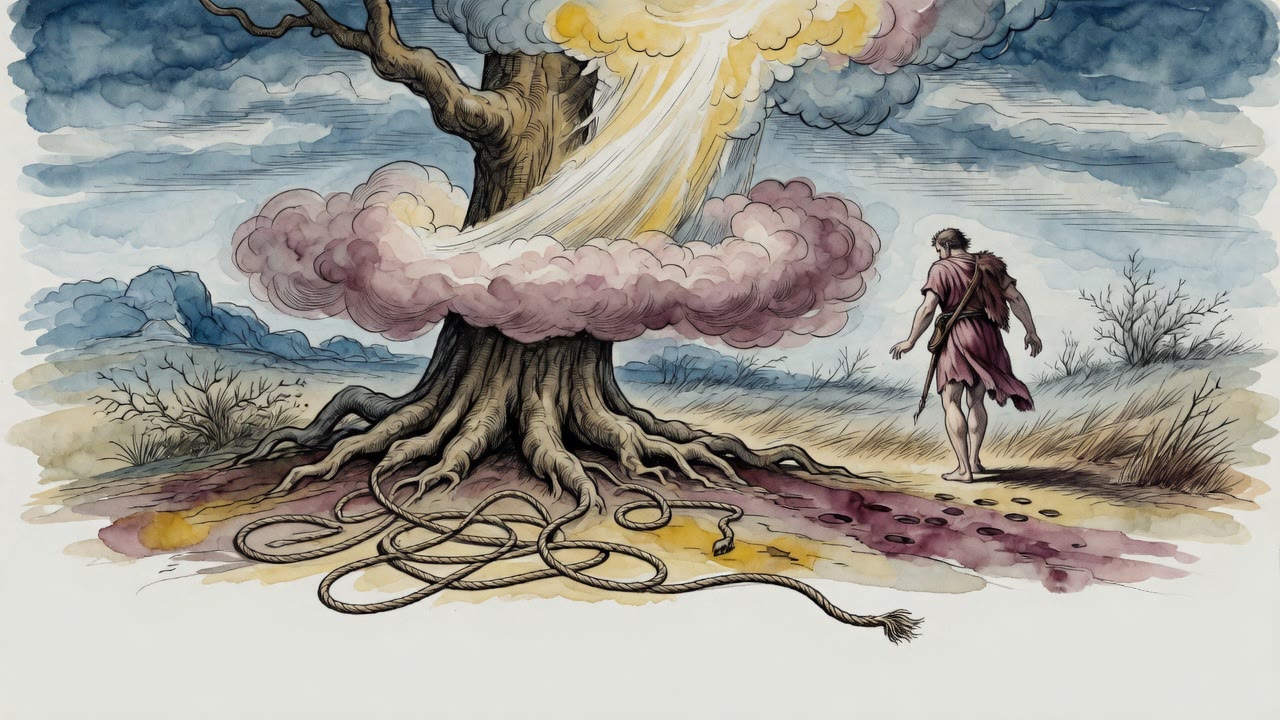
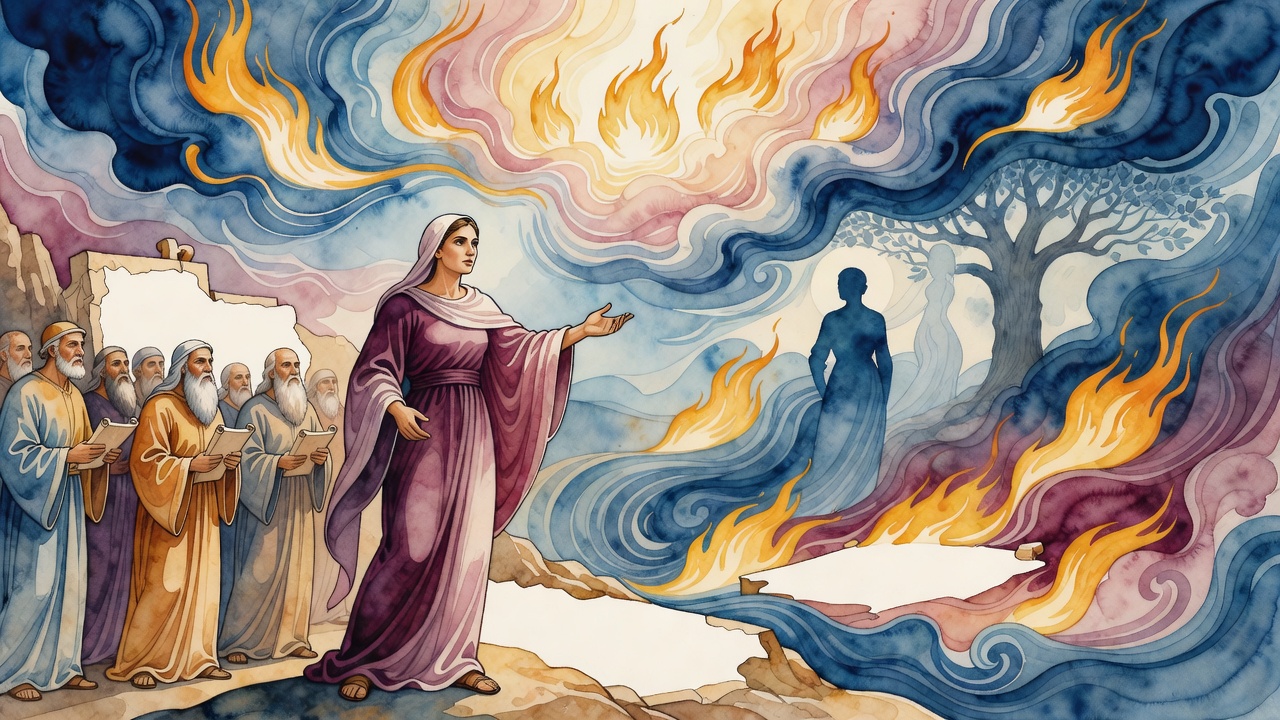
He and Eve heard it and knew. God was coming down into the garden to judge them. They ran and got in among the trees.
The Building Could Not Hide
He came on the chariot. Cherubs drove it. Angels rode alongside singing. The garden opened in flower under the wheels the whole way down. Then the voice, from somewhere above the leaves.
"Adam. Do you think you can hide from me? Can the building hide from its builder?"
"Lord, I was afraid, because I am naked, and I was ashamed."
Sentence was passed on the man, on the woman, and on the serpent. The expulsion followed. At the gate Adam asked for one thing before he went. Let me eat from the tree of life. God said no. "You cannot take of it in your lifetime." The angels started moving him out and he turned and asked again, smaller this time. Let me take incense out with me, so I can burn it, and perhaps God will listen.
That one they allowed. He walked out of the garden of creation with iris and balsam in his hands, and Eve walked out beside him, and behind them the gate held.
She Blessed Him First
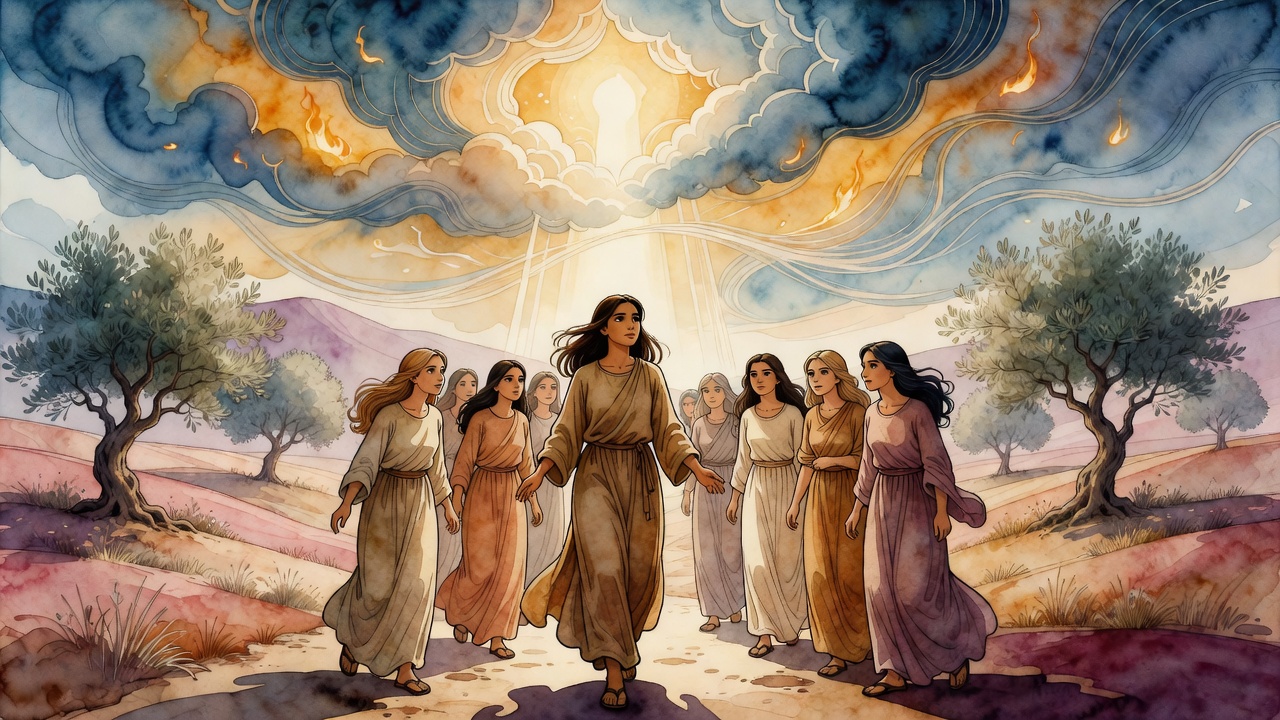
Generations down the line, in a camp in Canaan, Rebecca called her younger son over before anyone else had decided a thing.
"Blessed be the one who blesses you," she said, "and all flesh that curses you falsely, may it be cursed."
Then she kissed him. "May the Lord of the world love you as your mother's heart loves you. May her affection rejoice in you and bless you."
And she stopped. Whatever came next, it would not be the first blessing Jacob had received that season. It would not be the one she had put on him with her own mouth while nobody was watching. Adam had hidden and been found. She would put the words on her son in the open, before any costume went on.
The Old Man Called for His Hunter
In the seventh year of that week Isaac sent for his elder son.
"I am old, my son, and my eyes are dim in seeing, and I do not know the day of my death. Hunt for me, and make me savoury meat, and bring it to me, that I may eat and bless you before the Lord before I die."
Esau took a bow and went out into the field. His mother had heard every word of it through the tent wall.
Two Kids From the Flock
Rebecca went straight to Jacob.
"Go to your flock and fetch me two good kids of the goats. I will make savoury meat for your father, the kind he loves, and you will bring it to him, and he will eat and bless you before the Lord before he dies, so that you will be the one blessed."
Jacob did not argue about whether it was right. He argued about whether it would work.
"Mother, I will not hold back anything my father would eat and that would please him. Only I am afraid he will recognise my voice, and want to touch me."
That was the whole risk, stated by the person who would be standing inside it. A blind man's hands and a voice that was not his brother's. Rebecca answered it by taking the consequence off him and putting it on herself. Let the curse fall on me, my son. Only do what I tell you.
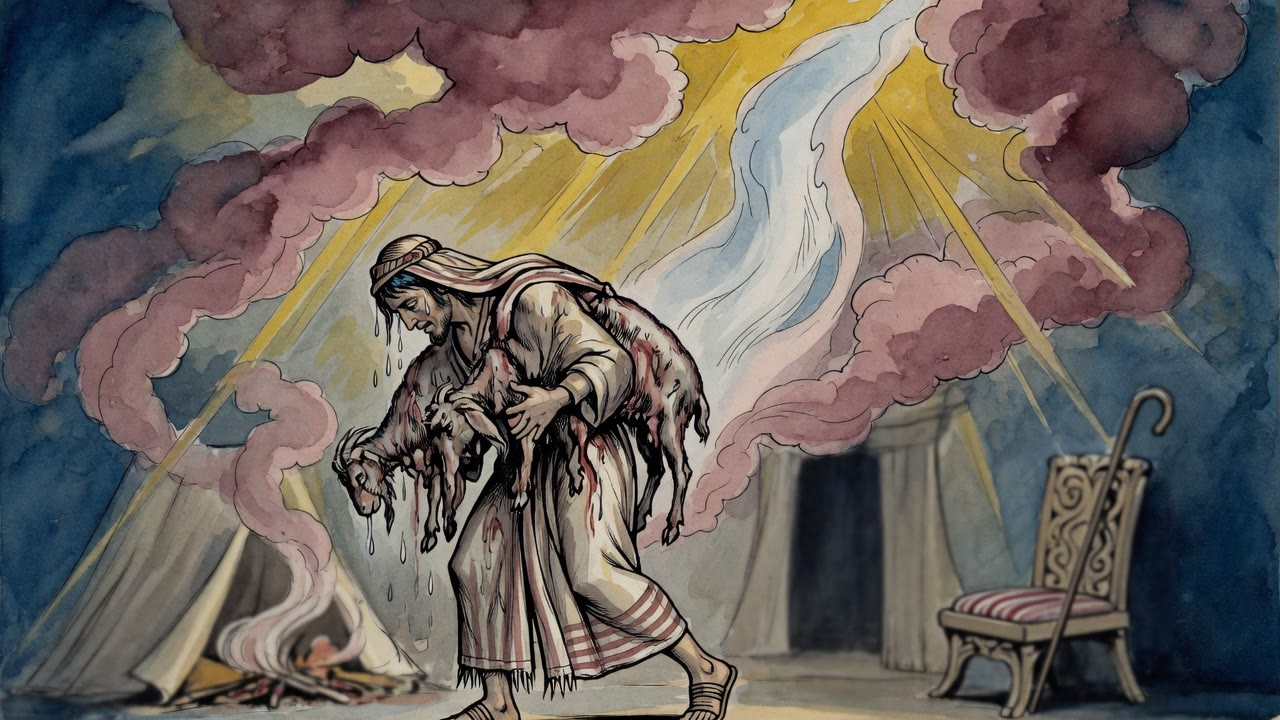
He went out to the flock. She cooked. She took Esau's good clothes out of the chest and put them on Jacob. She tied the skins of the kids over his hands and over the smooth of his neck. She put the dish and the bread into his hands and pushed him toward the tent flap.
The Hands That Went Over Him
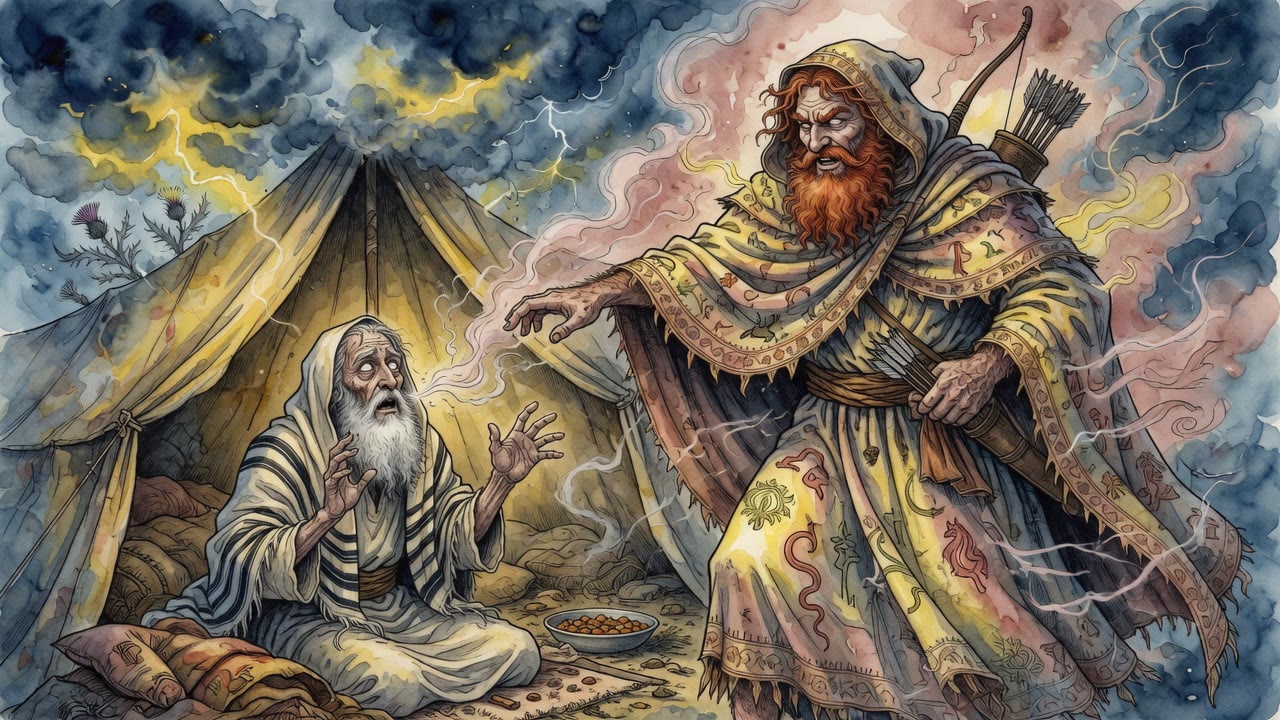
Isaac heard someone come in and asked who it was, and heard an answer that did not sound the way it should have. He said come here and let me feel you. The old hands went over the goat hair on the back of the wrists, over the neck, and stopped. The voice was Jacob's voice. The arms were not Jacob's arms. He asked once more, straight out, whether this was really Esau, and got a flat yes (Genesis 27:24).
He ate. He drank. He said come near and kiss me. When the boy leaned down, what came off the borrowed clothes was the smell of open country, and the old man let go of the question and blessed him with the dew of heaven and the fat places of the earth and grain and wine and nations bowing down.
Adam had hidden in a garden where nothing could be hidden, and a trumpet went off over his head before God had even arrived. Jacob stood inside a tent in his brother's clothes and his brother's smell with a lie in his mouth, and the hands passed over him and found what they were meant to find.
Outside, Rebecca waited with a curse she had already agreed to carry, and listened to a blind man give away everything he had to the son she had already blessed.
← All myths