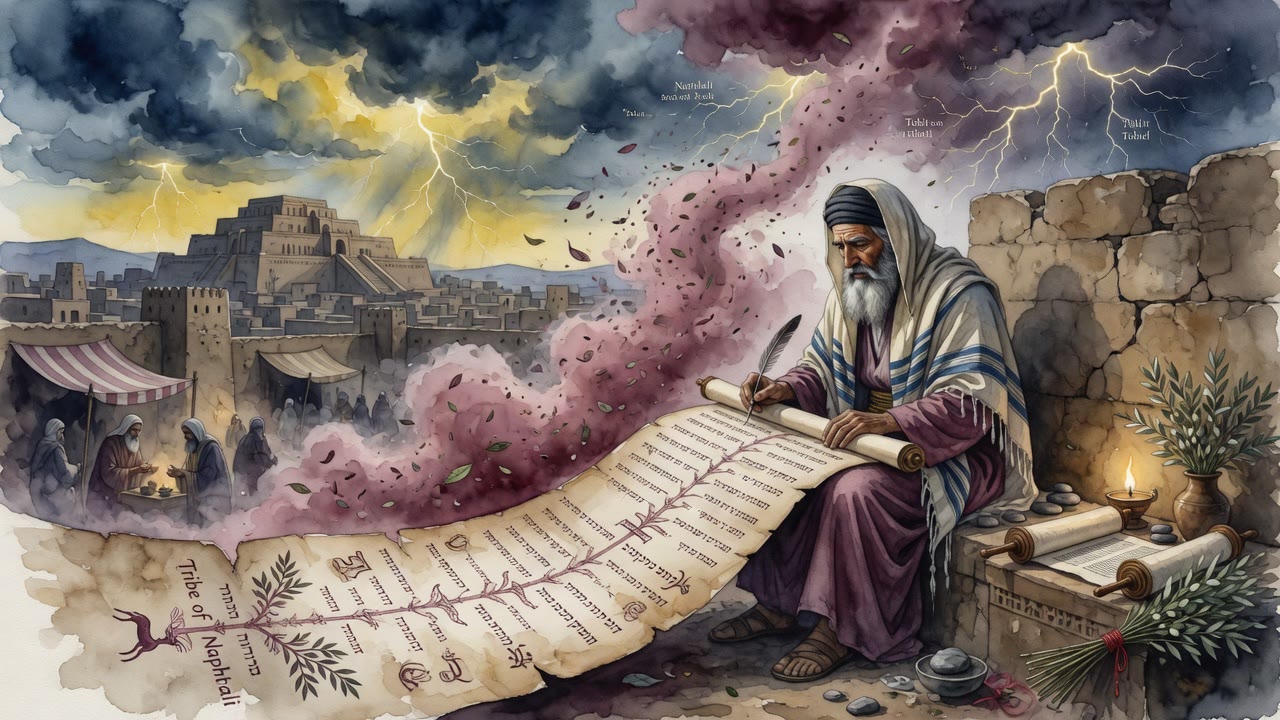
Naphtali Could Run Like a Deer and Jacob Sent Him in Every Crisis
In a dream, Naphtali's brothers grabbed the sun and the moon, and he seized a star. On earth he carried Jacob's messages between Egypt and Canaan.
Table of Contents
 Click for full size
The Gift That Made Him Indispensable
Naphtali was born of Bilhah because Rachel, still barren at that point, had given her handmaid to Jacob so that children might be born on Rachel's knees. Naphtali was thus Rachel's child in spirit, claimed by the woman who loved him though she had not carried him. He grew up knowing this, knowing that his existence was the result of Rachel's creative refusal to accept the situation as permanent. She had found another way. He absorbed that quality. He moved fast. He found paths where others saw walls.
He could run like a deer. Not quickly in the ordinary human sense. Supernaturally quickly. The texts describe Naphtali's speed as something people came to rely on the way they relied on weather or geography, a fact of the world they inhabited. Ginzberg's Legends of the Jews, drawing on multiple midrashic sources from the Talmudic and post-Talmudic periods, records that Jacob used Naphtali as his primary messenger precisely because of this capacity. When news needed to travel between family camps, when something had to reach Canaan quickly from Egypt or in the other direction, Jacob sent Naphtali. His brothers could have made the journey. Only Naphtali made it at the speed that crises require.
The Dreams Naphtali Received
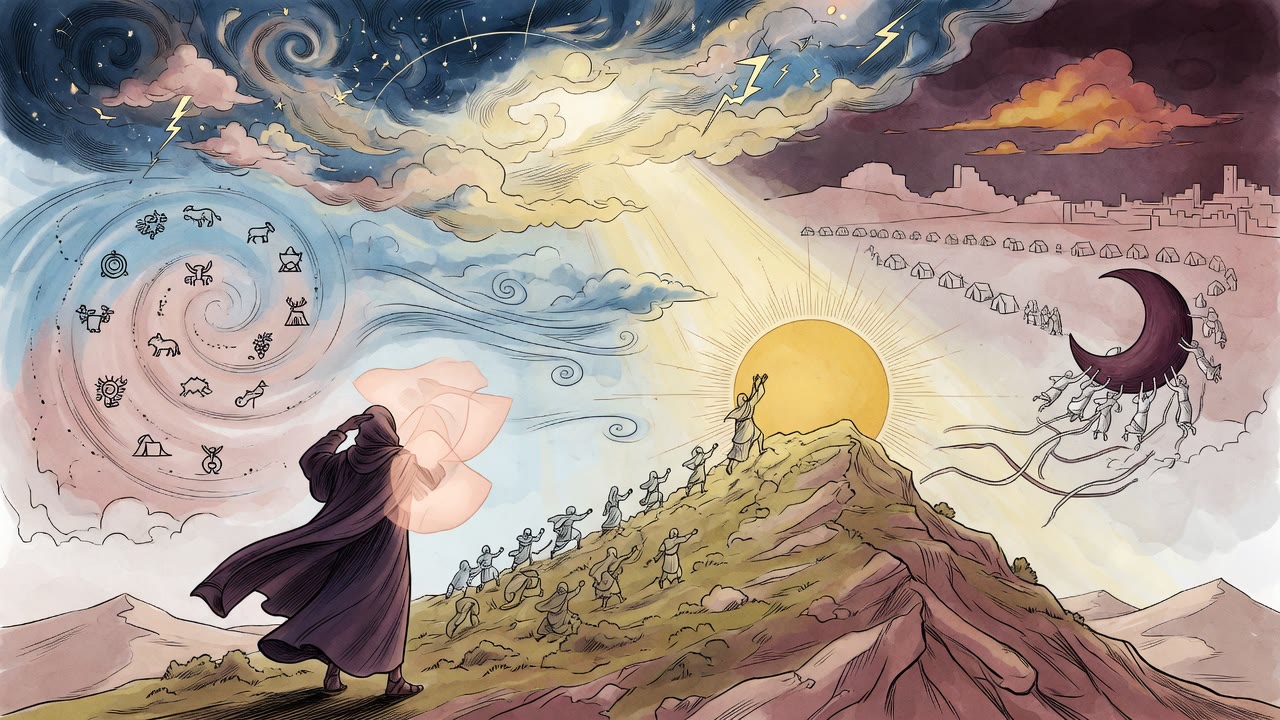
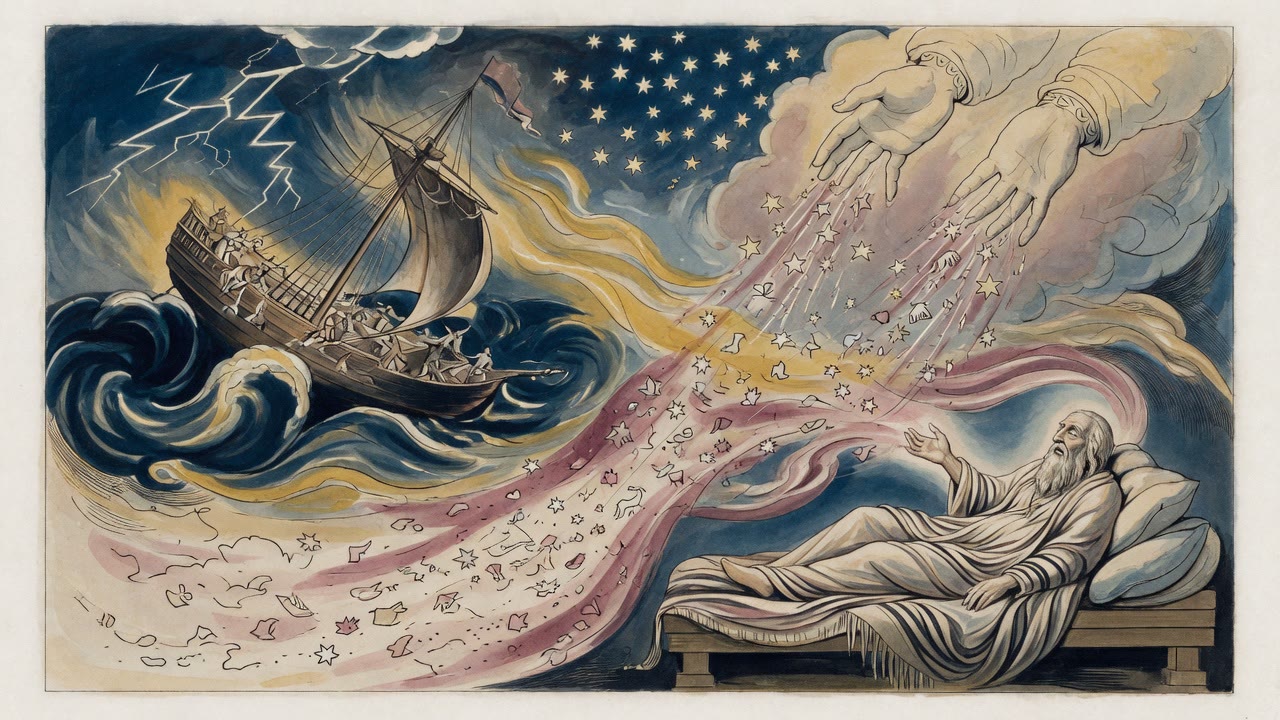
The Chronicles of Jerahmeel, a twelfth-century Hebrew chronicle compiled by Jerahmeel ben Solomon and first published in English by Moses Gaster in 1899, preserves the visions that came to Naphtali near the end of his life. In the first vision, Jacob told his twelve sons to seize whatever they could. Levi grabbed a staff, leaped onto the sun, and rode it. Judah did the same with the moon. Nine other brothers each mounted a star. Only Joseph remained on the ground, and when asked why, he said: "What good is heaven to the earth-born?" Then a mighty winged bull appeared, and Joseph rode it for four hours, moving through every mode of motion, walking and running and flying, until he overtook the others entirely.
The vision placed Naphtali among those who had seized a star, who had already claimed their portion of the heavenly architecture. His speed on earth was the earthly expression of something that existed in a more complete form above. The man who ran like a deer was also the man who had been assigned a star.
The Testimony at the End
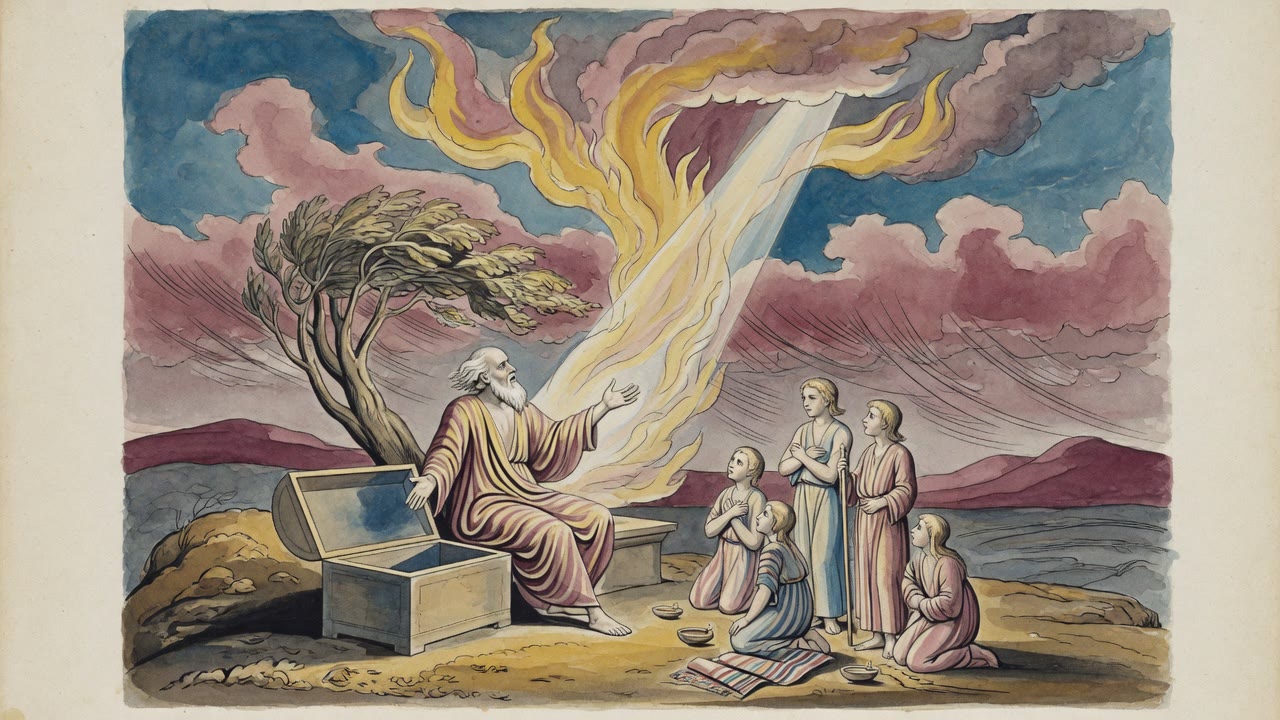
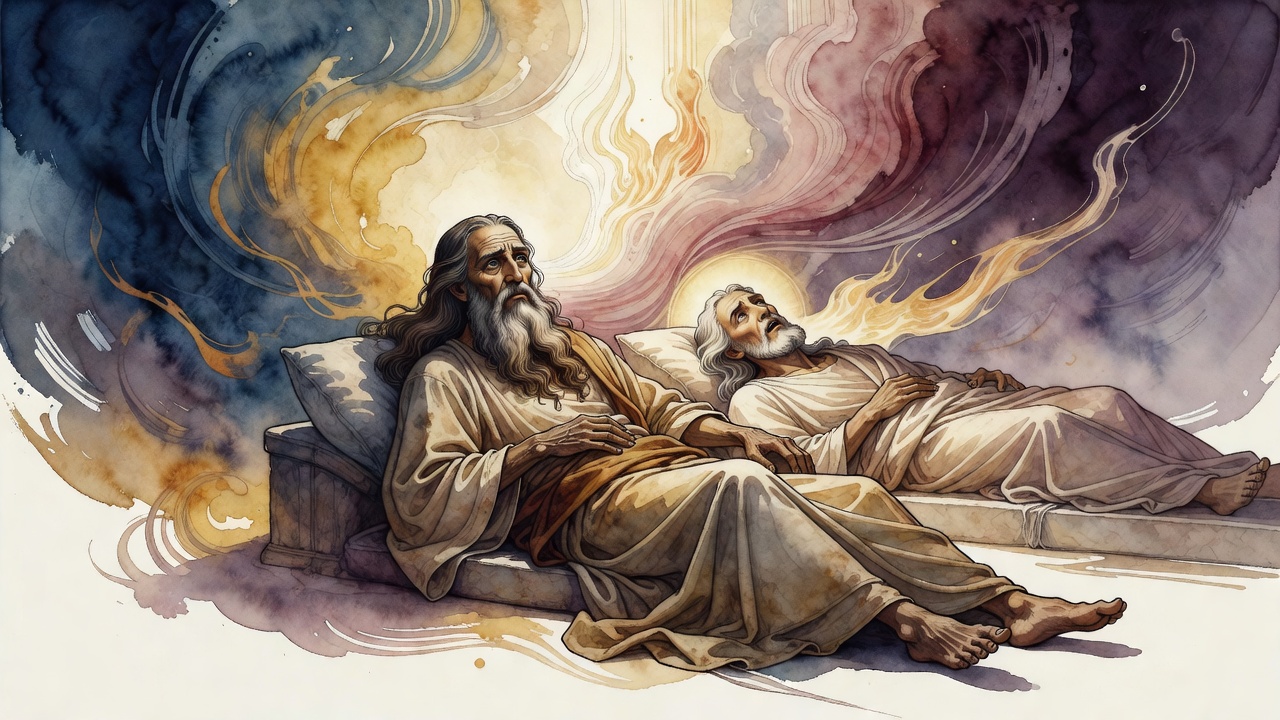
Naphtali lived to a hundred and thirty-two years. In his final year he invited his children to a banquet. The next morning he announced his impending death. They did not believe him. He insisted, praising God and marking the banquet as the sign. Then came his final address, his ethical will to his children, and it began in an unexpected place.
He said: "I give you no command concerning my silver or gold." He said: "What I command you is not a hard matter, which you cannot do, but an easy thing." Then he said the easy thing: "Fear God. Serve him. Cling to him."
He explained why God requires human service. "God needs no creature," he said. "All creatures need him. He did not create the world for nothing. He created it so that men should fear him and no one should do to his neighbor what he would not have done to himself."
A man famous for his legs, for the fastest run in Israel, for the physical gift that made him useful to his father in every emergency, died teaching his children that what mattered was the simplest obligation in the world: behave well toward other people. The whole accumulated speed and vision and dreamlife of his hundred and thirty-two years reduced, at the end, to that.
What Rachel's Cunning Had Made
Naphtali was the one who explained where his name came from. Rachel had acted with cunning, giving Jacob Bilhah instead of herself to produce children in her name. "Because of that cunning, I was called Naphtali." The name itself carries the story of its origin. He was named for the struggle, for the strategic creativity that Rachel had used to change her situation when direct change was impossible.
He had loved Joseph as a brother most deeply because Joseph resembled him most closely, an observation Naphtali made in his deathbed address. Rachel had prayed for a son from her own body who would look like Naphtali. Joseph was that answer. The two of them were Rachel's in different ways, one biological and one strategic, and the resemblance between them was visible to everyone who knew both. Naphtali had spent his life moving faster than anyone else alive, carrying messages for his father, claiming his star in a dream, telling his children at the end that the easy thing was the only thing. Joseph had spent his life moving through descents and ascents, pit and palace, grief and authority, and emerged carrying the covenant forward into Egypt where it would need to survive four hundred years.
← All myths