Naphtali Grew Stronger After He Told His Sons He Was Dying
He fed his sons, then told them he was dying. They did not believe him because he still looked strong. Then he told them about the sun and the broken ship.
Table of Contents
Naphtali was a hundred and thirty, and he still ran like a deer. On the first day of the seventh month he made his sons a feast of food and wine. In the morning he said, "I am dying."
 Click for full size
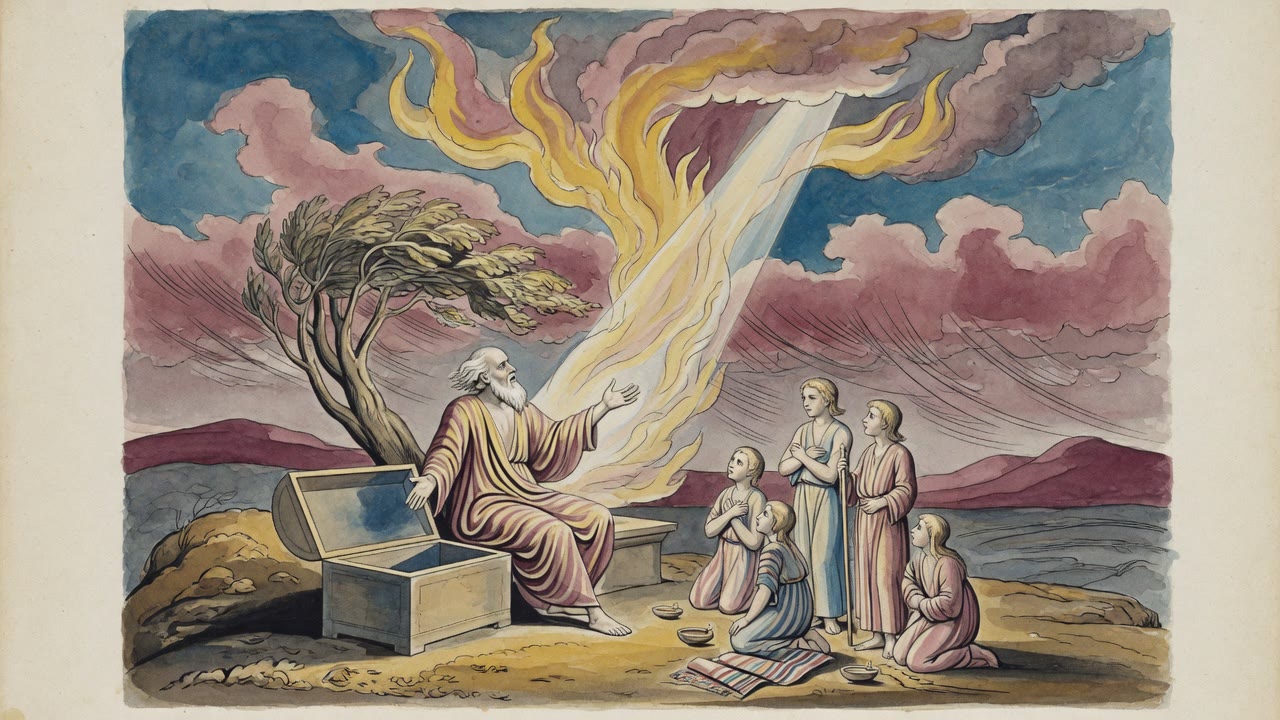
They did not believe him. He looked too strong. As he stood and glorified God, he grew stronger, not weaker, and he told them he would die after yesterday's feast anyway. Then he told them what he had seen.
They Did Not Believe He Was Dying
He began with his birth, because the visions sat on it. Rachel had given her maid Bilhah to Jacob, and Naphtali had been born on Rachel's knees. She loved him because he had arrived in her lap before she had a son of her own. She used to kiss him and say, "May I have a brother of thine from mine own womb, like unto thee." Joseph came later, shaped to that prayer, like Naphtali in all things.
Bilhah was not a slave by blood. Her father Rotheus was a Chaldean of Abraham's family, freeborn, taken captive and sold to Laban. Naphtali carried Abraham's line and the knowledge of a house that had been bought. Jacob had used him as a messenger because he was swift. A hind let loose. Beautiful words. The sons looking at him that morning could not match that body with a deathbed.
He said he would not command them about silver or gold. "I speak to you about a very easy matter. Fear God. Serve him. Cling to him." They said they had never strayed. He said God was his witness that they spoke the truth. "But I dread the future."
The Race for the Sun and the Moon
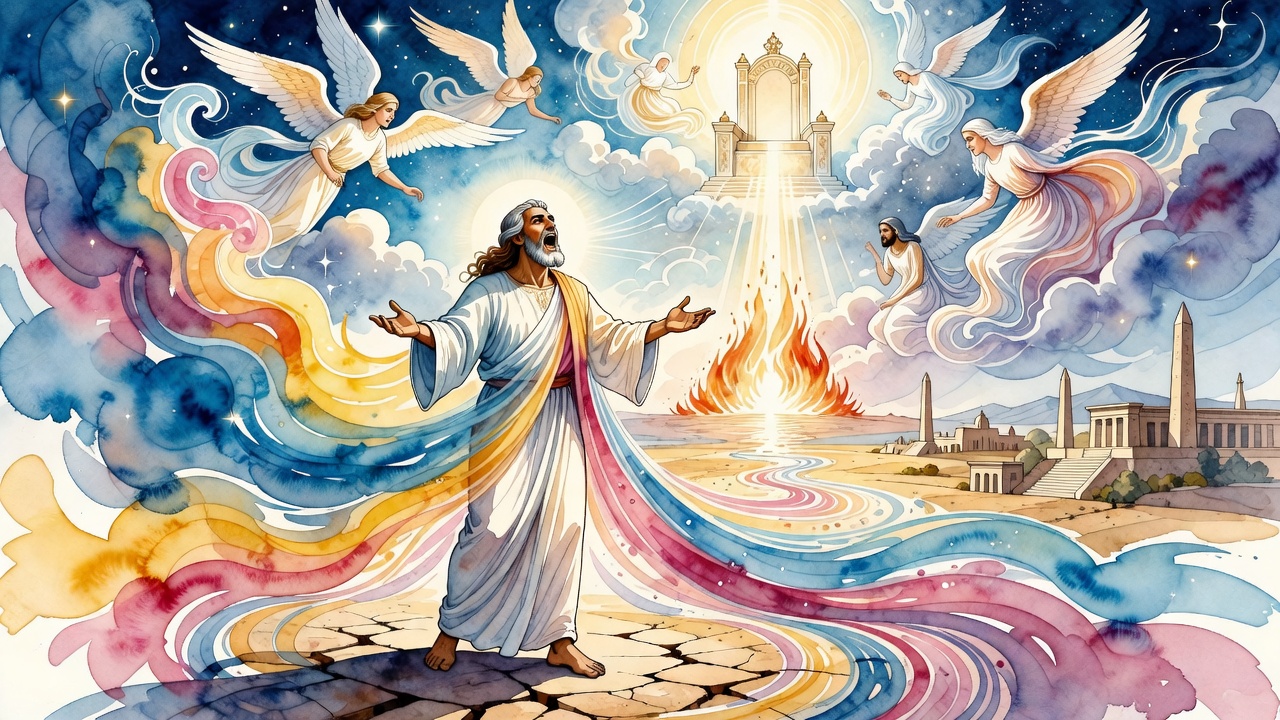
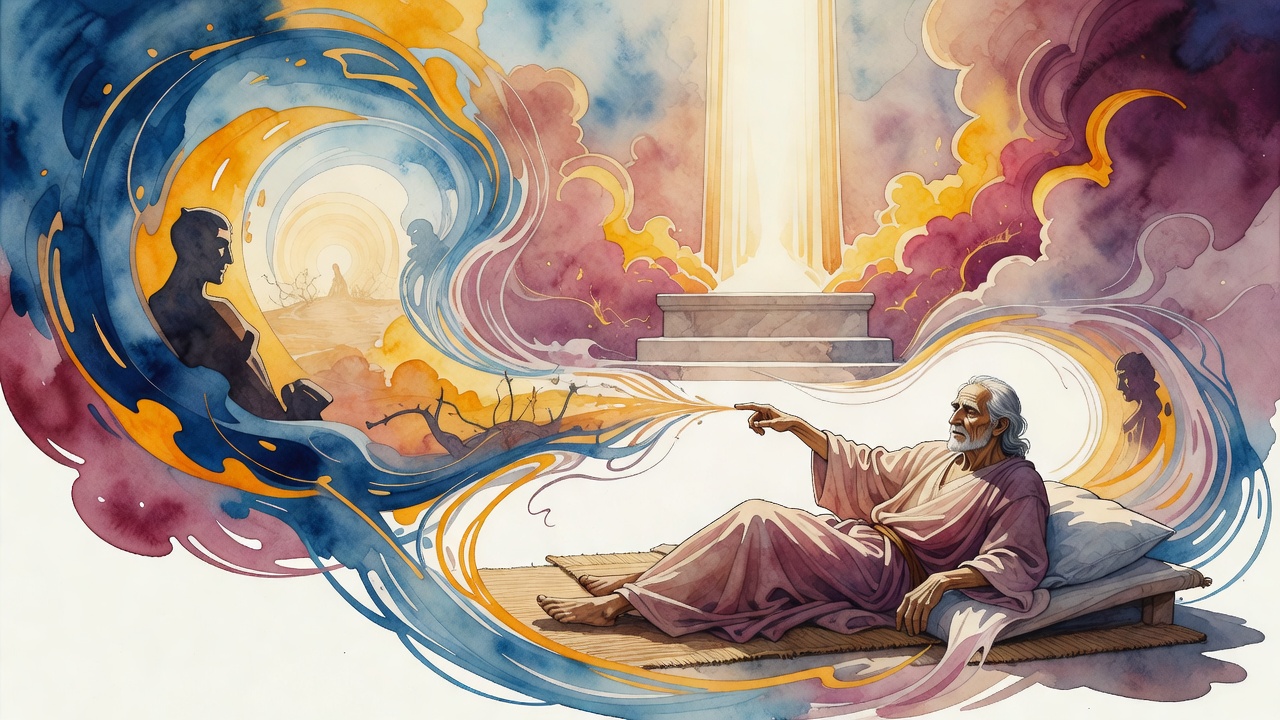
In the fortieth year of his life he had stood on the Mount of Olives, east of Jerusalem, and seen the sun and the moon standing still. Isaac said, Run, and lay hold of them, each according to his strength. To him that seizes them will the sun and moon belong.
They all ran. Most hands slipped. Levi laid hold of the sun. Judah outstripped the others and seized the moon. Both were lifted with what they had taken. A young man gave Levi twelve branches of palm. Judah shone like the moon, and under their feet were twelve rays.
A bull stood on the earth with two great horns and an eagle's wings on its back. The brothers tried to seize it and could not. Joseph came, seized the bull, and went up. A holy writing appeared: Assyrians, Medes, Persians, Syrians shall possess in captivity the twelve tribes of Israel.
In the other telling, Jacob himself ordered the race, and each of nine tribes rode a star, and Joseph stayed on the earth. "What availeth the woman-born in heaven, as in the end he must needs stand upon the earth?" Then the winged bull arrived for him, and he mounted, and later he beat Judah with a staff until ten rods changed hands, and the brothers left Judah and Levi like one man. Naphtali told both shapes. The sons could feel the split coming either way.
The Ship Without a Pilot
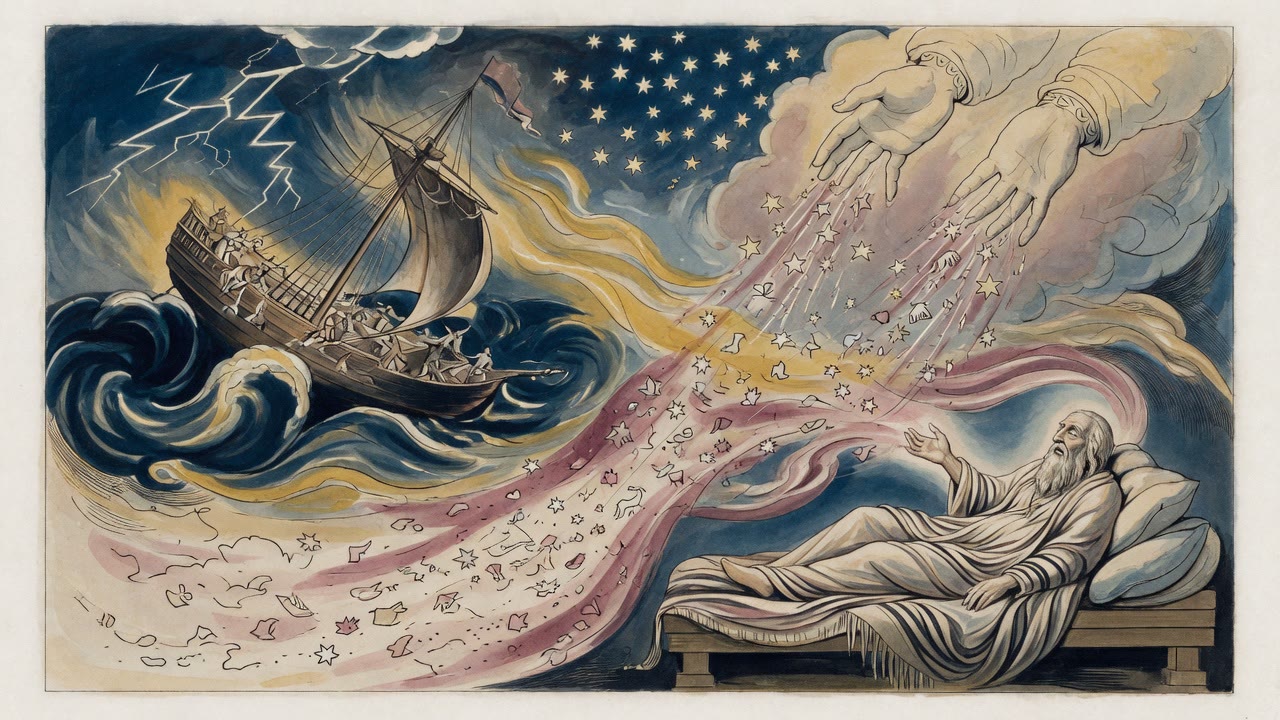
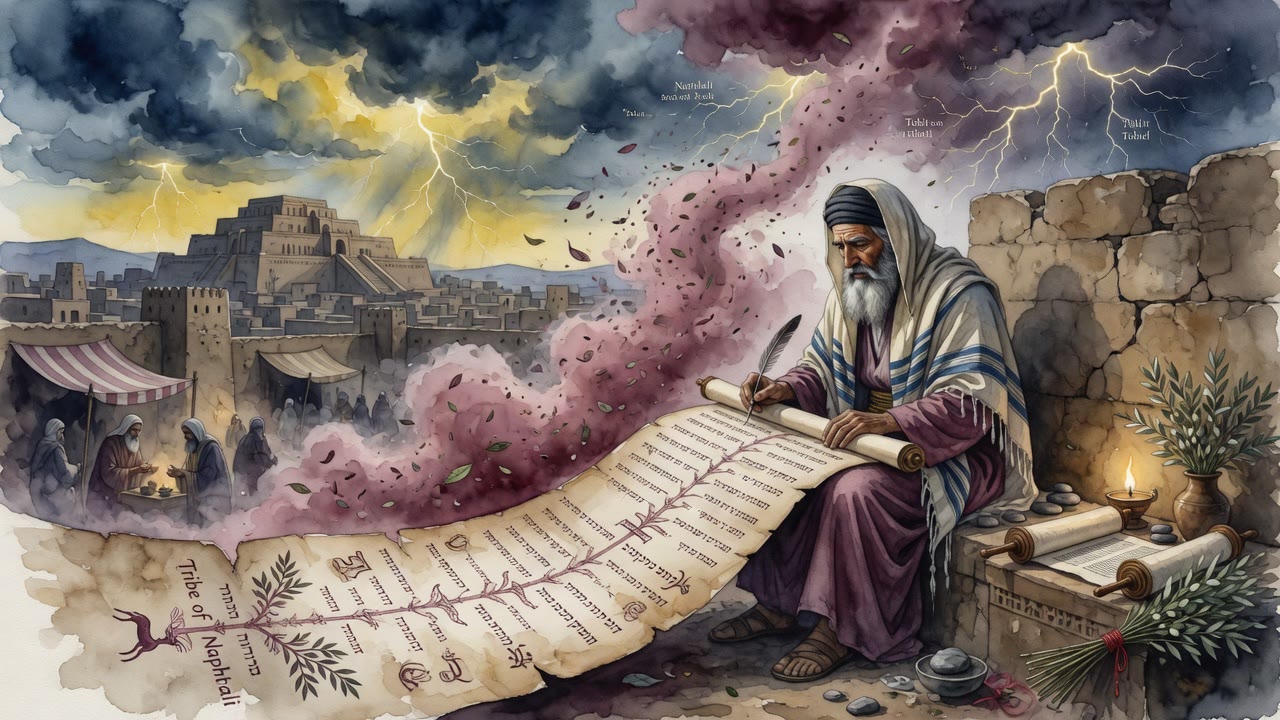
Seven days after the first vision he saw Jacob standing by the sea. A ship came sailing with no sailors and no pilot. Written on it: The Ship of Jacob. Their father said, Come, let us embark. When he had gone on board, a storm rose. Jacob, who had been holding the helm, departed from them. The ship filled and broke. Joseph fled on a little boat. The rest divided onto nine planks, Levi and Judah together, and they were scattered to the ends of the earth.
Levi girt himself with sackcloth and prayed. The storm ceased. The ship reached land as if in peace, and their father came, and they rejoiced.
In the later Hebrew telling the same sea is the Great Sea, and the mast bears the name of the son God had blessed, and Joseph refuses an oar until Jacob sets both rudders in his hands. As long as Joseph steered by Judah's pointing, the ship ran quiet. When they quarreled, Joseph stopped listening, and the course went wrong. Naphtali had seen the exile and the gathering in one night, and the gathering depended on two brothers who did not stay of one mind.
Fear God, Cling to Him
He told the two dreams to Jacob while Joseph was still missing. Jacob said they would be fulfilled in their season, after Israel had endured many things. Then he wept. "Ah me, my son Joseph, thou livest, though I behold thee not." Naphtali burned to say that Joseph had been sold. He feared his brothers and kept the words in his mouth.
Now, at a hundred and thirty, with sons who had never strayed, he was still afraid of a future he had already watched. Join Levi. Join Judah. Do not join the children of Joseph when they pull away. Do not run after the gods of the nations. The command was small on purpose. Fear God. Serve him. Cling to him. He had seen the sun taken, the moon taken, the ship broken, the planks going twelve ways. He wanted them holding one easy thing when the water came.
He grew stronger as he spoke. Then the feast was over, and the runner was finished.
← All myths