Adam Built the First Altar and Abraham Found It Still Standing
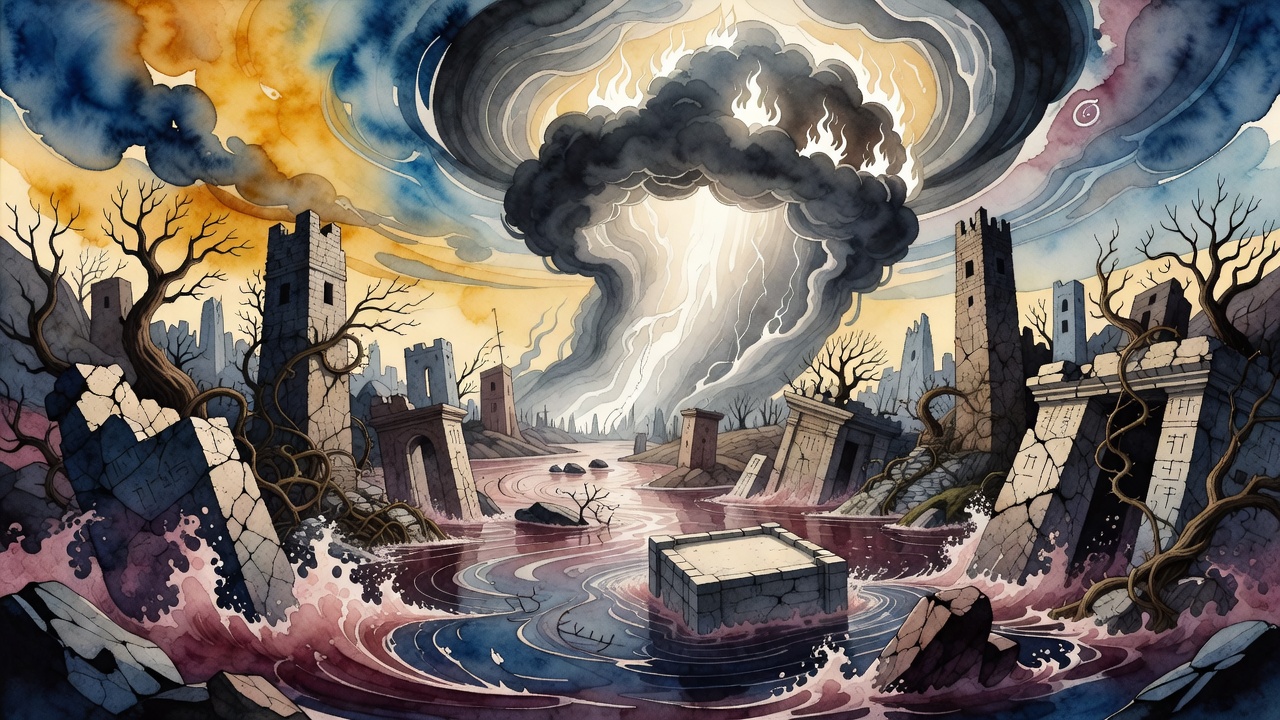
The stones at Mount Moriah were already arranged when Abraham arrived. Adam had built the altar first. Noah had rebuilt it. Then Abraham found it waiting.
Table of Contents
 Click for full size
Stones Already There
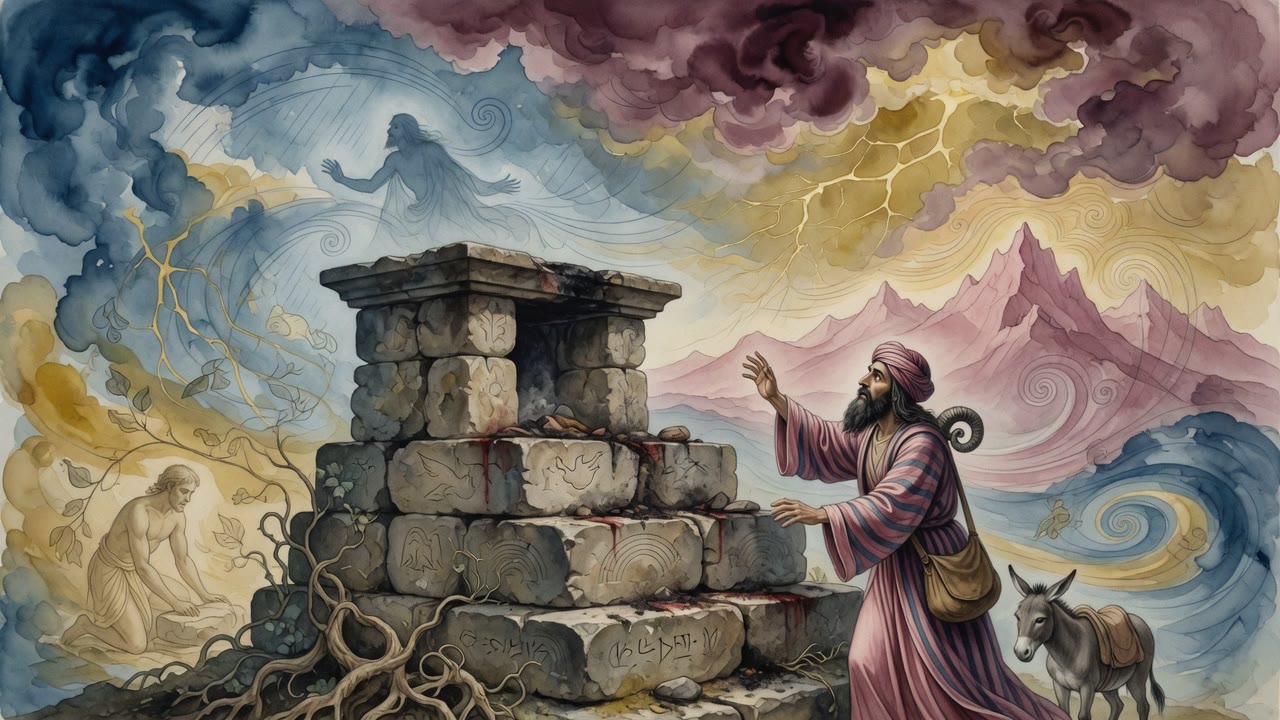
When Abraham reached the place God had told him to go, he did not build an altar from scratch. The stones were already arranged. He found them, recognized what they were, and understood what was being asked of him in light of everything that had happened at that spot before.
This is what the Targum Pseudo-Jonathan insists on: the altar at Mount Moriah was not a new construction. It was the oldest altar in the world, built by the first human being, rebuilt by the survivor of the flood, and standing ready for the father of the Jewish people when God told him to come and offer his son.
What Adam Built When He Left the Garden
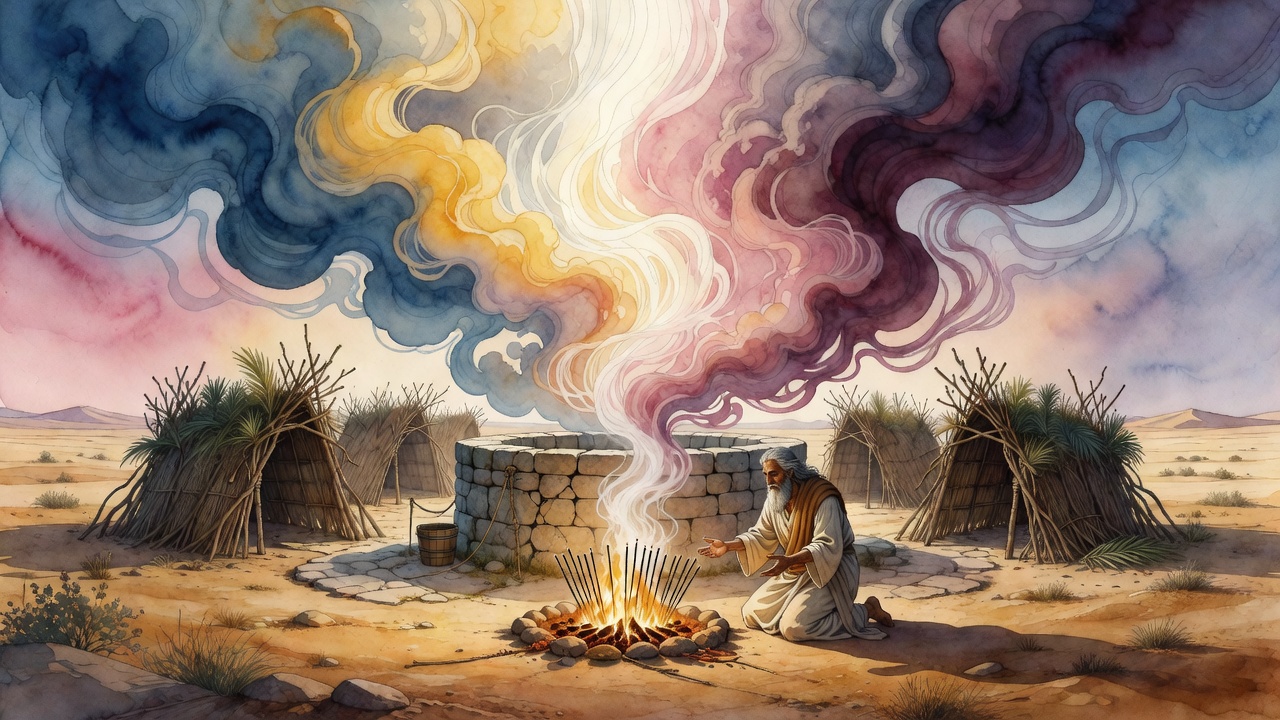
Adam was expelled from the Garden of Eden in the morning hours, the tradition says, and his first act on the outside was to offer a sacrifice. Not from grief and not from petition. From acknowledgment: he had been given life and a world, and the right response to that gift, even after losing direct access to its source, was to say so.
Pirkei DeRabbi Eliezer, the eighth-century Palestinian midrash attributed to Rabbi Eliezer ben Hyrcanus, records that Adam built his altar at the same spot that would later become the Temple Mount. He offered an ox, the Midrash specifies, an animal whose horns were greater than its hooves, which was itself a symbol: greatness bowing downward into service. The sacrifice rose as a pleasing odor. The altar remained.
Noah at the Same Stones
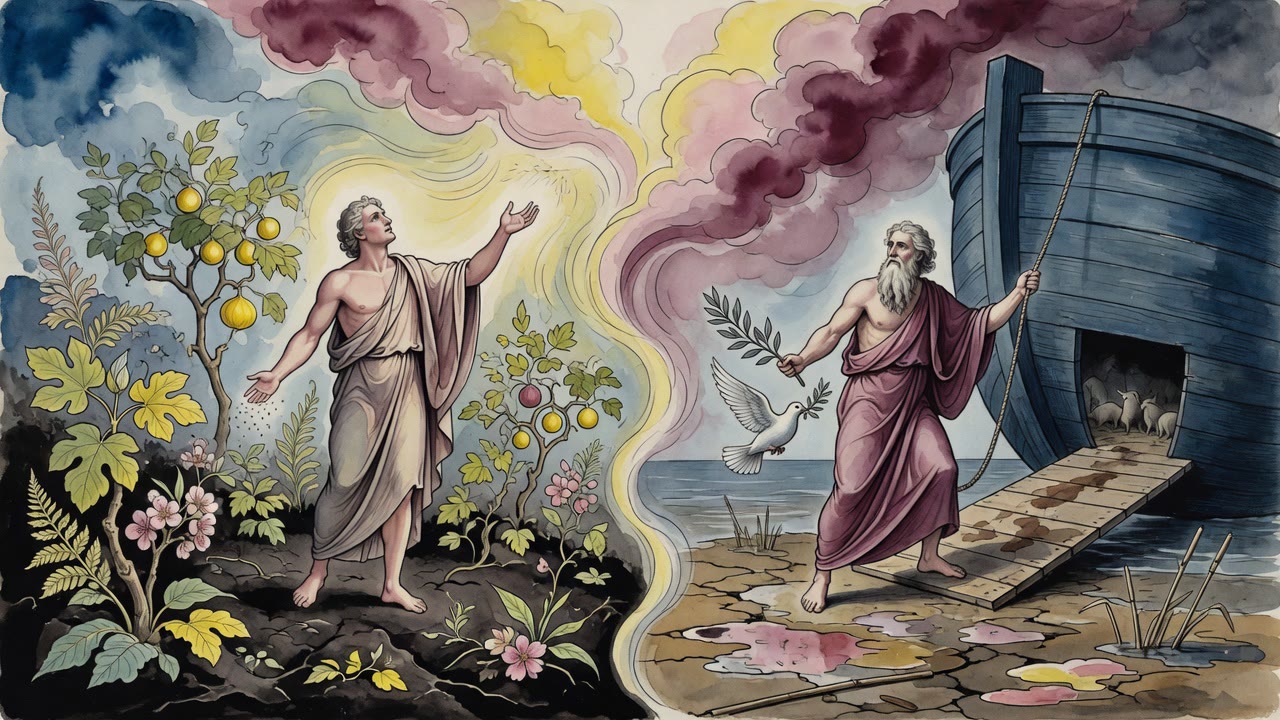
The flood came and went. The world was washed clean. When Noah's ark rested on dry ground and Noah stepped out onto the earth that had survived, he too offered a sacrifice. The account in Genesis says simply that he built an altar and offered burnt offerings. The Targum says he found the same altar Adam had built and repaired it. The stones had survived the flood, carried forward through the deluge like the ark itself, pieces of the pre-flood world waiting to be used again.
Noah's offering at Adam's altar established a continuity that the flood had not broken. The same place, the same dedication, the same upward gesture of a human being to the divine. The covenant after the flood was new, the rainbow was new, but the altar was old.
Abraham and the Third Use
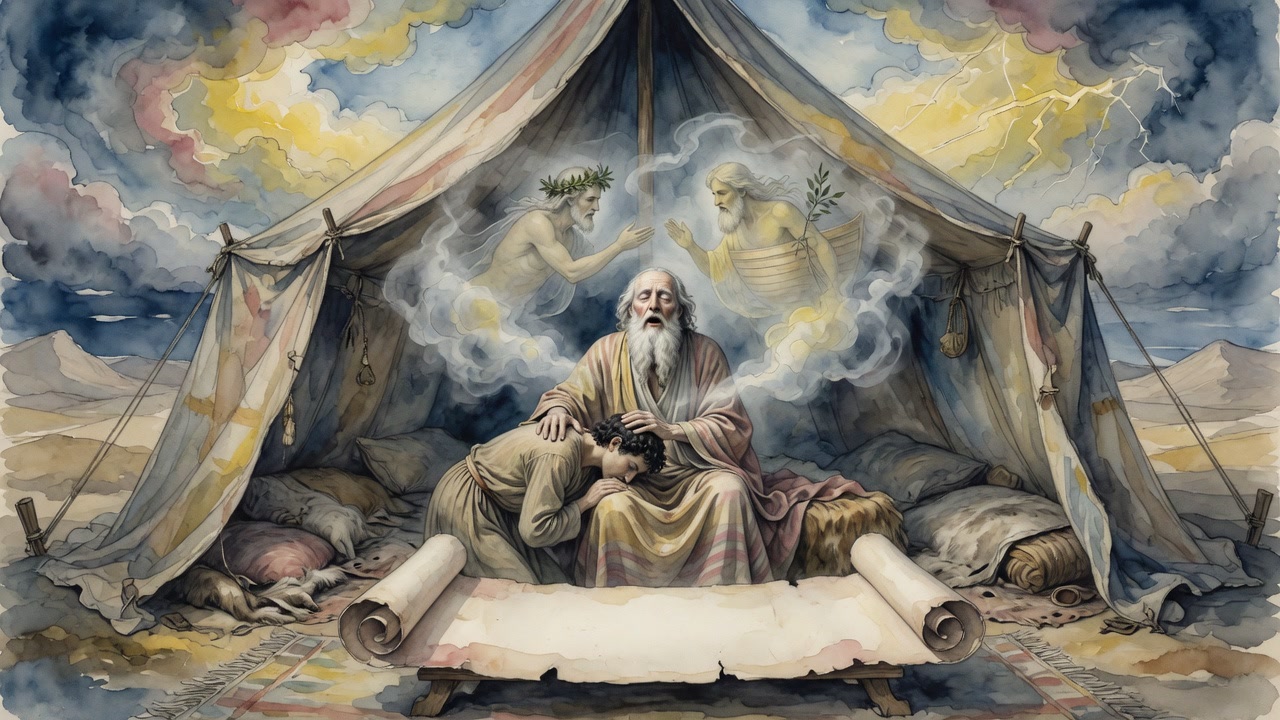
By the time Abraham arrived at Mount Moriah with his son Isaac and the wood and the fire and the knife, the altar had already held two covenants. He arranged the wood, bound Isaac, and raised the knife. The intervention came at the last moment: a voice, a ram caught in the thicket, Isaac unbound and breathing.
The Midrash Aggadah observes that Abraham built no new altar on that day. He used what was already there. The three great acts of covenant between God and humanity in the early biblical narrative, the offering after expulsion, the offering after the flood, and the binding that established the lineage of the Jewish people, all happened at the same address.
The Temple that Solomon eventually built on that spot was not the beginning of the site's sacred history. It was the fourth use of a location that had been holding the weight of covenant since the first morning outside the Garden.
← All myths