Ruth Was Written Into Creation in a World That Needed Her
Naomi told her three times to go back to Moab. Ruth stood on the road and would not take a step toward her mother's house.
Table of Contents
 Click for full size
Three Times Naomi Told Her to Turn Back
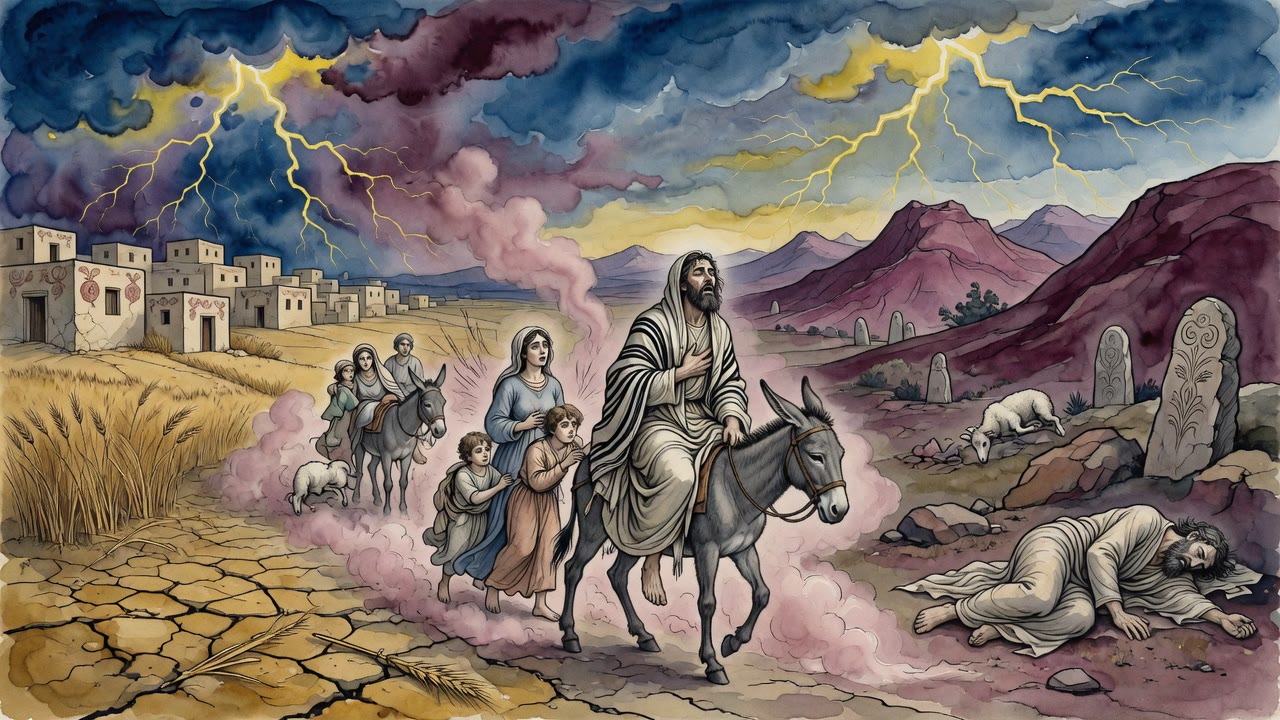
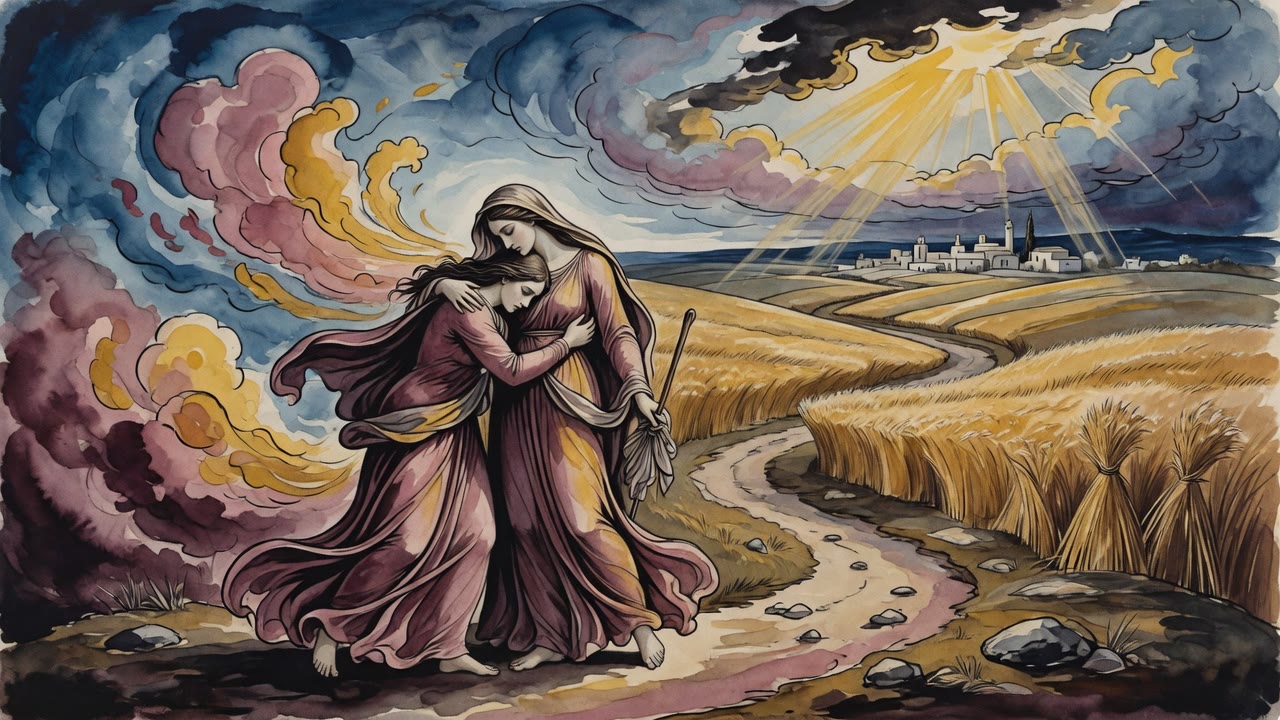
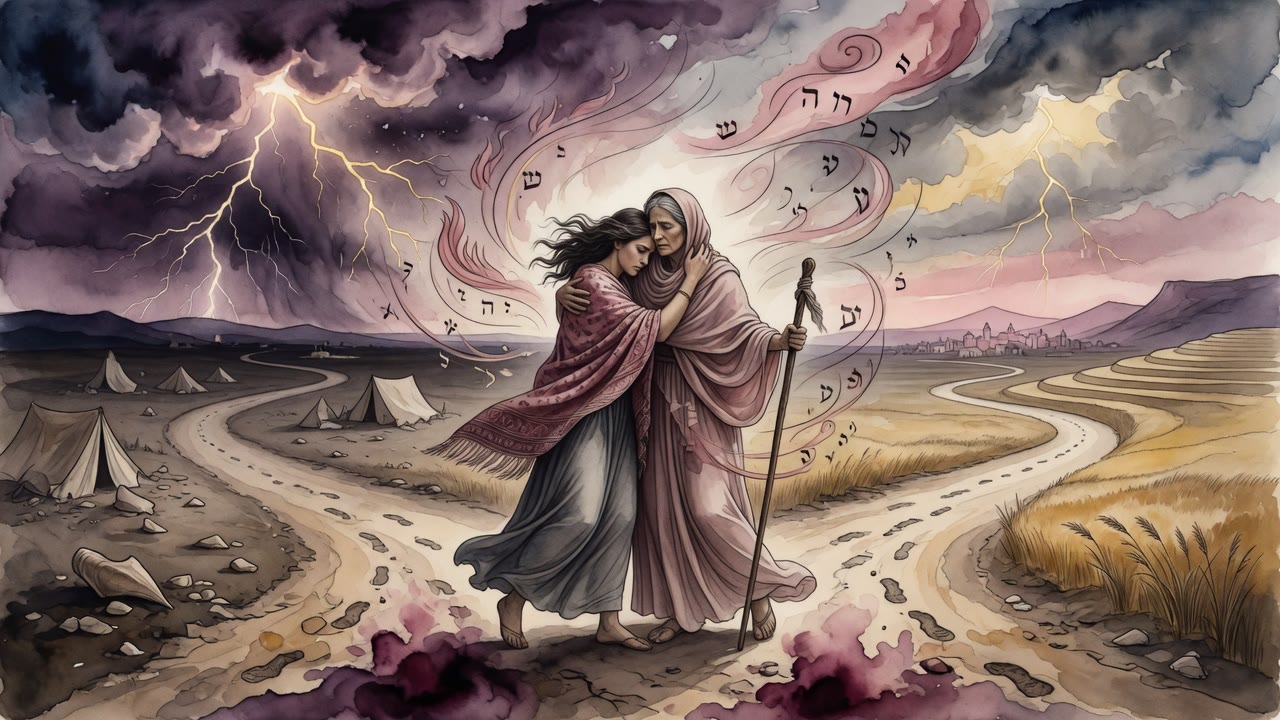
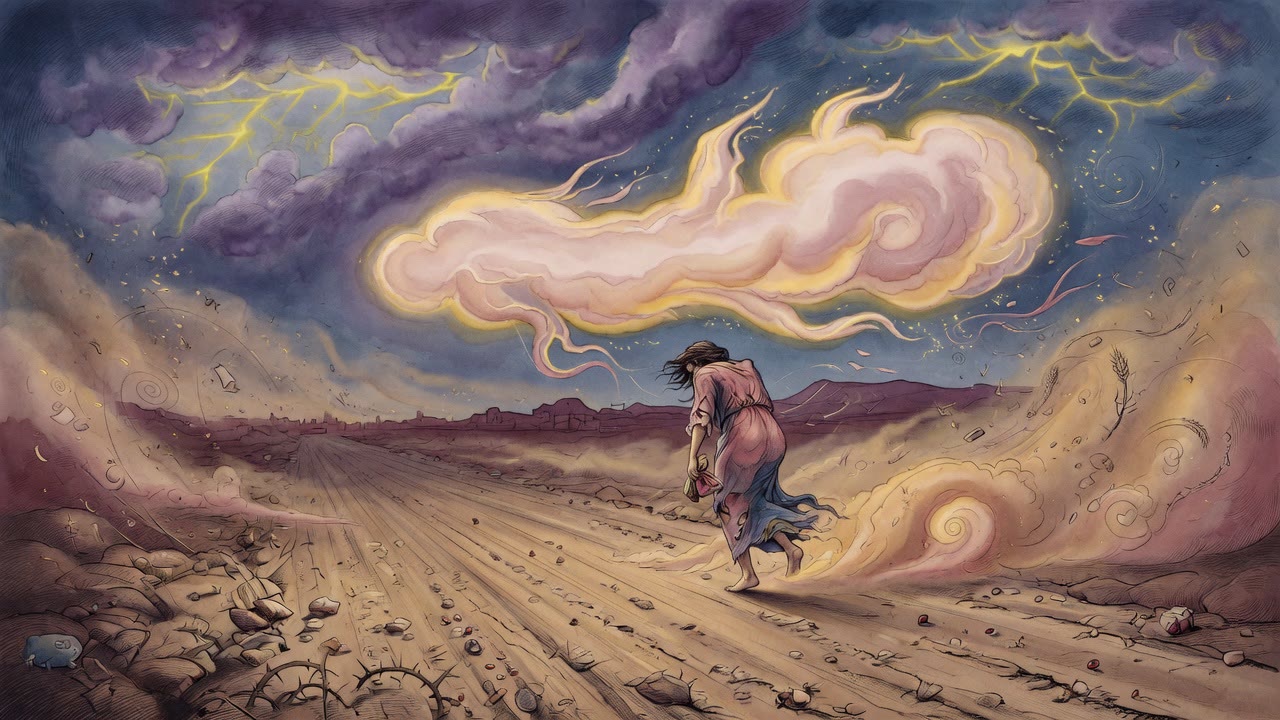
Naomi stopped on the road from Moab and would not take two widows into a third poverty. She had buried her husband and both her sons in foreign soil. Bethlehem was home, and home had nothing in it. She kissed Orpah and Ruth. She blessed them. She told them to go back to their mothers' houses.
Orpah wept, kissed her, and turned around.
Ruth did not move. Naomi tried again. Go after your sister-in-law. Return to your people and your gods. Israel keeps Sabbaths and feast days. The daughters of Israel do not sit in the theaters of the nations. We have one Torah, one law, one command. The Eternal our God is one, and there is none beside Him.
Ruth did not argue about gods. She said, "Where you go, I will go. Where you die, I will die. There let me be buried. Your people shall be my people, and your God my God" (Ruth 1:16). Naomi had been told to push a convert away three times, to make the cost plain. She had done it. Ruth had heard all of it and was still on the road.
They Arrived on a Burial Day
The two women walked into Bethlehem on the day Boaz's wife was put in the ground. The crowd that had come for the funeral saw Naomi come home empty and did not know what to call her. She told them to call her Mara, bitter, because she had gone out full and come back with nothing.
She had come back with Ruth. The field was full of barley. The famine that had driven them to Moab was over. Ruth went to glean before Naomi had finished opening her grief, and her feet found Boaz's field as if the rows had been waiting.
Boaz showed kindness to the dead first. He took on the burial of Elimelech, and of Mahlon, and of Chilion, men who could not thank him. He did this before he took a living woman into his house. Naomi watched and said nothing, then made a plan.
Boaz Woke and Thought a Demon Lay There
The times were bad enough that a man of property slept on his own threshing floor, because grain left alone did not stay. At midnight Boaz woke and found someone at his feet. He thought it was a demon.
Ruth spoke before he could cry out. She named him head of the court, son of princes, kinsman of her dead husband. She named herself a Moabite widow in the flower of her years, hunted on the road by men who wanted what converts are assumed to give. She had come so the redeemer would spread his cloak over her (Ruth 3:9).
Boaz understood the claim. He told her this second loyalty was larger than the first. If his older brother Tob would not do the duty, he would. He sent her out before dawn with grain in her shawl so that no one in the gate would say a woman had lain on the floor.
She had not washed or dressed on the road. She had waited until she reached the floor, because fine clothes on a night path would have pulled every wrong eye. Naomi's plan had been the clothes. Ruth had kept the plan and changed the hour.
The Older Brother Would Not Take Her
In the morning Boaz sat in the gate. An angel led Tob to the place so the two of them would not have to wait. Tob was not learned. He knew the ban on Moab and did not know it bound the men of Moab, not the women. He declined. He would not spoil his own inheritance with a foreign widow.
Boaz was eighty. Ruth was forty. No one in the gate expected a child from that math. They married. That night there was a son, Obed, who would be Jesse's father, who would be David's. Boaz died the next morning. Ruth lived long enough to see Solomon on the throne.
The shoe left the other kinsman's foot in the gate. The name that would not take her left the record. The name that would take her went into the ground within a day, and the child stayed.
She Lay in the Dust and a Scribe Wrote Her Name
On the threshing floor, before any of that, Ruth had lain down in the dust between Boaz's feet. The Shechinah (שכינה), the Divine Presence, lay down there with her. Not instead of her. In the same dust. The Presence that had gone into exile when Israel's house broke pressed itself against the earth and asked to be covered, the way Ruth asked.
"Stay the night," the voice would one day say to that Presence. "Morning will be mercy. If the people raise you, good. If they do not, I will redeem you Myself."
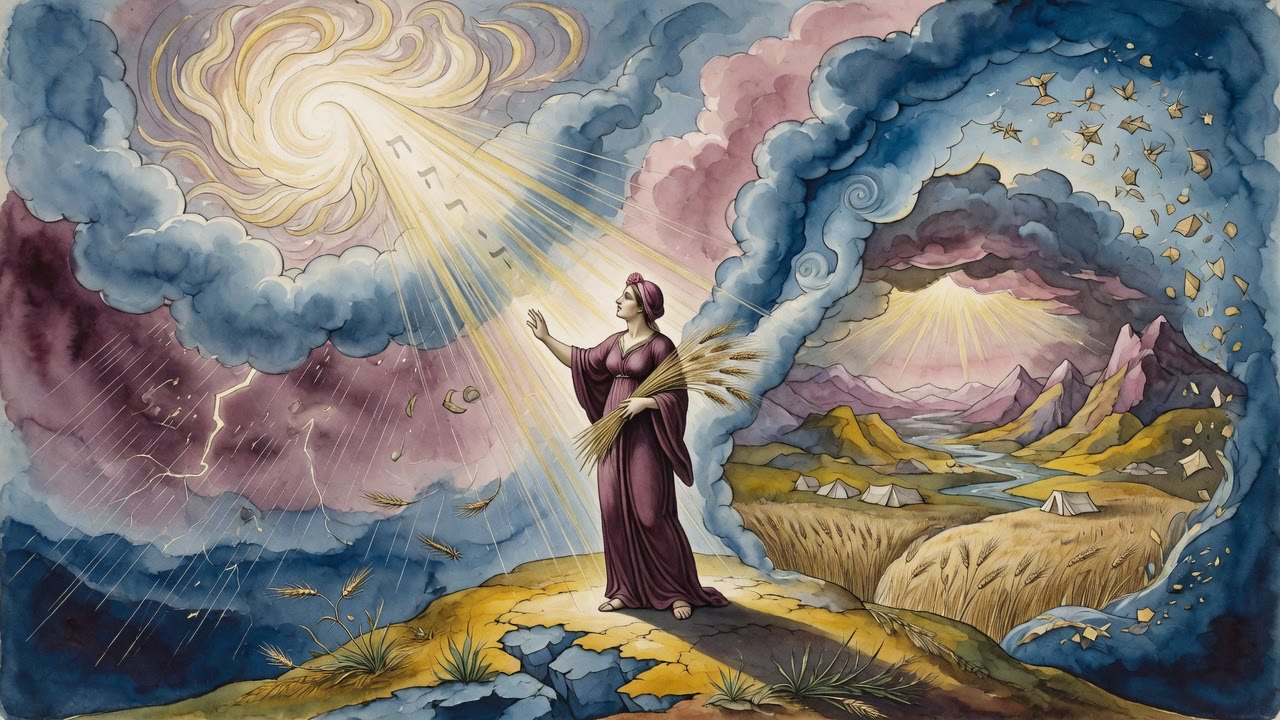
Above the floor, Metatron the scribe bent over the book that matters and wrote what a Moabite widow had done in barley dust. Her name was already there. The world that needed her had put her in creation before she reached Bethlehem, before she gleaned, before she refused the road back to her mother's house. The book did not wait for the gate. It had been waiting for the dust.
← All myths