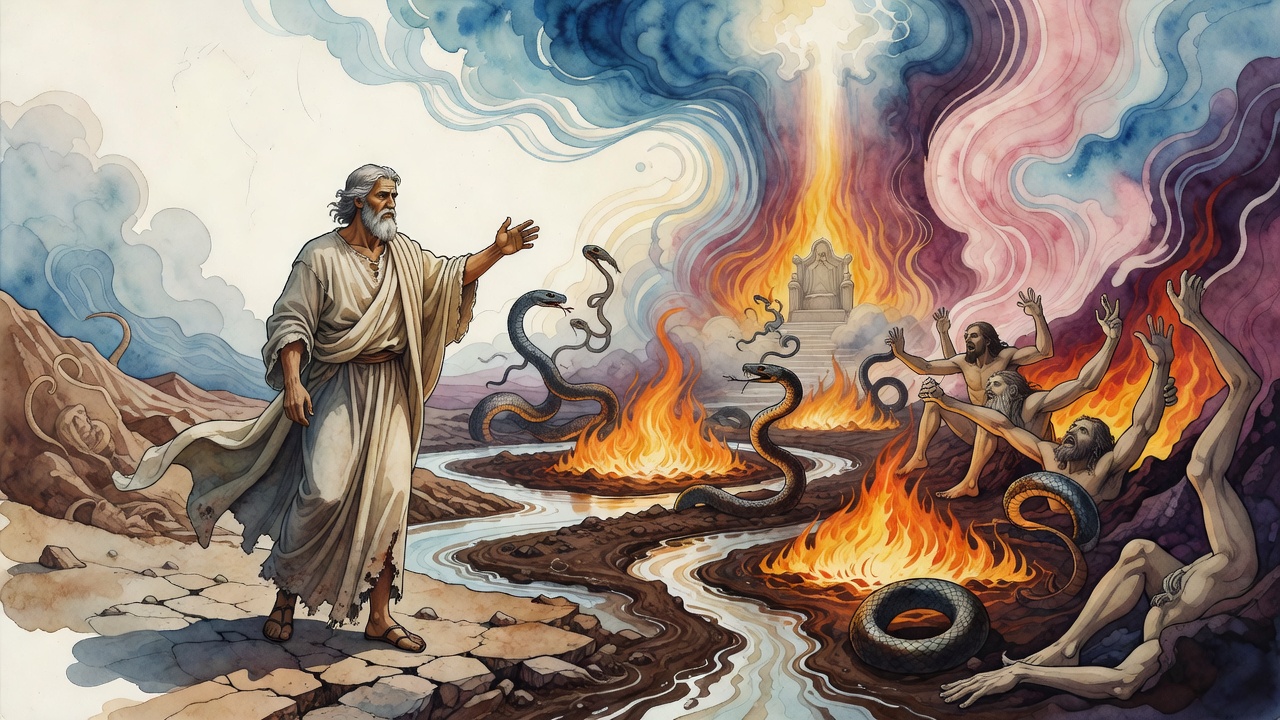
Lot Stopped to Count His Silver and the Angels Dragged Him Out
The chest stood open on the table. An angel took him by the wrist anyway, and the rain behind them was already burning as it fell.
Table of Contents
 Click for full size
The Door He Could Not Hold
The men of Sodom were against the door, and Lot was on the outside of it, in the street, bargaining with them (Genesis 19:6-8).
He had two guests in the house. The crowd wanted them. What he offered instead was his daughters. A man is supposed to put his own body between a mob and the women of his household. Lot put the girls there and stood behind them.
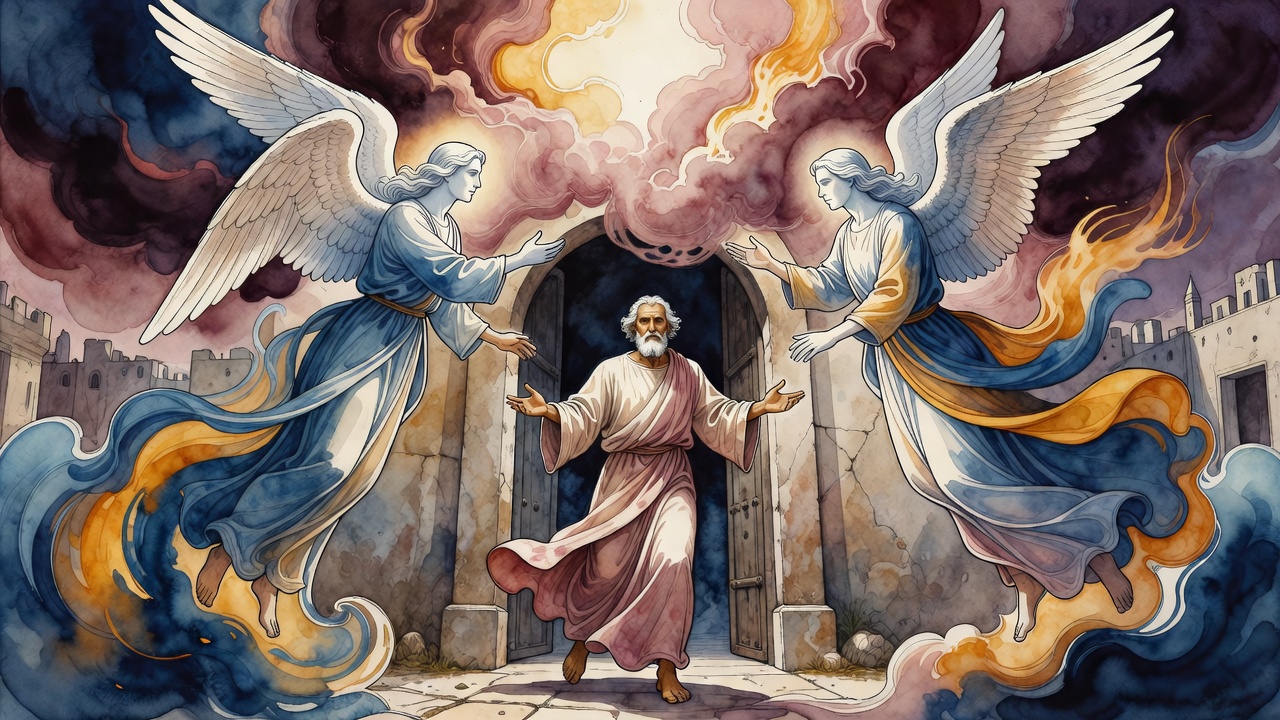
The guests ended it. Two hands came out of the doorway, took hold of him, pulled him inside, and shut the door. Then the crowd went blind, from the smallest man to the greatest, in the same order they had come. They put their fingers on the wall and felt along it for the entrance they had been standing at a breath before. It was not there. They wore themselves out looking. Anger came after that. After the anger they were not themselves, still going along the wall with their hands when the night ended.
Violins in a City About to Burn
Inside, the angels told Lot what they were and what they had been sent to do. Take your wife, they said. Take your four daughters, the two who are married and the two who are promised. Get them out.
Lot went to the two husbands.
They laughed in his face. "You fool," one of them said. "There are violins going in this city tonight. Cymbals. Flutes. Listen to it. And you stand there and tell me Sodom is going to be destroyed."
The laughter did not buy them time. It moved the judgment up.
The Silver He Stopped to Count
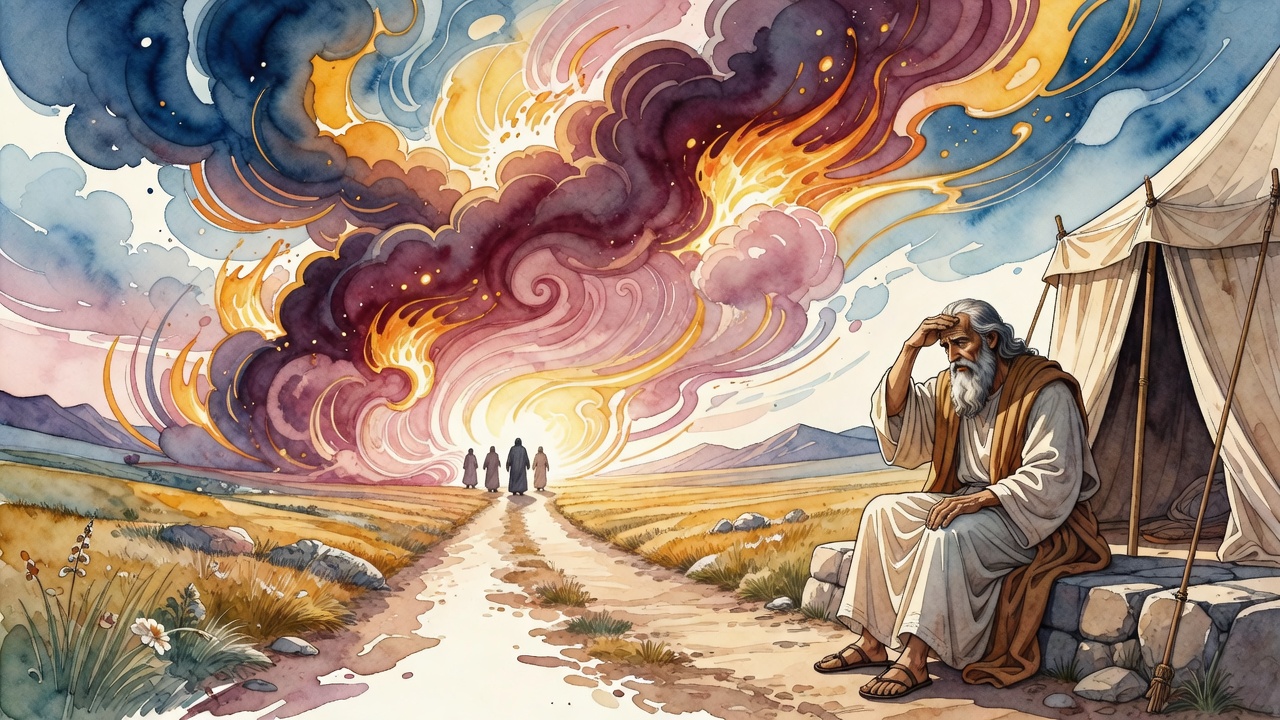
Dawn came and Lot did not move.
The angels had him by the threshold. He stood in it, astonished and then astonished again, and what came out of his mouth was not a prayer for his children. It was a count. Such a loss, he said. The silver. The gold. The gems and the jewels, all of it, left here.
He had lived in that valley long enough to be judged by its standards, and by its standards he was a decent man. He kept a doorway open. He had fed two strangers and taken a crowd on for them. That was the whole weight on his side of the scale. One night of a door held open. It was the only reason anyone had come for him at all.
On the other side of the scale the gates of Gehinnom (גהינום) were already open. Two bands of angels stood there calling the same word into the dark. "Come. Come." Coals sat behind them the size of mountains. Rivers of pitch seethed. The inhabited gate of that place is a furnace, and Sodom was sliding toward it while Lot stopped in his own doorway to count what he owned.
An Angel Dragged Him by the Wrist
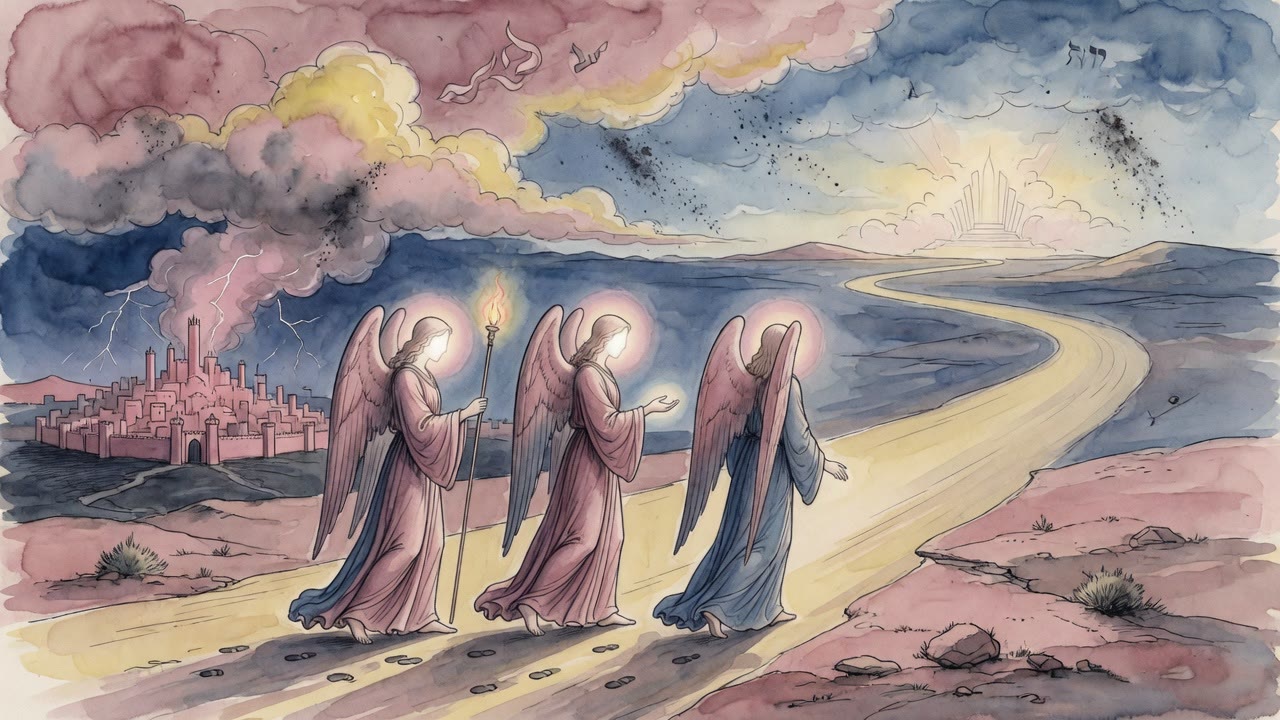
The angel stopped waiting.
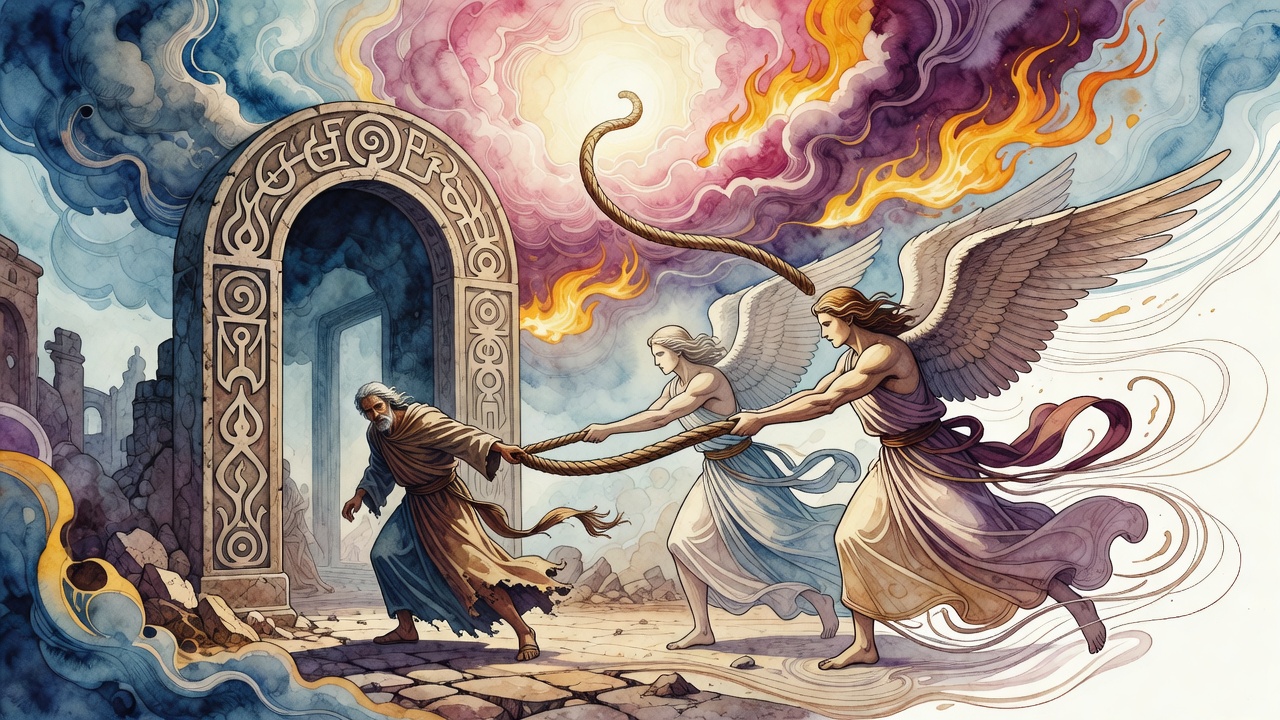
Michael closed his hand around Lot's wrist, took the wife's hand and the daughters' hands, and dragged them through the gate of the city and set them down outside it (Genesis 19:16). The mercy in that grip was not Lot's. It had been sent from somebody else's tent.
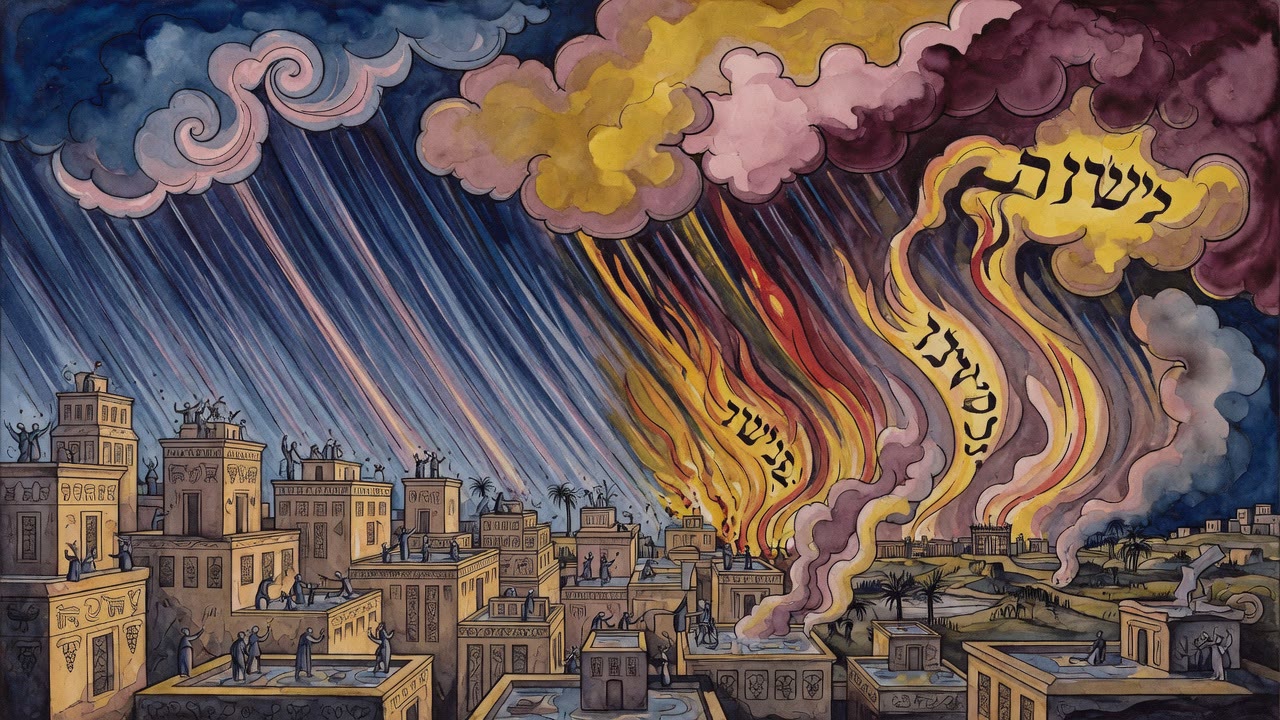
Then Gabriel put out one finger, the smallest one, and touched the rock the cities were built on, and turned it over. The rain that had been falling on Sodom and Gomorrah all night changed in the air as it came down. What landed was brimstone.
The men who had gone mad along Lot's wall were still looking for a door when the ground went out from under them.
The Mountain He Would Not Climb
Run for the mountain, the angel had told him. Do not look behind you. Do not stop anywhere on the plain (Genesis 19:17).
The mountain meant Abraham. It always had. Abraham was the mountain, and Lot understood the instruction perfectly, and that was the problem.
Down here, he said, God had been looking at my deeds and the deeds of the men of this city, and next to them I came out a righteous man. Put me up there next to Abraham and God will look again. I will not survive that comparison. Please. There is a small town close by, hardly a town at all. Let me have that one.
He got it. The little city stood, because a man who had once opened a door was allowed to name the terms of his own rescue.
Behind him the whole plain went up. Lot lived out his years in the shadow of the country he had been carried out of, saved by a night of hospitality he had learned from a man he could not stand to be measured against. The silver stayed on the table. The gates kept calling.
← All myths