Adam Stood in the Jordan for Forty Days and the River Stopped
He stood on a stone until the water reached his neck. He told the fish not to beat their own breasts. The Jordan held still.
Table of Contents
They wept first. Adam and Eve walked out of the Garden and wept for seven days on the ground outside, until weeping had no more water in it.
 Click for full size
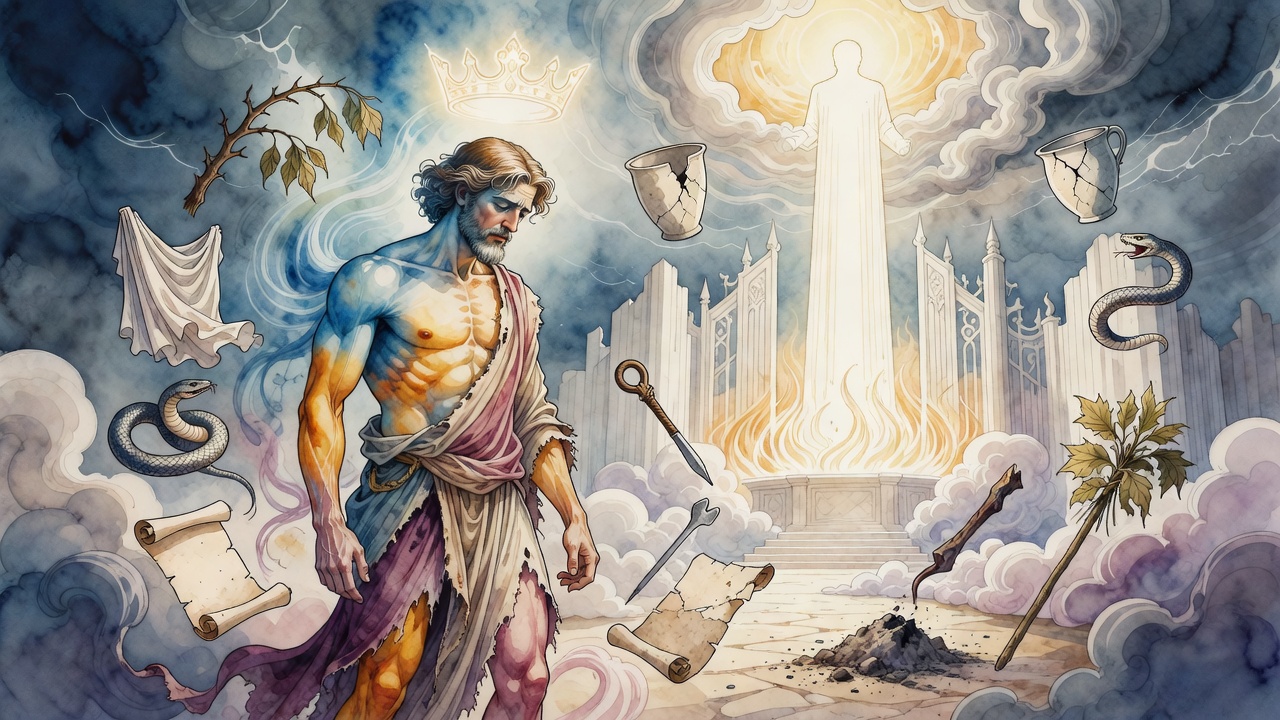
The grief was complete. They had lost the place made for them, and they had lost it with their own hands. No one came to tell them how to live on the other side of the trees.
They Chose Two Rivers
When the weeping was spent enough to allow thought, they decided to afflict themselves. Each would stand in a river, neck-deep, for forty days, without food, without speech, without clothing, without moving. Adam chose the Jordan. Eve chose the Tigris. They separated and went to the water.
Eve had already offered to take half his trouble. "Rise up and give me half," she had said, "for it is on my account that this hath happened to thee." He would not hand her his share. He sent her to her own river and took his own.
Adam Spoke to the Jordan
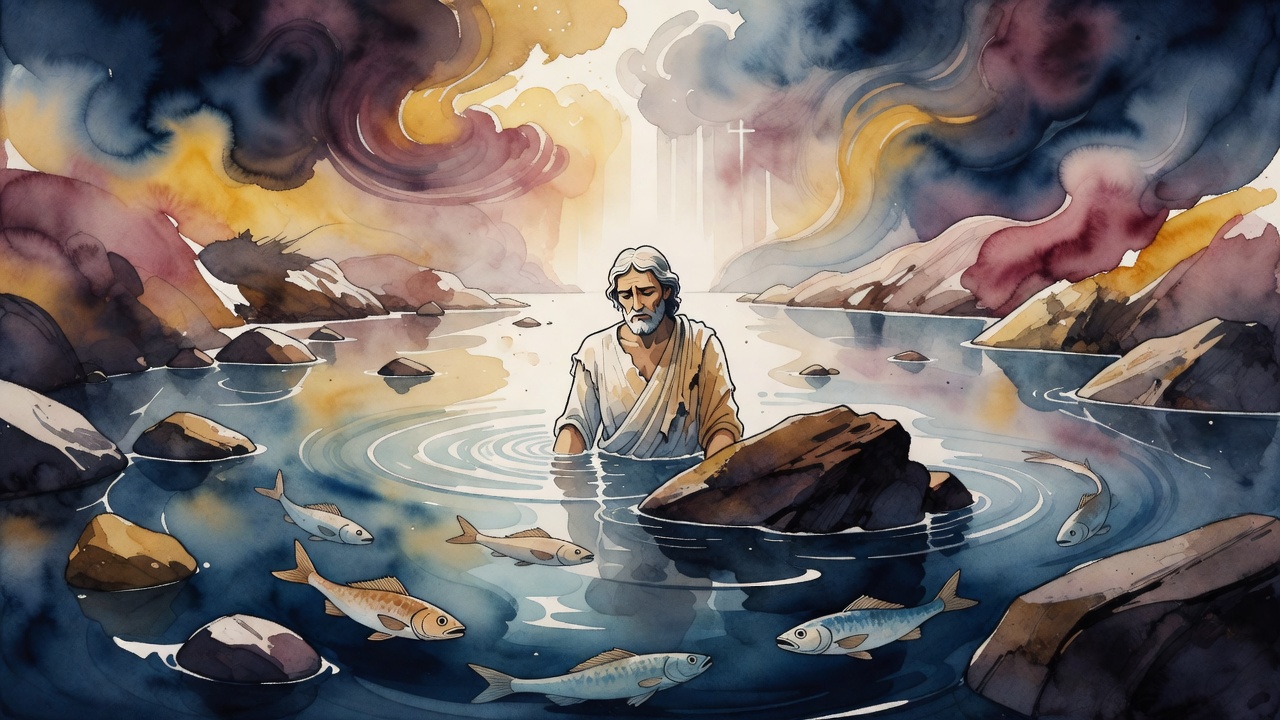
Before he entered, he prepared his place. He found a stone in the middle of the current, set it, and stood on it, so the water rose to his neck and only his face remained above the surface. Then he spoke to the river. He did not ask it to lessen his suffering. He asked it to increase it.
"I adjure thee, O thou water of the Jordan. Afflict thyself with me, and gather unto me all swimming creatures that live in thee. Let them surround me and sorrow with me, and let them not beat their own breasts with grief, but let them beat me. Not they have sinned, only I alone."
He wanted witnesses who had not eaten. He wanted the river's own people to stand around a man who had, and to strike him instead of themselves.
The Fish Came and the Water Stopped
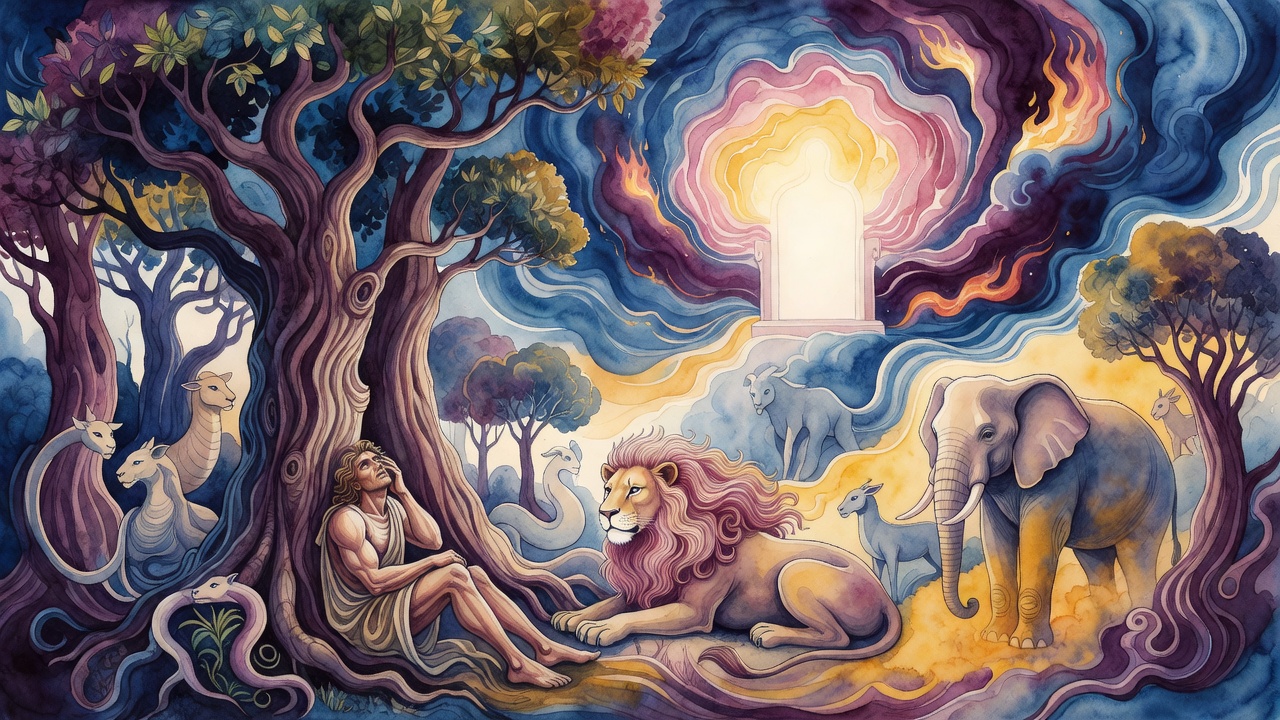
They came. The dwellers in the Jordan gathered around the man on the stone, a living ring in the current. From that moment the water stood still and ceased from flowing. The river that had been running from its source to its mouth since the world was made held its body in place around him.
Fish pressed in. Cold sides brushed his legs. The surface went flat as a floor. A man who had named the animals in the Garden now stood named by them, and they did as he asked. They did not beat their own breasts. They kept him in the middle of a stopped river, and the days began to count themselves.
His skin changed in that stillness. River-grass found him. The bright clay of the sixth day took on the color of the water. He was almost unrecognizable as the creature God had stood on his feet. He stayed.
Ha-Satan Found Eve in the Tigris
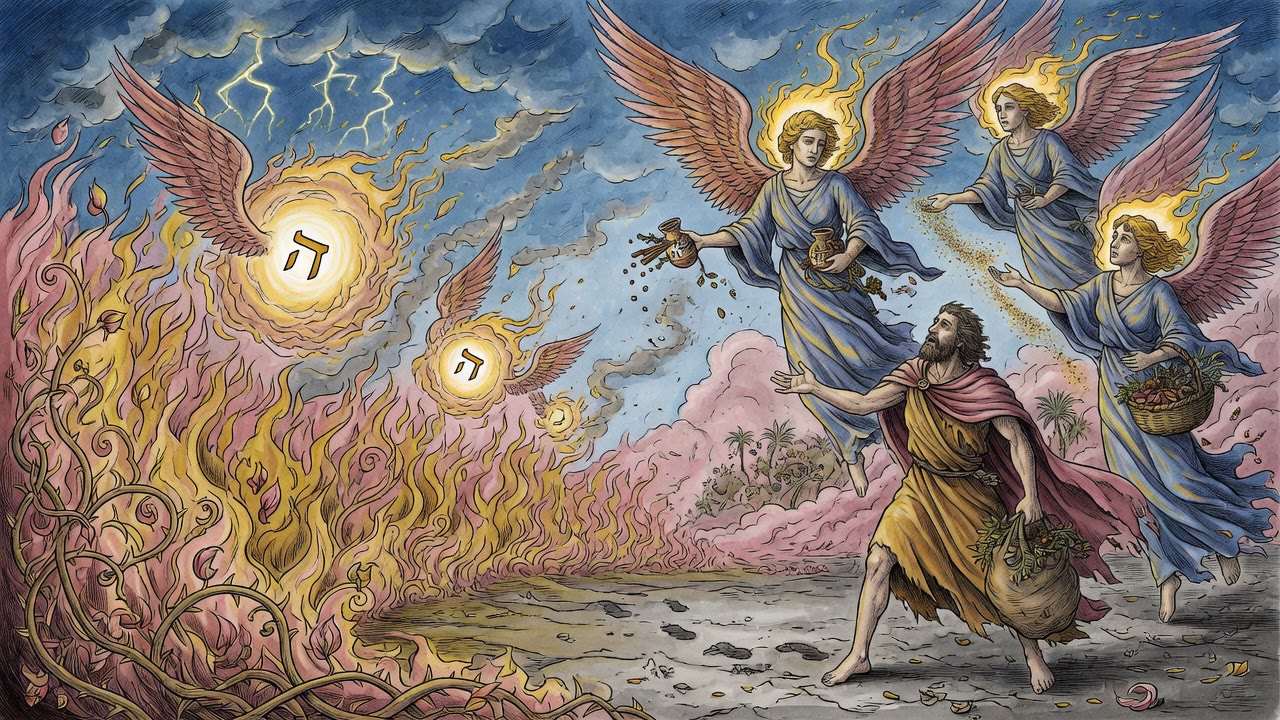
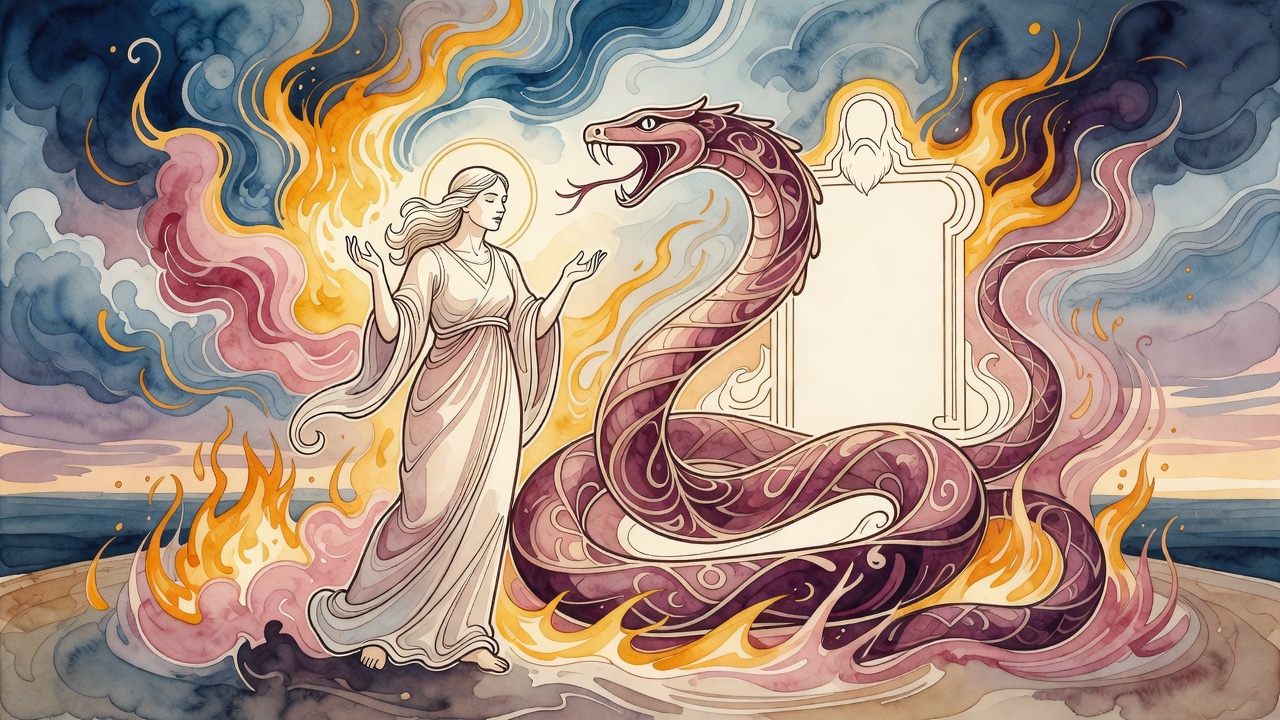
Eighteen days into the fast, Ha-Satan, the Accuser, came to Eve in the Tigris. He appeared as a holy angel, brightness on the bank, and he deceived her a second time. He told her God had heard her weeping. God forgives you. Come out of the water and eat.
Eve believed him. She climbed out. She went to Adam, still wet, to tell him the good news. Adam looked at her and knew at once what had happened. "Ha-Satan has deceived you as he deceived you in the Garden," he said. He turned his face toward heaven. "Lord God, why has my enemy prevailed against her?"
He began the forty days again. Eve, ashamed and exhausted, had to begin her standing over from the first hour. The Accuser had not needed a new trick. He had needed her hunger and a face that looked like mercy.
The River Held Until God Heard
Adam stood until the grass covered him. The fish did not leave. The Jordan did not resume. The forty days lasted their full count with the animals of the river in attendance and the water stopped. When it was over, an angel came and told him to come out. God had heard.
Hearing was not the same as undoing. Years later Adam lay groaning under seventy-two afflictions and sent Eve with their son Seth toward Paradise, earth on their heads, to beg for oil from the tree that flows with mercy. A beast lunged at Seth on the road. Eve cried out that all who had sinned would curse her. The beast answered that from her the rule of the animals had arisen, and their nature had been transformed. Seth told it to stand off from the image of God until the day of Judgment, and it went back to its lair.
Michael met them at the edge of the garden and refused the oil. Not now. At the end of the times. Go back. Your father will live three days and die. The river had stopped for Adam once. The oil of mercy was not for his dying body. He climbed off the stone with river-grass on his skin, and death still had his name.
← All myths