Noah Divided the Earth by Lot and Canaan Took Shem's Portion
Every son of Noah swore to the boundaries out loud. Canaan moved inside Shem's share anyway, and his grandchildren still held it when Abraham came.
Table of Contents
 Click for full size
The Thieves the Law Could Not Touch
The generation that drowned had worked out a way to steal that no court could reach. A farmer would set his basket of vegetables down in the market, and they came at it one at a time, each man lifting a single pod, a single root, nothing worth a complaint. By midday the farmer had nothing left to sell and no one to accuse.
God gave them a hundred and twenty years to stop. Noah spent those years building and warning, and they came to watch him work and laughed at the shape of it. "What is the boat for?" they asked. Noah told them a flood was coming. "If He sends fire we know how to shelter from fire," they said. "If water comes up out of the ground we will cap it with iron rods. If it falls from the sky we have an answer for that too."
"It will seep up under your feet," Noah said, "and you will not be able to push it back."
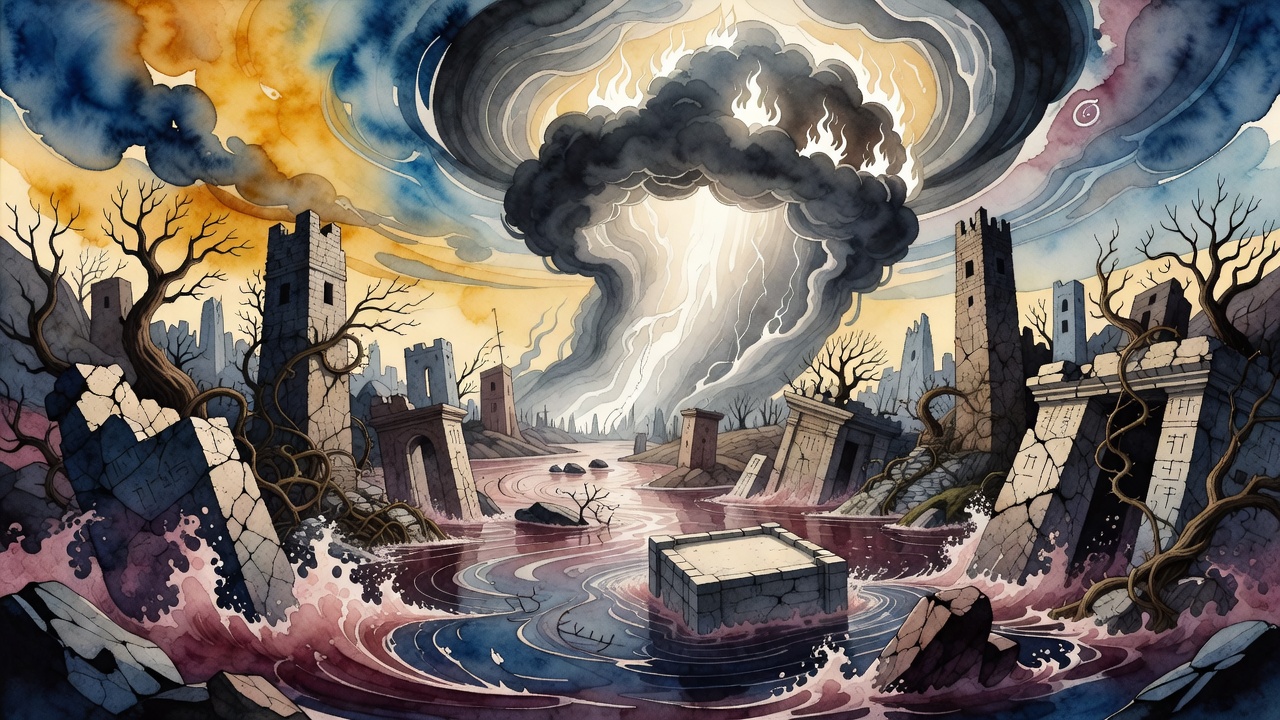
The water came up under their feet.
Slips Drawn From Noah's Bosom
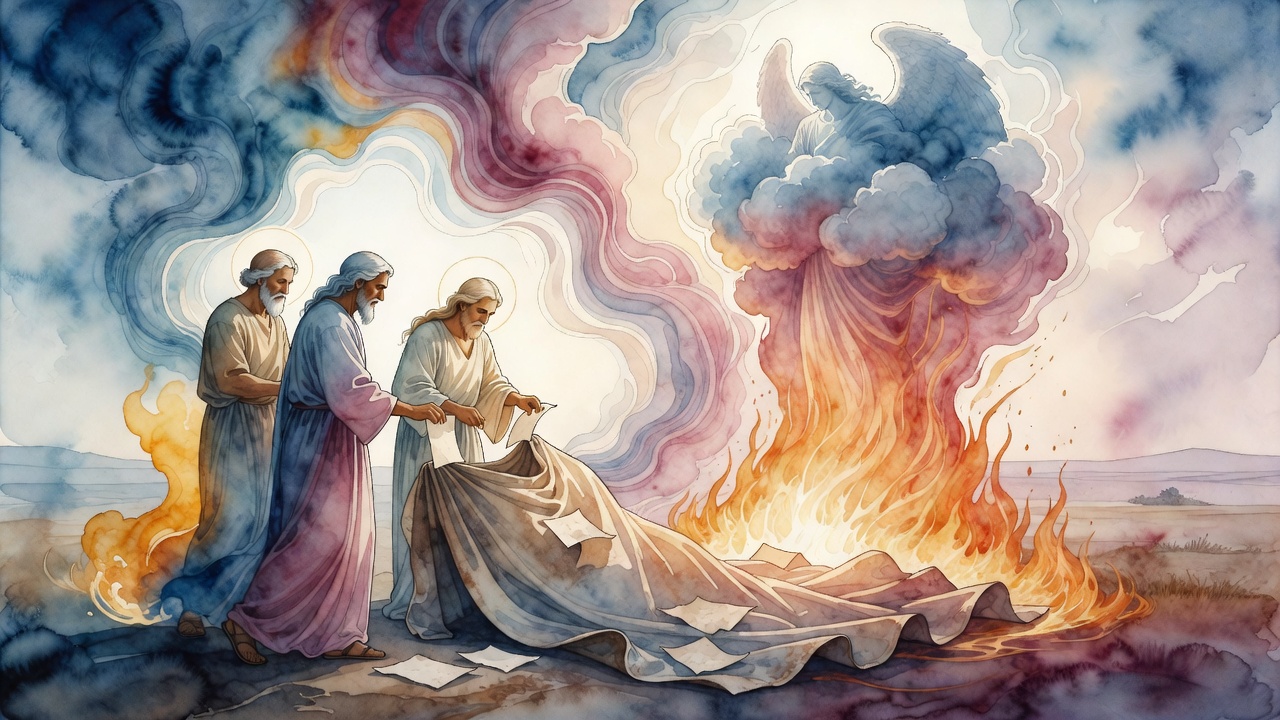
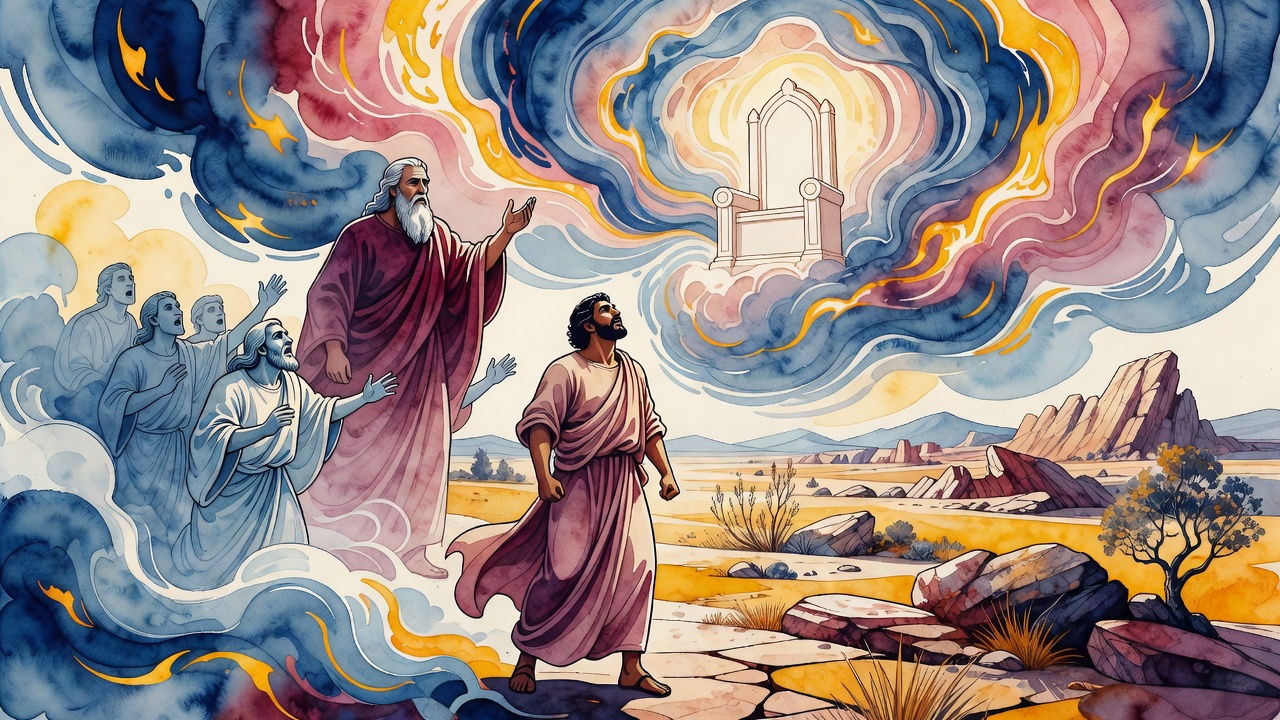
In the one thousand five hundred and sixty-ninth year after the creation of the world, with an angel standing there to see it done, Noah divided the earth among his sons by lot. He carried the slips in the front of his robe. Each son reached in and drew one out.
Shem unfolded his and read the middle of the earth. Noah was glad it had fallen to him. Three holy places sat inside that portion without anyone yet knowing it: the Holy of Holies, Mount Sinai in the middle of the desert, and Mount Zion at the navel of the world.
The south came out for Ham and the north for Japheth. Ham's country runs hot and Japheth's runs cold. Shem's is neither one, hot and cold mixed together in the same year.
So Be It, So Be It
Then, while they were still standing in front of their father, each of the three divided his own portion among his children, and Noah put a curse on the table. Anyone who stretched out a hand for a share the lot had not given him would carry it.
All of them shouted back, "So be it! So be it!"
A hundred and four lands and ninety-nine islands went out to seventy-two nations that day, each nation with its own language, sixteen different alphabets among them. Japheth took forty-four lands and five kinds of writing. Ham took thirty-four lands and five kinds of writing. Shem took twenty-six lands and six kinds of writing, one more set of letters than either brother had, and the extra set was Hebrew.
Canaan Would Not Listen
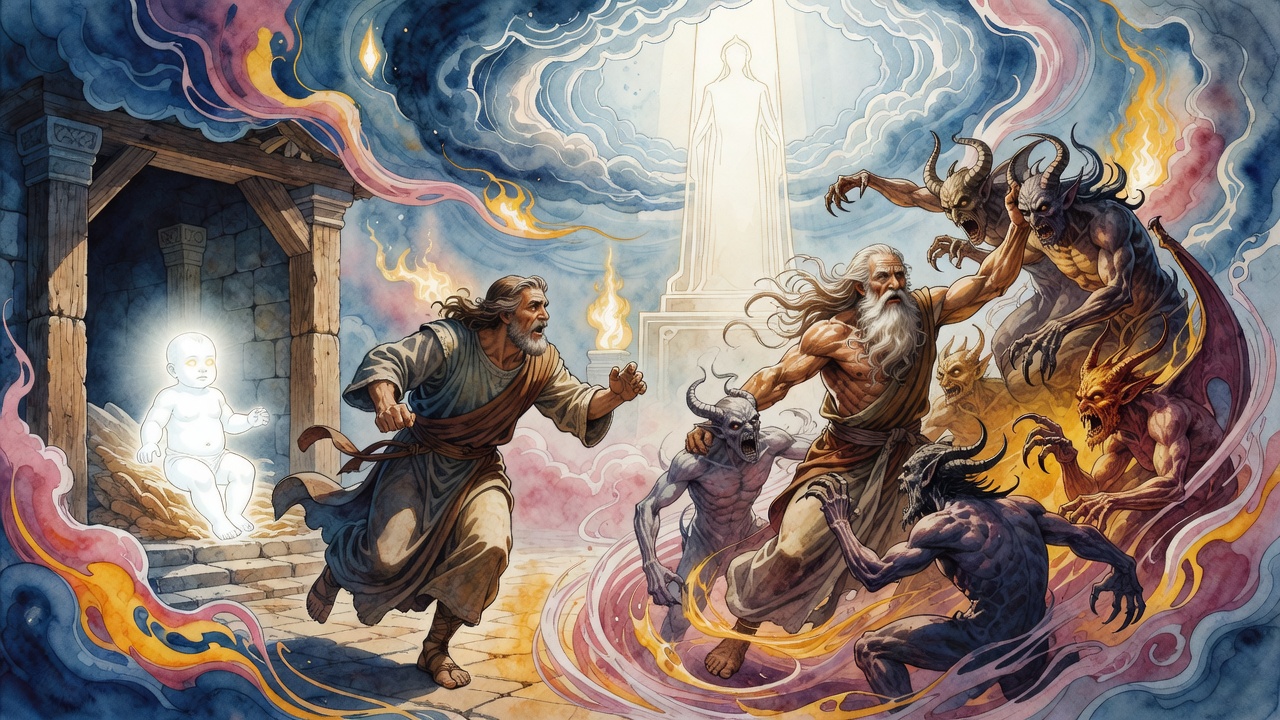
Canaan, Ham's son, had heard every word of the oath and watched every slip come out of his grandfather's robe. He knew what had fallen to Shem. Then he walked into it and sat down.
His father told him to get out. His brothers told him to get out. He answered them by staying. He settled the whole stretch from Lebanon to the doorstep of Egypt, he and his sons after him, and their sons after them, and the towns filled up and the roads got names and the fields were fenced and sold and inherited, and the curse their grandfather had laid on the table stayed exactly where he had left it.
Nobody came to argue. For generations there was nothing to argue with. A whole country had been taken the way that basket in the market was taken, a little at a time, by men who could not be brought before any judge on earth.
The Muzzles on Abraham's Camels
Then Abraham came up out of Haran and pitched his tents on ground that the lot had handed to his own ancestor, in a country full of people holding it without title.
He muzzled his camels.
He would not let his animals crop a mouthful of grass that belonged to somebody else, and every man who watched that caravan go by watched a rich man's beasts walk hungry past open pasture. The Canaanites who had taken a continent were given back their fences by a stranger with a herd and no land at all.
He had hardly set the tent pegs when the famine came, the second of the ten famines appointed for the chastening of men, the first having come down on Adam when the ground was cursed for his sake. Abraham went down to Egypt to eat, and the country the lot had promised him stayed in other men's hands for four hundred more years.
← All myths