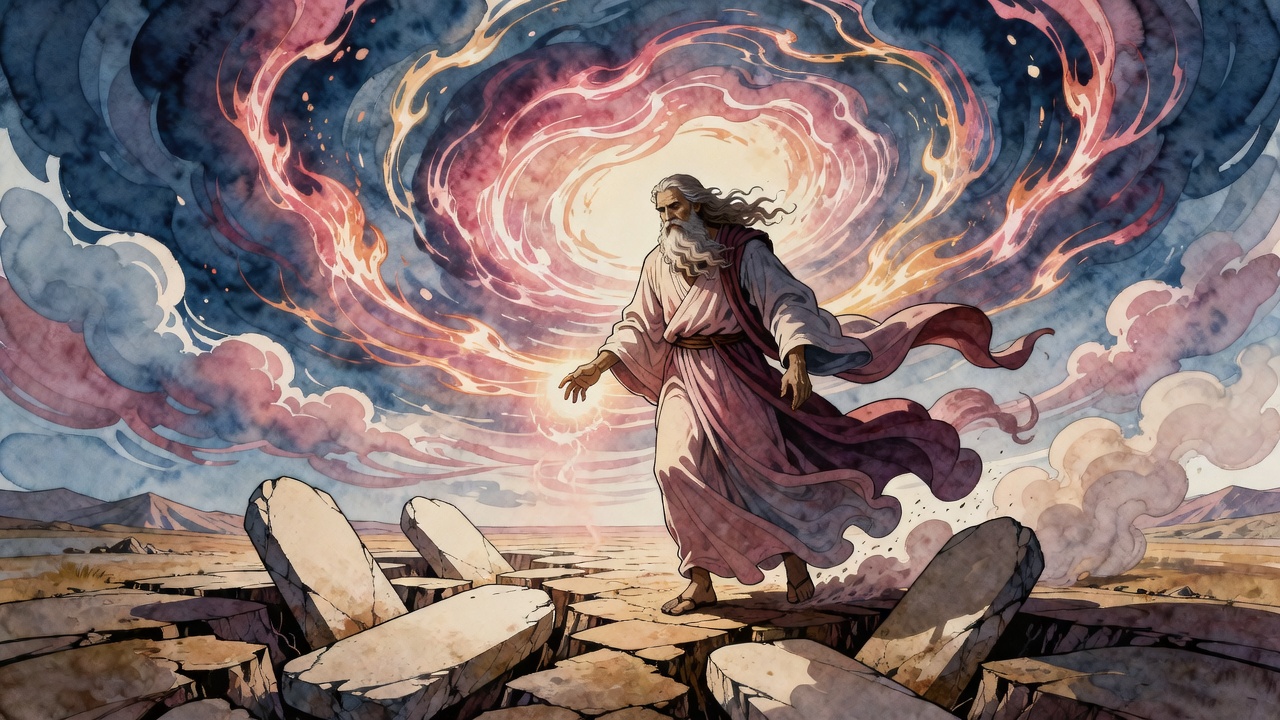
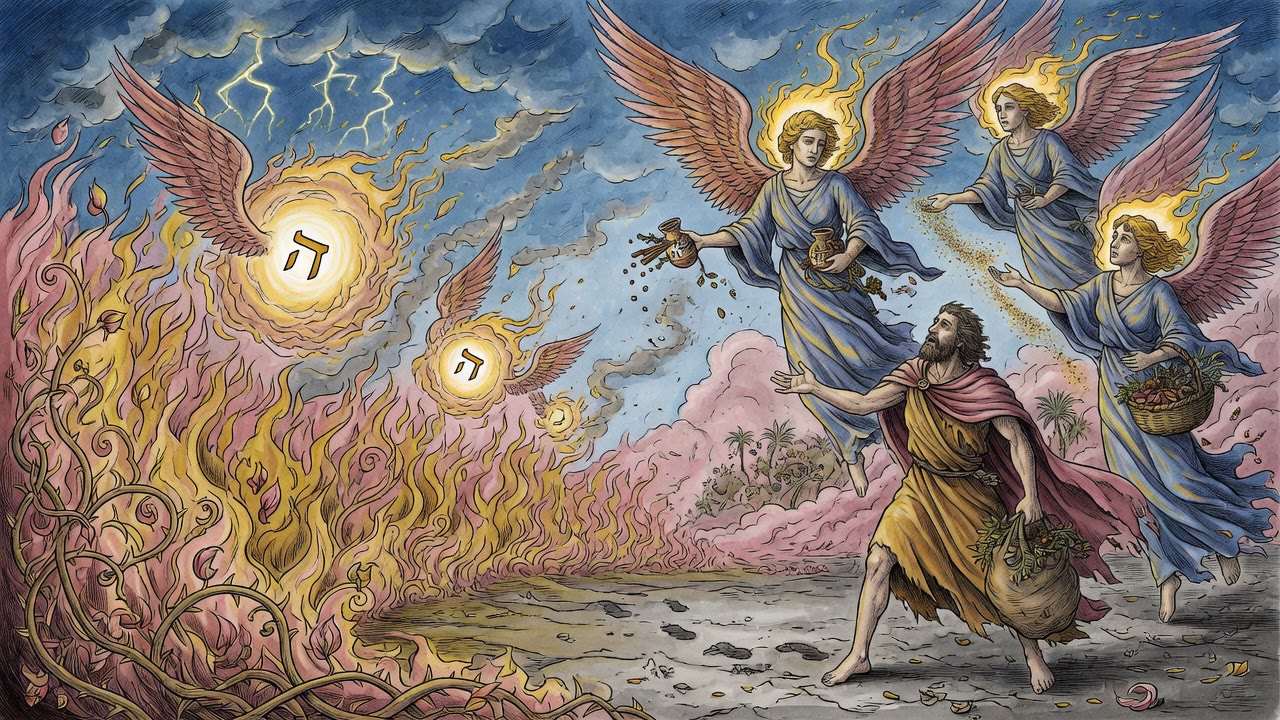
Enoch Lived 365 Years and Philo Counted Every Day of It
Enoch's lifespan matched the solar year exactly. The Midrash of Philo reads this not as coincidence but as a proof that not one day was wasted.
Table of Contents
 Click for full size
The Number That Required Explanation
The patriarchs before the flood lived for centuries. Methuselah reached 969 years. Noah lived 950. Adam himself reached 930. Against that backdrop, Enoch's 365 years looks almost short, a brevity that stands out precisely because the numbers around it are so large.
The Midrash of Philo stopped at that number and refused to let it pass without examination.
A Life Built Day by Day
Three hundred and sixty-five. The number of days in a solar year. The precise count of the days it takes for the sun to complete its circuit, mark every season, and return to where it began. Philo of Alexandria, reading every number in the Torah as a meaningful symbol, sees this lifespan not as a coincidence of ancient record-keeping but as a statement about what kind of life Enoch lived.
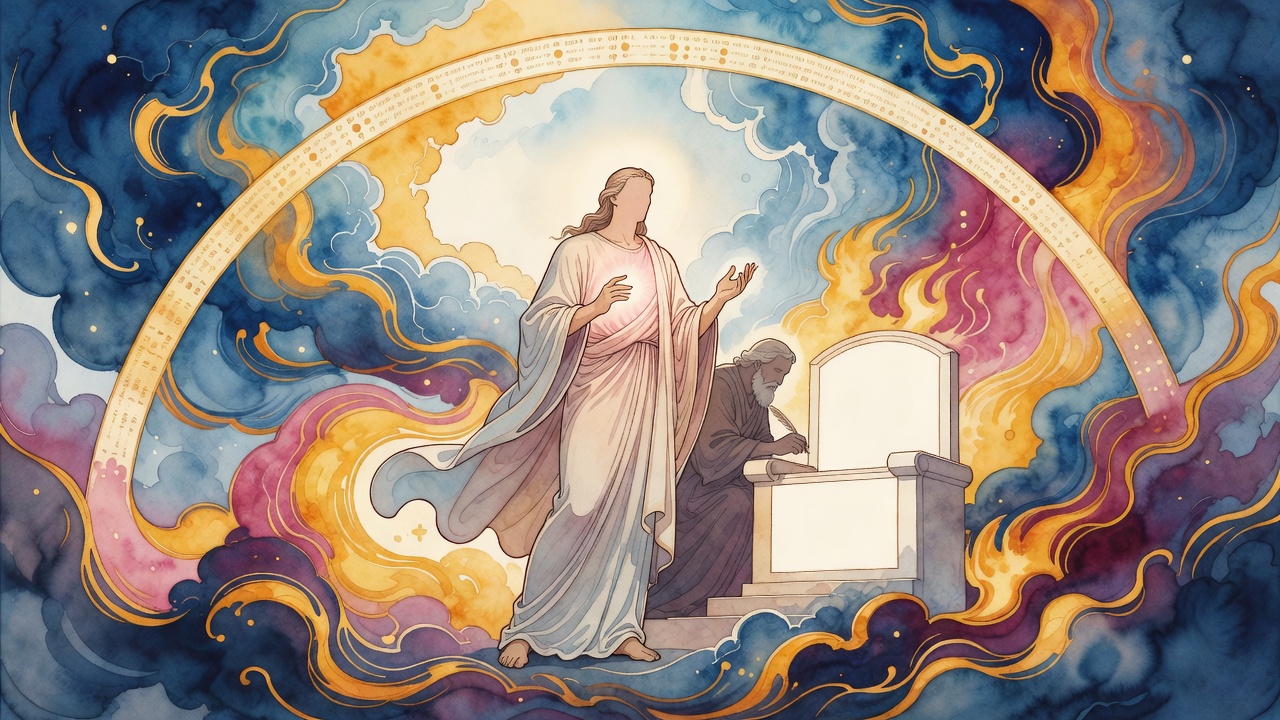
Each day that the sun moved through the sky is represented in Enoch's years. Every single one. Not one was unaccounted for. And the tradition connects Enoch specifically to repentance and return: he is the man who pleased God, who walked with God, who was taken before a natural death because his life was complete in a sense that had nothing to do with its duration. The 365 years represents a life in which not one day was wasted, in which each day was an opportunity for teshuvah, for turning back toward what is right, and Enoch took each one.
This is what makes the number more than arithmetic. Repentance in the Jewish tradition is not a single event at a moment of crisis that is then left behind. It is a daily practice. A daily turning. A daily choosing of a different direction from the one that is easiest or most familiar. The person who devotes their life to genuine teshuvah does not do it once and return to ordinary living. They do it every morning, every time a choice presents itself, every time the easier wrong path opens beside the harder right one. Enoch did this for every single day represented in the solar year. The span of his life was equal to the span of complete time: a full orbit, nothing missed.
Methuselah After Enoch Ascended
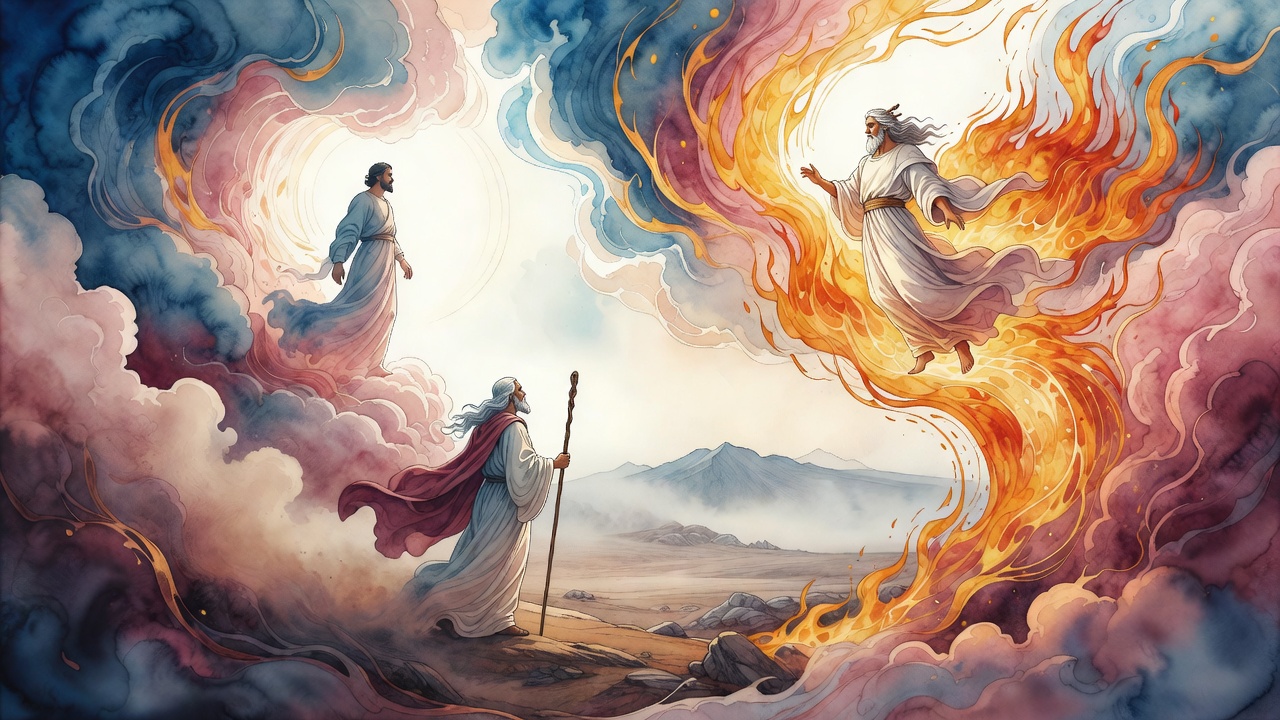
Enoch's ascent left Methuselah behind. Nine hundred sixty-nine years to his father's three hundred sixty-five: the son lived nearly three times as long as the father who was taken to God before his natural end. This numerical gap has its own meaning for the tradition. Methuselah did not ascend. He stayed. He was the righteous king after Enoch rose, the steady presence that held the pre-flood world in something approaching order, the son who had to build a life on earth after his father had demonstrated that life on earth was not where such men finally belonged.
The tradition treats Methuselah with tenderness. He died in the year the flood began, according to rabbinic reckoning. Some sources say he died seven days before the waters came, and those seven days were a mourning period that delayed the flood. God waited until Methuselah was buried before the world was washed. His death was the last thing between the old world and its destruction.
Nine hundred sixty-nine years of presence. Every one of them after his father had shown that complete devotion ends not in death but in being taken. Methuselah lived long and died before the waters, and the tradition honors that longevity as its own form of faithfulness: staying on the earth as long as the earth needed him, without the dramatic ascent, without the transformation, without the translation into something beyond the human.
Noah Who Found Grace
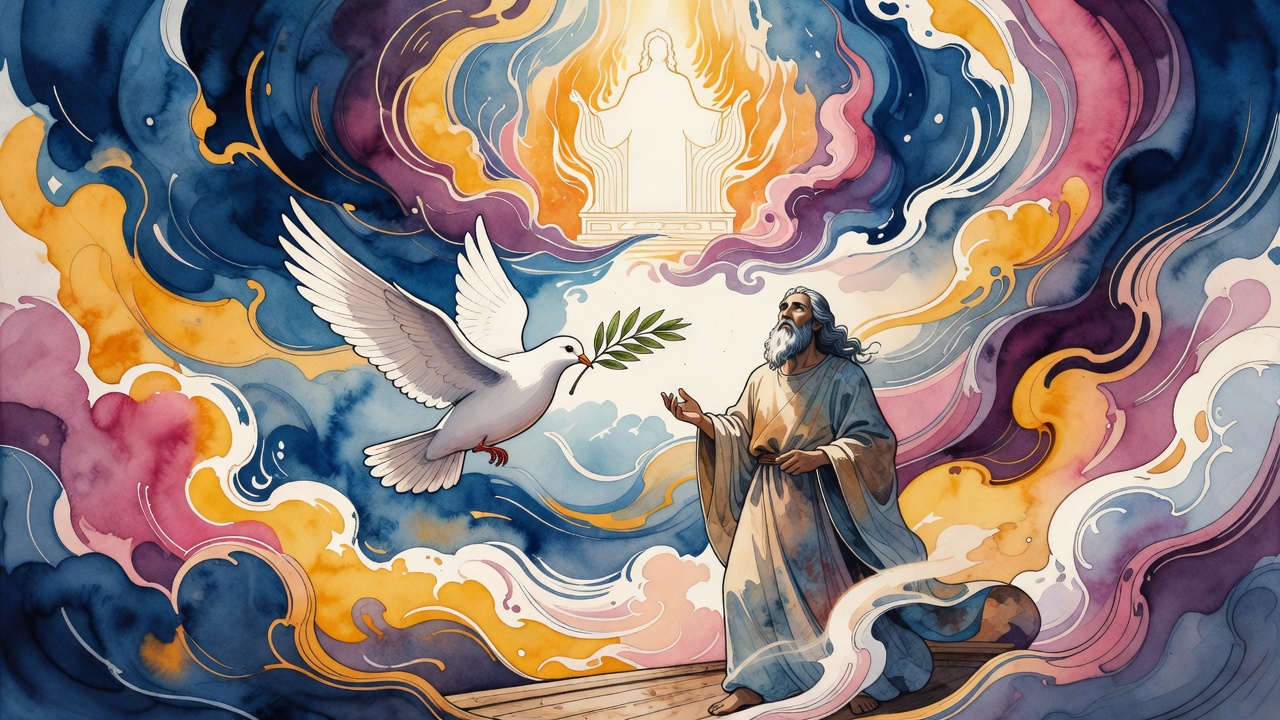
The genealogy moves from Enoch through Methuselah to Lamech to Noah. Three generations after Enoch's ascent, the world had become too violent for anything but a flood to reset it. Noah found grace in God's eyes. That phrase is the pivot between the antediluvian world and everything that comes after. It answers the question of what survives when everything else is washed away: not the righteous life of 365 complete days, which had already been taken. Not the long steady presence of 969 years, which had just ended. What survives is grace, an assessment by the Creator that one man and his family represented enough of what human beings were supposed to be that the project should continue.
Enoch at 365 years represents the perfected human life. Methuselah at 969 years represents the long human service. Noah represents the minimal human persistence that makes continuation possible. The genealogy counts down through them not toward failure but toward survival. The flood is not the end of the Adamic line. It is the narrowing of it to the point where what remains can be enough to start again.
← All myths