Enoch Wrote 366 Books from Heaven's Reed in Thirty Days
Two tall men stood over Enoch's bed. They put a reed in his hand in heaven, and he wrote for thirty days without stopping.
Table of Contents
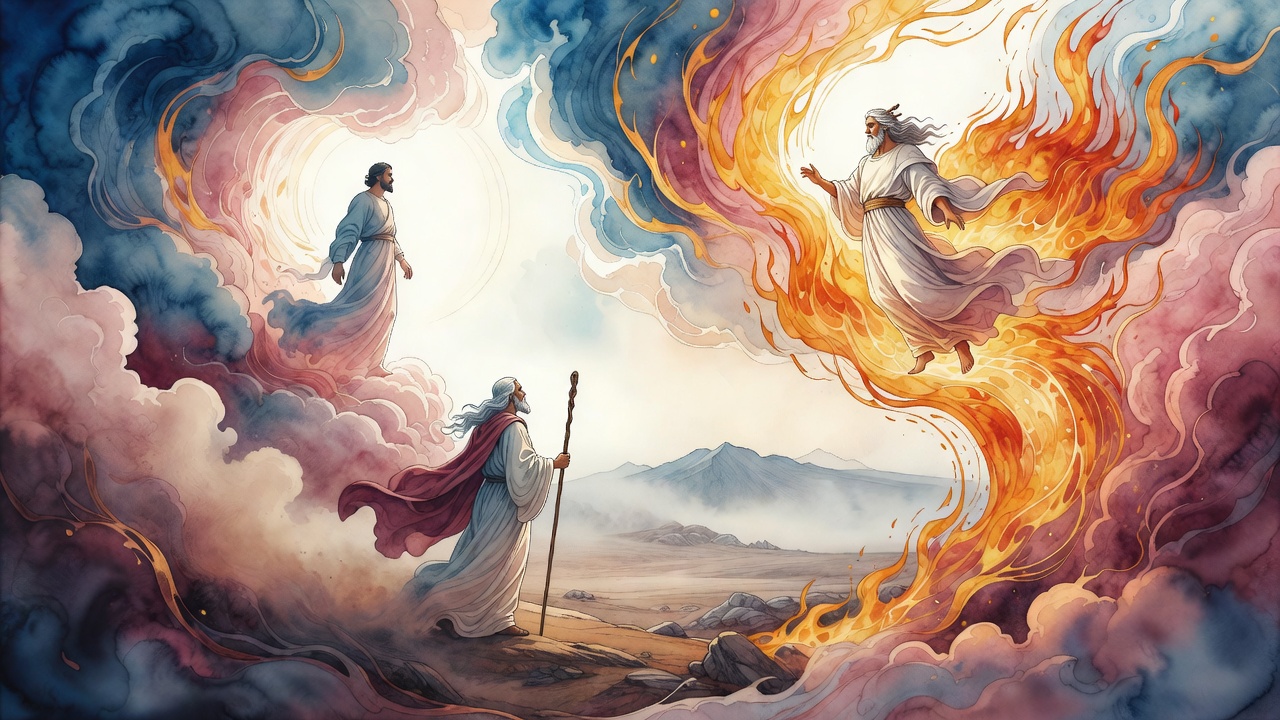
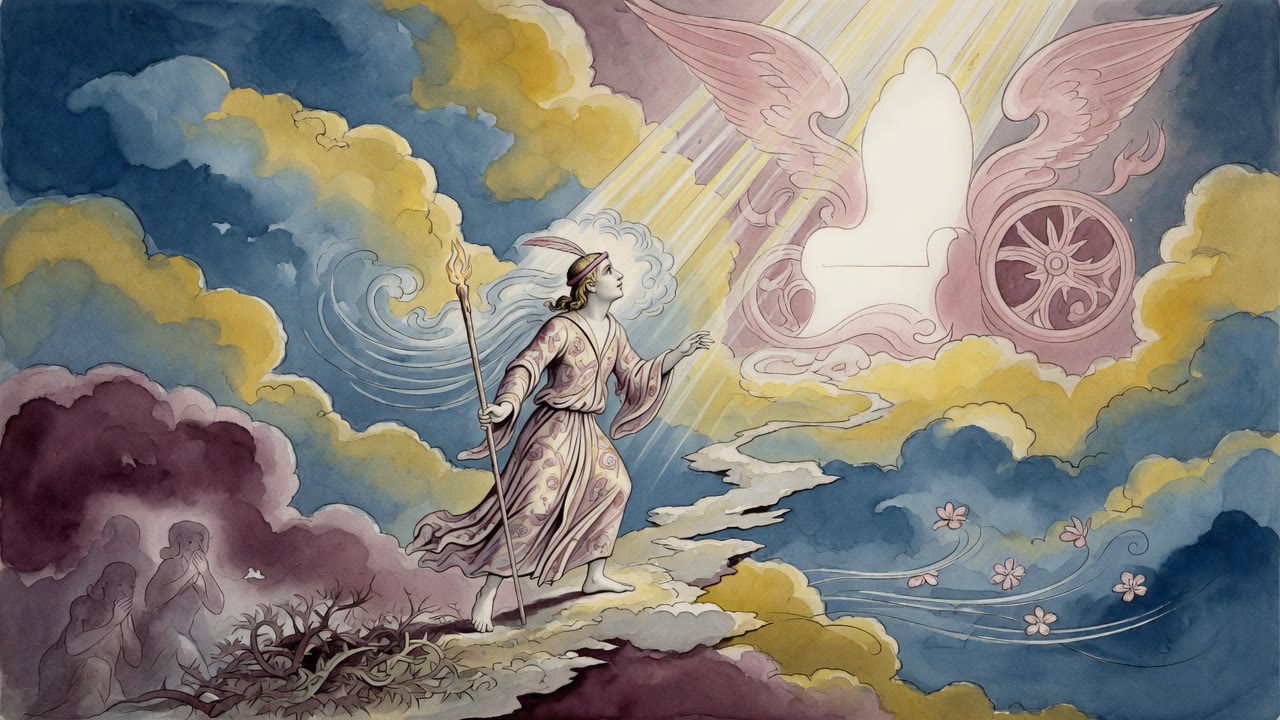
Two tall men stood at the head of Enoch's bed. Their faces shone like the sun. Fire came from their lips. Their wings were brighter than gold, their hands whiter than snow. They called him by name.
 Click for full size
He woke. He bowed. He was afraid.
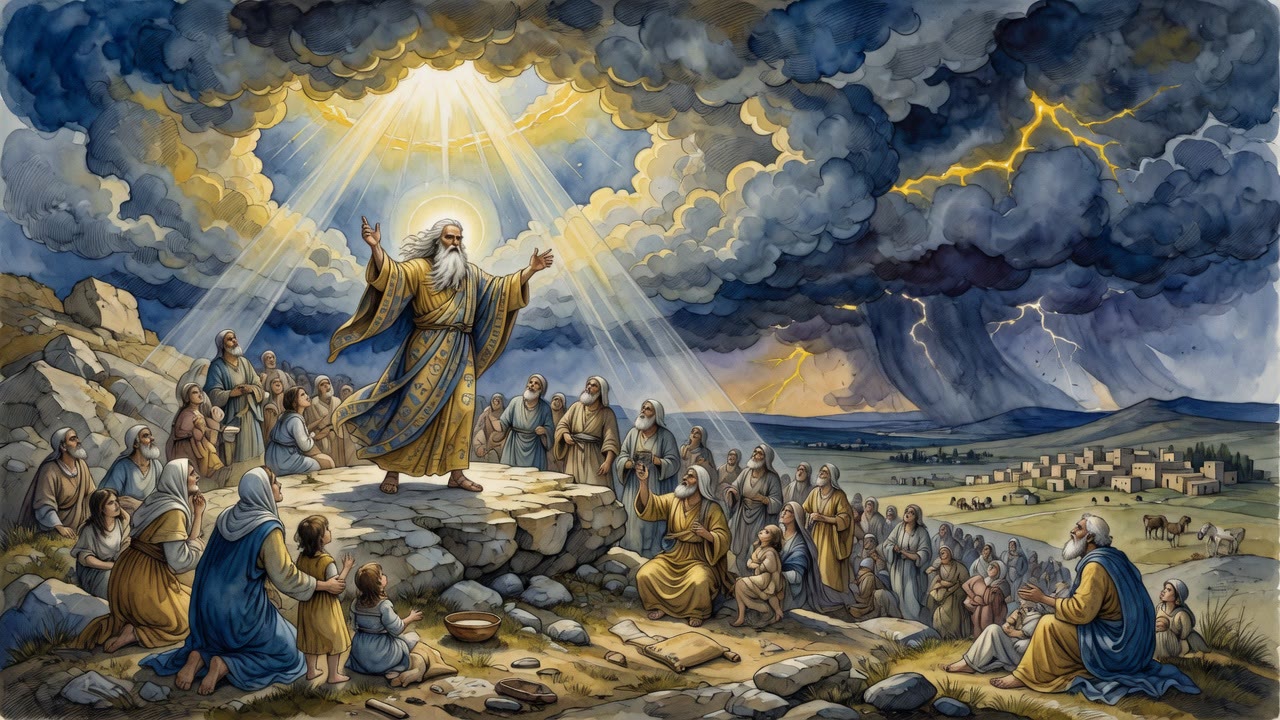
"Be of good cheer, Enoch. Be not afraid. The everlasting God has sent us. Today you will ascend with us into heaven. Tell your sons and your servants, and let none seek you until the Lord brings you back."
Clouds to the First Heaven
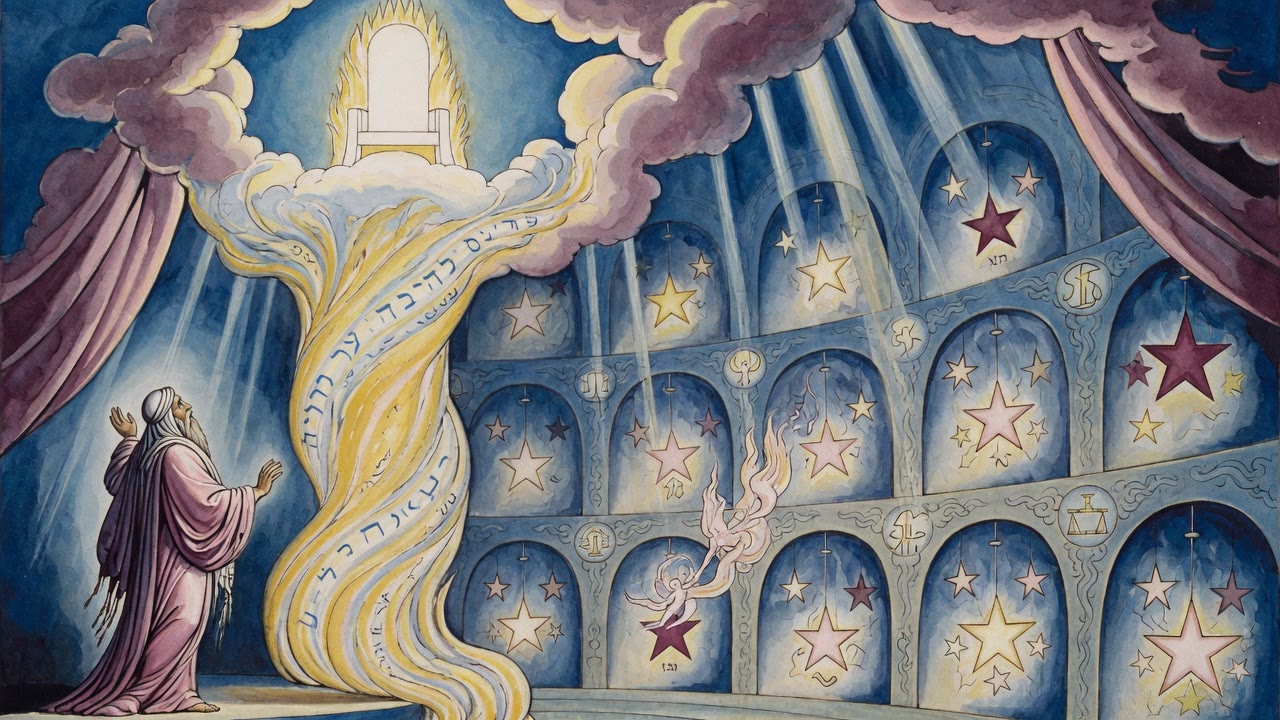
He spoke to his sons. He told them not to turn from God. Then the two men took him on their wings and set him on clouds that climbed until they put him down in the first heaven. Two hundred angels ruled the stars there. He saw the treasuries of snow and ice, of clouds and dew.
The second heaven was darker. The Watchers who had left their posts were locked there. They pleaded with him to pray for them. He would not claim the right.
"Who am I, a mortal man, that I should pray for angels? Who knows where I go, or what waits for me?"
The third heaven opened on a garden. The Tree of Life stood in the middle, and from its roots four streams poured honey, milk, oil, and wine down toward Eden. Three hundred angels sang without stopping. North of that garden a place of fire and ice waited for the wicked.
In the fourth heaven he watched the sun and the moon at their work, and strange birds, phoenixes and chalkidri, carrying heat and dew through the gates of morning.
Oil That Made Him Stand
God said, "Enoch, be not afraid. Rise up and stand before My face forever."
Michael lifted him. At the Lord's command he took Enoch's earthly robe away, anointed him with holy oil, and clothed him. Enoch looked at his own hands. He looked like one of the glorious ones. The fear went out of him.
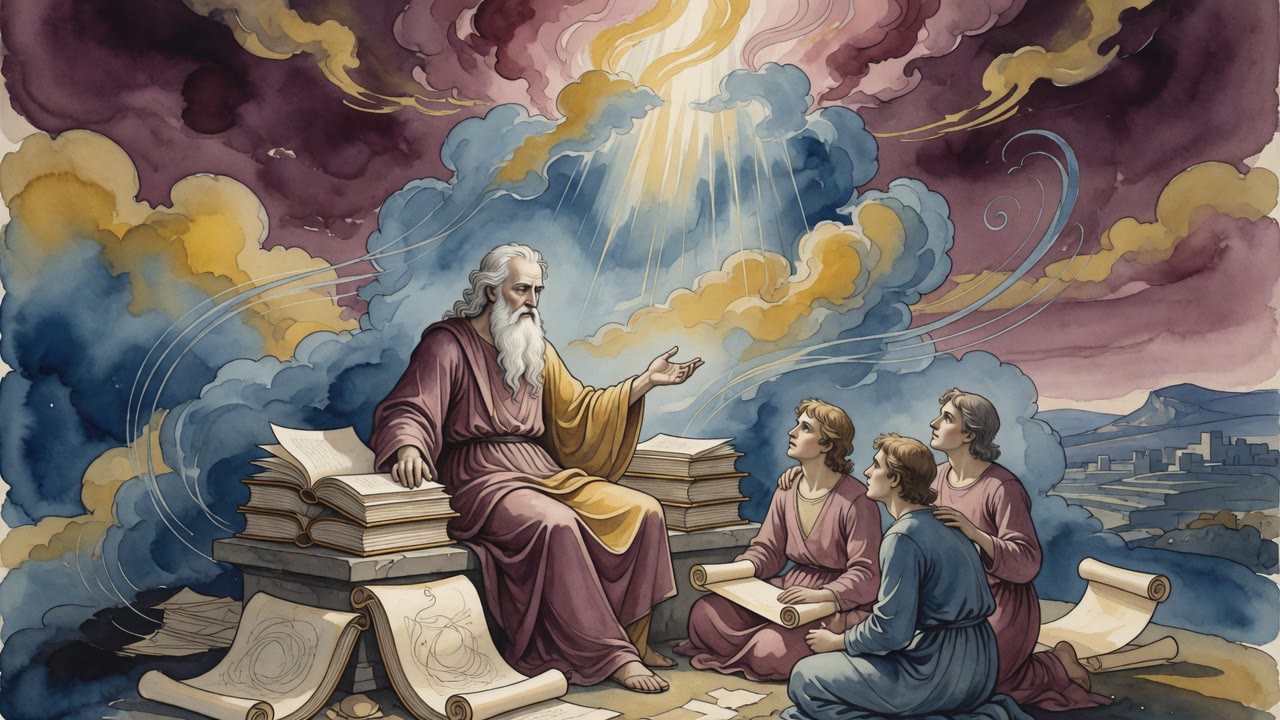
Then God called an archangel wiser than the rest, the one who wrote down all the doings of the Lord. "Bring forth the books from My store-place. Give a reed to Enoch, and interpret the books to him."
Thirty Days of a Moving Reed
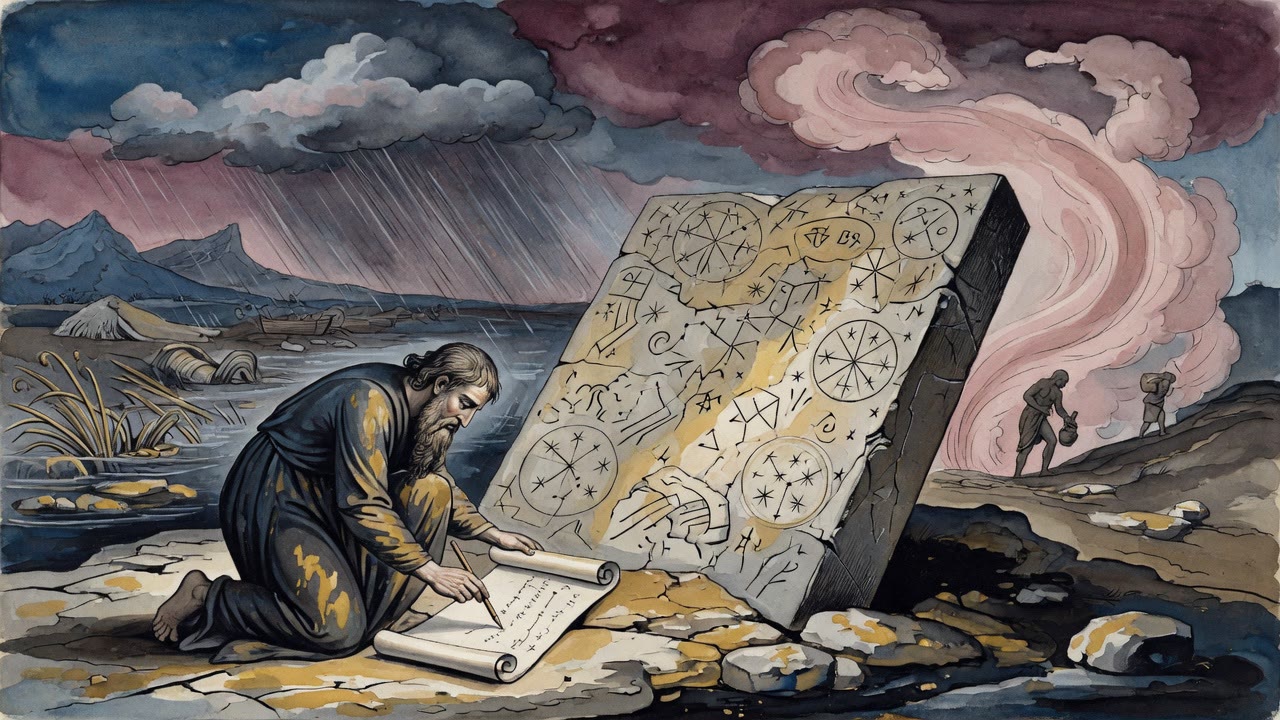
The archangel did not pause. Thirty days and thirty nights his lips kept moving. Enoch wrote. Heaven and earth. Angels and men. The signs of heaven in the order of their months, so men might know the seasons. The weeks of the jubilees. Souls not yet born, and the places prepared for them. He copied accurately. When the month ended he had written three hundred and sixty-six books. Dictation filled the reed until the inventory of creation sat in a mortal hand.
After the books, God told him secrets the angels themselves did not know: how visible and invisible came out of the lowest darkness, how heaven and light and water and earth were formed, how the world would run seven thousand years, and how the eighth millennium would have no count of years or months or days.
Take the Books Down
"Go upon the earth," God said. "Tell your sons what I have said, and what you have seen from the lowest heaven up to My throne. Give them the works written out by you. They shall read them, and distribute the books from generation to generation."
He named two watchers for the pages, Ariuk and Mariuk, so the account would not be lost in the flood that was coming. A righteous man of Enoch's line would be left with his house. Later the books would be shown to men who were true.
Before Enoch left, God sent an angel whose appearance was like snow and whose hands were like ice. Enoch looked at him, and his own face chilled, so that men below could bear to see him.
The Dark That Hid Him
The angels put him back on his bed. His son Methuselah had been waiting there by day and by night. Enoch gathered the household and handed over the books. "Do not conceal them," he said. "Tell them to all who desire to know."
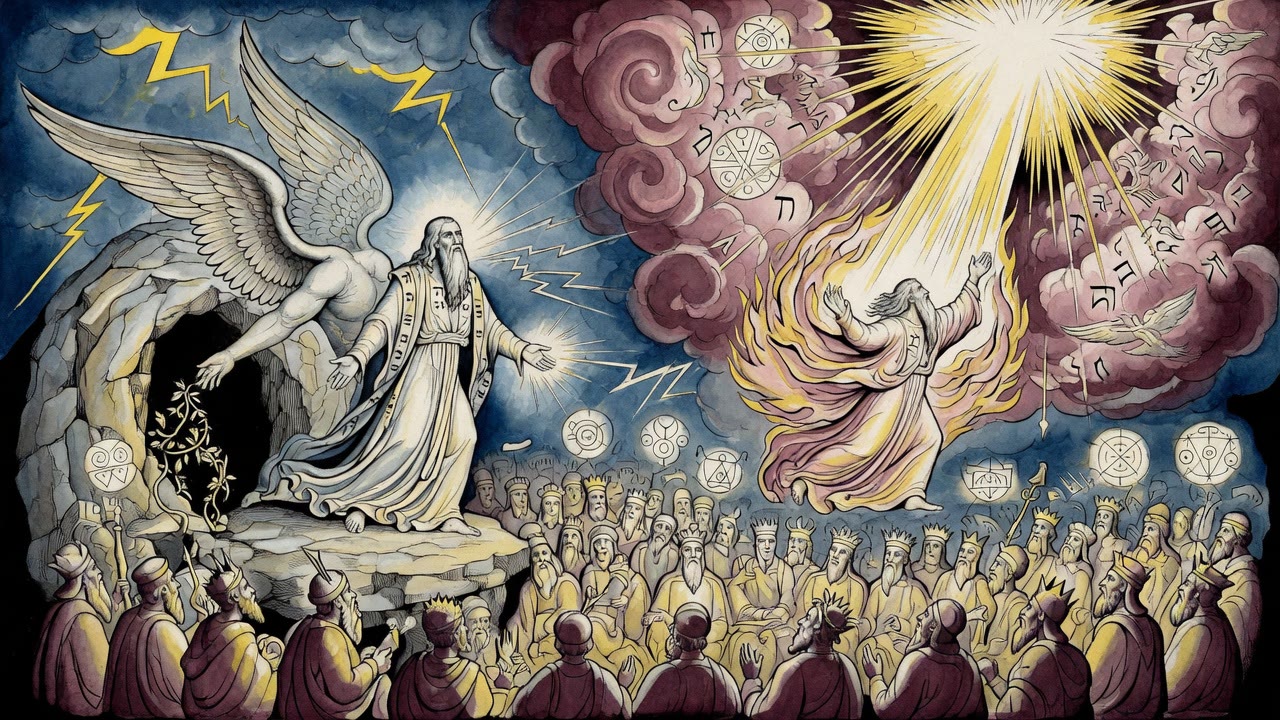
He had thirty days on earth to teach. When those days ended, the Lord sent darkness. Gloom hid the men standing with him. Angels took Enoch to the highest heaven, and the Lord set him before His face. The dark lifted. The people saw light and did not understand how the man had gone.
He had been born on the sixth day of Siwan. He was taken in Siwan, on the same day and in the same hour. Methuselah and his brothers built an altar at Achuzan, the place he left from. The elders brought gifts and made a feast for three days. The 366 books stayed on earth. The scribe did not.
← All myths