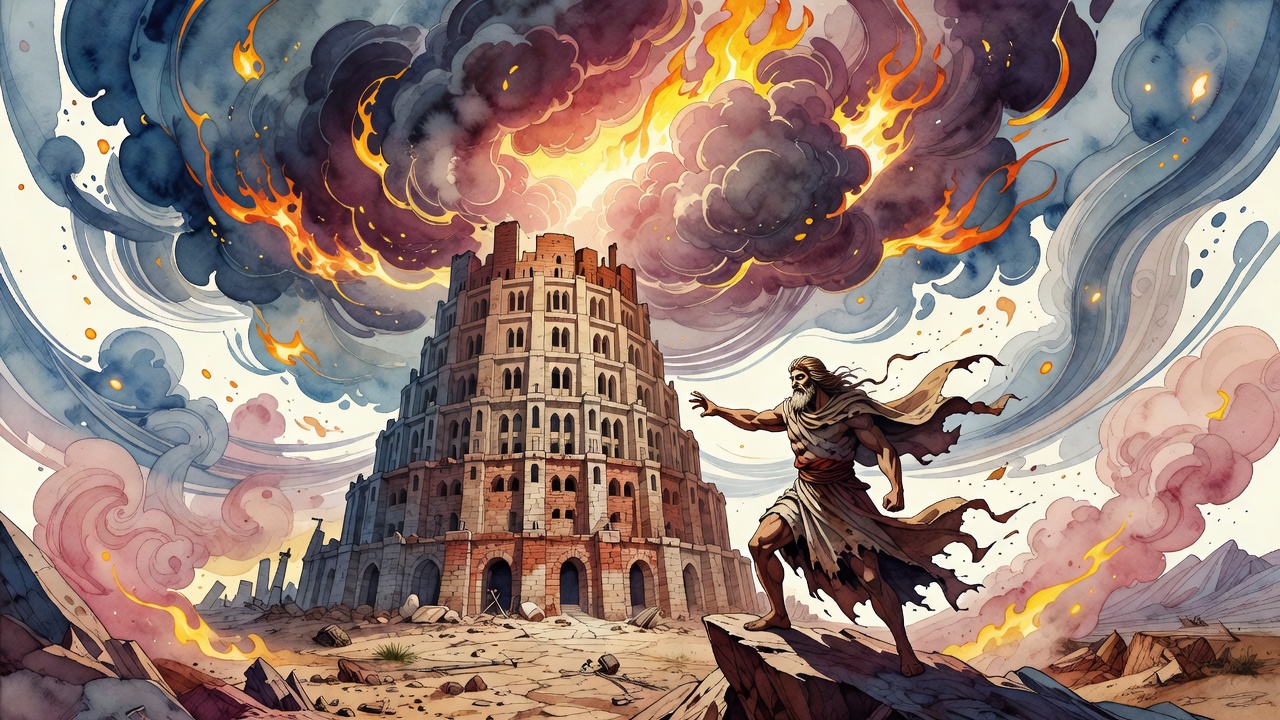
The Builders Who Wept for Bricks but Not Men
A brick slipped from the top of Nimrod's tower and they mourned it for a year. A man fell from the same height, and the line did not stop.
Table of Contents
The brick hit the ground and broke, and the builders sat down and wept as if a year of their lives had died with it.
 Click for full size
"When, oh when, will another be brought up?" they cried. It had taken a year to carry that brick to the summit. Now it lay shattered below, and the year was gone.
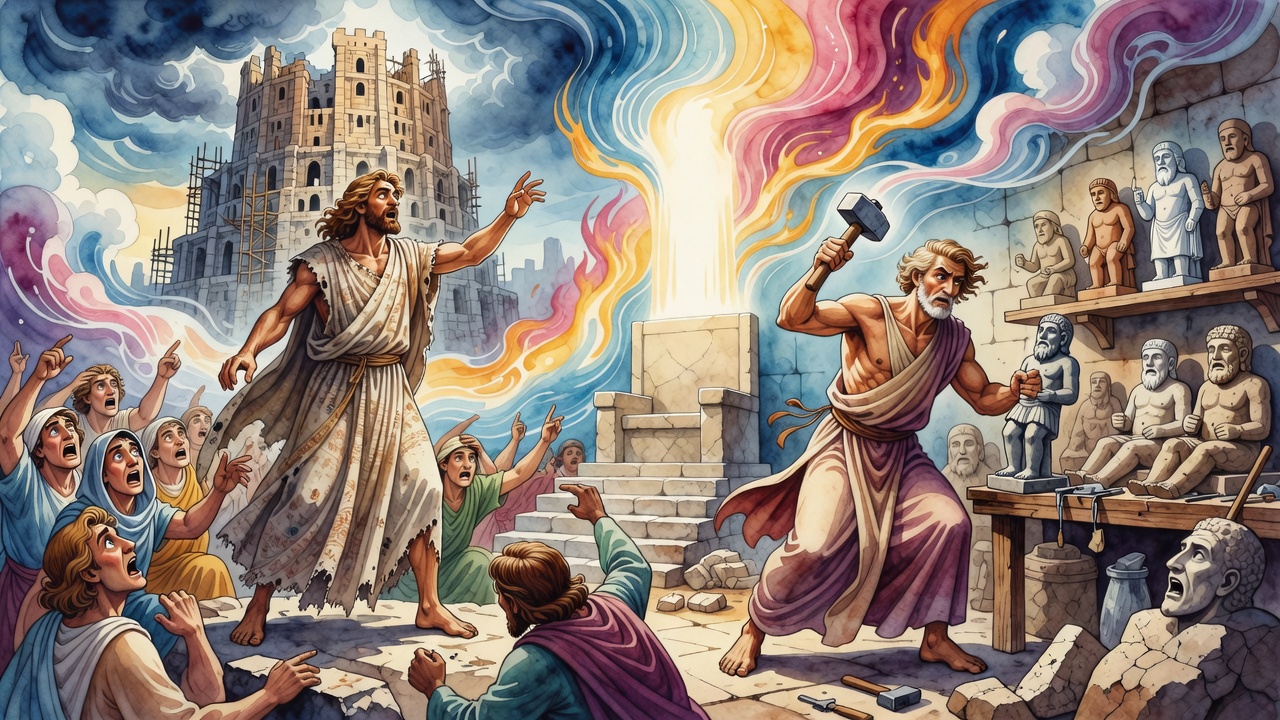
A man fell from the same height and died. No one wept. No one paused. The man was replaced. The brick was mourned.
They Wept a Year for One Brick
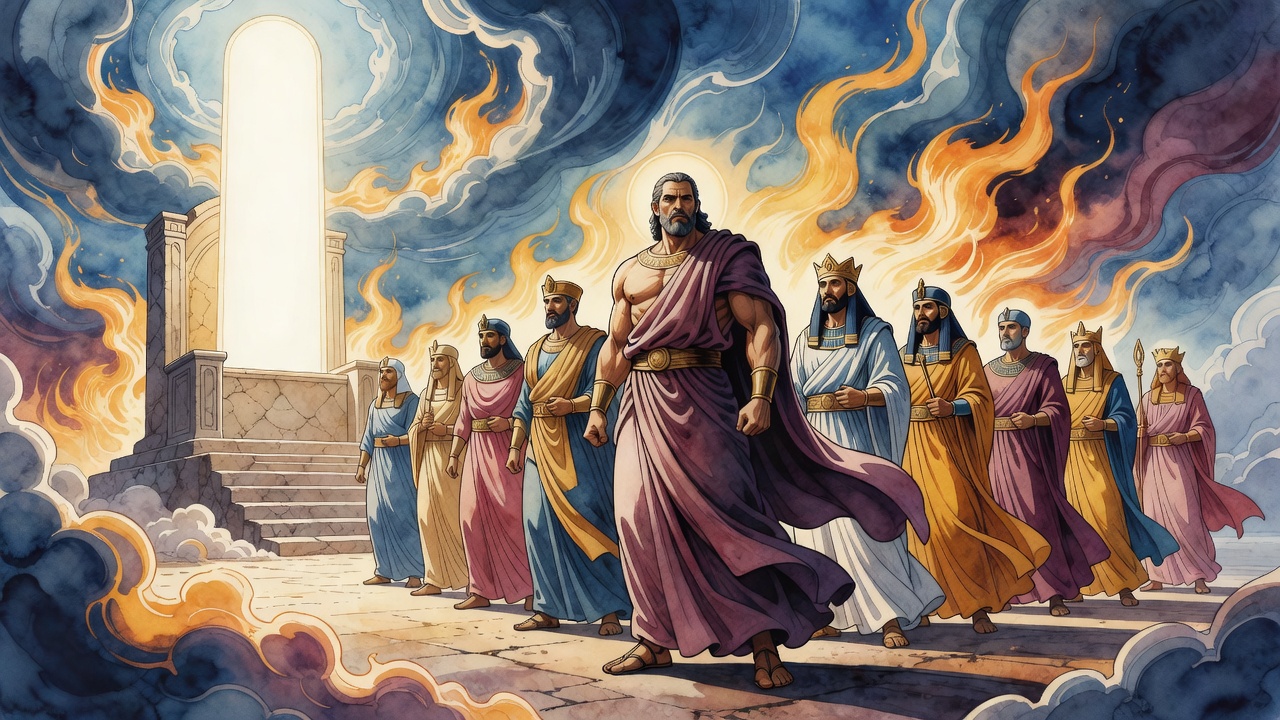
Nimrod had assembled six hundred thousand men on the plain of Shinar. The tower rose seventy steps, with the ascent from the east and the descent from the west. Hands passed brick to brick until the summit was a place a body could fall from.
When a worker slipped, the line closed. When a brick slipped, the work stopped for grief. That was the accounting of Babel before God said a word. The height was not yet the crime. The weeping already was.
Abram cursed the builders in God's name. They ignored him and kept the line moving.
Three Armies Under One Tower
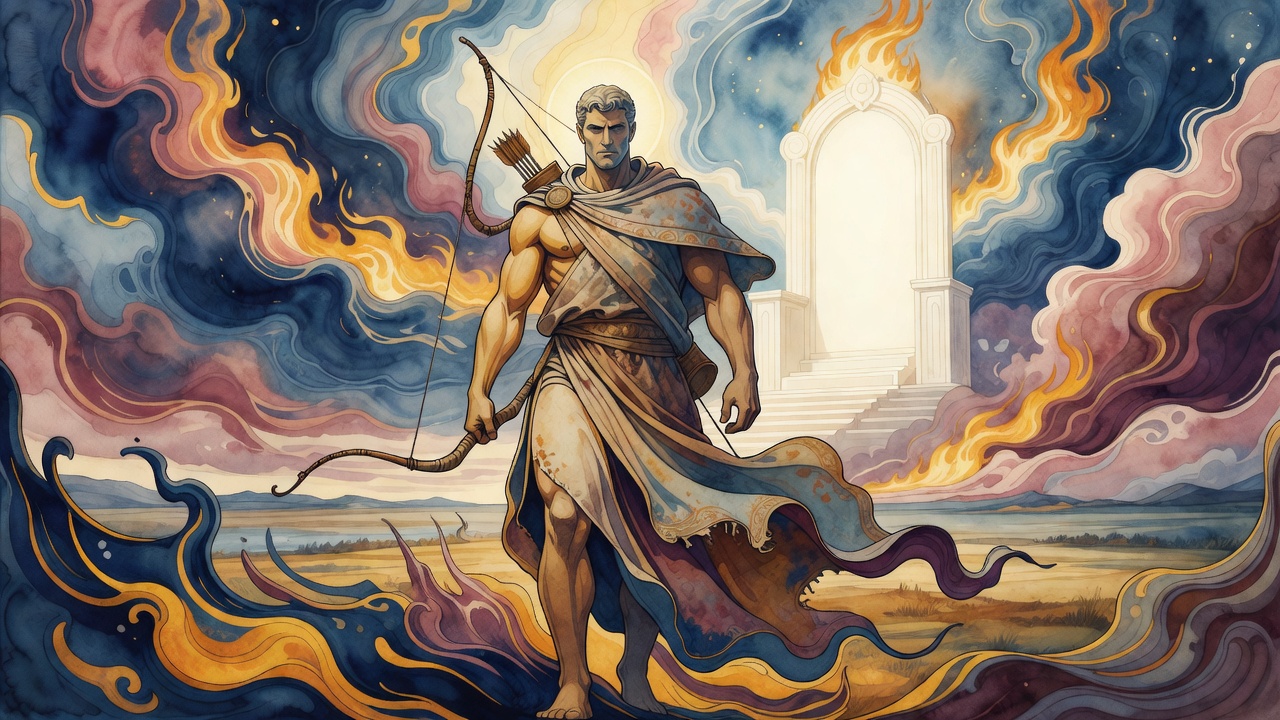
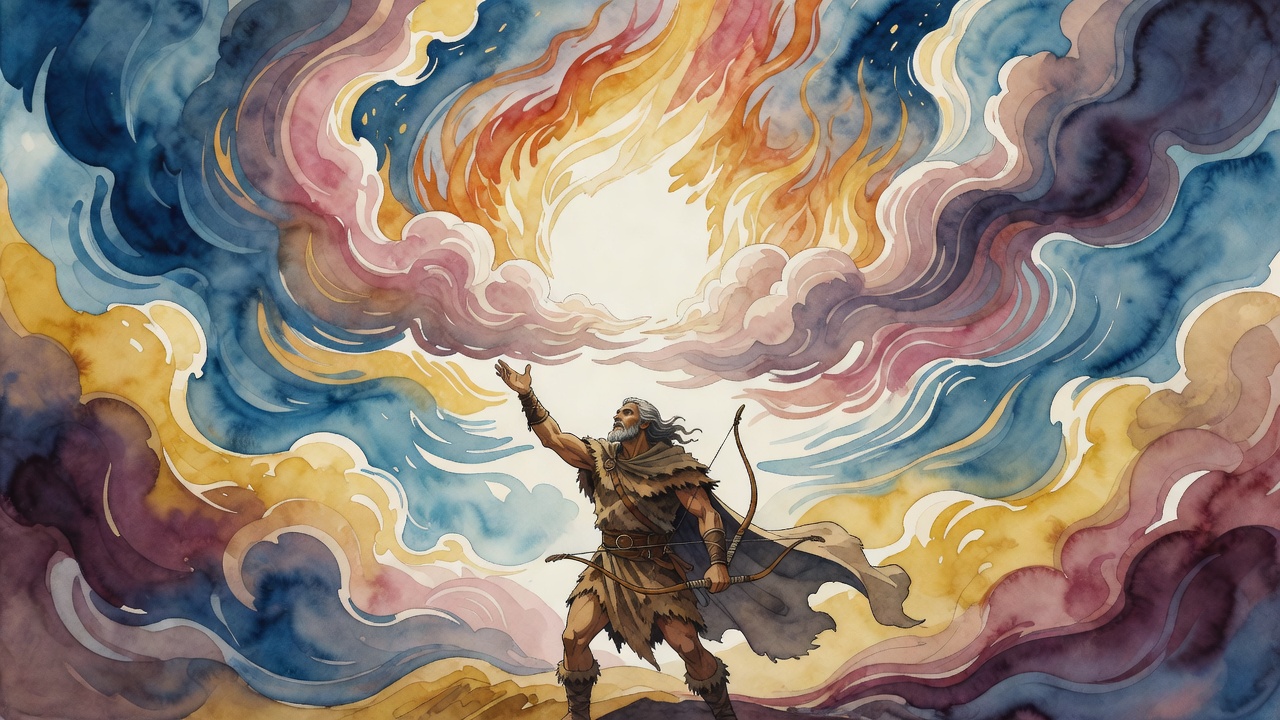
Three factions drove the project, and each had its own plan for heaven. The first said, let us ascend and make war against God. The second said, let us ascend and set our idols in heaven and worship them there, above everything, where God Himself sits. The third said, let us ascend with our bows and spears and ruin the heavens entirely.
None of these purposes required bricks. Bricks were what they had. They also planned to take axes and break open the firmament so the waters above would drain below, and no flood could ever be sent again.
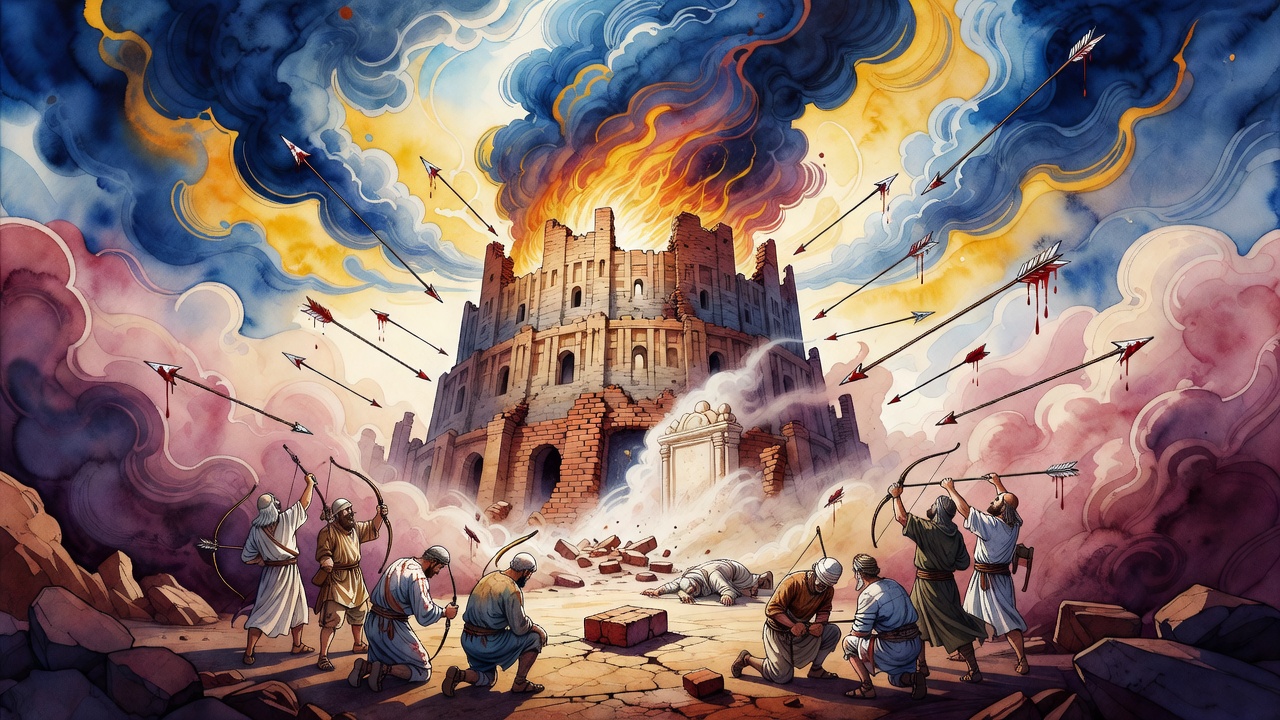
They built upward. When they reached what they believed was the level of heaven, they shot their arrows straight up.
The Arrows Came Back Bloody
The arrows came back with blood on the tips.
The builders took the blood as proof that their arrows had killed. "We have slain the beings of heaven," they said. They had reached the sky. They had drawn blood from it. The tower was working.
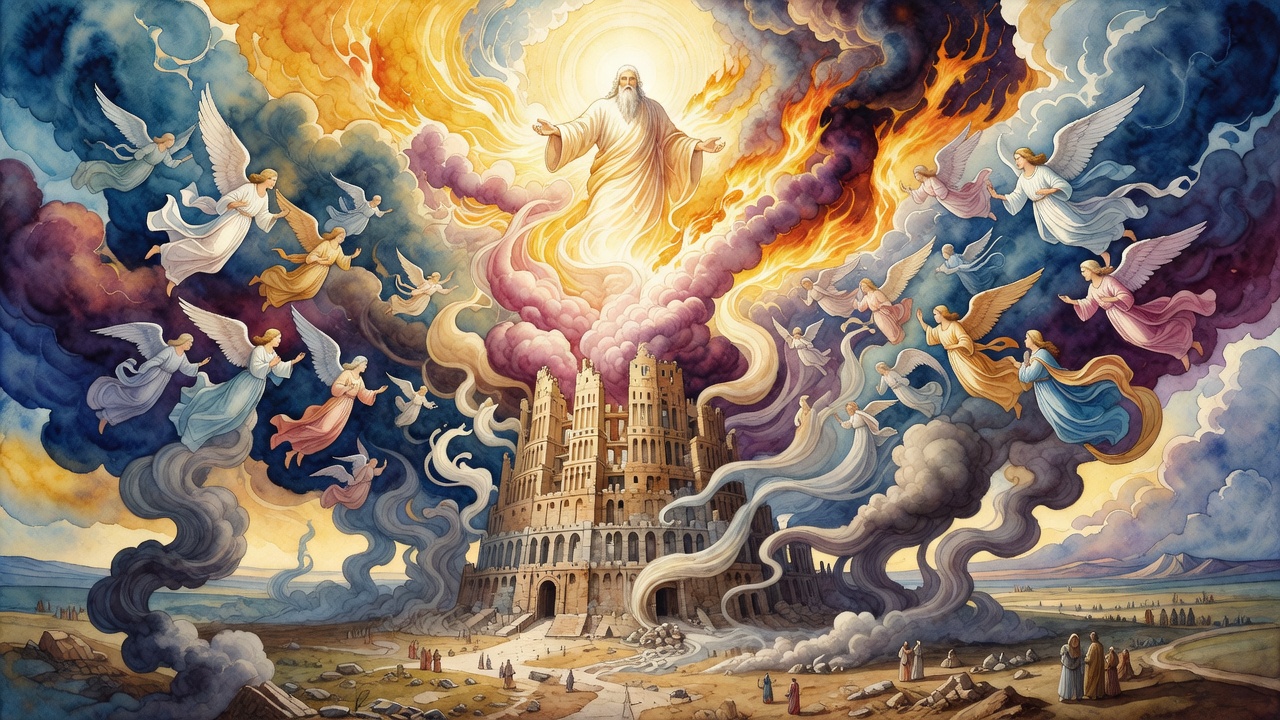
God looked down at the city and the tower. Their purpose was unified. Their language was one. Whatever they imagined doing, they would be able to do it. So He came down with seventy thousand angels, and the languages broke apart.
The six hundred thousand men on the plain of Shinar stopped understanding each other mid-sentence.
The Word for Brick Died
Men who had been passing bricks hand to hand for years found that the word for brick no longer worked in the mouth of the man beside them. One asked for mortar and was handed a brick. One asked for a stone and received water. One asked for water and received stubble.
They hurled the wrong thing. Sometimes the brick killed the partner who had not understood. Brothers could not recognize each other. The project became impossible the moment speech became impossible.
The tower had been built so they could stay in one place and make a name for themselves rather than be scattered across the face of the earth. The tower became the instrument of the scattering it was meant to prevent.
Those who had wanted to set idols in heaven were turned into monkeys and phantoms, unfinished in the change they had been trying to force. Those who had wanted to attack with weapons turned on each other. Those who had wanted to fight God directly were scattered across the earth.
One Third Burned, One Third Sank
One third of the tower was burned by fire that came from heaven. One third sank into the earth. One third was left standing. Travelers who passed the leftover stub forgot everything they knew. The ruin itself took memory.
The bricks they had wept over were still there, at the bottom of the rubble. The men they had not wept over were scattered to the edges of the world, walking away in languages they could not share.
God had spared the land He intended for Abram even during the flood. He had never sent the deluge upon it. Now He would bring Abram there, make a covenant with him and his descendants, and be their God. The builders had ignored the curse of the one man whose land had never drowned. The tower they left behind was a stub of ambition sticking up from Shinar, bleached by sun, unreachable from above and unsupported from below.
← All myths