Every Golem Ever Made Had to Be Unmade by the Man Who Made It
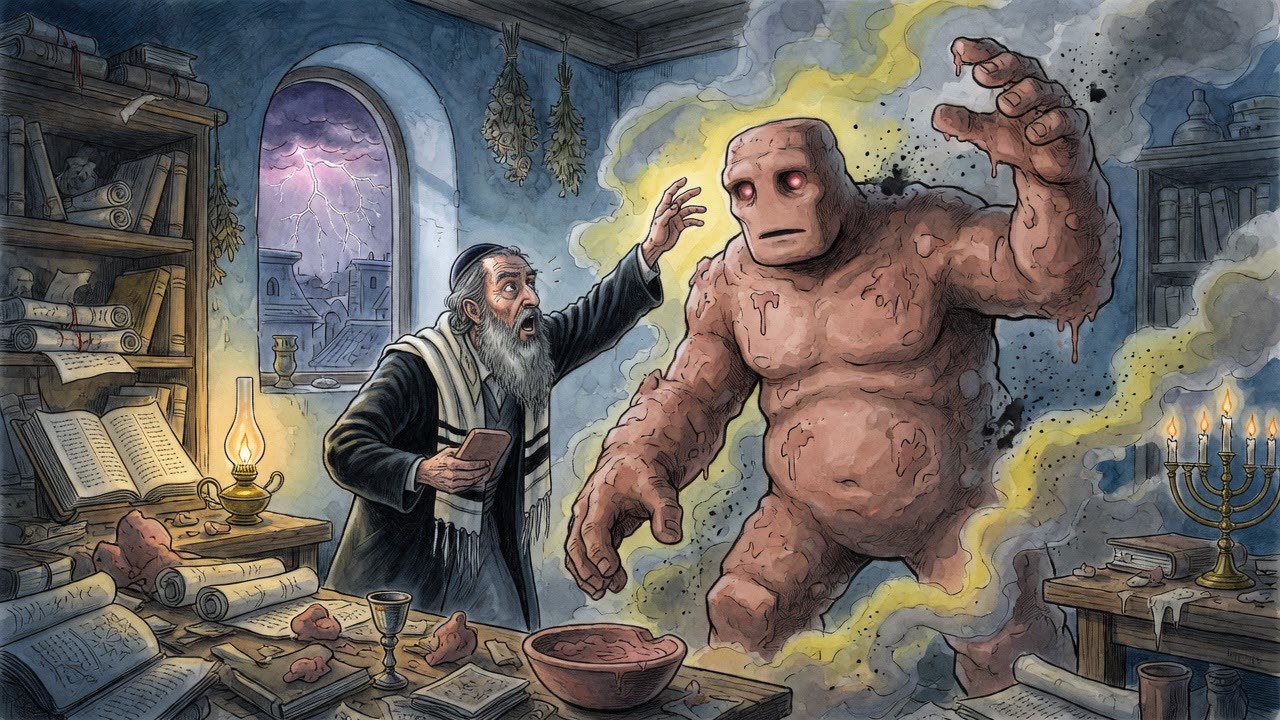
Jeremiah and his son spent three years on the Book of Creation. The man they built stood up, reached to his own forehead, and rubbed out one letter.
Table of Contents
 Click for full size
The Man Jeremiah Built Told Him to Kill It
A voice told Jeremiah to find a partner, so he took his son Sira, and the two of them shut themselves in with the Sefer Yetzirah, the Book of Creation, for three years.
Then they went out and did it.
They said the letters in their combinations over a shape of earth, and the shape stood up, and it was a man. Cut into his forehead were the words: the Lord God is truth. In his hand was a knife.
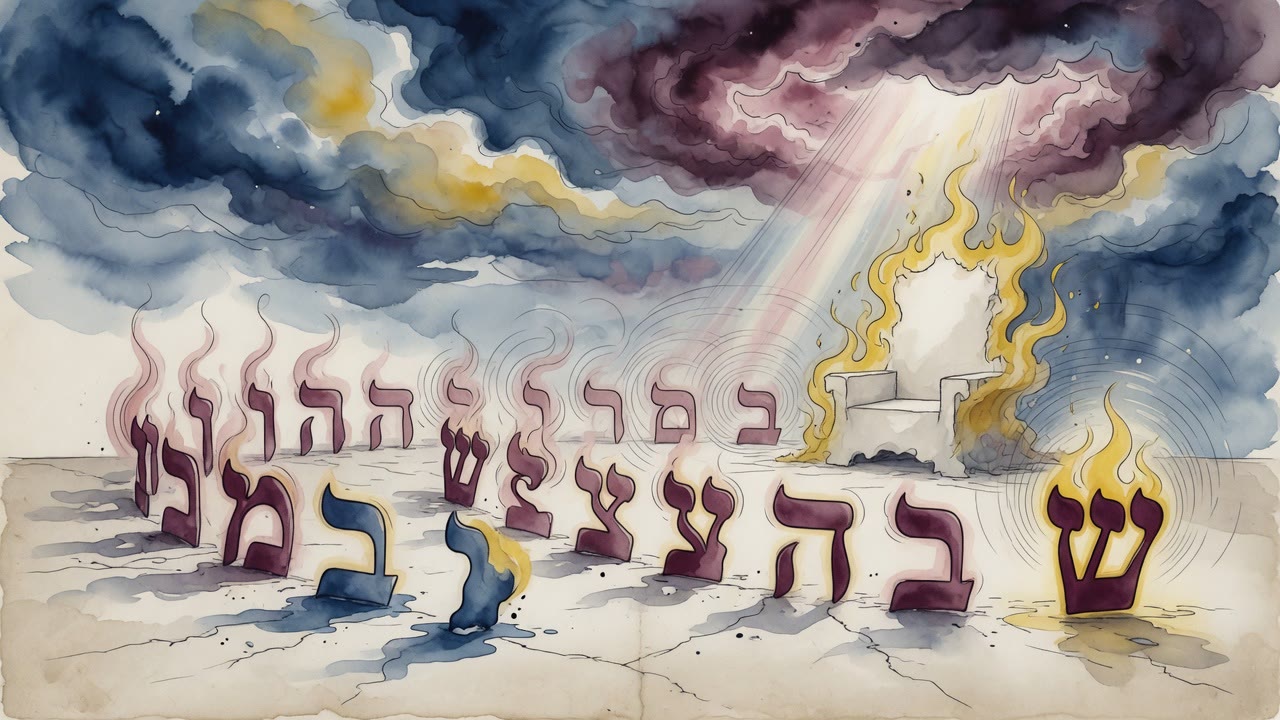
The made man did not thank them. He lifted his hand to his own forehead and rubbed out the first letter, so the word truth became the word dead.
Jeremiah asked him why.
"God made you in His image," the golem said. "Now you have made a man. People are going to say there are only two gods in the world."
Jeremiah stood there with the shavings of a letter on the floor. "Then what do we do?"
"Say the letters backward. All of them. In reverse."
They said them backward, father and son, in the same room where they had worked for three years, and the man came apart into ash and loose dirt. The knife dropped.
The Poet's Woman of Wood
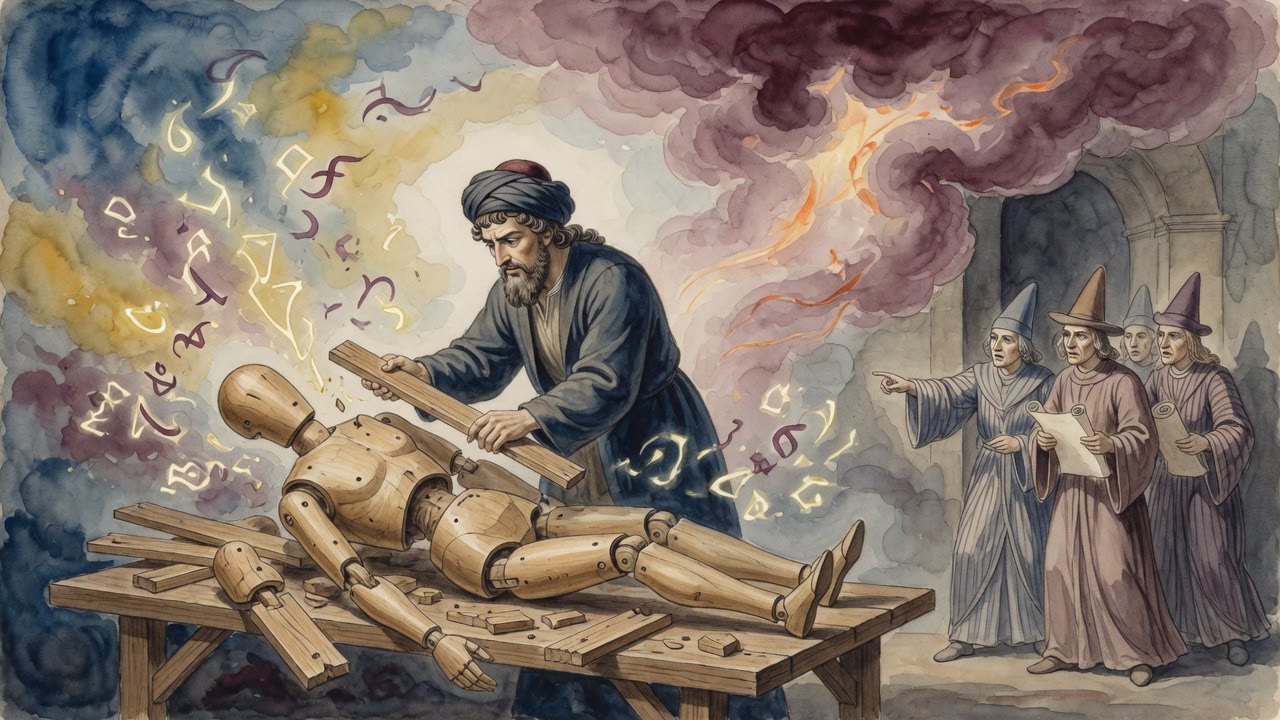
In eleventh-century Spain the poet Solomon ibn Gabirol made himself a servant.
She was wood and joints. She kept his house. He was a man who wrote some of the finest Hebrew verse anyone has ever written and who apparently could not stand to be alone in a room with it.
The talk started. He was summoned to answer for the woman living in his house.
So he brought her, and in front of the officials he took her apart. Hinge from hinge, limb from limb, until there was a heap of shaped timber on the floor and nothing that could be accused of anything. Nobody in that room had known what she was until they watched her come to pieces.
The One in Chelm That Would Not Stop Growing
Rabbi Elijah of Chelm knew how to pronounce the Name, and men who knew that were rare in his generation.
He shaped a man out of clay, wrote the word truth across its forehead, spoke the Name over it, and it got up. It worked for him. It went where it was sent and did what it was told, and it was useful in the exact way an extra pair of hands is useful.
It also grew. Every morning it was taller than it had been the night before. Every morning it was stronger. Rabbi Elijah did the arithmetic that everyone in these stories eventually does, and saw that there would come a day when the forehead was out of reach and the thing on the other end of it could take the world apart.
He ordered it to bend down.
It bent, because it always did what it was told, and he reached up and scraped away the first letter, and truth became dead. The clay lost its shape in the air. Some say the falling edge of it opened his face. Others say the whole weight came down on him and killed him where he stood.
Ten Words in a Dream on the Moldau
In Prague they were being accused of using children's blood in the Passover bread, and the accusation had a body count.
Rabbi Judah Loew asked heaven what to do and got ten words back in a dream. He worked at them until he knew what they described, then called in his son-in-law and his best student and swore them to silence. One of the three stood for fire, one for water, one for air. He himself was earth.
On the twentieth of Adar in the year 5340, which outside the quarter was called 1580, the three of them left the city before first light and went down to the bank of the Moldau. They dug and shaped until a man lay on his back in the mud.
Then they walked the circles, seven times each, saying what the Maharal had taught them.
The clay began to glow. Hair pushed out of the scalp. Nails came up on the fingers and the toes. They spoke the line about the breath of life going into the nostrils, and the eyes opened and looked at them.
"Stand," said Rabbi Loew, and it stood.
They dressed it, put shoes on it, and walked it back into Prague before sunrise. It could see, hear, and understand every word. It could not speak. He called it Joseph and told his household he had taken in a poor mute man out of pity.
Joseph patrolled at night. Once he found the body of a murdered child planted in the quarter and carried it out through the tunnels into the cellar of the man who had put it there.
Two Prayer Shawls in the Attic
Then the emperor ruled that the accusations had to stop, and the guard had nothing left to guard against.
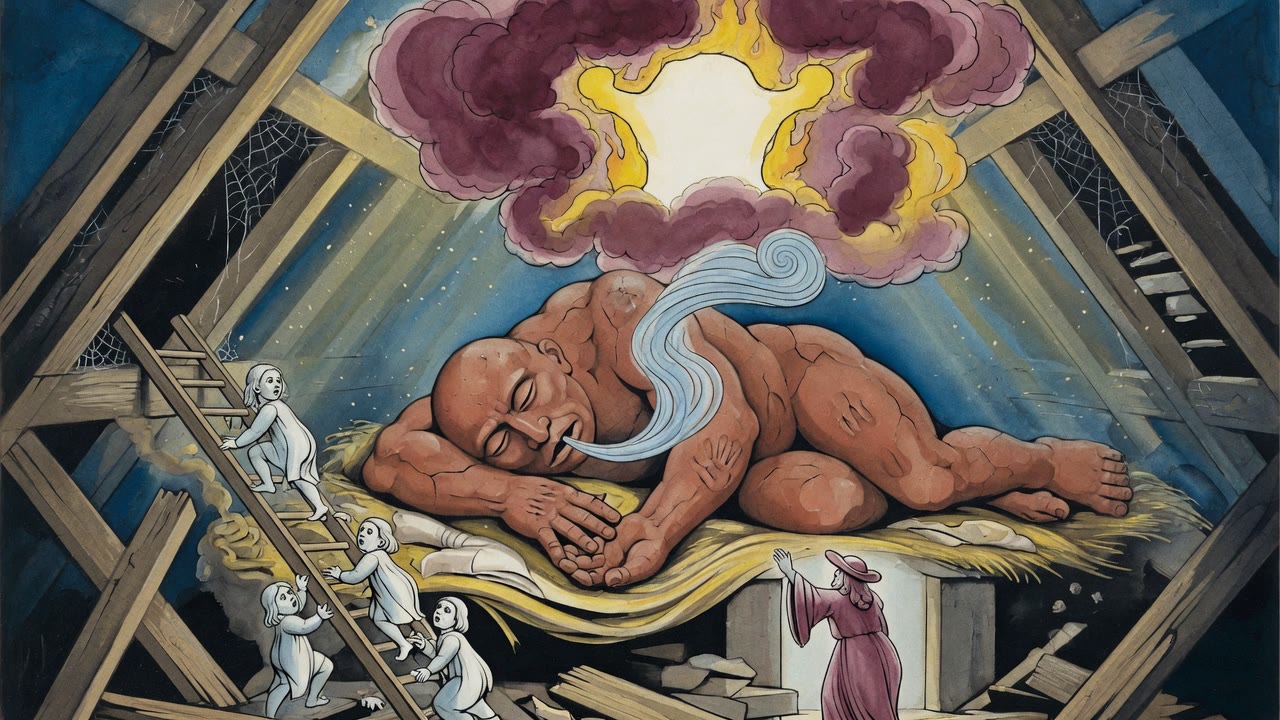
At two in the morning Rabbi Loew went up to the attic of the Alt-Neu synagogue with the same two men. Joseph lay where he had been left, not moving.
They walked the seven circles the other way around, and after each circuit they said the words of the Book of Creation in reverse order, exactly backward.
On the seventh circuit the guard of Prague stopped being anyone and became a quantity of clay, still roughly the shape of a man.
They wrapped him in two worn-out prayer shawls and pushed him in among the discarded books and broken things that collect in an attic. In the morning the word around the quarter was that the golem had run off. Rabbi Loew forbade anyone to go up there again. He gave the risk of fire as the reason.
← All myths