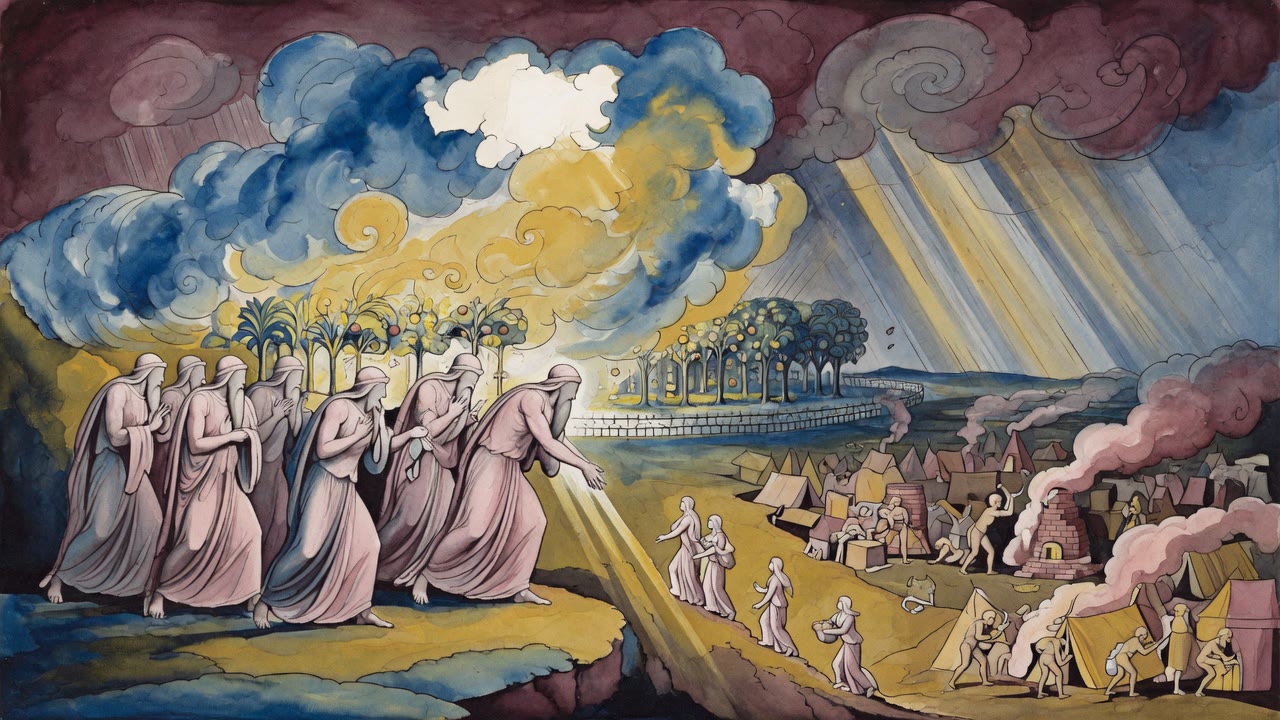
Cain Built the First Walled City Because He Was Afraid
God told him the beasts would not take him. Cain still raised the first wall on earth and filled it with people he later robbed.
Table of Contents
 Click for full size
The Mark That Did Not Quiet Him
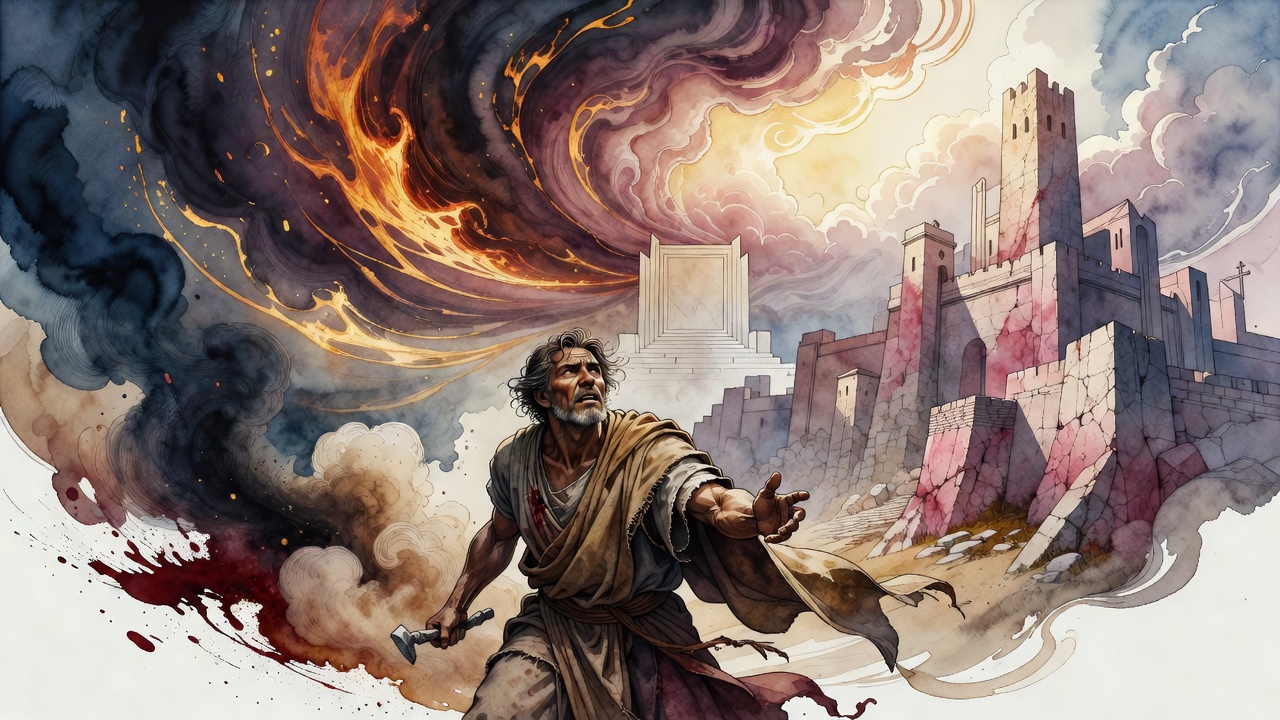
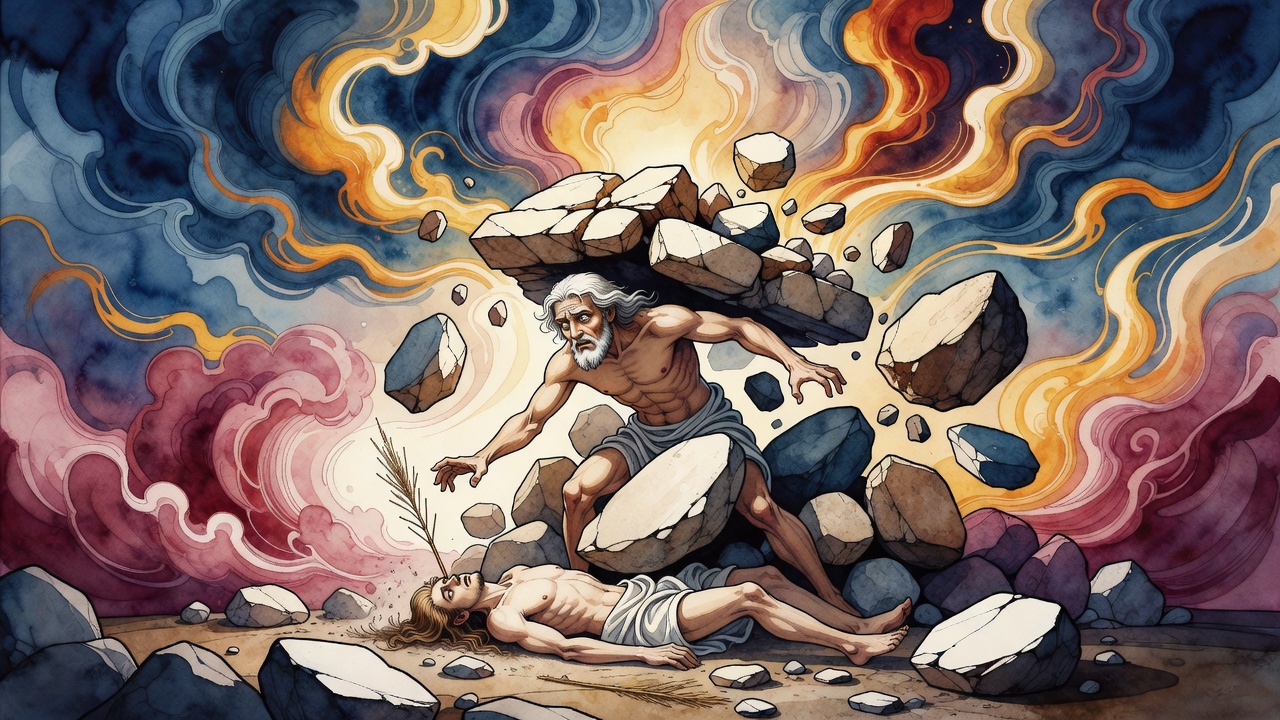
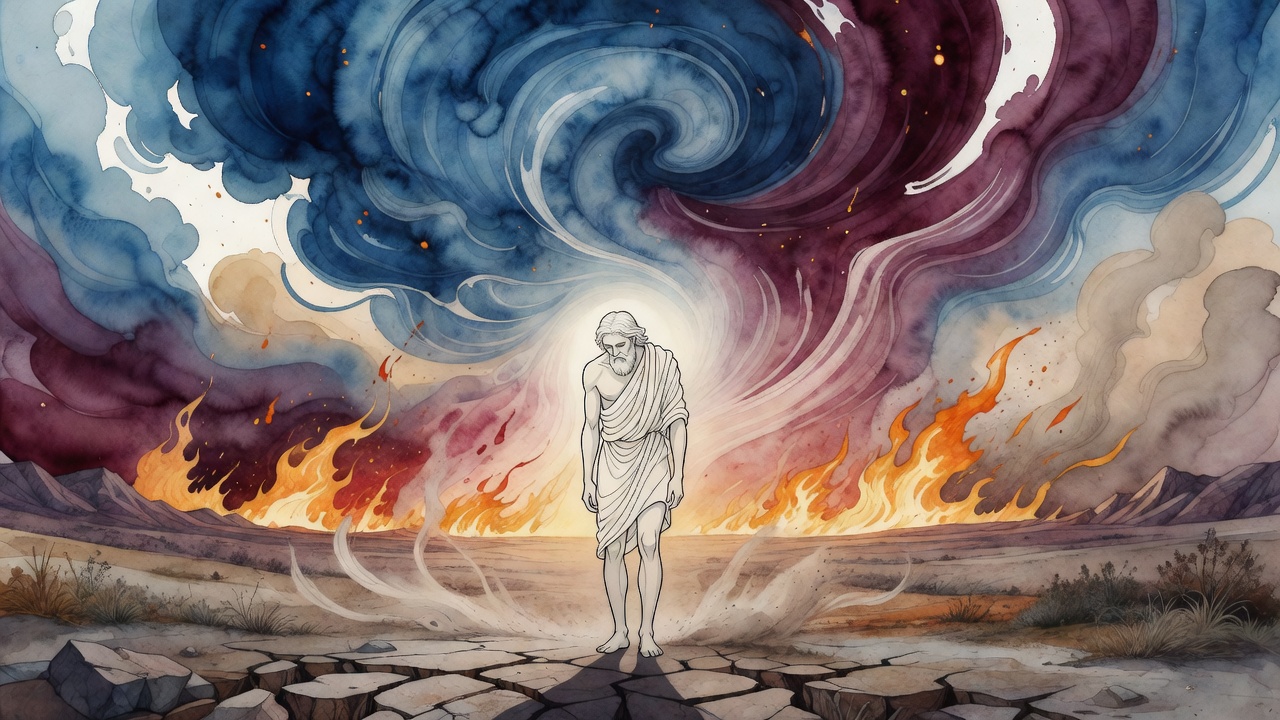
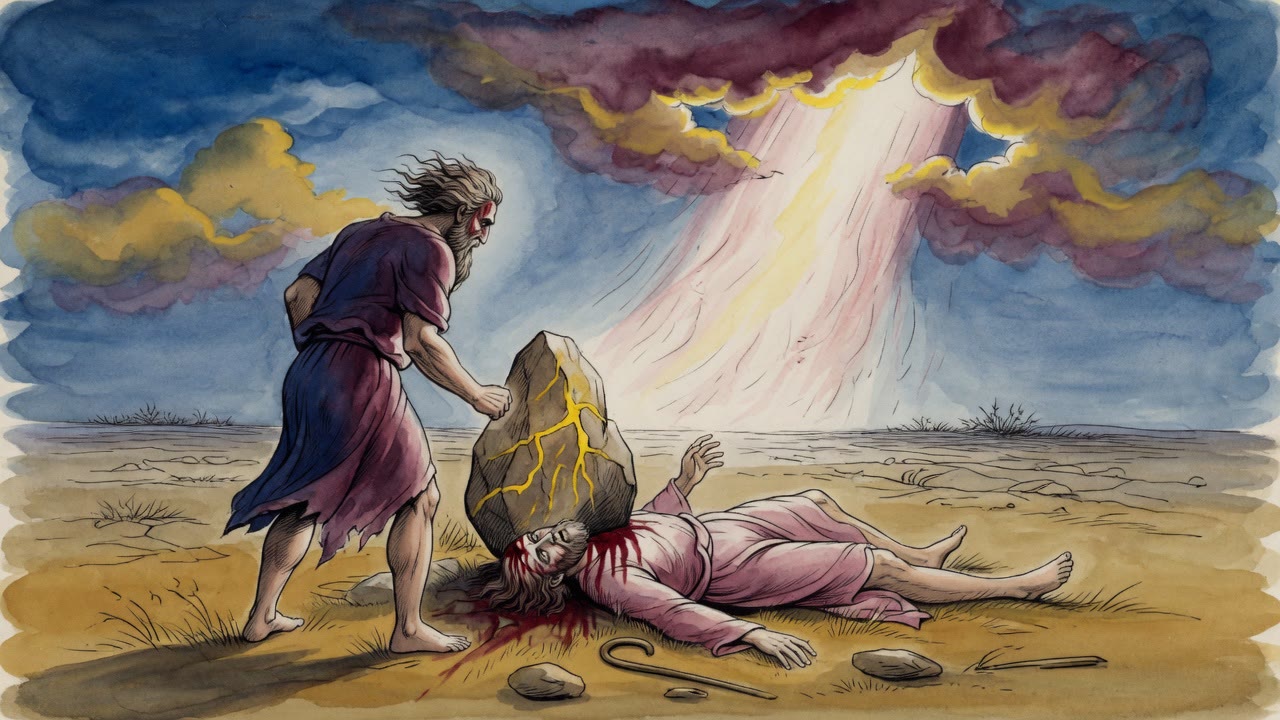
Cain hid his brother's body and told God he was not the boy's keeper. God found the body anyway. God did not kill him. God cursed him, threatened his line in the seventh generation, and set a mark on him so that any man who raised a hand would pay sevenfold. Beasts would not take him. God said so. Cain was told to walk the earth without that fear.
He did not walk without it.
He went east of Eden into the land of Nod with his wife Awan, his sister, and when she bore a son he named the boy Enoch. The mark sat on his skin. Abel's blood still sat in the ground. He began to build.
Trenches Around Enoch
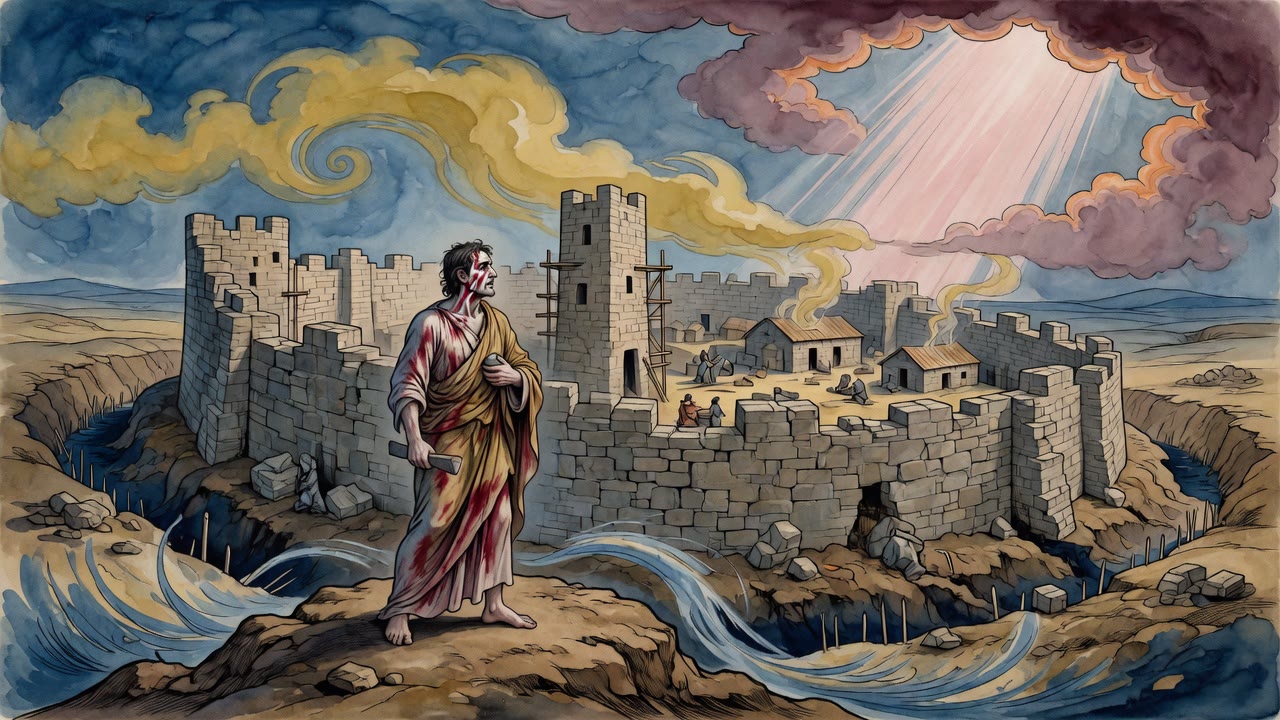
Not a shelter. Not a tent. A city. He dug trenches around it and raised walls above the trenches, the first walls anyone had put around a living place. He compelled his household to come inside. He named the city Enoch, after the son, because the living boy was what remained when the dead brother had been spent.
He was afraid of enemies. He was afraid of beasts. He was afraid of whatever a marked man imagines after dark. The mark said no one could touch him. The trenches said he had not believed it.
He did not put his own name on the gate. He put Enoch's. The name he could not trust to last on his marked skin he tried to make last in a child.
He Lured Them In
He used to entice people into the city and then rob them. The walls were not only for keeping danger out. They were for keeping victims in. He first set boundaries around land. He invented weights and measures. He taught men to count what they took. People who had lived without scales now stood at his gate and were weighed.
He became a leader of men into robbery, and into spoils taken for pleasure. He compelled his family to crowd together inside the masonry, and the city filled until its people were about twice the number that would later leave Egypt. The first city on earth was a trap wearing the face of safety.
Lamech Took the Mark as License
Out of that city came a line that sharpened what Cain had begun. Tubal-cain worked brass and the tools of war. Jabal raised tents and kept cattle. Jubal made the harp and the psaltery. Music and metal grew in the same enclosure as the robberies.
Lamech, farther down, took two wives, Adah and Zillah. He killed a man for wounding him and a child for bruising him, and he boasted to the women about it. "If Cain shall be avenged sevenfold, truly Lamech seventy and sevenfold" (Genesis 4:24). He had taken Cain's protection and used it as a permit.
Lamech knew, in the way of a man who can see a sentence coming, that the seventh generation would pay for Abel. He kept having children anyway. The walls that were supposed to keep danger out kept the violence in, gave it names, and handed it tools.
Water Over the Walls
The city of Enoch grew corrupt the way a closed wall grows corrupt. Brass lived beside the robberies. Songs did too. Cain had built because he was afraid to die by beast or by blood-avenger. He had filled the enclosure with people he could plunder. He had written a son's name on the gate as if a name could outlast a curse.
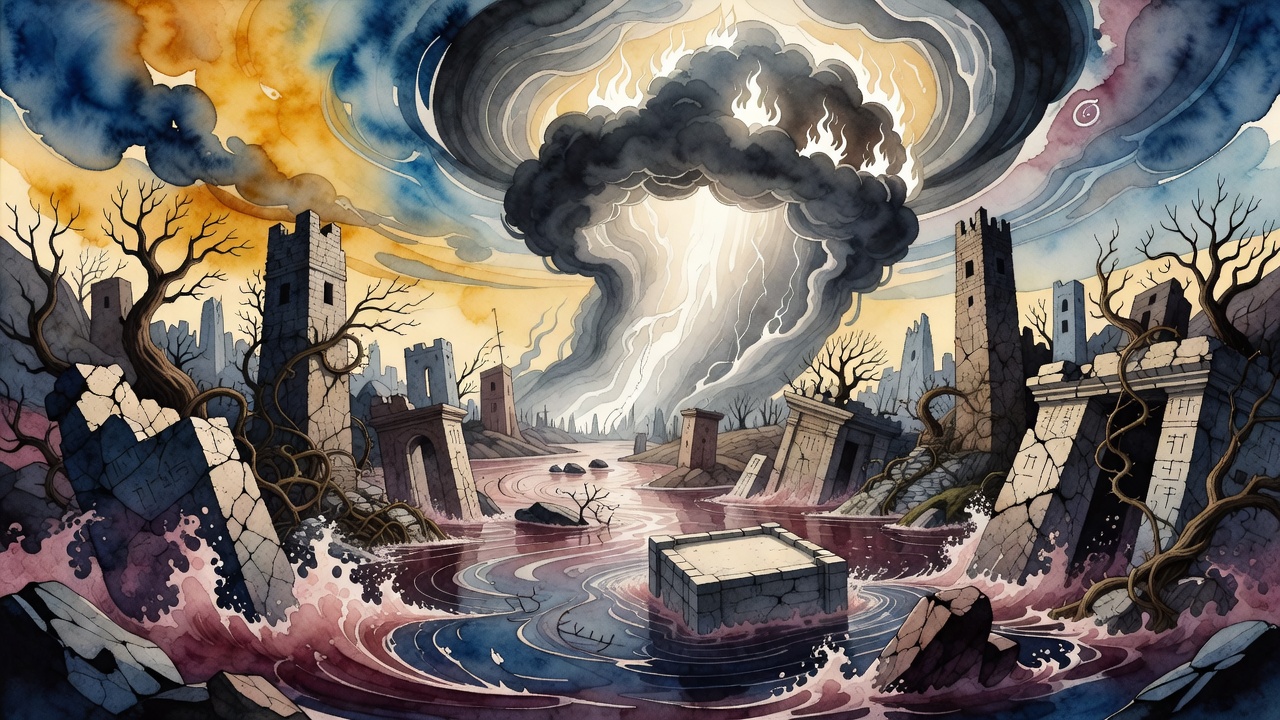
The flood did not read names on gates. Water took the walls, the weights, the brass, the harps, and the graves that had been houses. The mark had not made Cain safe. The masonry did not save him. The son's name on the gate did not outlast the rain.
← All myths