Noah Stepped Off the Ark and Divided the Whole Earth Among His Sons
The flood had emptied the world. Noah's sons reached into his chest and drew lots for every coast and mountain that was left.
Table of Contents
The mountain still smelled of wet wood and pitch.
 Click for full size
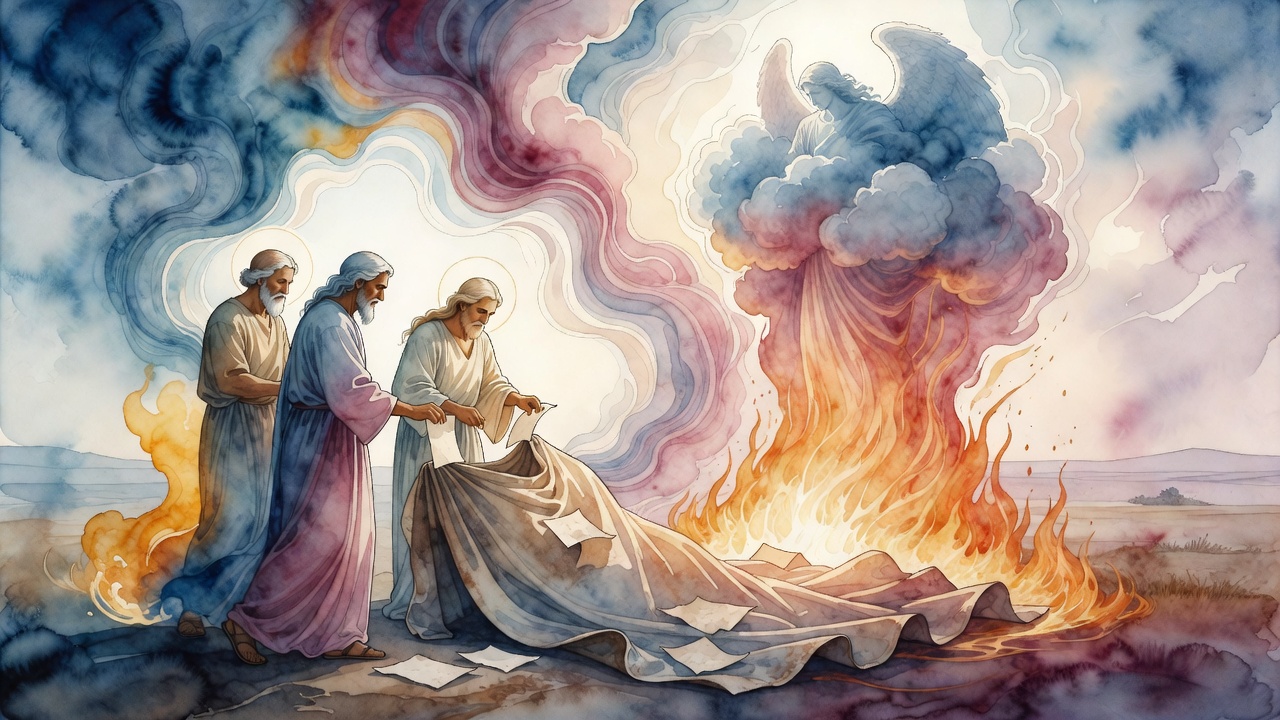
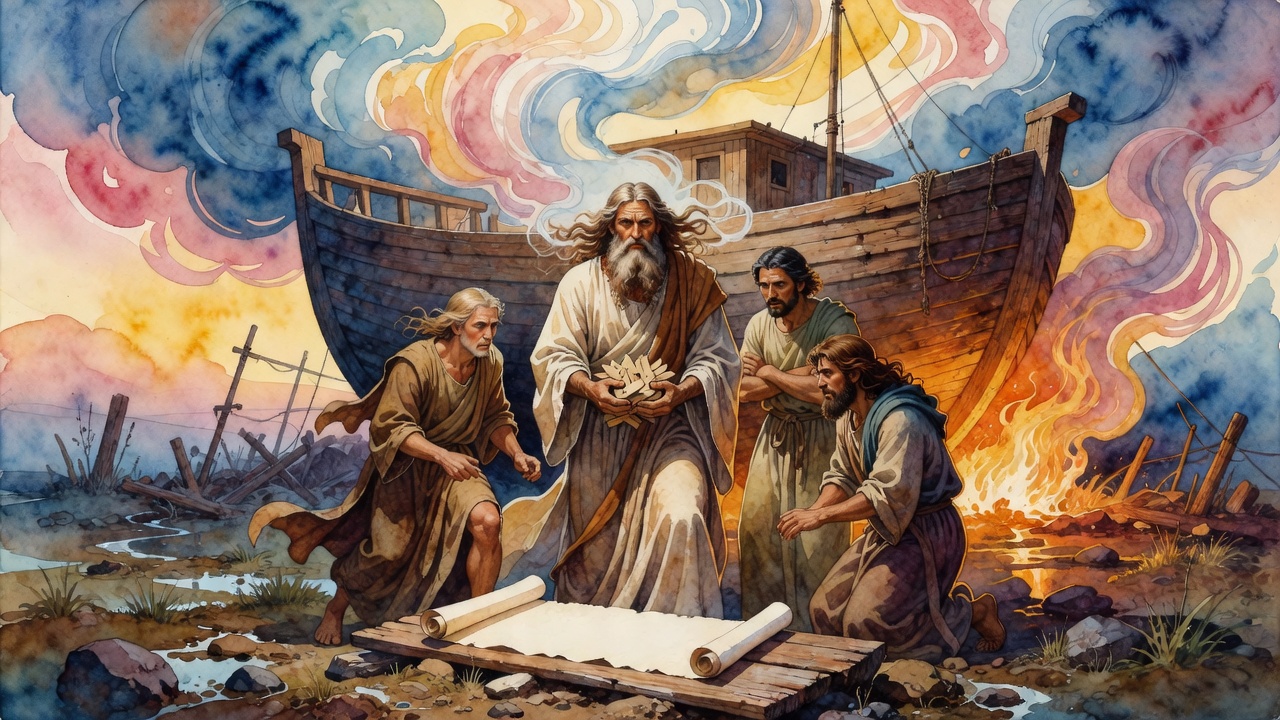
Noah came down from the ark onto Lubar, one of the peaks of Ararat, and built an altar before he built a house. He took from every clean beast and every clean bird and offered them. Smoke went up over a world with no neighbors in it. God smelled the offering and set a bow in the cloud. The ground was his again, and it was empty.
The Writing in His Chest
Then he did the thing the flood had made necessary. He divided the earth.
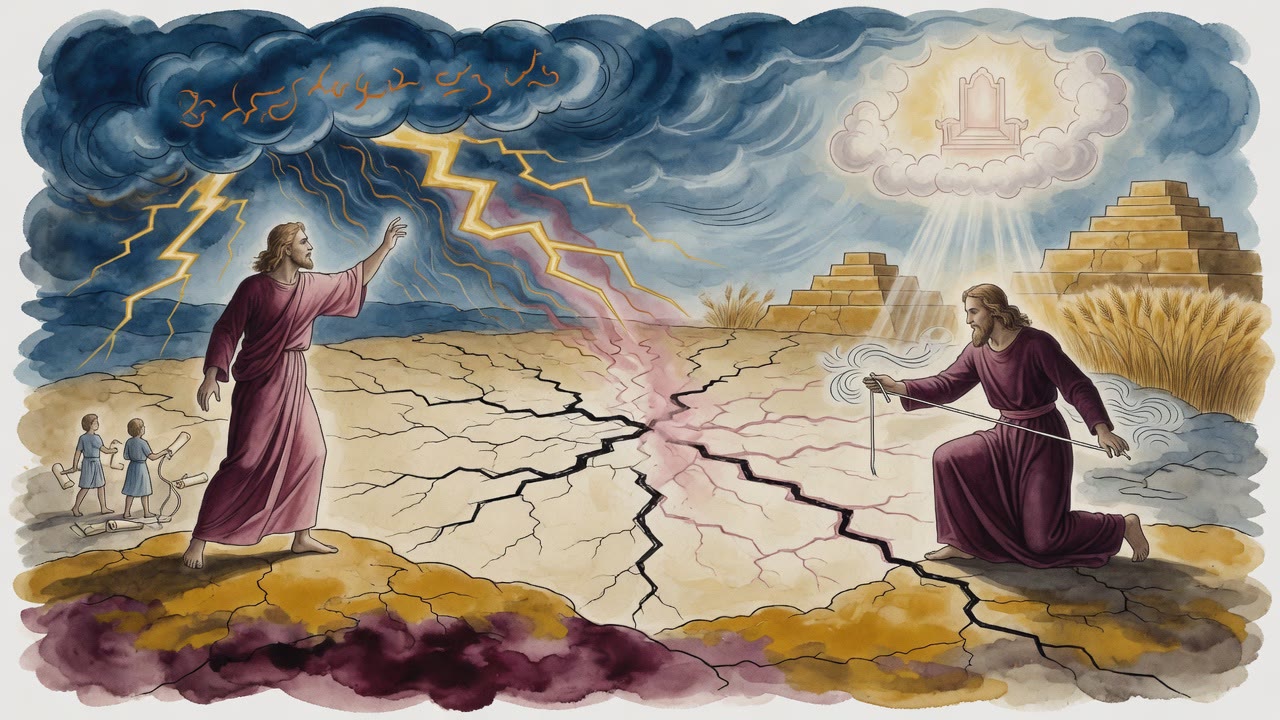
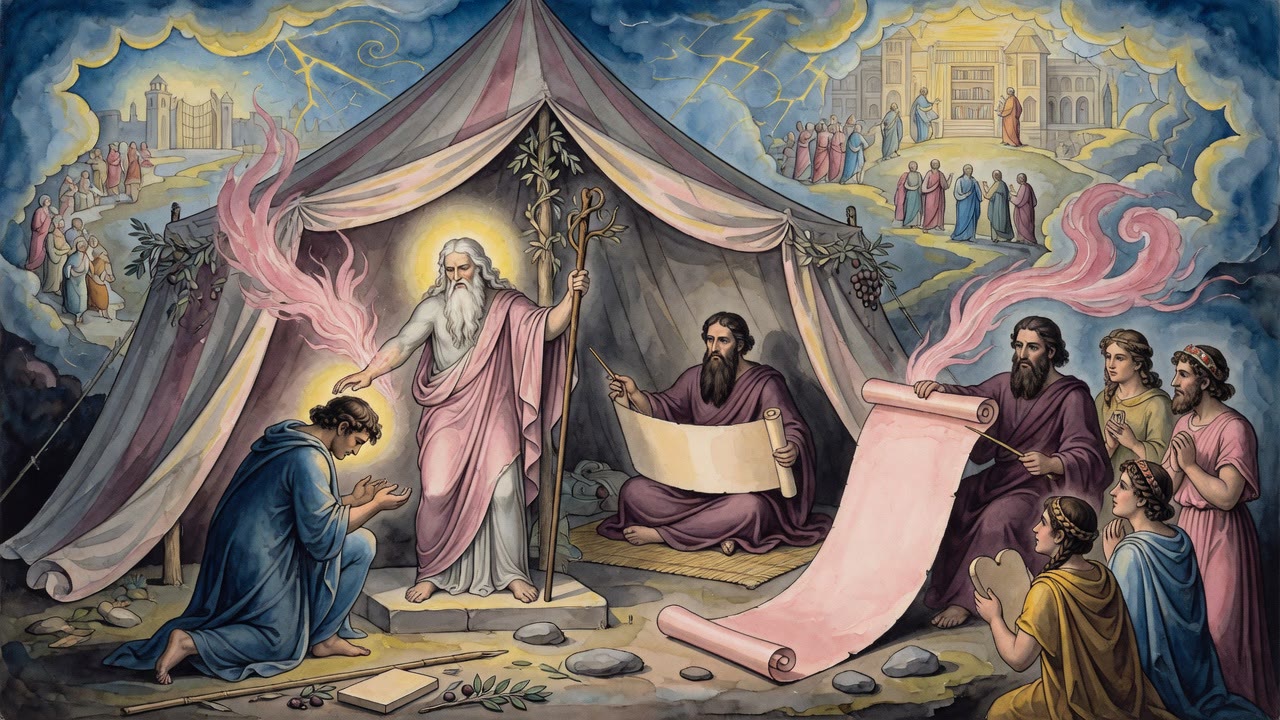
He wrote the portions. He placed the writing in his bosom. His three sons stood in front of him and put their hands into his garment and drew the lots out, one by one, and read them aloud.
Shem's lot came first: the middle of the earth, from the range of Rafa and the river Tina toward the west, the navel of the world, the land where an altar would still matter. Ham received the south, heat and long coasts. Japheth received the north, cold seas and inner mountains. Each portion was named down to waters and ranges, as if a map could keep brothers from becoming enemies.
They Swore Not to Seize a Border
The sons divided their shares again among their own boys. Gomer, Magog, and the rest of Japheth's line took strips of the north. Ham's line took the land toward the Red Sea and India and Susan. Shem's line kept the middle. They bound themselves by an oath. A curse sat on anyone who would come and seize a lot that had not come out of Noah's chest for him.
The flood had erased every older claim. This writing was meant to be the first new one. Not conquest. Not luck. A drawing from a father's clothes after the water went down. They swore. They ate. The empty earth had owners again.
Noah looked at the boys who had walked out of the ark with him. He had been saved, the old verse said, because descendants would need ground to stand on. The lots were for those children. He was a man handing the world to sons he had kept alive in a box of gopher wood.
The Vines on Lubar
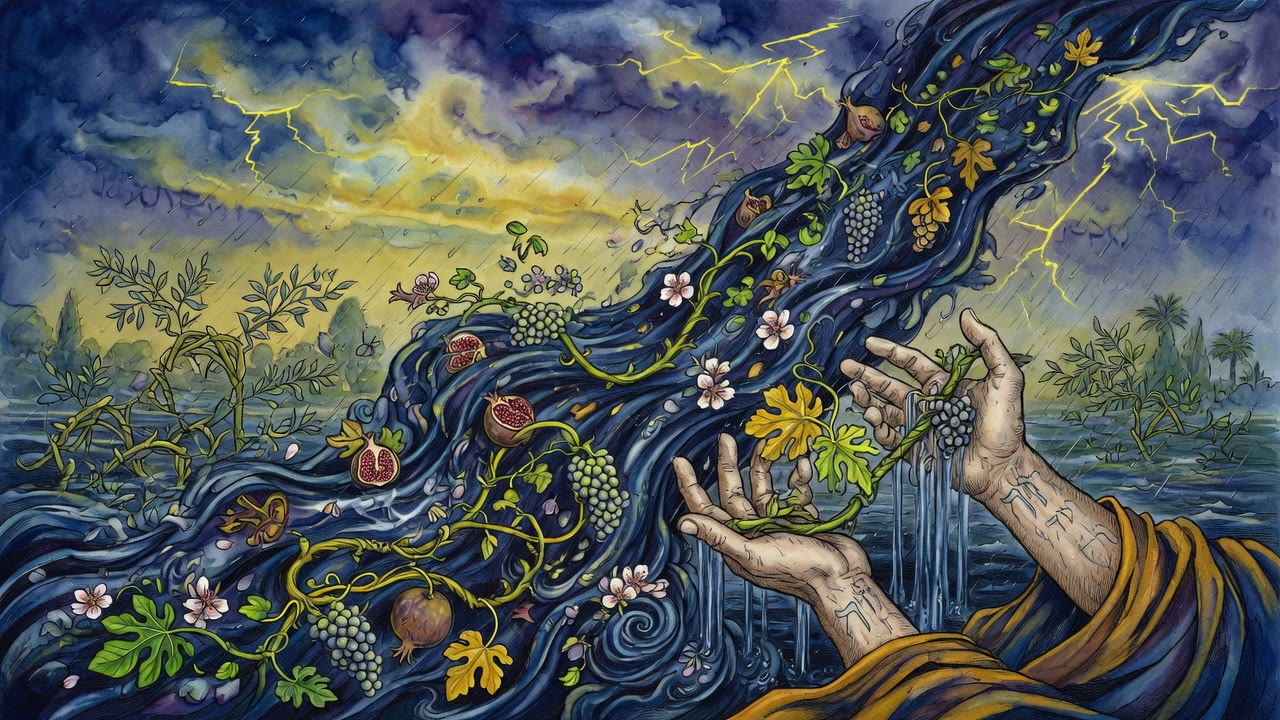
In the seventh week of that jubilee, on the same mountain where the ark had rested, Noah planted vines.
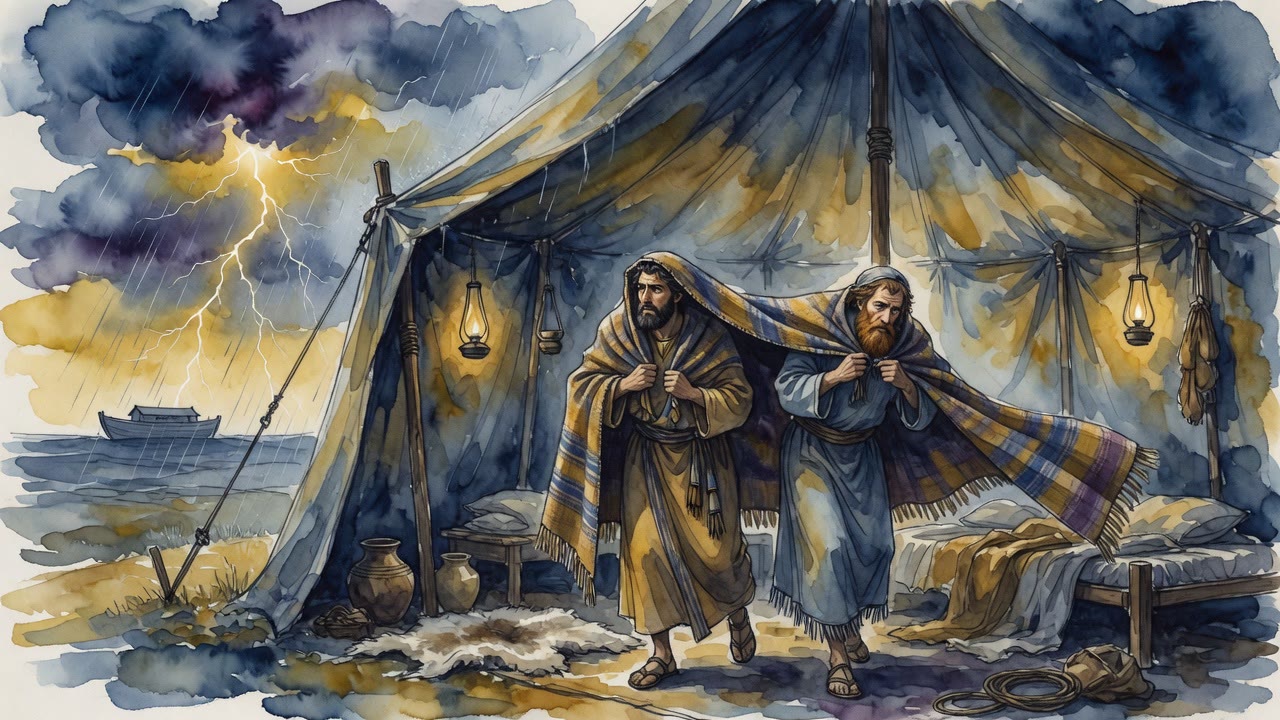
The vines took. He made wine. He drank. He uncovered himself inside his tent, a man who had seen the world die and who now could not sit upright in his own house. Ham went in and saw him. What passed in that tent the Torah will not say cleanly. Noah woke, knew what his youngest son had done, and cursed Canaan, Ham's son, to be a servant of servants to his brothers (Genesis 9:24-25).
The man who had just assigned continents by lot could not keep peace inside one tent. Shem and Japheth walked backward with a garment and covered their father without looking. The curse went to Canaan anyway. The first map of the world was drawn in the morning. By night the family that was supposed to honor it had already split.
The Earth Filled Along the Lines
Noah lived three hundred and fifty years after the flood. He watched the tents multiply. He watched his sons' children walk out toward the portions the writing had named. The oath was supposed to make seizing unnecessary. People seized anyway.
The writing had come out of his bosom. Hands had taken it. Mouths had sworn. A vineyard had then undone the dignity of the man who wrote it. The earth stayed divided along those lines, not because men kept the oath well, but because the lots had been drawn when there were only three names left to receive them.
On Lubar the altar stones cooled. The ark weathered. The vines kept making wine. The borders the writing named outlived the tent.
← All myths