The Promised Land Had Borders Under the Great Sea
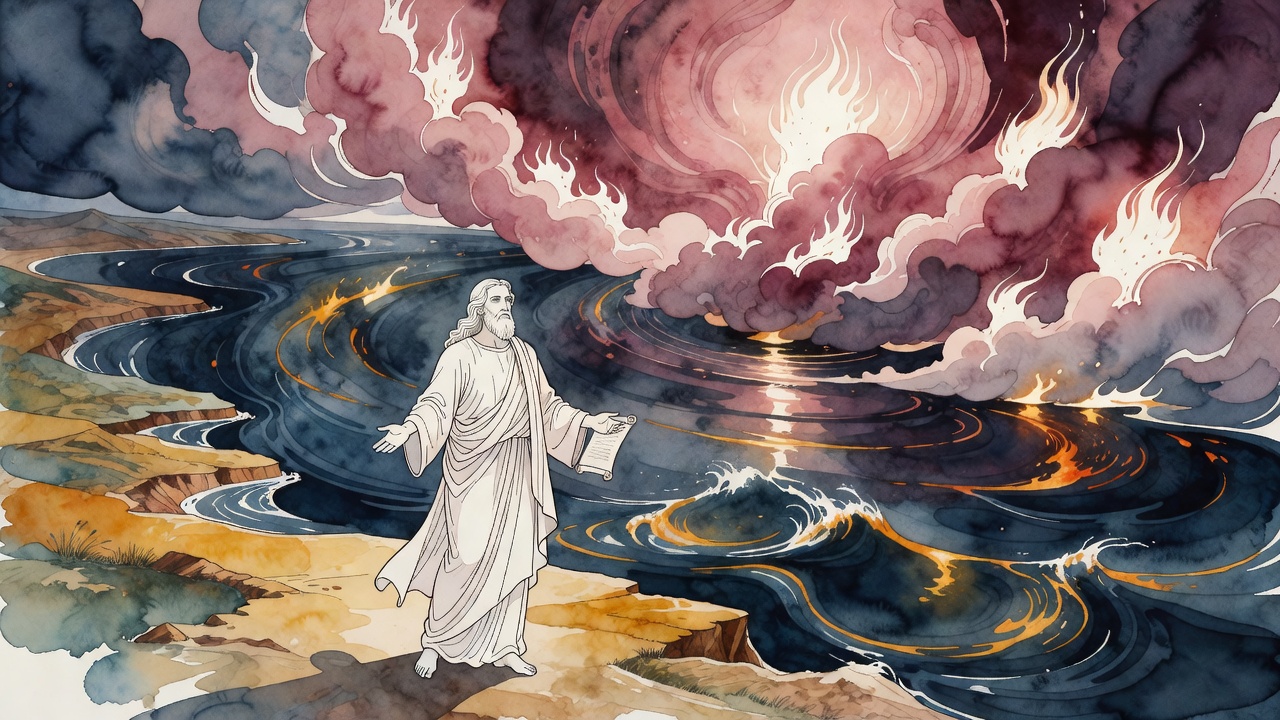
On the plains of Moab, Moses named a western edge no walker could pace. The line dropped through the sea into water older than the sky.
Table of Contents
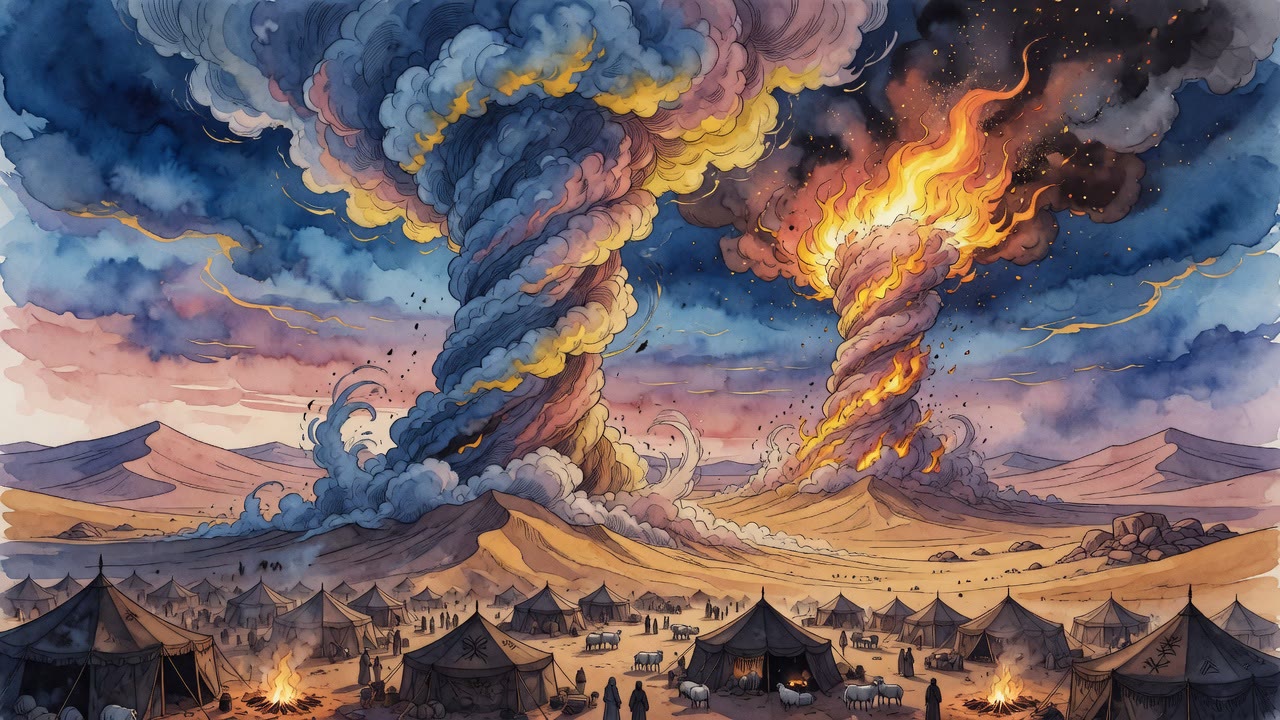
Moses had the whole camp in front of him on the plains of Moab, and not one person there had ever set foot in the country he was about to give them.
 Click for full size
He did not show them a hill. He spoke a line into the air and asked them to live inside it.
He Gave Them the South First
From the Wilderness of Palms, along the iron mountain, down the edge of Edom, out to the far end of the Salt Sea on the east. Then the line bent. It went up the pass of Akrabbith, across to the palms of the iron mountain, south of Rekem Giah, on to the tower of Adar. From there it ran over to Kesam, around to the Nile of Egypt, and out to the west.
Nobody interrupted. These were sand people. They had eaten bread that fell out of the sky for forty years. Their sandals were the same sandals. A tower they had never seen was being offered as a corner of home.
Moses kept going. A country has to close or it is only a wish.
Snow, a Cave, and the Towers of Damascus
He gave them the north. From the Great Sea across to Mount Umanis, then along the road that climbs toward Tiberias, out past the two Kadkols. It ran past Divakinos and Tarnegola as far as Caesarea, up to Abelas of Cilicia. Then Keren Zekutha, then Gibra Hatmona, and the line ended between the towers of Hinvetha and Damascus.
He gave them the east. Down from Apamea to Daphne, down again to the cave of Panias, and from Panias to the mountain of snow. From the snow to Henan, around the plain of the river Arnon, into the wilderness and the palms of the iron mountain, taking in the Waters of Contention, resting at Ginesar. Then down the Jordan and out into the Salt Sea.
Four corners, if the west would behave.
The West Did Not Stop at the Water
The west was the Great Sea, and the Great Sea did not sit still like a fence.
Its capes belonged to them, and its harbors, its creeks and its coastal towns, its islands, its ports, its ships, and the coves nobody has ever bothered to name. That was the surface. Moses did not stop at the surface.
The border went down through the water. It went past the reach of any rope. Its limits, he told them, are the waters of the beginning, together with the waters of old that lie in its depth.
Under the shipping lanes, under the wrecks, under the sand at the bottom, the water keeps going, and it stops being water anyone has sailed. It becomes the water that was there when there was nothing else, before the sky was pushed up out of the middle of it. The far side of the inheritance was the second day of creation.
A man can walk a southern wadi. He cannot walk the floor of the first waters. Moses gave them that anyway. The Promised Land was not only fields and towns. It was a claim that ran off the map and into the dark under the waves.
The First Name on the List
Then Moses read out who would cut the country up.
Eleazar the priest. Joshua son of Nun. And one prince from each tribe, and the first name on the tribal list was Caleb son of Jephunneh, for Judah.
Everyone in earshot understood what had just happened, because everyone in earshot had buried a father.
Forty years back, twelve men had walked that country and come home, and ten of them had put out a report that broke the camp in half. The assembly went wild. It talked about a captain and a road back to Egypt, and it picked up stones. Two men stood into it. They held against six hundred thousand fighting men, they turned the anger off the congregation, and they finished the evil report.
Six hundred thousand died in the sand over the next four decades. The two of them did not.
The Wisdom That Walked Him Onto the Heights
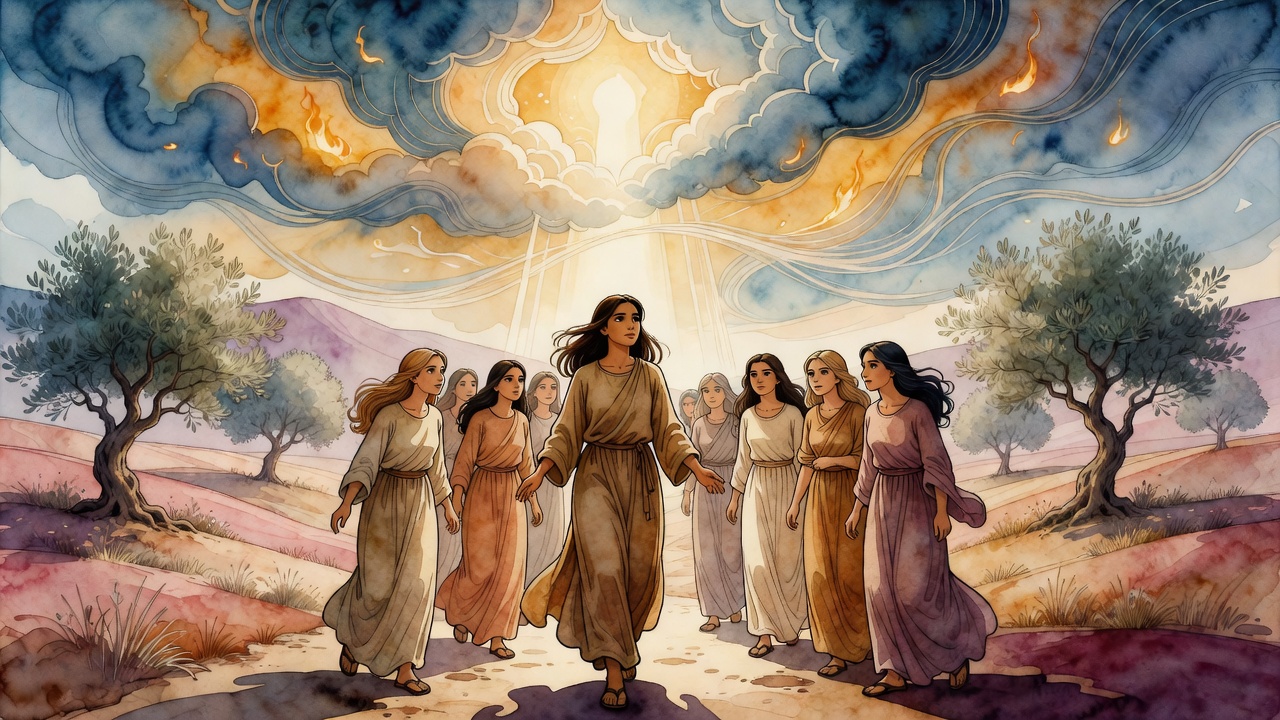
Caleb had told them to go up at once and take it, back when going up meant walled towns and giants and no allies. He got wisdom out of that day, and it did not leave him when the rest of him got old. It stayed with him and walked him up onto the high ground of the land, and after him his children held what he had held.
He stood in the crowd at Moab and heard an old man read out his name among the men who would measure and divide. The same voice had already told him the western edge of his portion. Down through the sea, past the bottom, into water that has no bottom at all.
The camp would cross the Jordan without Moses. Caleb would still be walking. The borders would still include a depth no surveyor could chain. Seed of Jacob, the old wisdom said, it is good to follow after the Lord all the way. The all-the-way, on this afternoon, ran under the Great Sea.
← All myths