Translation of the source text.William Davidson Edition - Vocalized Aramaic · CC-BY-NC
his body from Babylonia, and his head from the Land of Israel, and his limbs from the rest of the lands. As for his buttocks, Rav Acha said: from Akra de-Agma.
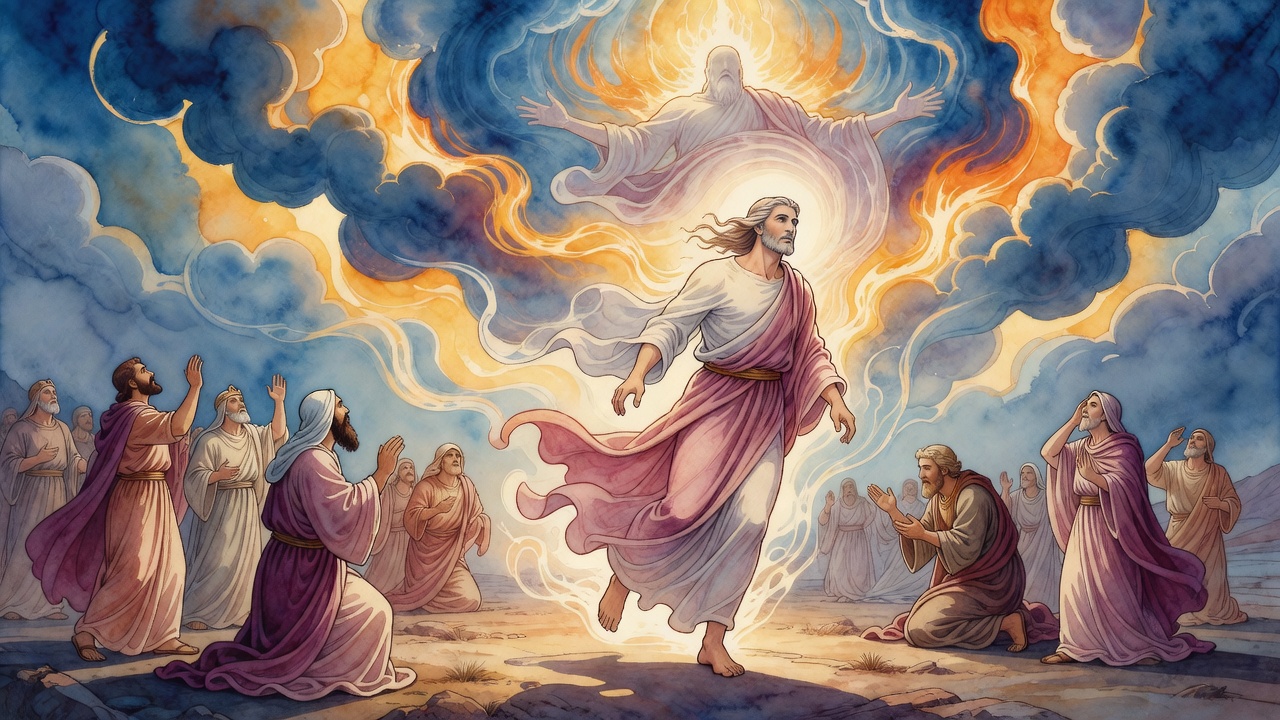
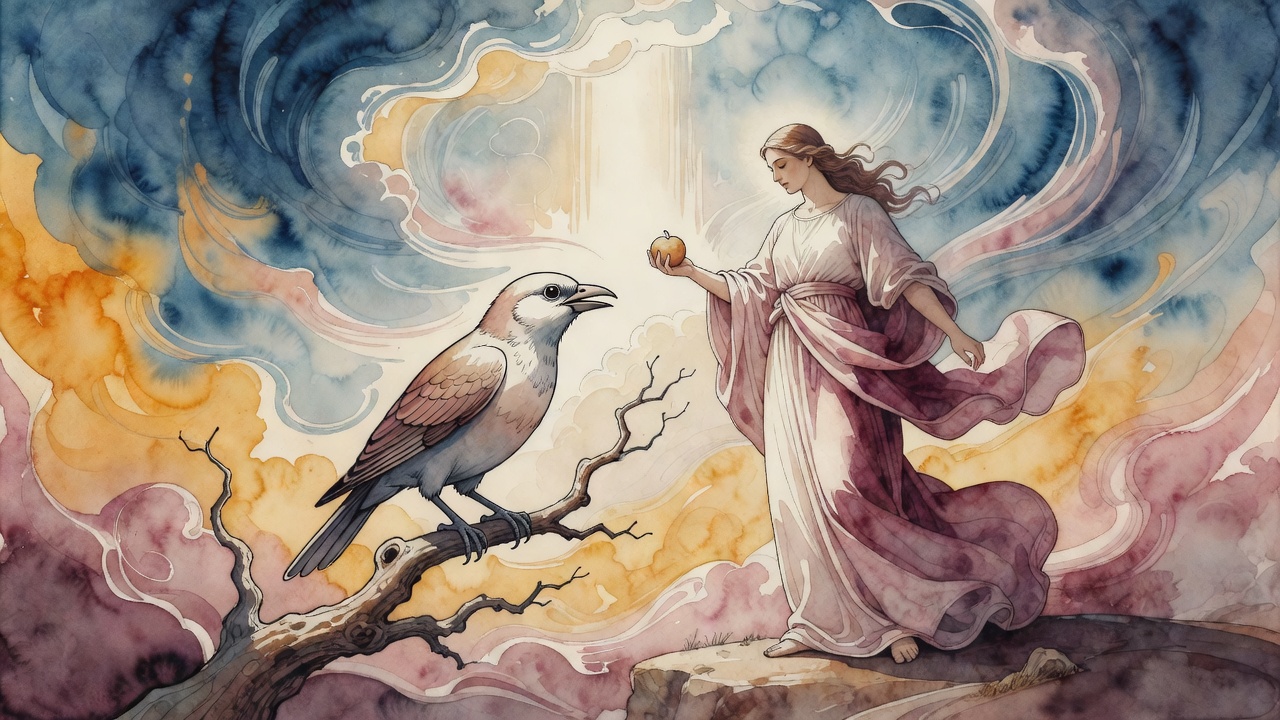
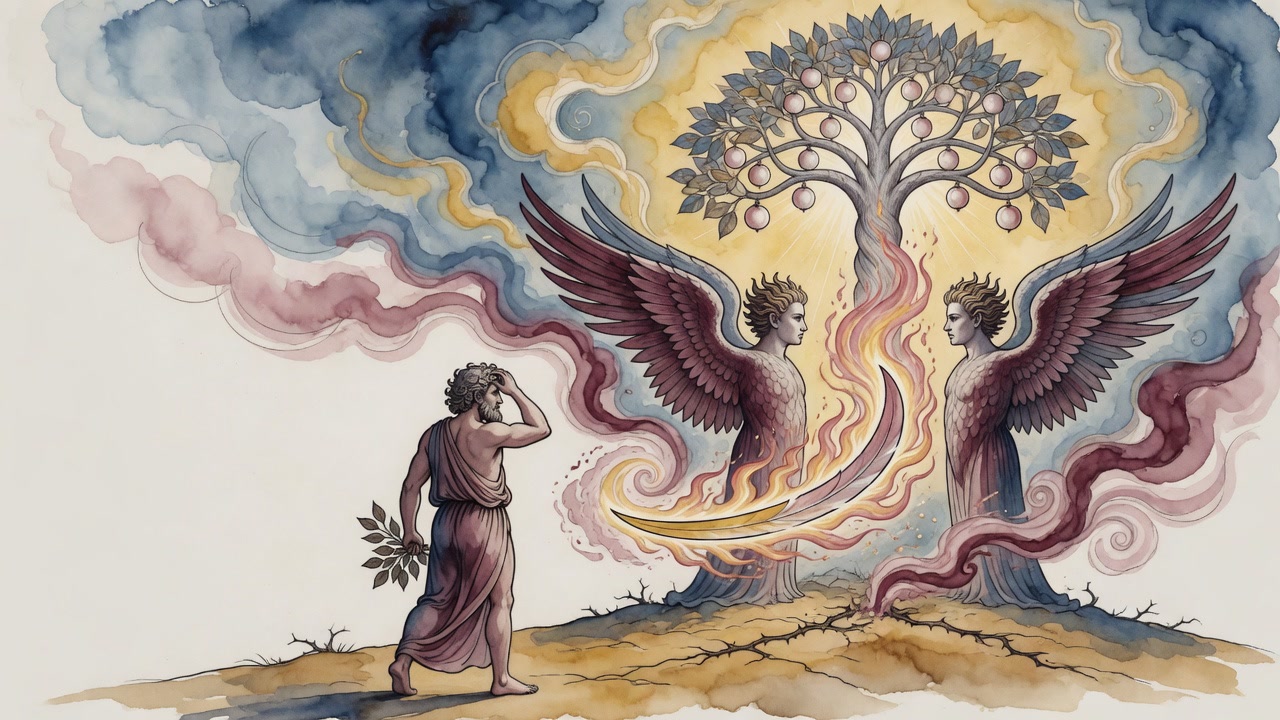
Rabbi Yochanan bar Chanina said: The day has twelve hours. In the first hour, his dust was gathered. In the second, he was made into a shapeless mass. In the third, his limbs were stretched out. In the fourth, a soul was cast into him. In the fifth, he stood on his feet. In the sixth, he gave names. In the seventh, Eve was joined to him. In the eighth, two went up to the bed and four came down. In the ninth, he was commanded not to eat from the tree. In the tenth, he sinned. In the eleventh, he was judged. In the twelfth, he was driven out and went on his way, as it is said: "Man does not abide in honor" (Psalms 49:13).
Rami bar Chama said: A wild beast has no power over a person unless he appears to it like an animal, as it is said: "He is likened to the beasts that perish" (Psalms 49:13).
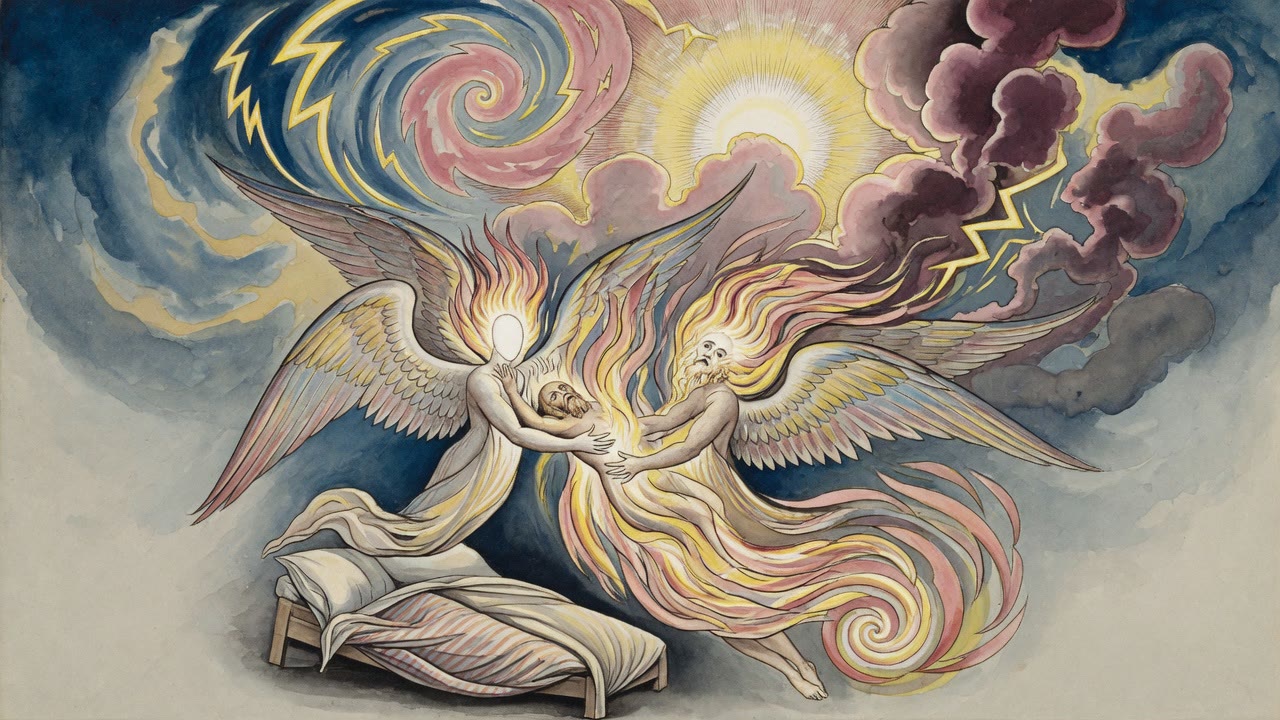
("Hour," "at the end," "Aramaic" is a mnemonic.) Rav Yehudah said that Rav said: At the time when the Holy One, blessed be He, wished to create man, He created one company of ministering angels. He said to them: Is it your will that we make man in our image? They said before Him: Master of the Universe, what will his deeds be? He said to them: Such and such will be his deeds.
They said before Him: Master of the Universe, "What is man that You are mindful of him, and the son of man that You take note of him?" (Psalms 8:5). He stretched out His little finger among them and burned them. And so too a second company. The third company said before Him: Master of the Universe, the earlier ones who spoke before You, what did they accomplish? The whole world is entirely Yours. Whatever You wish to do in Your world, do.
When He reached the men of the generation of the flood and the men of the generation of the dispersion, whose deeds were corrupt, they said before Him: Master of the Universe, did not the earlier ones speak well before You? He said to them: "And to old age I am the same, and to gray hairs I will carry you," and so on (Isaiah 46:4).
Rav Yehudah said that Rav said: Adam the first man extended from one end of the world to the other, as it is said: "From the day that God created man upon the earth, and from one end of the heavens to the other end of the heavens" (Deuteronomy 4:32). When he sinned, the Holy One, blessed be He, laid His hand upon him and diminished him, as it is said: "You have formed me behind and before, and laid Your hand upon me" (Psalms 139:5).
Rabbi Elazar said: Adam the first man extended from the earth to the firmament, as it is said: "From the day that God created man upon the earth, and from one end of the heavens to the other end of the heavens" (Deuteronomy 4:32). When he sinned, the Holy One, blessed be He, laid His hand upon him and diminished him, as it is said: "You have formed me behind and before," and so on (Psalms 139:5). Do the verses contradict one another? This and that are one and the same measure.
And Rav Yehudah said that Rav said: Adam the first man spoke in the Aramaic tongue, as it is said: "And to me how precious are Your friends (re'ekha), O God" (Psalms 139:17).
And this is what Resh Lakish said: What is the meaning of that which is written, "This is the book of the generations of Adam" (Genesis 5:1)? This teaches that the Holy One, blessed be He, showed him each generation and its expounders, each generation and its sages. When he reached the generation of Rabbi Akiva, he rejoiced in his Torah and was saddened by his death. He said: "And to me how precious are Your friends, O God" (Psalms 139:17).
And Rav Yehudah said that Rav said: Adam the first man was a heretic, as it is said: "And the LORD God called to the man and said to him: Where are you (ayekka)?" (Genesis 3:9) [read as: where has your heart turned?]. Rabbi Yitzchak said: He was one who drew back his foreskin to conceal his circumcision. It is written here: "And they like Adam have transgressed the covenant" (Hosea 6:7), and it is written elsewhere: "He has broken My covenant" (Genesis 17:14).
Rav Nachman said: He was a denier of the fundamental principle. It is written here: "they have transgressed the covenant" (Hosea 6:7), and it is written elsewhere: "He has broken My covenant" (Genesis 17:14), and they said: "Because they forsook the covenant of the LORD, the God of their fathers" (Deuteronomy 29:24).
We learned there in a Mishnah: Rabbi Eliezer says: Be diligent to study Torah, and know what to answer a heretic. Rabbi Yochanan said: They taught this only with regard to a gentile heretic, but as for a Jewish heretic, all the more so, for he would become even more brazen.
Rabbi Yochanan said: In every place where the heretics found grounds for their heresy, the refutation of them is at their side. "Let us make man in our image" (Genesis 1:26), and it says: "And God created man in His image" (Genesis 1:27). "Come, let us go down and confound their language there" (Genesis 11:7); "And the LORD came down to see the city and the tower" (Genesis 11:5). "For there God was revealed to him" (Genesis 35:7); "to the God who answers me in the day of my distress" (Genesis 35:3).
"For what great nation is there that has a god so near to it as the LORD our God is to us, whenever we call upon Him?" (Deuteronomy 4:7). "And who is like Your people, like Israel, one nation on the earth, whom God went to redeem to be a people for Himself?" (2 Samuel 7:23). "Until thrones were set up, and the Ancient of Days took His seat" (Daniel 7:9).
Why do I need these? In accordance with Rabbi Yochanan, for Rabbi Yochanan said: The Holy One, blessed be He, does nothing unless He takes counsel with the heavenly retinue, as it is said: "The matter is by the decree of the watchers, and the sentence by the word of the holy ones" (Daniel 4:14).
This works well for all of them, but as for "until thrones were set up" (Daniel 7:9), what is there to say? One for Him and one for David, for it was taught: One for Him and one for David, the words of Rabbi Akiva. Rabbi Yose said to him: Akiva, how long will you make the Divine Presence profane? Rather, one for justice and one for charity.
Did he accept it from him or did he not accept it from him? Come and hear, for it was taught: One for justice and one for charity, the words of Rabbi Akiva. Rabbi Elazar ben Azariah said to him: Akiva, what have you to do with Aggadah? Take yourself off to the laws of plagues and tents! Rather, one for the throne and one for the footstool: the throne to sit upon, the footstool as a stool for His feet.
Rav Nachman said: One who knows how to refute the heretics like Rav Idit, let him refute; and if not, let him not refute. A certain heretic said to Rav Idit: It is written, "And to Moses He said: Come up to the LORD" (Exodus 24:1). It should have said "Come up to Me"! He said to him: This is Metatron, whose name is like the name of his Master, as it is written, "For My name is within him" (Exodus 23:21).
If so, let them worship him! It is written: "Do not rebel against him" (Exodus 23:21) [read as: do not exchange Me for him]. If so, why do I need "he will not pardon your transgression" (Exodus 23:21)? He said to him: We hold by our faith that we would not accept him even as a guide, as it is written: "And he said to Him: If Your presence does not go with us," and so on (Exodus 33:15).
A certain heretic said to Rabbi Yishmael son of Rabbi Yose: It is written, "And the LORD rained upon Sodom and upon Gomorrah brimstone and fire from the LORD" (Genesis 19:24). It should have said "from Him"! A certain launderer said to him: Leave him be, I will answer him. It is written, "And Lemech said to his wives: Adah and Zillah, hear my voice, wives of Lemech" (Genesis 4:23); it should have said "my wives"! Rather, Scripture speaks in this manner; here too Scripture speaks in this manner. He said to him: Where did you get this? I heard it from the lecture of Rabbi Meir.
For Rabbi Yochanan said: When Rabbi Meir would expound in his lecture, he would expound a third legal tradition, a third Aggadah, and a third parables. And Rabbi Yochanan said: Rabbi Meir had three hundred fox fables, and we have only three.

 Click for full size