Rakyon the Pauper Talked His Way to the Throne of Egypt
He arrived from Shinar with empty hands. Eight months later he paid the king in gold and a charger, and Egypt learned a new royal name.
Table of Contents
His name meant what it said. Rakyon had nothing.
 Click for full size
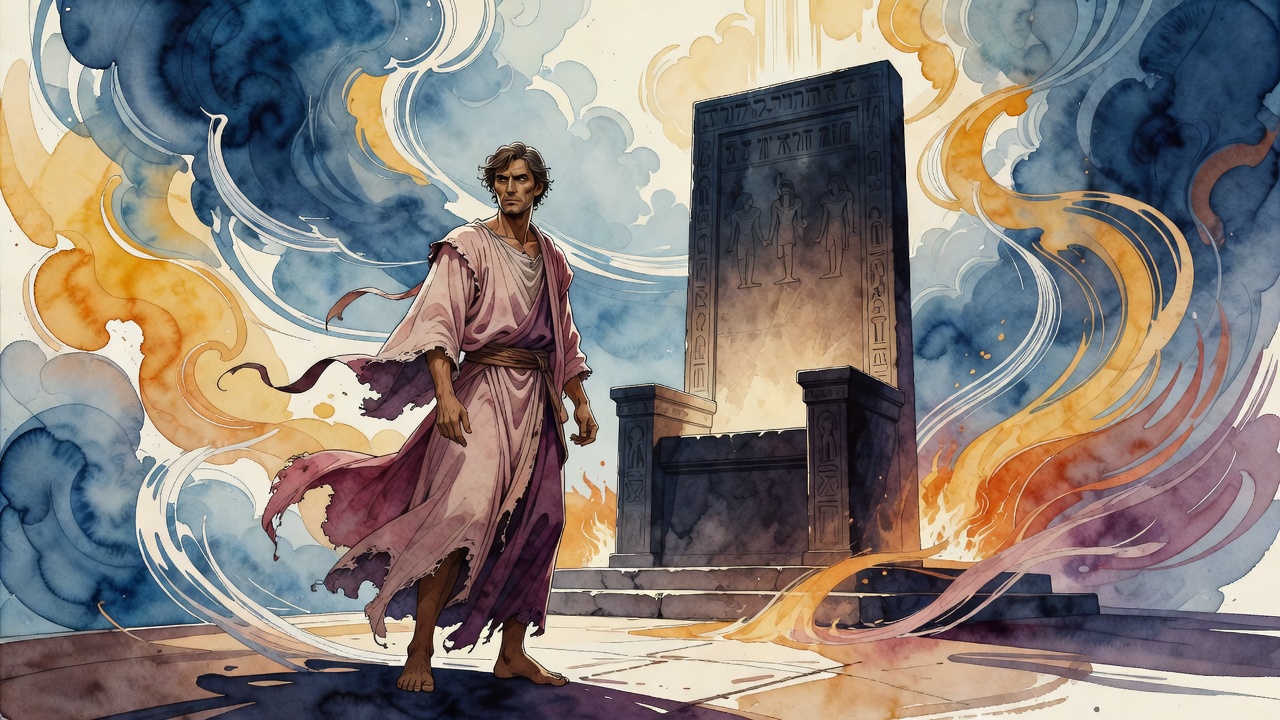
He was wise and he was handsome, and he had come from the land of Shinar because a poor man with a good face will try a foreign court before he tries hunger a second year. He had heard of King Ashwerosh, son of Anam, who ruled Egypt from behind palace walls. Rakyon meant to stand in front of that king, show his mind, and rise.
Have-Naught Sleeps in a Ruin
Egypt had a problem with kings. Ashwerosh appeared in public one day a year. He came out to hear petitions, then withdrew for the remaining days and left officials to manage his name. For a man with no money and no introductions, that single window was a locked gate.
Rakyon reached the country and learned the custom too late. He spent the first night in a ruin, hungry. The next day he tried to live by selling vegetables. He fell in with dealers, but he did not know the market's rules. Ruffians assaulted him, snatched the wares from his hands, and made a laughing-stock of him in the street.
The second night he slept in the same ruin. Hunger had not taught him humility. It had taught him a plan.
Thirty Men at the Graves
He rose and gathered thirty strong fellows. He took them to the graveyard and bade them, in the name of the king, charge two hundred pieces of silver for every body they buried. Otherwise the dead would wait.
Grief pays. Families standing over a wrapped body do not argue long with men who speak for the crown. Night after night the silver moved. In eight months Rakyon had gold, gems, horses, and an armed force that rode at his word. Have-naught had become a man who could fill a courtyard.
He had never met the king. He had only borrowed the king's name and set it like a seal on the graves.
The City Complained of the Dead
On the one day Ashwerosh showed himself, the people found their voices. They said, what is this thou art inflicting upon thy servants, permitting none to be buried unless they pay thee silver and gold? Has a thing like this come to pass in the world since the days of Adam, that the dead should not be interred unless money be paid? We know it is the privilege of the king to take an annual tax from the living. Thou takest tribute from the dead too, day by day. O king, we cannot endure this any longer, for the whole of the city is ruined thereby.
The king had had no suspicion. Rage took him. He ordered Rakyon and his armed force to appear.
Rakyon did not come empty-handed. A thousand youths and maidens rode before him on steeds, dressed as if they had always belonged to palaces. They were a present. When he himself stepped forward he poured out gold, silver, and diamonds, and a magnificent charger. The gifts did their work before his tongue did.
The King Bought a New Name
Then he talked. Well-considered words. A pliant tongue. He described the undertaking as if taxing the dead were a public service the crown had simply not thought of yet. He won the king. He won the court.
Ashwerosh said, "No longer shalt thou be called Rakyon, Have-naught, but Pharaoh, Paymaster, for thou didst collect taxes from the dead."
The name stuck to him like a title already waiting. Under the suzerainty of Ashwerosh he administered law and justice throughout the year. Only on the one public day did the king himself sit and decide cases. Through that year-round power, and through practices as cunning as the graveyard fee, Pharaoh succeeded in usurping royal authority. He collected taxes from all the inhabitants of Egypt.
The people still loved him. Poverty that talks well can look like rescue. It was decreed that every ruler of Egypt should thenceforth bear the name Pharaoh.
The Title Outlived the Pauper
The first Pharaoh was not born in a palace. He was a man from Shinar who slept hungry in a ruin, lost a load of vegetables to thieves, and learned that a city will pay for its dead if you stand in the right place and speak in the king's voice. The throne took his new name and kept it after his body was gone.
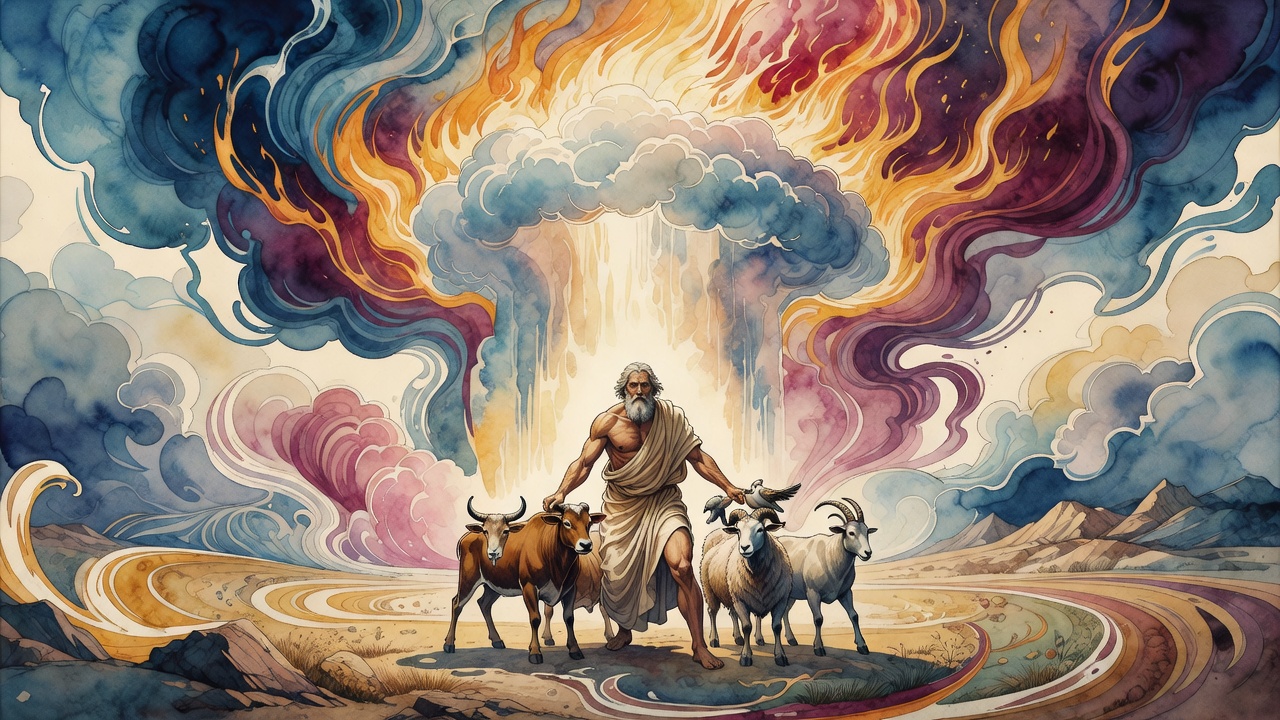
Later a king who wore that title met Abram. He restored Sarai and sent Abram out of the land of Egypt. Abram went back to the altar between Bethel and Ai with sheep, cattle, asses, horses, camels, servants, silver, and gold, and he called on the name of the Lord. The Book of Jubilees sets that return in the forty-first jubilee. The Egyptian who sent him still sat on a seat named for a pauper's tax.
Every ruler after Rakyon carried Pharaoh in his mouth. Not because of blood. Because a man with nothing had once charged two hundred pieces of silver at the graves, and a king had liked the sound of Paymaster enough to give the country away.
← All myths