Noah Could Not Curse Ham, So He Cursed Ham's Youngest Son
Noah woke up sober and went looking for the son who had done it. God had blessed all three brothers at the ark, so the one man he wanted was untouchable.
Table of Contents
 Click for full size
What Ham Said Outside the Tent
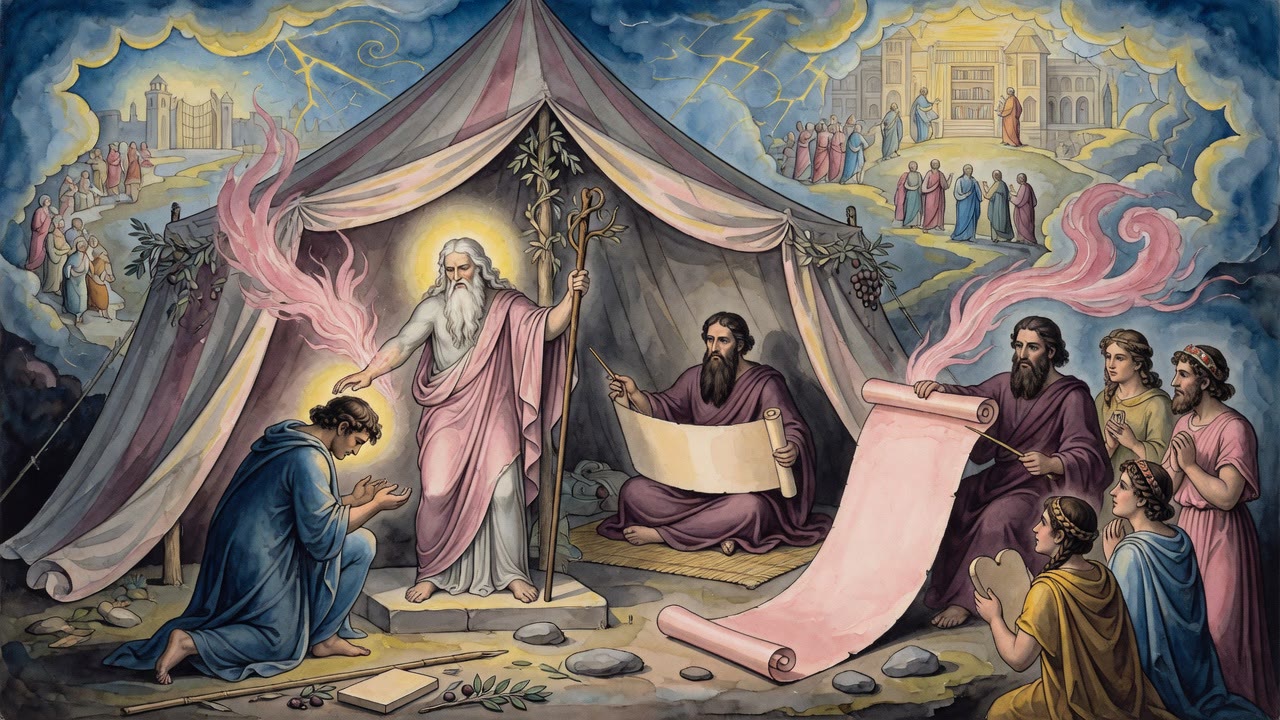
Ham came out of his father's tent into the light and found his two brothers and told them what was lying in there. He did not tell it plainly. He made it funny.
"The first man had two sons," he said, "and one of them killed the other. This man has three sons, and he wants a fourth."
The brothers did not laugh. Ham had not finished either. He went back in and set about doing something to Noah's body while the old man lay there insensible, an operation with one purpose, so that the fourth son his father wanted would never be born. Then he came out again.
His own son Canaan had been the one who told him to go and look.
The Partner Who Killed Four Animals Under the Vine
Noah had come off the ark with a reputation. He was Noah the pious, the one man God had kept out of the water. He lost the name the day he became a man of the ground.
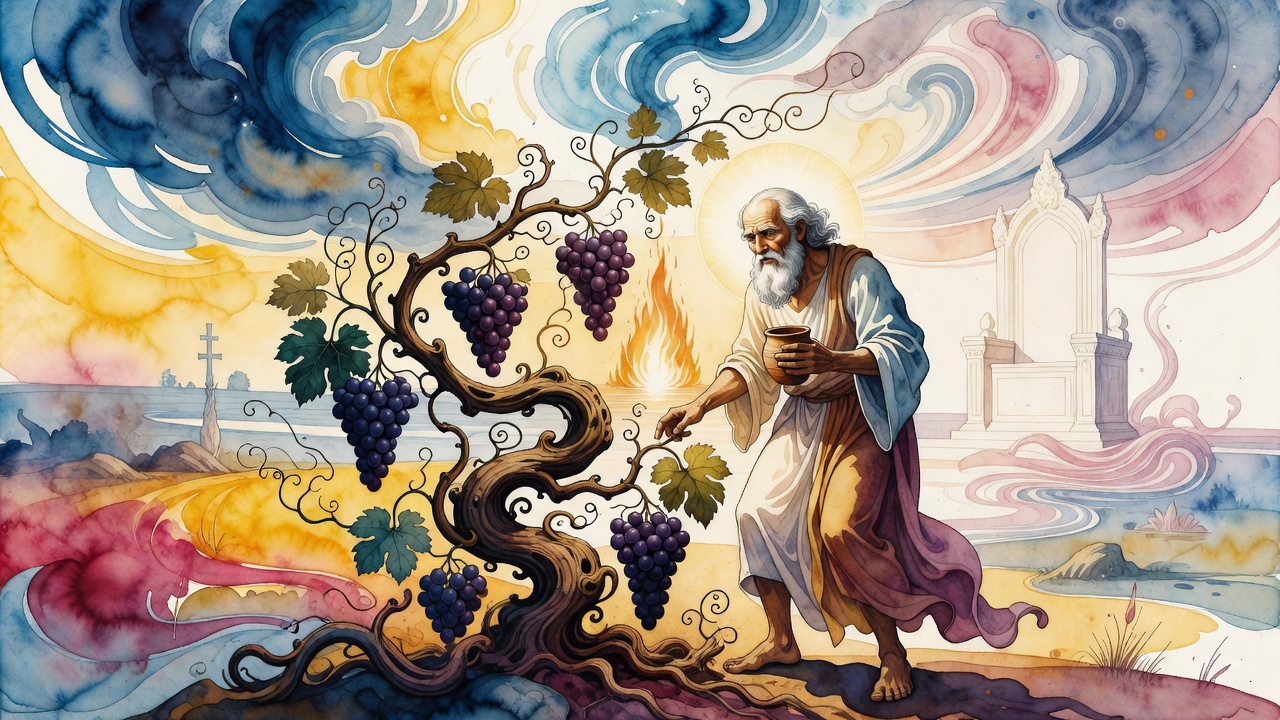
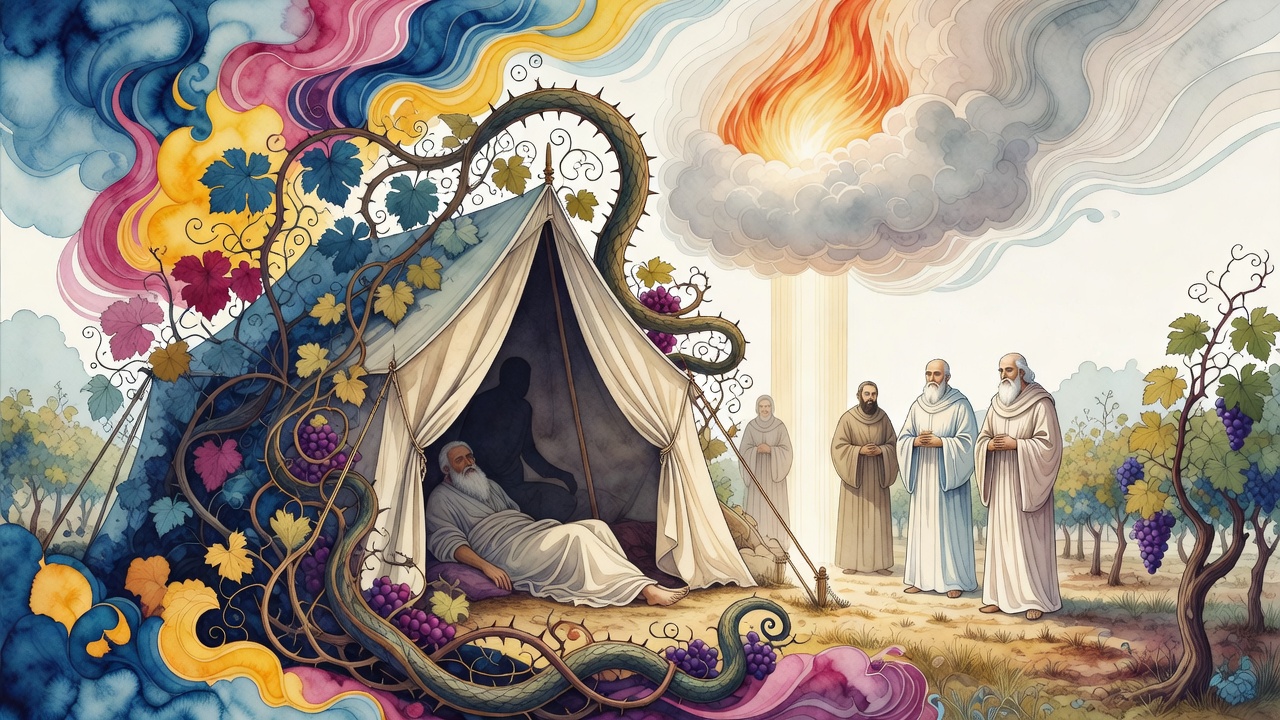
He had found a slip of the vine Adam carried out of the garden, tasted the grapes, liked them, and started digging. A stranger came along the row while he was setting the cutting in.
"What is it you are planting here?"
"A vineyard."
"And what are the qualities of what it produces?"
"The fruit is sweet, wet or dried. It gives wine that gladdens a man's heart."
"Let us go into partnership," Satan said, "in this business of planting a vineyard."
"Agreed."
Satan brought a lamb and cut its throat over the roots. Then a lion. Then a pig. Then a monkey. He let the blood of each one run down under the vine and told Noah exactly what he was watering it with. Before a man drinks he is harmless as the lamb. A cup or two and he is strong as the lion. Past what he can carry he is the pig. Drunk to the bottom he is the monkey, dancing, singing, saying filthy things, with no idea what he is doing.
Noah watched four animals die at his feet and planted the vine anyway. Adam had gone down through this same fruit, since the thing forbidden in the garden was the grape and Adam had made himself drunk on it, and that did not stop Noah either. He planted it in the morning. It bore that day. He pressed it, drew off the juice, drank, went under, and was dishonored. All of it inside one turn of the sun.
Noah Woke and Could Not Reach the Man He Wanted
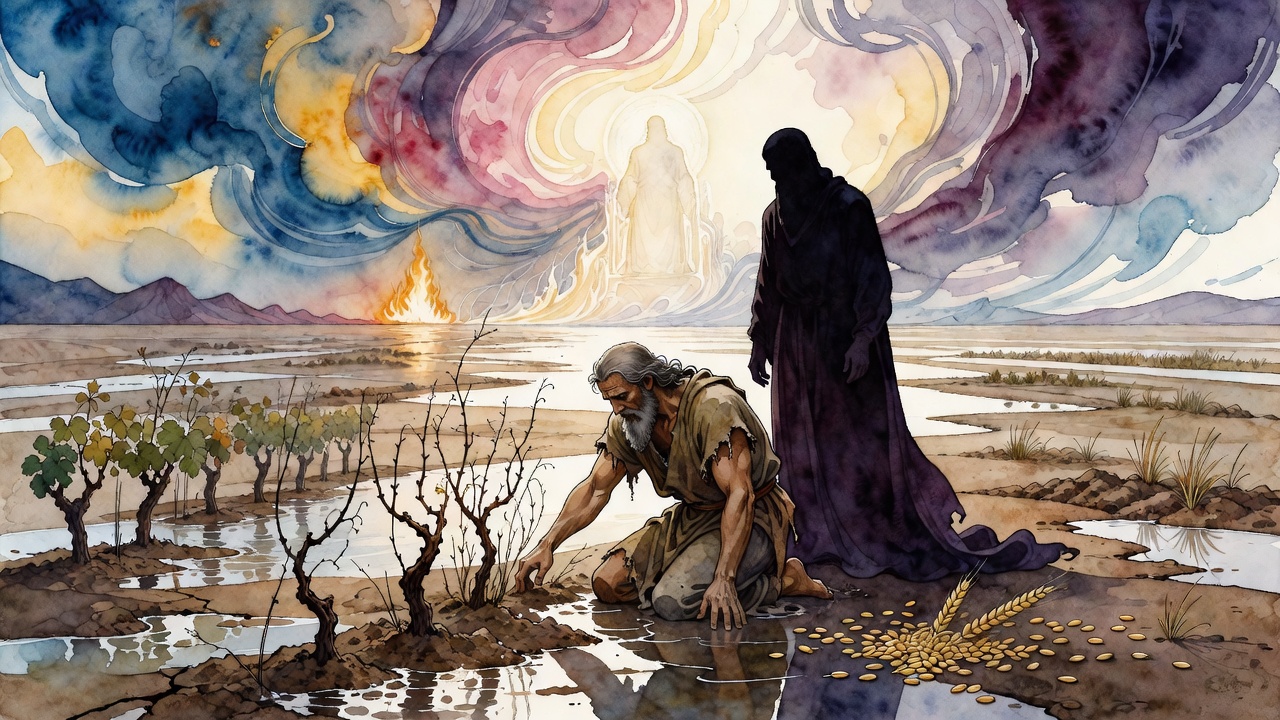
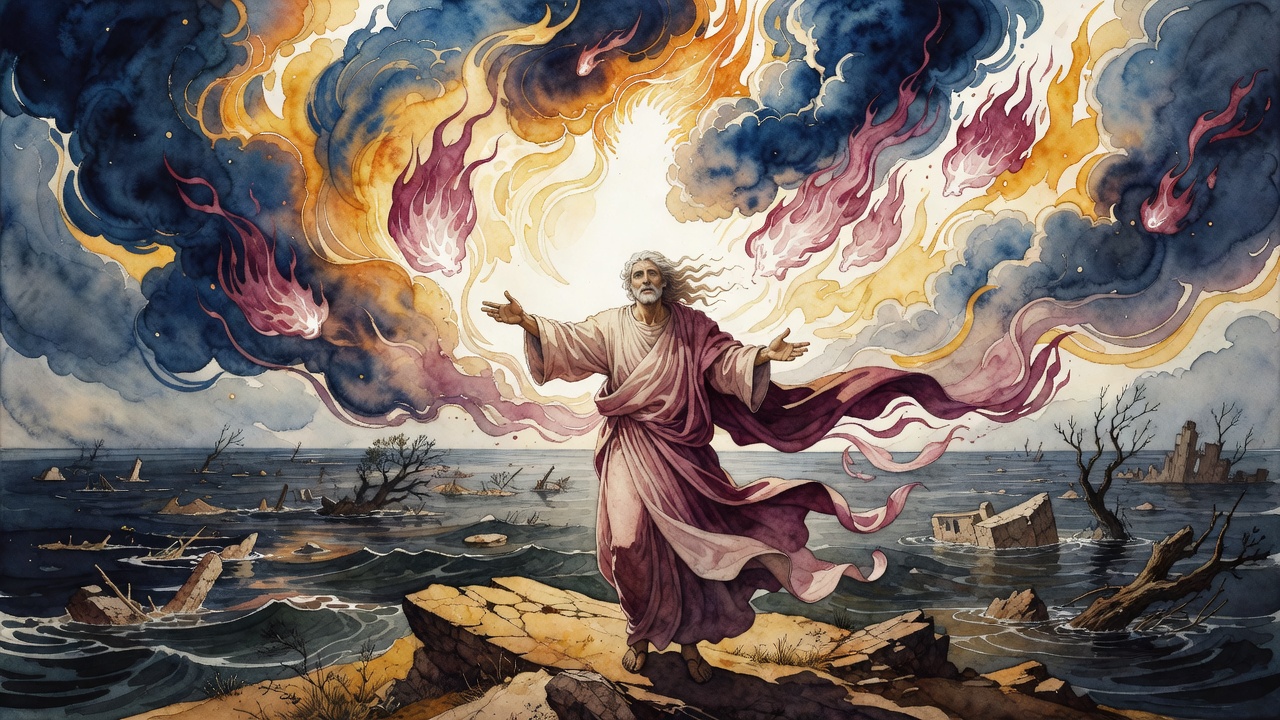
He came out of the wine and understood what had been done to him, and there was nothing he could do to Ham.
God had blessed all three brothers as they walked down off the ark. A blessing out of that mouth does not come back, and a curse cannot be laid over the top of it. Noah stood there sober with the one name he wanted and no way to say it.
So he counted. Ham had made sure Noah would never have a fourth son, a last-born. Noah turned and cursed Ham's last-born instead. Canaan, the youngest, the boy who had sent his father in to look, took the whole weight of it, and God pays out measure for measure.
Four Marks and a Father's Will
The curse came apart into pieces that matched the pieces of the act. Ham had looked, so his line carried red eyes. Ham had used his lips to describe what he saw, so his line carried misshapen lips. Ham had turned his head and twisted it round to keep looking, so his line carried hair that grew twisted and curled. Ham had left his father uncovered, so his line went uncovered.
Not all of it was inherited. Canaan had earned a share of his own, standing outside the tent and pointing his father at the door.
When Canaan came to die he left instructions to his children, and they read like a man handing down the only thing he had. Do not tell the truth. Do not keep yourselves away from theft. Live loosely. Hate your master with an exceeding great hate. And love one another.
The Garment on Two Shoulders
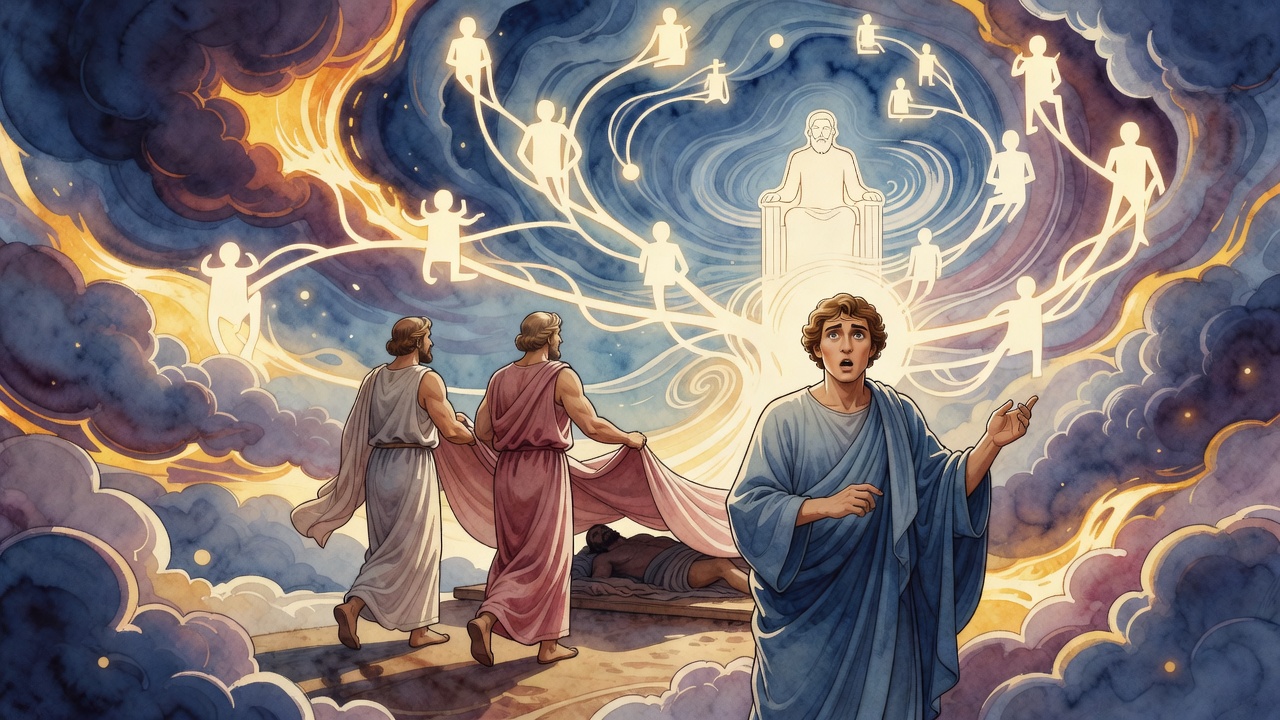
Shem had gone for a cloth while Ham was still talking. He laid it across his shoulder, and Japheth took the other end onto his, and the two of them walked backward into the tent with their faces turned away and put it down over their father without seeing anything. Shem started it. Japheth joined after the work had begun, and that half-step of difference followed both families forever. Shem's descendants wear the tallit. Japheth's wear the toga.
Noah blessed them in the same order. "Blessed be the Lord, the God of Shem," he said, joining God's name to a living man's, which is not done for anyone still breathing. To Japheth he gave a land of beauty and said his sons would come as converts into the academies of Shem. He meant more than a school. He meant that the divine presence would settle in the first Temple, built by Solomon out of Shem's line, and would not settle in the second, built under Cyrus out of Japheth's.
Then the family broke apart. Ham learned he had been cursed and ran, ashamed, and built a city far off and named it for his wife. Japheth could not stand to be outdone and built one of his own the same way. Shem was the only son who did not walk away from the old man. He built in sight of his father's house, up against the mountain, and named it Zedeketelbab. The three cities stand around Mount Lubar where the ark came to rest, one to the south, one to the west, and one to the east.
← All myths