Isaiah Who Saw Creation Before It Was Finished
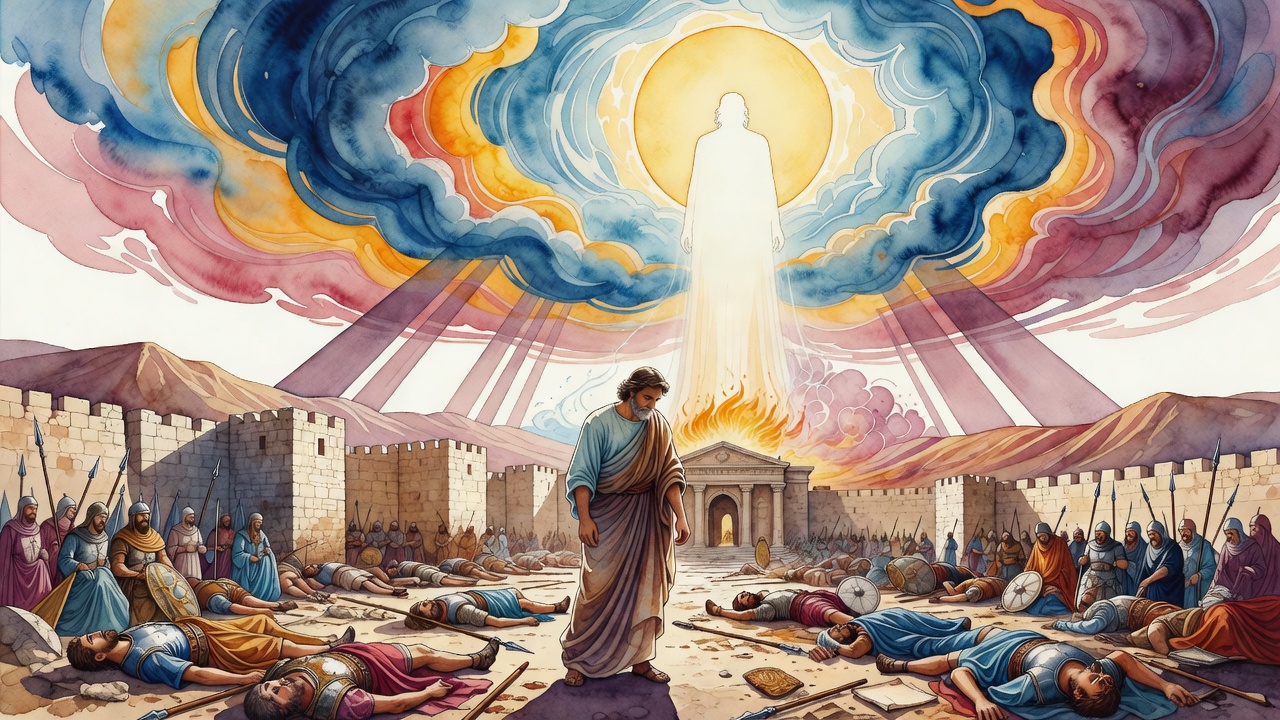
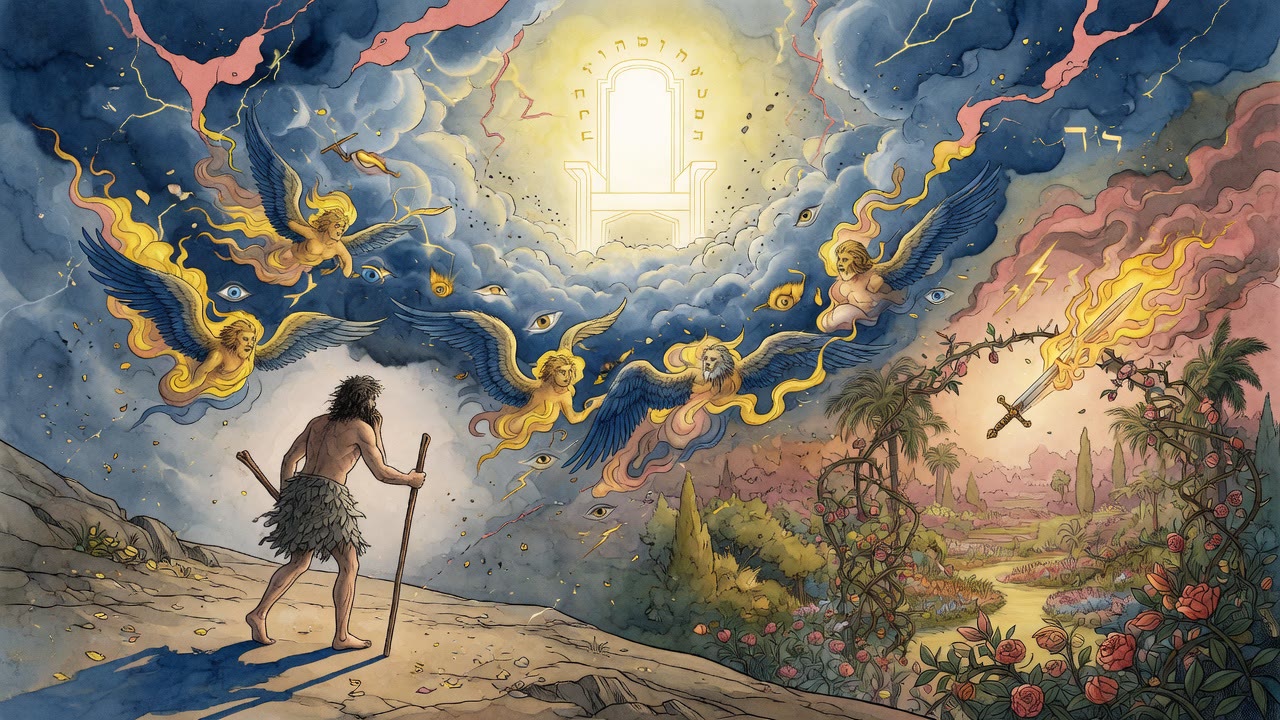
Isaiah stood in the smoke of the throne room. Overhead the sky was still being stretched, a curtain a hand had not yet let go.
Table of Contents
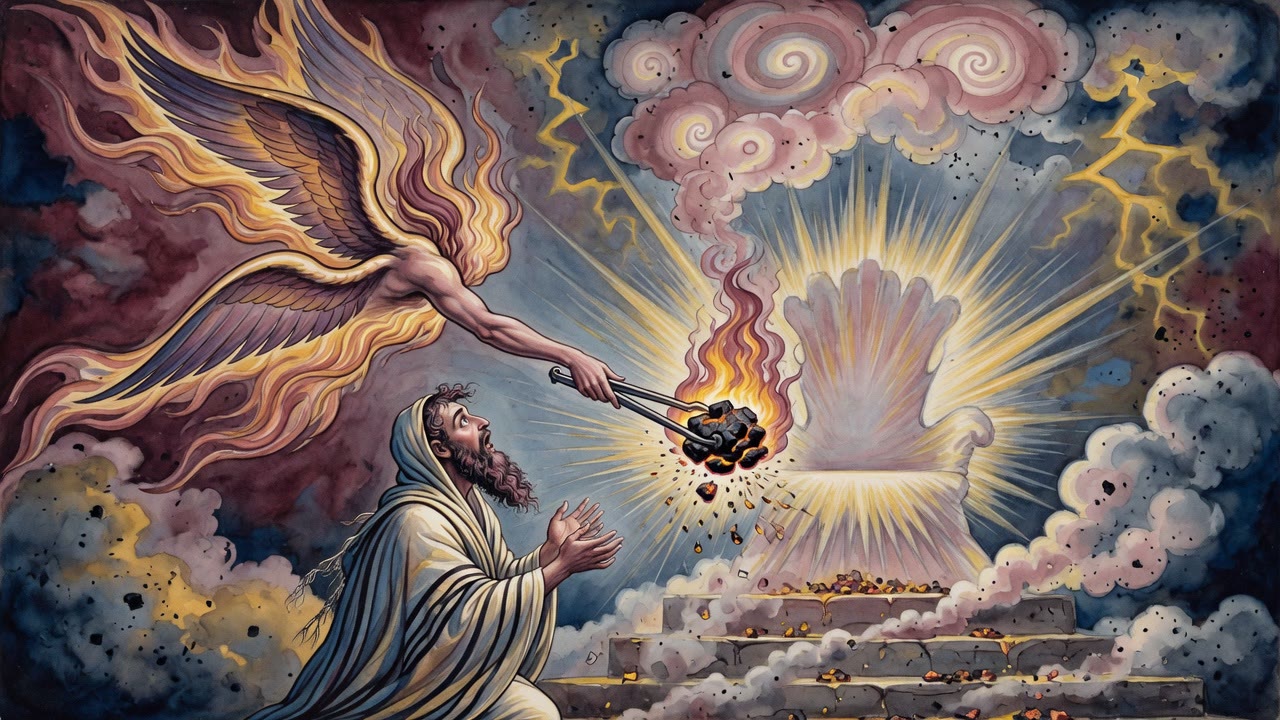
Isaiah stood in the throne room while the sky was still moving. Seraphim covered their faces before the smoke. The doorposts shook. What lodged in him was not only the terror. The heavens were not a ceiling. They were a curtain drawn by a hand that had not yet let go.
 Click for full size
Both Hands at Once
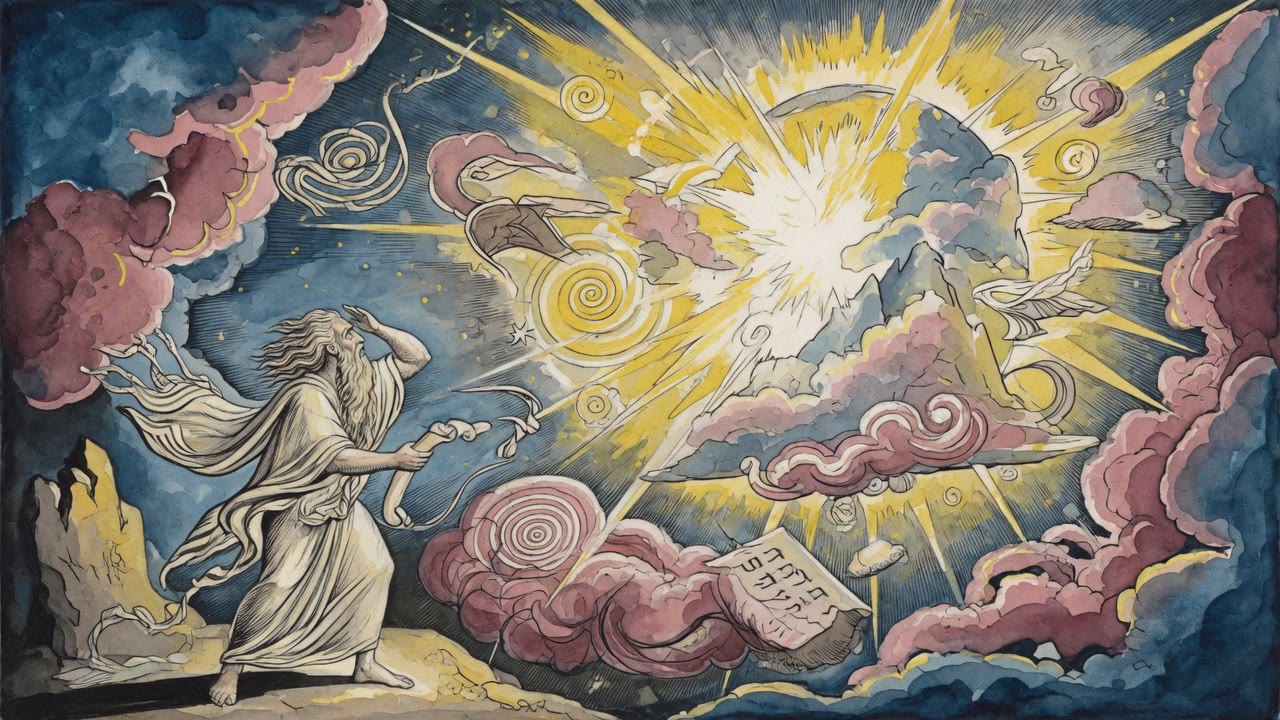
When God stretched the heavens at the beginning, the act was not one hand and then the other. The right hand spread the sky. The left hand founded the earth (Isaiah 48:13). Both at once, the way a tent goes up: pull one side and the other collapses, so both must be worked together or the whole thing falls. Isaiah had seen this. Not a memory of it. Not a symbol. The actual tension still present in the fabric overhead, the gesture held open by the same attention that first made it.
He wrote it plainly. The heavens looked finished. They looked like a fact. He kept insisting they looked like a hand.
God's throne was the sky. God's footstool was the ground people walked on (Isaiah 66:1). That meant the furniture was still in use. A throne with someone sitting on it is not an antique. The heavens being stretched was not an event from a closed past. It was a description of the present moment, the curtain still trembling at the edge of the hand.
The Mountains Break Into Song
Isaiah's visions did not stop at the mechanics of heaven. They moved forward into sound.
He wrote it in the forty-fourth chapter: sing, heavens, for what the Lord has done; shout, foundations of the earth (Isaiah 44:23). Not an invitation. A report. The heavens were already singing. The foundations were already shouting. In the fifty-fifth chapter he went further: the mountains and hills would break into song, and all the trees of the field would clap their hands (Isaiah 55:12).
Trees do not have hands. The mountains are not a choir. Isaiah knew this. He wrote it anyway, because he had seen what happened when creation aligned with what it was made for. The whole structure responded. Stone and bark and compressed ancient rock remembered what they were doing there, and the sound came out of them whether they intended it or not.
The nations would see this. Heaven and earth, the witnesses Moses invoked at the border of the land, had been watching from the start (Deuteronomy 30:19). The singing was their verdict.
When God Sits with the Judge
Isaiah had paired justice and praise for a reason. In the fifty-sixth chapter he issued the command: maintain justice and perform acts of charity (Isaiah 56:1). Not one. Both.
When a judge sat down to decide a case, something arrived with him. Not a feeling. A presence. God left the heavens of heavens and rested the Shekhinah (שכינה), the divine indwelling, in the place where the judgment was being rendered. The same attention that held the heavens open also moved toward the courts of the earth when someone tried to get justice right.
Then sometimes a judge would look at the powerful man in front of him and shift. Not a dramatic corruption. A small lean. A tilt toward the outcome that would cost him less. In that moment the presence withdrew. It rose and left the room.
The angels felt the gap. They asked what had happened. God told them, "I saw that the judge is showing favor. So I left."
The Sword Above the Bench
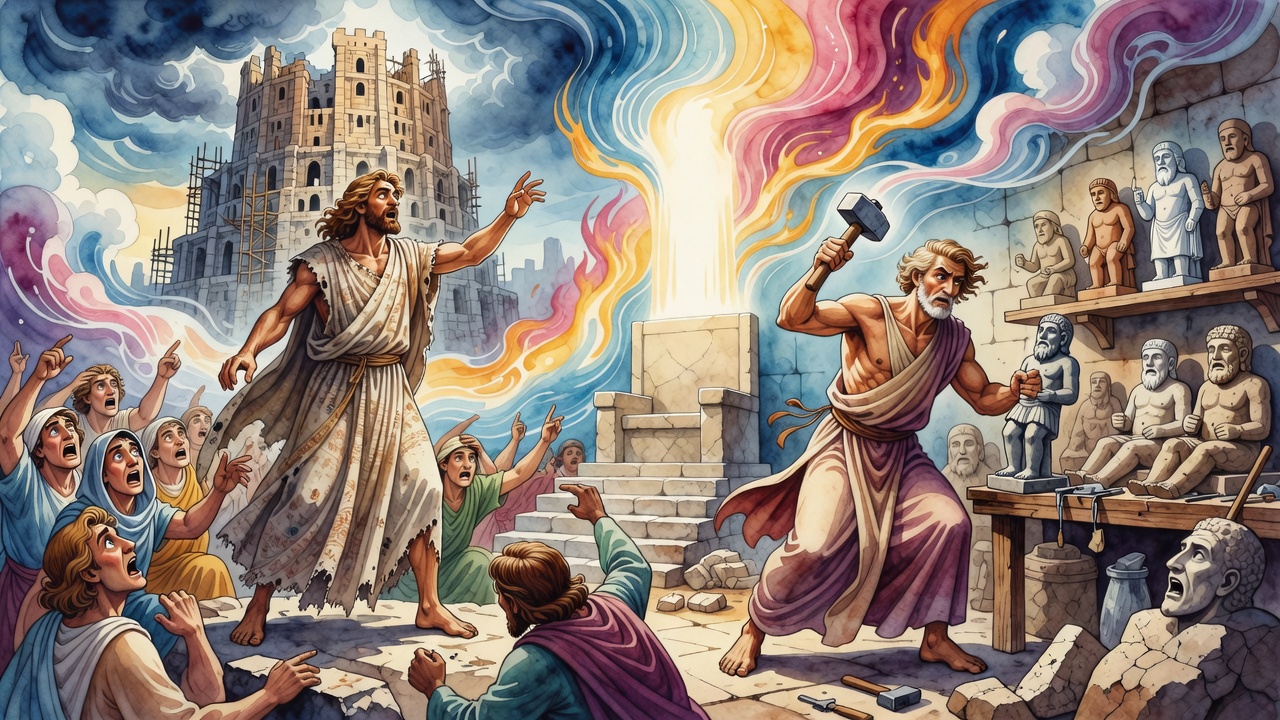
God did not only leave. He drew a sword against the man on the bench, to make it known there is a Judge above the judge. The courtroom that had held the Presence now held a blade. Showing favor in judgment is no good. The poor had been robbed in open court, and the needy had groaned, and the sky that had been a throne became a height from which God said, "Now I will arise."
The heavens stretched taut overhead were not decoration. They were participation. What God had built with both hands at once, right and left, sky and earth, held together only as long as the tension was maintained. Let justice go slack and the curtain began to fold. Let the singing stop in the courts and the mountains went quiet in response.
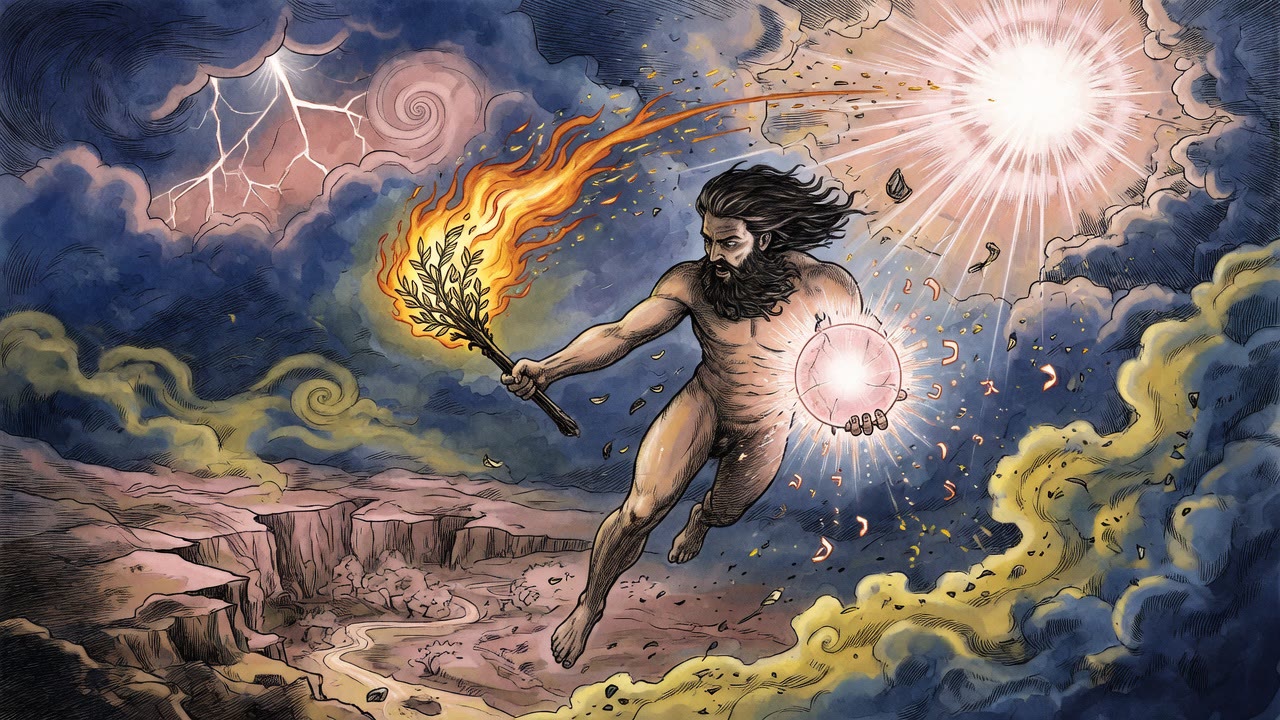
Isaiah watched his people ignore most of what he told them. He watched the courts. He knew what judges did when no one powerful was watching. He wrote down what he had seen anyway: the heavens still being stretched, the trees preparing their hands, the mountains already finding their voices, and a sword hanging over a bench the moment a lean began. Creation was built to respond. It had been responding since the right hand and the left hand moved at once. It would go on responding long after anyone who remembered Isaiah's name had gone to dust.
← All myths