Noah Counted Seven Days in the Dark Before He Sent the Dove Again
Enoch was taken out of the world before the water came. Noah was left inside a sealed box floating on it, measuring the world by one bird.
Table of Contents
 Click for full size
The Bird That Found Nowhere to Stand
Noah opened the window he had built into the side of the ark and put a raven out of it.
The raven did not come back and did not settle. It went out and it came round and it went out again, working the air over the water for weeks, and it told him nothing he could use.
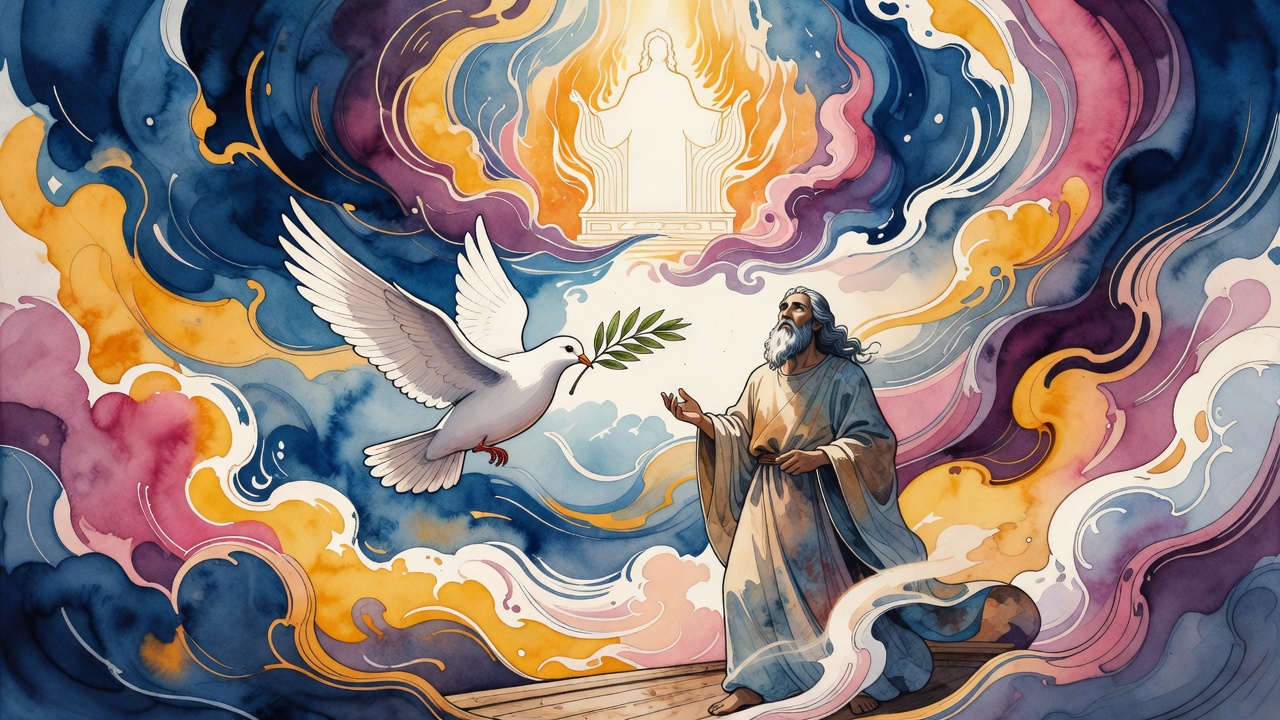
So he took a dove in both hands and let it go.
It was back before the day was out. There was no place on the whole surface of the world for the sole of its foot, nowhere dry enough for a bird weighing less than a loaf of bread to put itself down. He reached his hand out through the window and it came onto his fingers, and he drew it in to himself, into the ark, and shut the world out again.
Seven Days in the Dark
Then he waited seven days, which does not sound like anything until you consider what he was waiting inside of.
The rain had gone forty days and the water had stood over everything for a hundred and fifty. Outside that hull there was no coastline, no shadow of a hill, no shore for the light to come up behind. Cold and heat, summer and winter, seedtime and harvest had all stopped meaning anything, because there was no ground for any of them to happen on. Time had come loose from the world.
Inside, in the dark, with animals underfoot and a dove on his chest, Noah counted to seven.
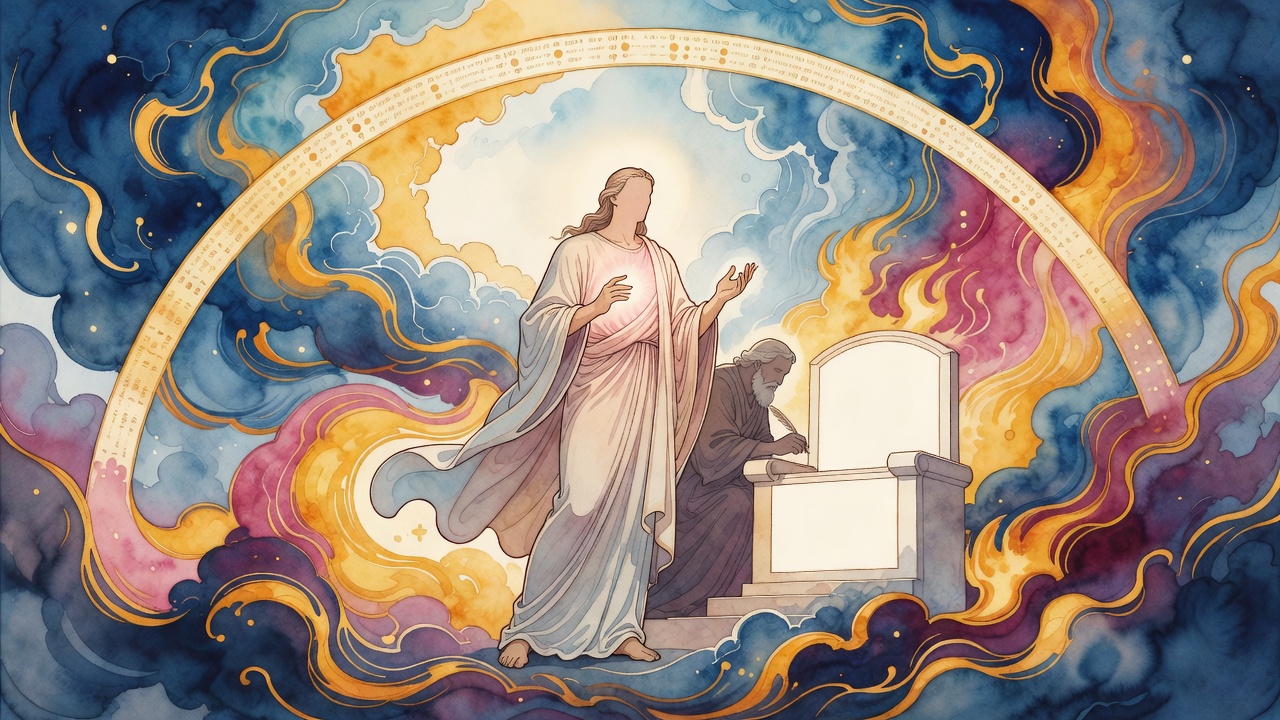
His great-grandfather had not had to do this. Enoch was found pure and walked with God, and God took him, lifted him out before any of it, and left him standing in the memory of every generation after as a sign of what a man could know. Noah was found pure too. What that got him was the job. At the hour the world was ending he was put in as the exchange for it, and because of him there was a remnant, and he did not get taken anywhere. He got a boat.
The Leaf
On the seventh day he sent the dove out a second time.
It came back to him at evening, and there was an olive leaf in its beak, torn off green.
Somewhere out there was a tree with its head above water. Not a floating branch, not wreckage. A leaf pulled off something growing. He held it, wet, in a boat that had been sealed for a year, and it was the first piece of the new world anyone had touched.
And then he waited another seven days.
That is the part that is hard to read past. He had the proof in his hand and he did not open the door. He put the leaf down somewhere in that dark and started counting again, one, two, three, with the animals shifting behind him and the water going down at a rate nobody could see.
The Bird That Did Not Come Back
On the seventh day he sent it out a third time, and it did not return to him any more.
That silence was the message. The bird had found somewhere to be that was better than his hand.
So Noah went up and pulled the covering off the ark and looked out, and the face of the ground was dry.
It was the new moon of the first month. He had been told to start building on the new moon of the first month, and he came out on the new moon of the first month, the same date coming round again on the far side of a drowned world, as though somebody had been keeping the appointment the whole time the calendar was underwater.
He Nailed the Year Down
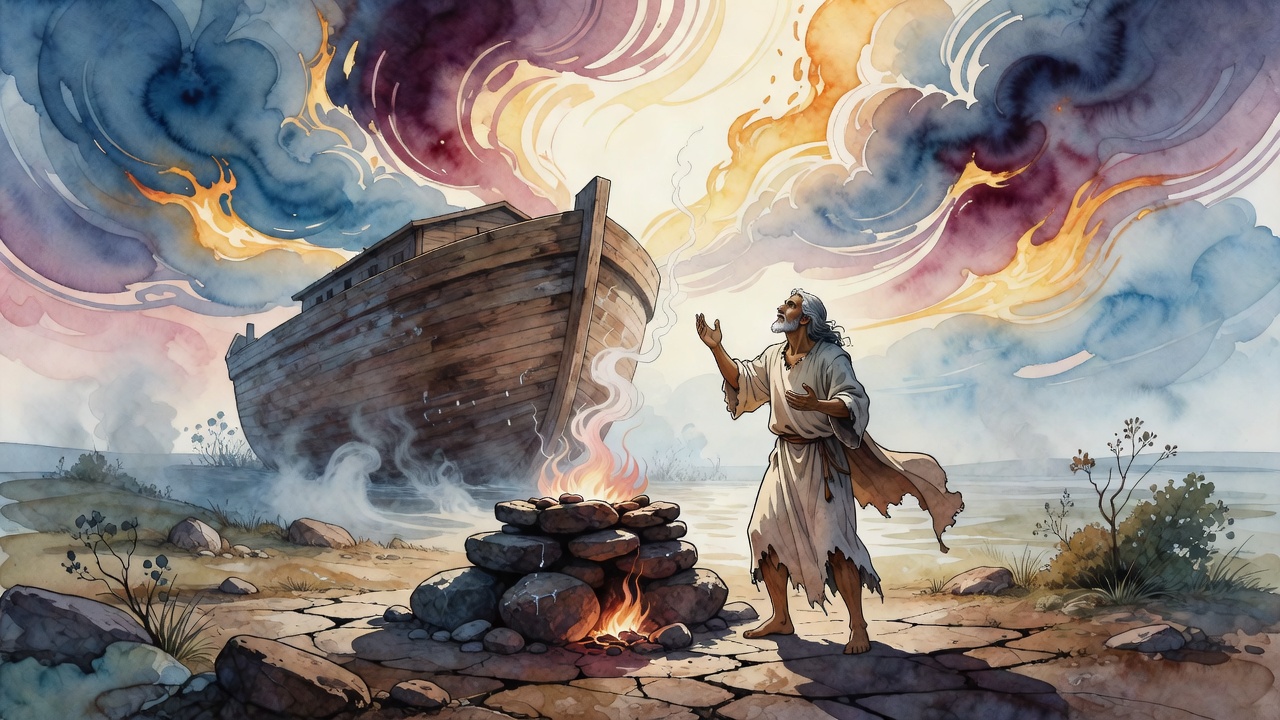
The first thing he did on dry land was build an altar and burn an offering on it, and the smell went up.
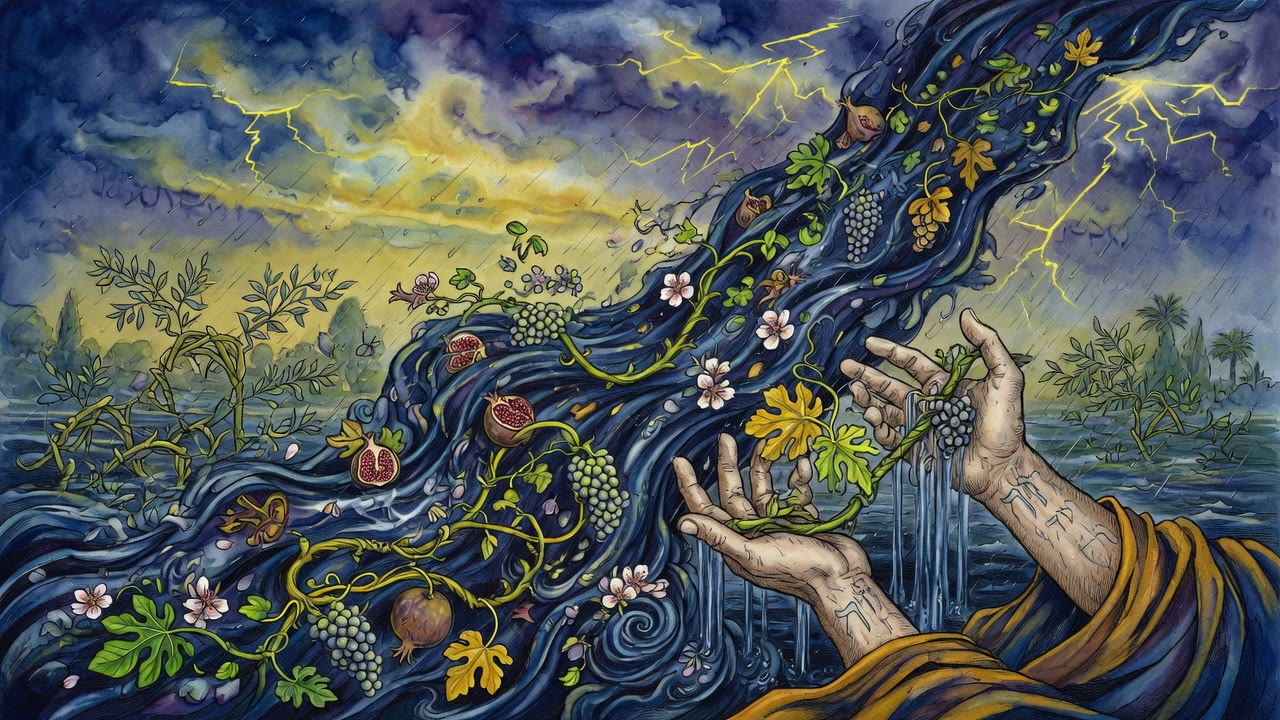
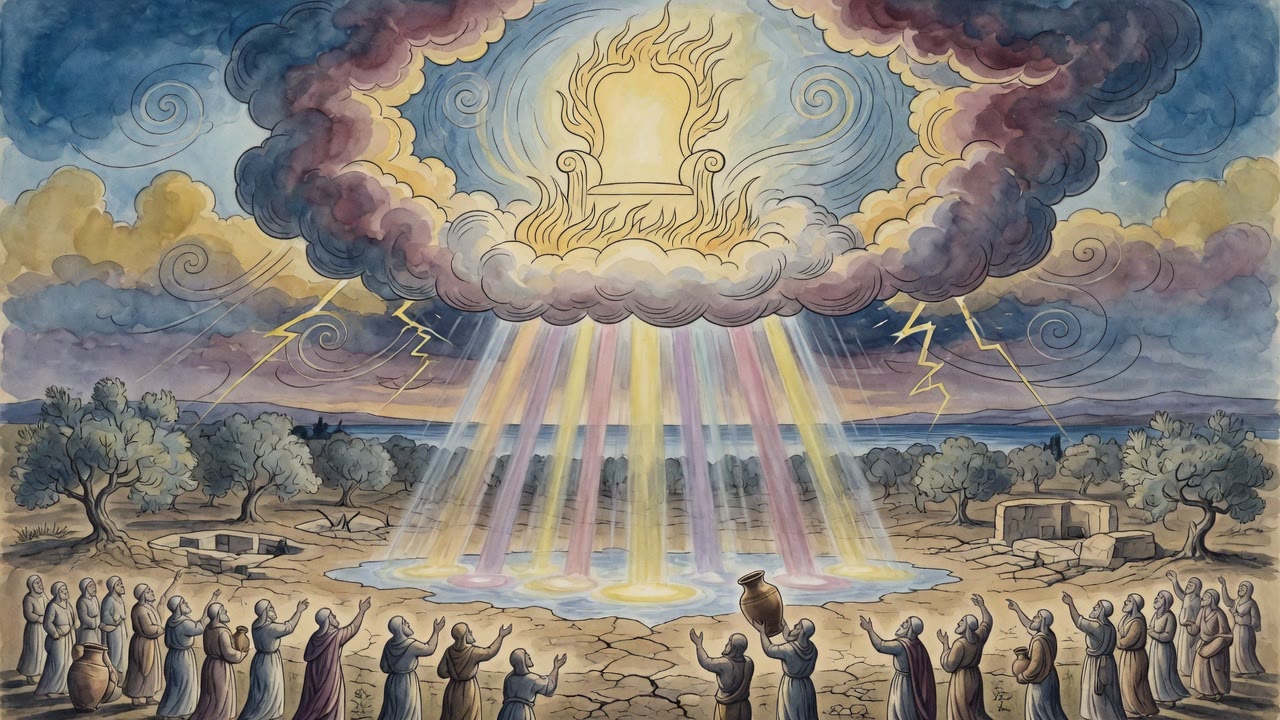
God took in that smell and swore an oath about the machinery of the year. There would be no second flood. Seed-time and harvest would not cease for as long as the earth lasted. Cold and heat, summer and winter, day and night would not change their order and would not stop. The sign of it was set in the sky, and without that sign, the old writings say, every living thing would have been wiped out in the end anyway.
Noah, standing on mud, took the oath and did something with it that nobody had asked him to do. He fixed the dates.
The new moon of the first month, the fourth month, the seventh month, the tenth month. Four hinges, one for each division of the year, and he ordained them for himself and for everyone who came after him as days of remembrance, feasts written down as a testimony forever. A man who had watched the sky quit working, who had spent a year measuring time in units of seven because there was nothing else left to measure it against, came out onto the wet ground and hammered the year into place so it could not come loose again.
The days he chose are still a memorial to him.
← All myths