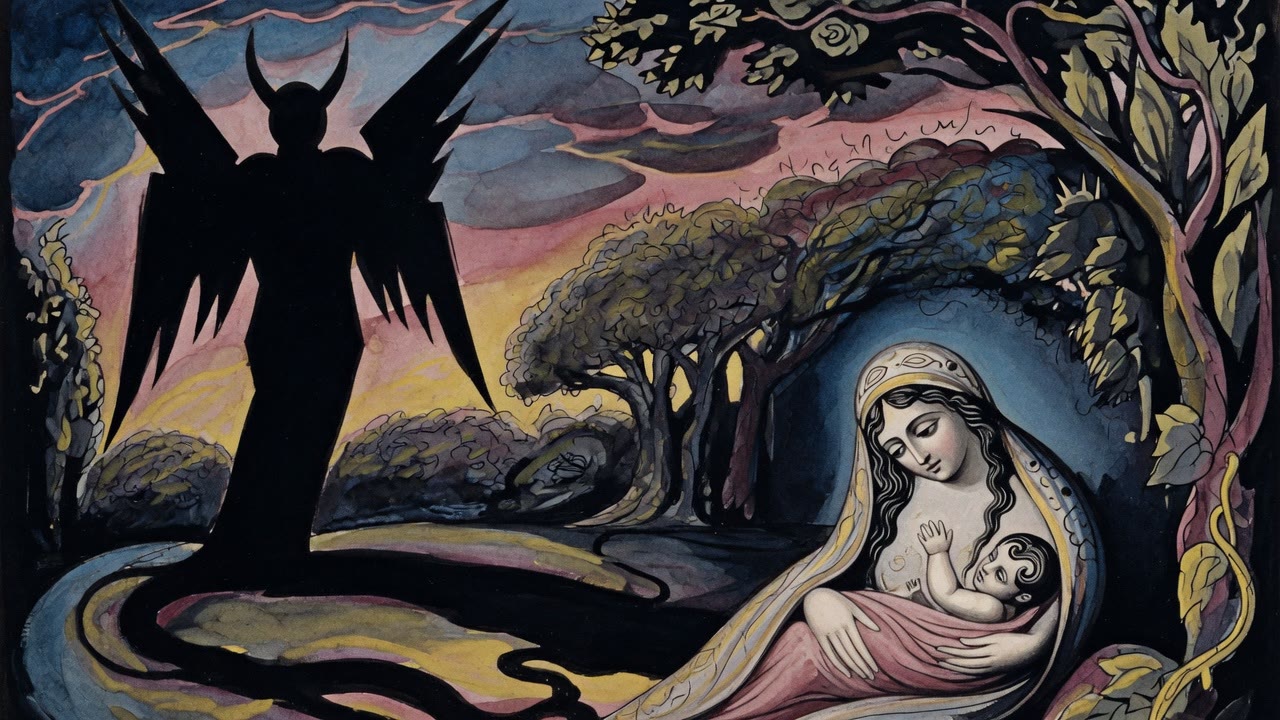
The Angels Nearly Called Adam Holy and God Stopped Them
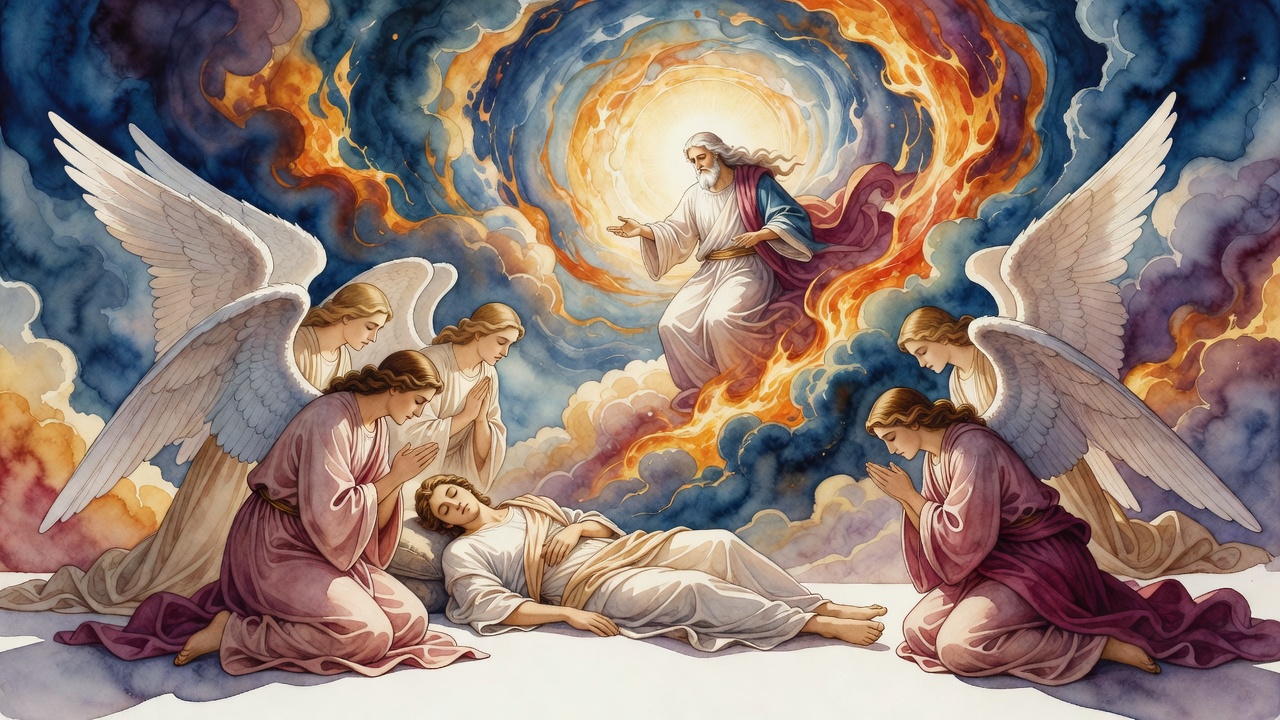
The ministering angels were one breath from crying Holy over the new man, using the word kept for God alone. God put Adam to sleep in front of them.
Table of Contents
 Click for full size
The Angels Opened Their Mouths to Say Holy
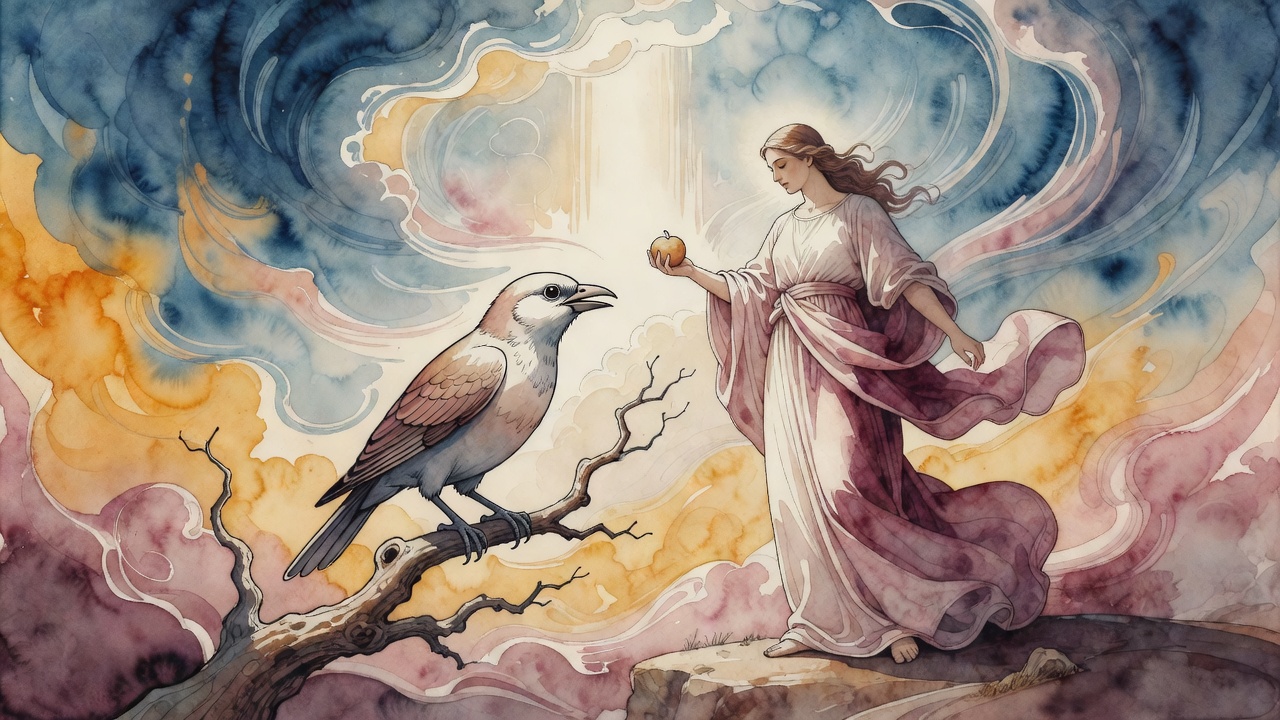
The ministering angels looked at the man God had just finished making and began the wrong song.
They knew the words by heart. Holy, holy, holy is the Lord of hosts. The cry belonged to one being in all of creation, and the angels were aiming it at Adam, who was made out of dirt and had been alive for less than a day.
The name they were about to spend was not a loose word. It was the name Adam himself had used the first time he called out to his maker. God had fixed that name between Himself and Himself, and He had set terms about it with the ministering angels, and the terms had never been complicated. The glory attached to it went to nobody else.
A king rides through the province with his governor beside him in the chariot. The crowd wants to shout for the king and cannot tell which of the two men he is. So the king puts out a hand and pushes the governor down into the road, and after that nobody has to guess.
God dropped a deep sleep onto Adam where he stood.
The angels watched the man's knees give, watched him go down and lie there with his breath running slow through his nose, and the song died in their mouths. Whatever was lying in the dust in front of them, it needed sleep, and they did not.
The Sleep That Cost Him a Side
The sleep had a second job. Adam had been made with two faces, two whole faces set side by side on one body, and while he was under, God separated them. One side of him got up as a woman.
God had gone over the body part by part first, deciding where to cut. "Not from the head, or she will carry her head high in pride. Not from the eye, or she will be wanton-eyed. Not from the ear, or she will listen at doors. Not from the neck, or she will be insolent. Not from the mouth, or she will be a tattler. Not from the heart, or she will be inclined to envy. Not from the hand, or she will meddle. Not from the foot, or she will be a gadabout." He took a chaste portion instead, and over every limb and organ as He shaped it He said, "Be chaste. Be chaste."
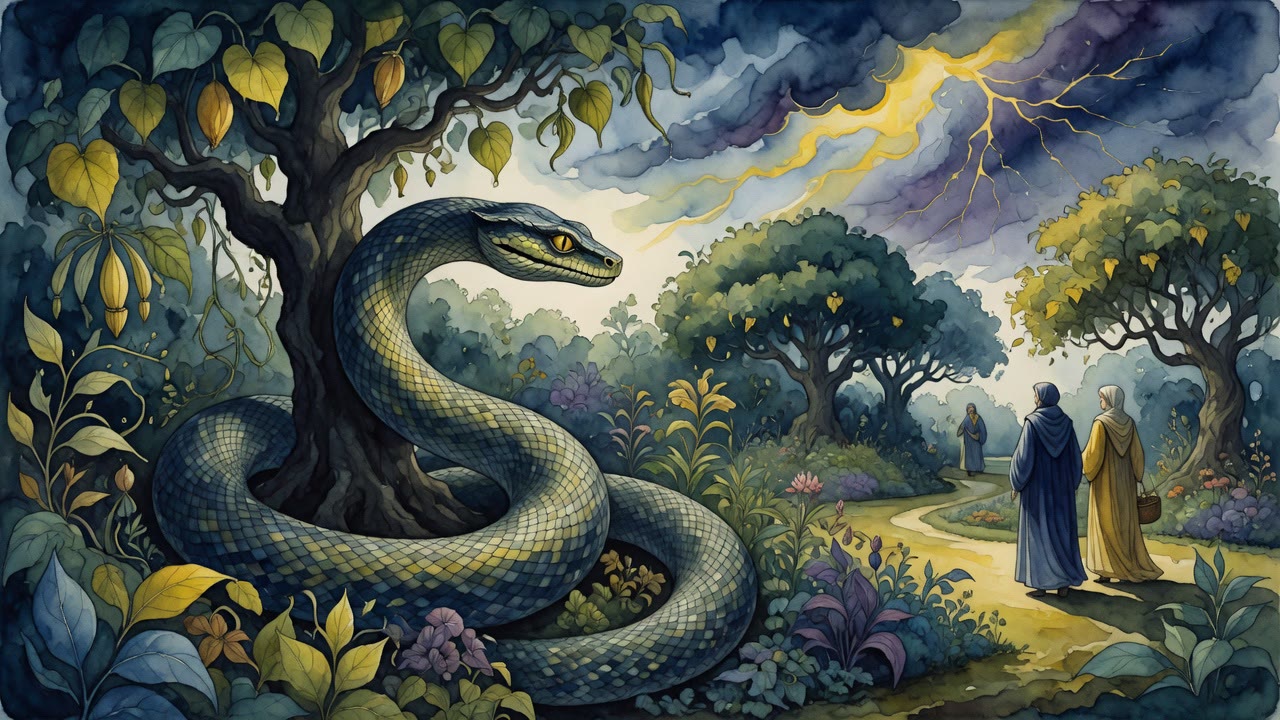
None of it held. Sarah listened at the wall of her own tent while the angel spoke with Abraham. Miriam carried a story about her brother. Rachel envied her sister. Dinah went out walking. Eve put her hand out toward the fruit. Every fault God had steered around arrived on schedule anyway.
But the woman was the point of the sleep. Without her there was one man and no human race, and no way for any creature alive to see where God ended and a man began.
The Earth Said It Could Not Feed Them
The ground heard what God had decided and started shaking.
"I have not the strength," the earth said. "I cannot provide food for the herd of Adam's descendants."
"You and I together," God said. "We will find food for the herd."
So time was cut in two and divided between them. God took the night. The earth took the day, and pushes up produce in it while God sends the water down. The sleep that had exposed Adam as a mortal in front of the whole heavenly host turned out to be his ration, the thing that feeds him and strengthens him and hands him back his life every morning.
The rest he has to dig out of the dirt himself.
God Came Down to the Wedding
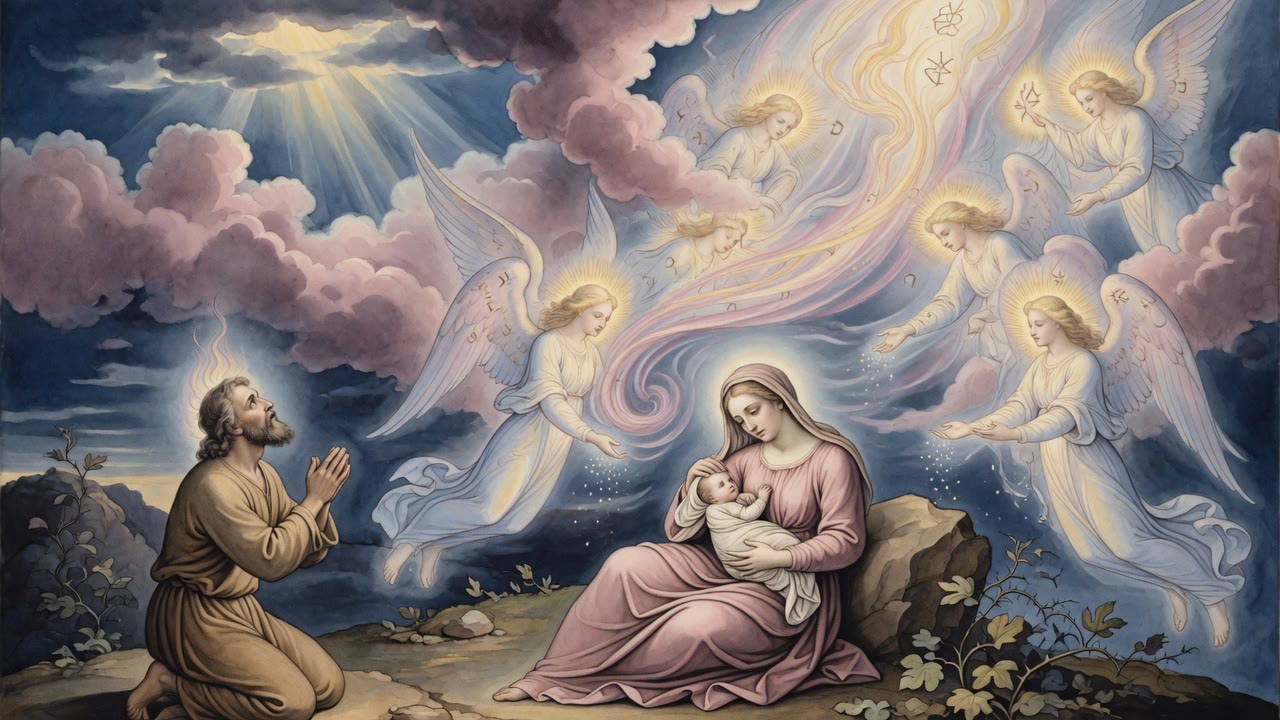
The angels got a second look at the man, and this time they were given instructions.
"Come," God said to them. "Let us show loving-kindness to Adam and his helper."
Then He went down with them to do it. The same ranks that had nearly sung the holy cry over Adam's head now stood around him and his wife at the first wedding anyone had ever held, doing them honor at close range, on the ground, at the edge of the garden.
God set the value of it out loud while they worked. Chesed (חסד), plain loving-kindness of this kind, was dearer to Him than all the sacrifices and burnt offerings Israel would one day carry up to the altar in front of Him.
The Book Went Into the Dark
Adam kept a holy book, and when he died it went missing with him.
Generations later a man dreamed the location of the cave where it lay. Enoch went and found it and read it and pulled out of it the workings of the earth and the sky, until he knew more than Adam had ever known. Then he learned it by heart and put the book back into the dark.
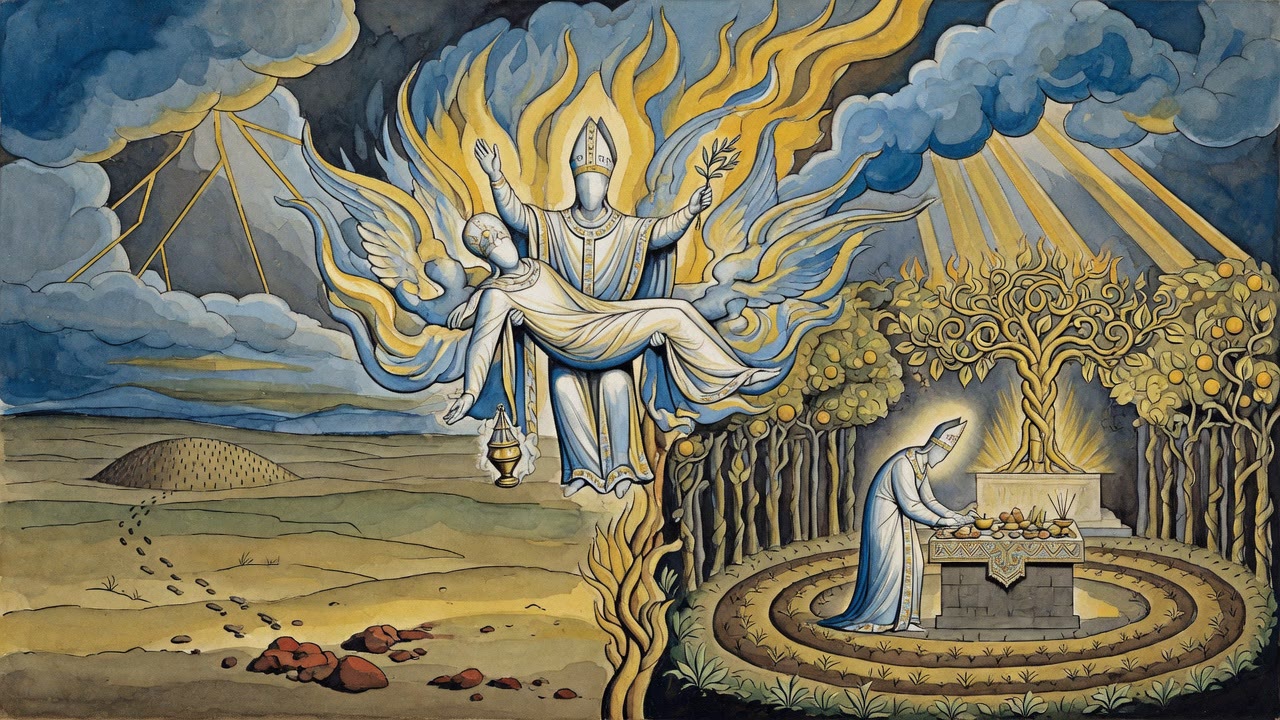
It came out one more time. When God settled on drowning the world, He sent the archangel Raphael down to Noah with the book in his hands.
"I give you the holy book," Raphael said, "so that every secret and mystery written in it is made plain to you, and so that you will know how to carry out what it commands, in holiness and purity and modesty. You will learn from it how to build an ark of gopher wood, and you and your sons and your wife will find shelter inside it."
Noah stood holding a volume he could never have located on his own, with the measurements of his own survival written somewhere in the middle of it.
← All myths