What Elijah Taught about Women, Wasps, and Why God Keeps Pests
Elijah came back from heaven to explain why women are indispensable to men, and why God refuses to destroy even creatures no one wants.
Table of Contents
 Click for full size
The Prophet Who Came Back to Talk About Small Things
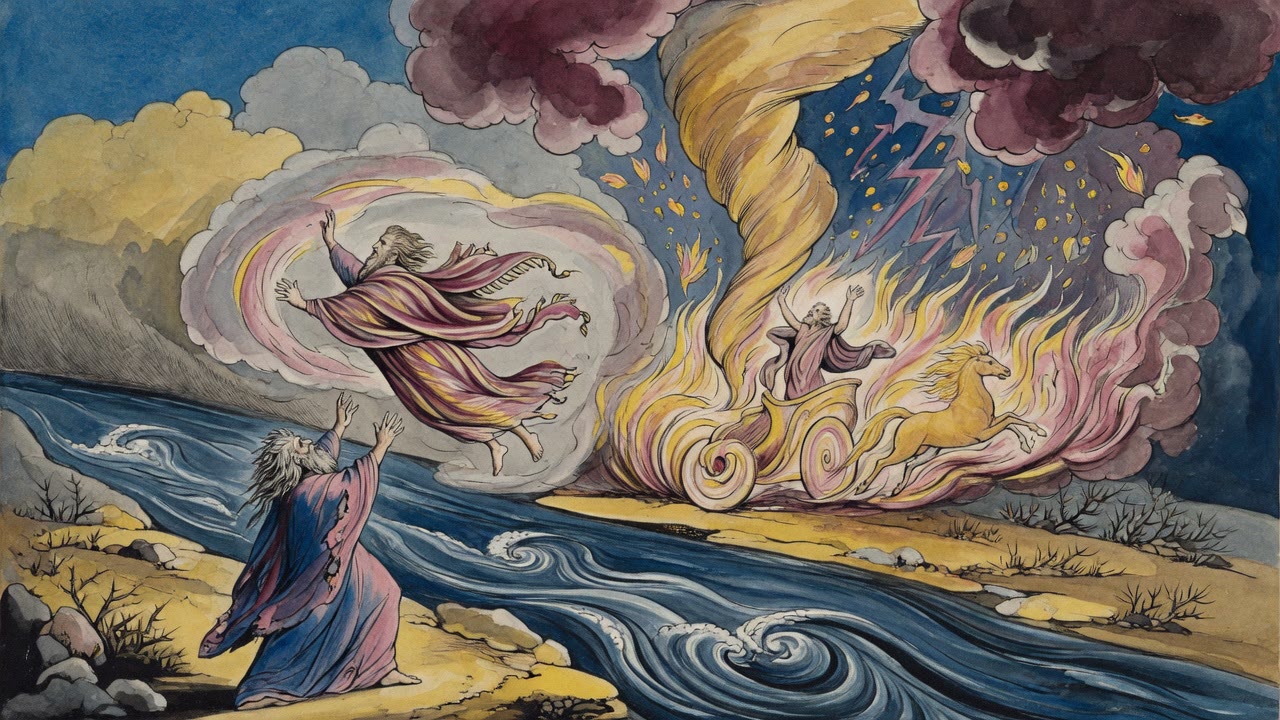
He had ascended to heaven in a chariot of fire. He had spent centuries in the upper world, carrying the knowledge of both realms. And when Elijah returned to the sages, he sometimes came back to talk about wasps.
The two teachings he brought to Rabbi Jose look, at first, like subjects from two different categories. One is about the nature of women and what the Torah means when it describes woman as a helpmeet for man. The other is about insects that sting and serve no obvious purpose. Placed side by side, as the tradition preserves them, they form a single argument about creation: that everything God made has a reason, and that the reason is often not visible from the perspective of the creature asking the question.
What Elijah Said About Women
The Torah describes woman as ezer kenegdo, a phrase usually translated as helpmate or helper, but which contains a tension: the word kenegdo means both alongside and against. Elijah sat with Rabbi Jose and opened what the phrase actually meant in the architecture of creation.
The argument Elijah made was not about subordination or service. It was about mutual necessity and interdependence. He moved through examples that showed how the structure of a man's inner life, his moral development, his practical functioning, his spiritual orientation, was built around the relationship with a woman in a way that could not be replaced or bypassed. This was not a claim about women's capabilities or limitations. It was a claim about how God had arranged the human being: that a man without a woman was incomplete in a specific way that the man himself could rarely see, because the incompleteness was structural, not experiential.
The force of the teaching came from its source. This was not a sage reasoning from texts. This was the prophet who had watched the full sweep of human life across centuries, who had seen the arrangement in operation at every level of human society, telling a scholar what he had observed. The phrase kenegdo, the being who stands alongside and also against, was not an anomaly. It was the precise description of what made the relationship generative.
Why God Will Not Destroy the Wasp
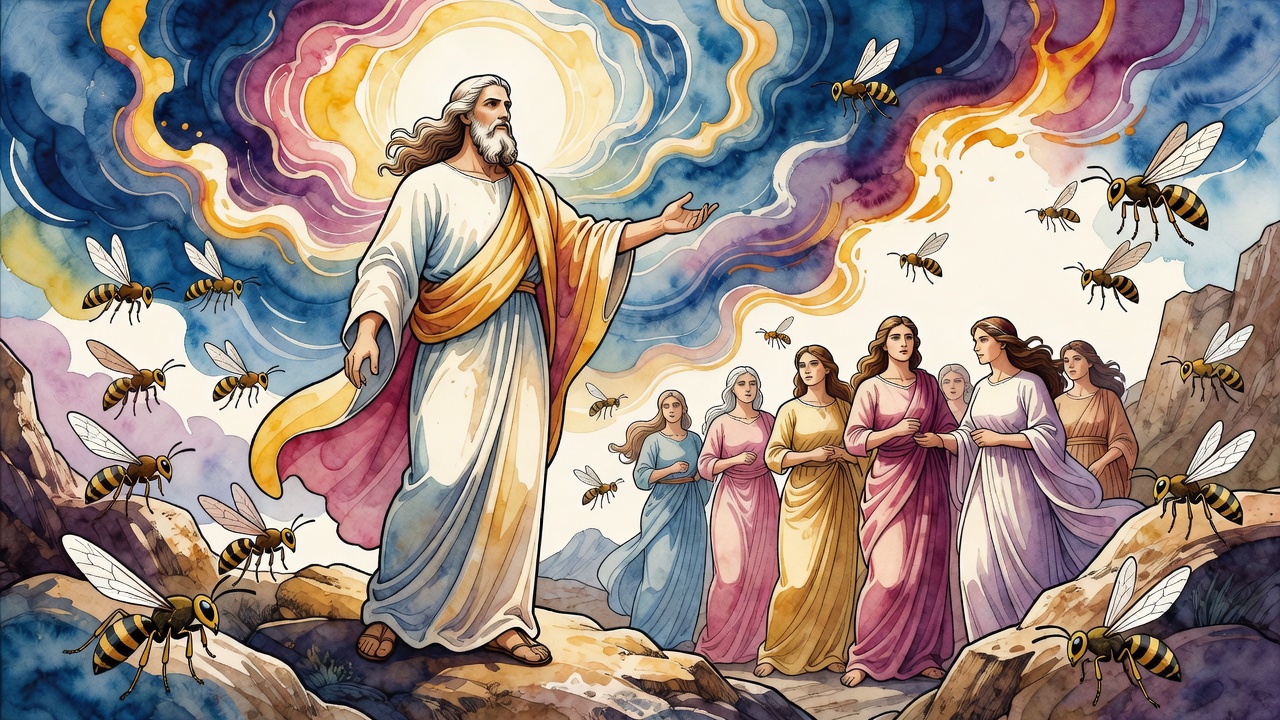
The second teaching landed differently. Rabbi Jose had apparently complained about wasps, or raised the question of what purpose they served. They stung. They built nests in inconvenient places. They seemed to have no contribution to human welfare that could not be accomplished more efficiently by creatures that were less hostile.
Elijah's answer was not a natural history of wasp behavior. It was a theological statement: God does not destroy what God has made, even when the creature's purpose is not visible to the people who encounter it. The wasp exists in the same creation as the bee, the same creation as the ant, the same creation as the human being. The fact that its function is not immediately apparent to someone who has just been stung does not mean the function is absent.
The teaching pointed in a direction that the tradition found important enough to preserve alongside the teaching about women: that the human tendency to evaluate creation on the basis of whether it serves human convenience is a form of error. The world was not made for human convenience. It was made by a Creator whose purposes extend beyond what any individual creature can see from its position inside the creation.
Two Teachings, One Argument
The pairing matters. The teaching about women addresses a relationship that humans experience as essential but sometimes misunderstand as hierarchical. The teaching about wasps addresses a relationship that humans experience as threatening but fail to understand as necessary. In both cases, the problem is the same: the inability to see the full structure of what has been made from inside a single perspective. Elijah, who stood outside ordinary time and had seen the structure from a wider vantage, carried the correction back.
← All myths