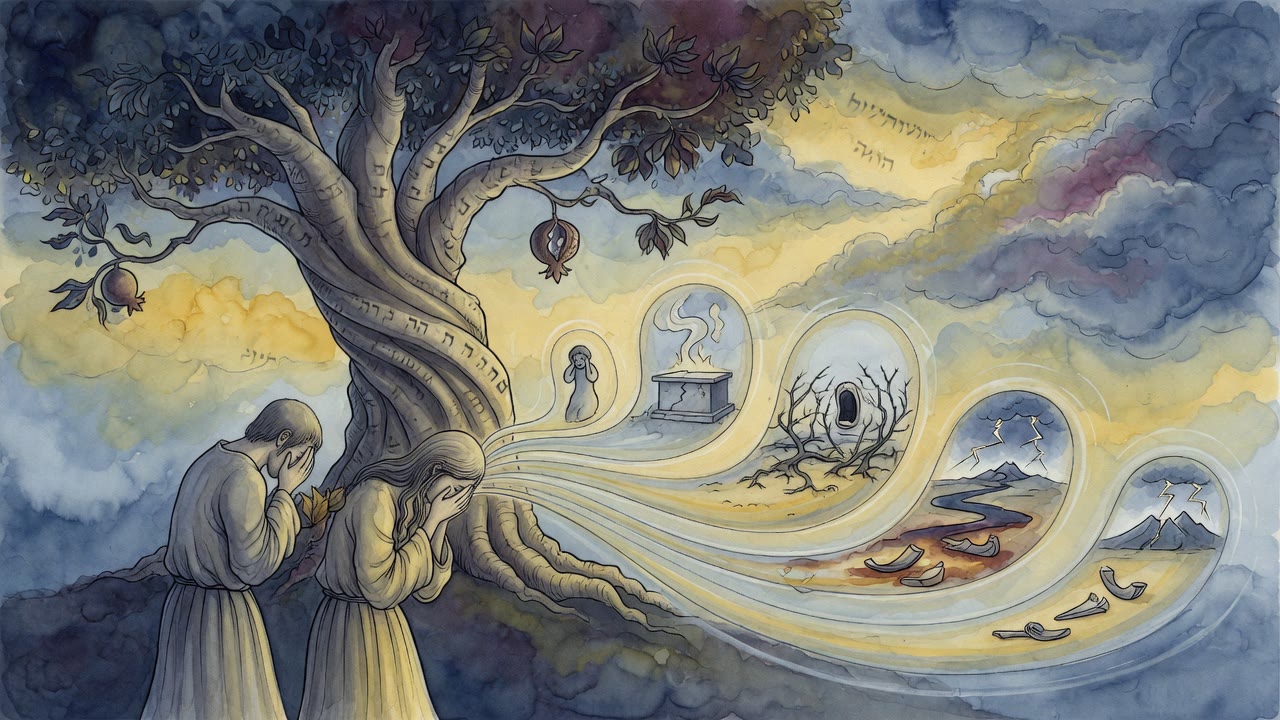
Esther Named Her Maids for the Seven Days of Creation
Hegai gave her seven attendants and Esther gave them names. Nobody in the palace heard anything strange in them. She was counting to the Sabbath.
Table of Contents
 Click for full size
The Palace Ran on the King's Clock
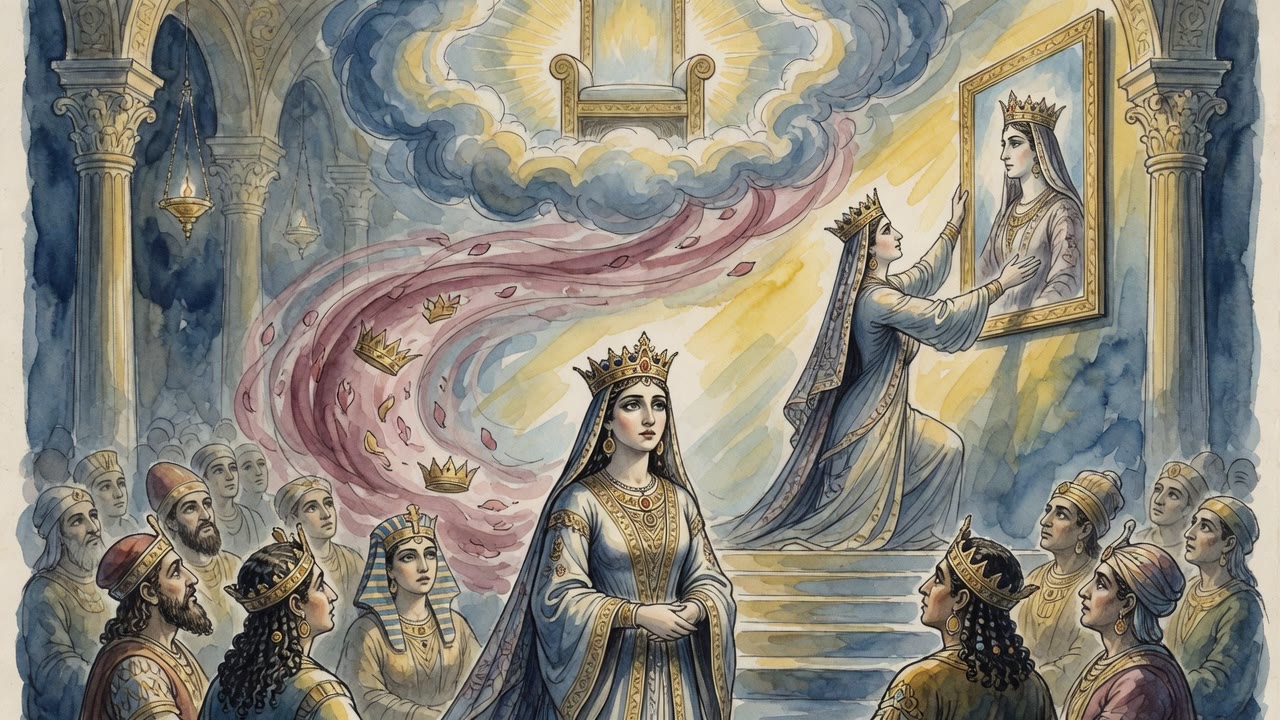
They took Esther into the harem and closed the door on everything behind her. No letters, no visitors, no one from her own people to say a word to. Mordecai walked the ground outside the gate every day and that was the whole of her contact with anything Jewish.
Inside, nothing marked a week. The kitchens ran, the looms ran, the chamberlains came and went, and the calendar the palace kept was the king's calendar, built out of feasts and audiences and whatever Ahasuerus wanted next. Seven days would go past and nothing in the building would tell her that they had.
She was going to lose the Sabbath. Not refuse it. Lose it, the way anyone loses count in a room with no windows.
The Food She Handed Down the Table
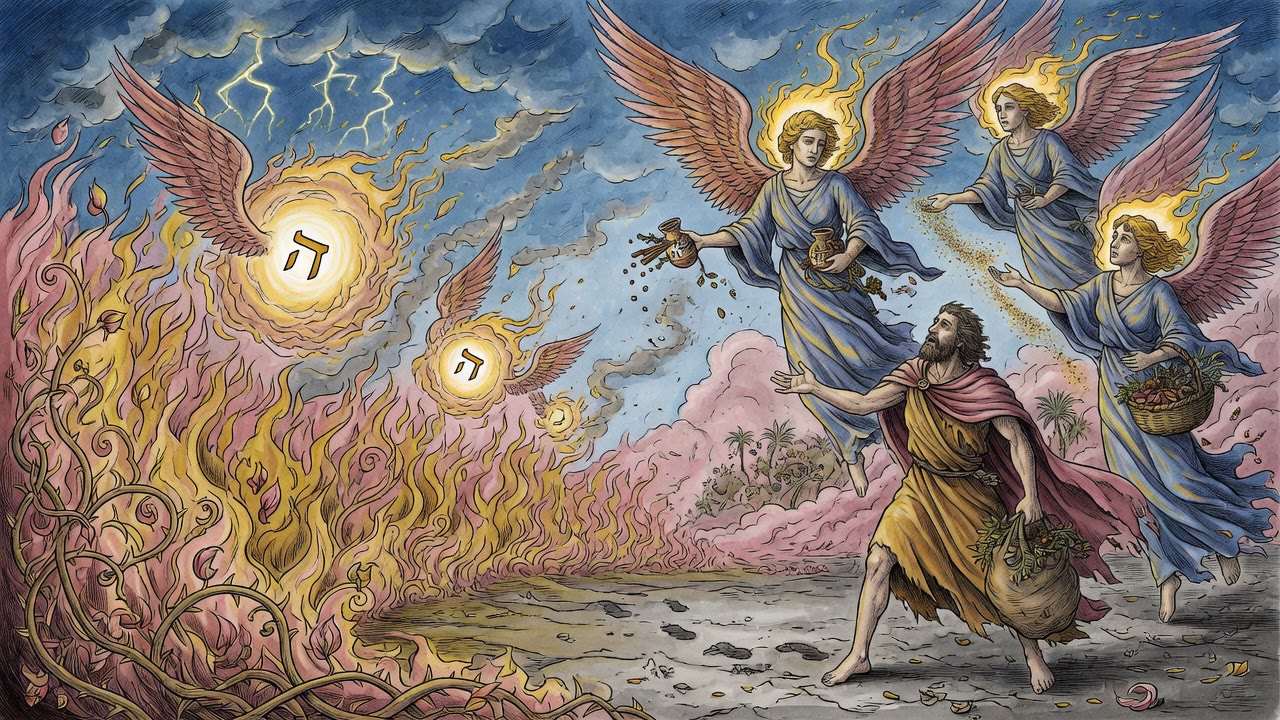
Hegai, who kept the women, took an interest in what she ate and had dishes carried in for her from the royal table. She would not touch them. She ate vegetables and nothing else, the way three young men at another king's court in Babylon had eaten vegetables and nothing else, and when the good things came in on the royal plate she passed them along to the servants who were not Jewish and let them enjoy the king's kitchen on her behalf.
The seven attendants Hegai assigned to her were Jewish girls, every one of them as careful about the law as she was. She could eat what they handed her. She could say what she liked in front of them. What none of them could do was tell her when Friday had come, because none of them could see out either.
Six Names for Six Days
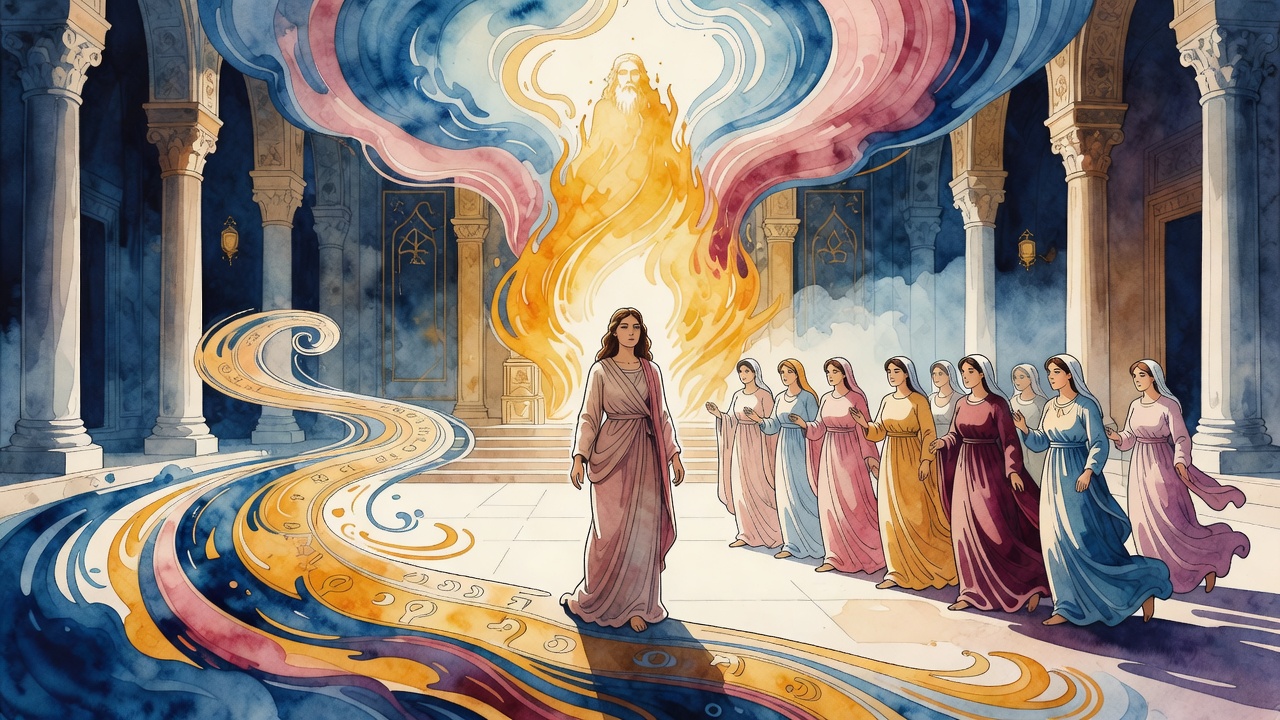
So she named them.
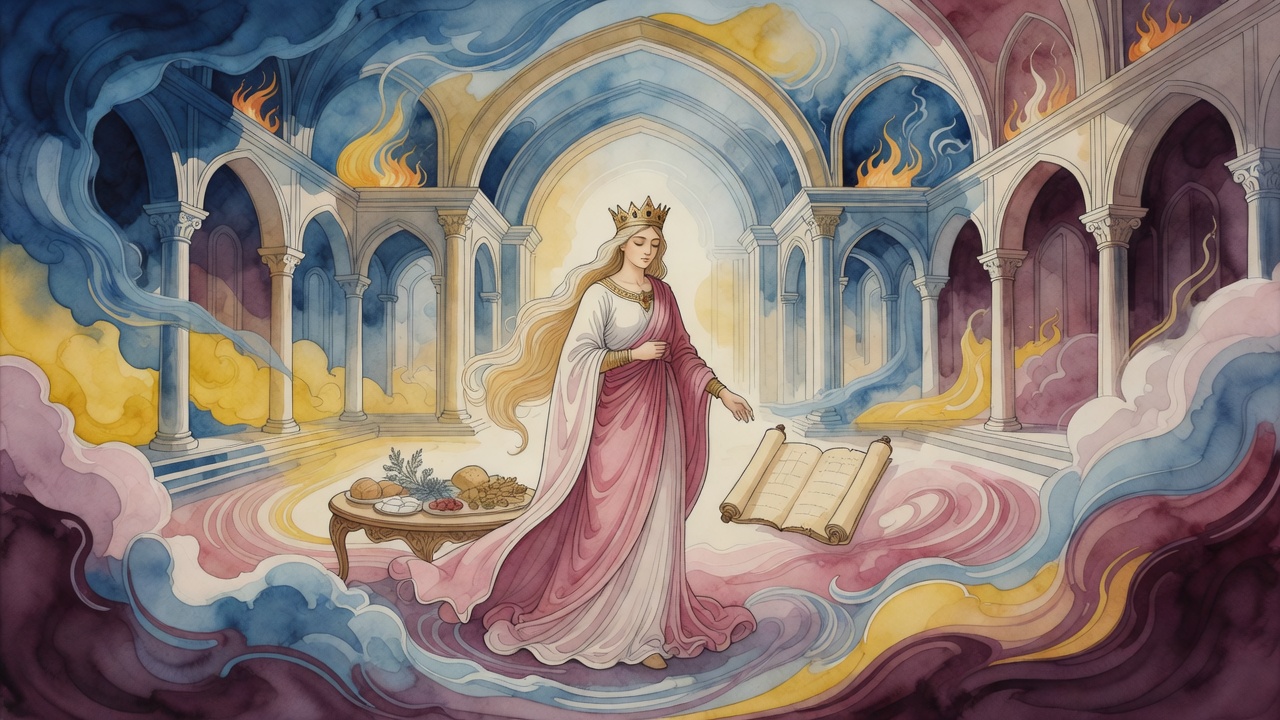
The one who attended her on Sunday she called Hulta, Workaday, for the day the work of making the world began. Monday's was Rokita, for the firmament, hammered out on the second day between the water above and the water below.
Tuesday she called in Genunita, the Garden, for the third day, when the ground was told to put out grass and fruit trees and did it.
Wednesday belonged to Nehorita, the Luminous, for the fourth day and the two great lights and all the stars set into the sky to keep time for everyone under it. Thursday was Ruhshita, Movement, for the fifth day, when the water swarmed and the birds came up off it.
Friday was Hurfita, Little Ewe Lamb, for the day the beasts were made and stood up on the dry ground and began to graze.
The Seventh Girl Was Called Rest
On the seventh day Regoita came in.
Her name meant Rest and it was the only one of the seven that Esther could not say out loud to anybody in that palace as what it was. She said it as a servant's name. A girl crossed the room and set something down, and the queen of Persia knew, without asking anyone and without being told, that the Sabbath had come in with her.
Week after week it held. Hulta, Rokita, Genunita, Nehorita, Ruhshita, Hurfita, Regoita, and around again, seven women walking the whole of creation through a Persian corridor in order, one per day, and no one who watched them come and go ever saw anything but the household running normally.
The Day That Said It Had No Partner
Long before Susa, the Sabbath had come before God with a complaint.
"Master of the universe. Everything has a mate. I have none."
Festivals could be pushed. The Day of Atonement could be pushed. The Sabbath could not be moved off its place by anything, and it stood there alone at the end of every week with nothing beside it.
God answered: "Israel will be your mate."
Then Israel stood at the mountain, and He said to them, remember the thing I promised the Sabbath, that the assembly of Israel is her partner. Remember the Sabbath day and keep it holy. The word He gave them was remember, and the reason He had to give it was that people forget.
The Clock Handed Over
There was a king who kept a timepiece and would look at it and know what hour it was. When his son came of age, he gave him the timepiece.
God said: until now the reckoning of the months and the years has been in My hand. From here on it is in yours.
Which is how a woman locked in a Persian harem, with no court, no witnesses, no moon she was permitted to go out and look at, ended up holding the whole thing herself, and holding it by the only method left to her, which was to say seven names in the right order and never once get them wrong.
← All myths