The Emperor's Daughter Demanded a Tent, and God Would Not Take It Back
The Emperor's daughter mocked the rabbi's God as a builder. Days later she was sealed in a tent she could not leave, and God would not take it back.
Table of Contents
The Emperor's daughter had a question for Rabbi Joshua ben Hananiah. Not a sincere one. She stood before him and said what she considered unanswerable: "Your God is a carpenter, a builder. If He is so mighty, let Him build a tent right here."
 Click for full size
She waited. No tent appeared. The rabbi said nothing that day, nothing she could hear.
The Tent That Would Not Let Her Go
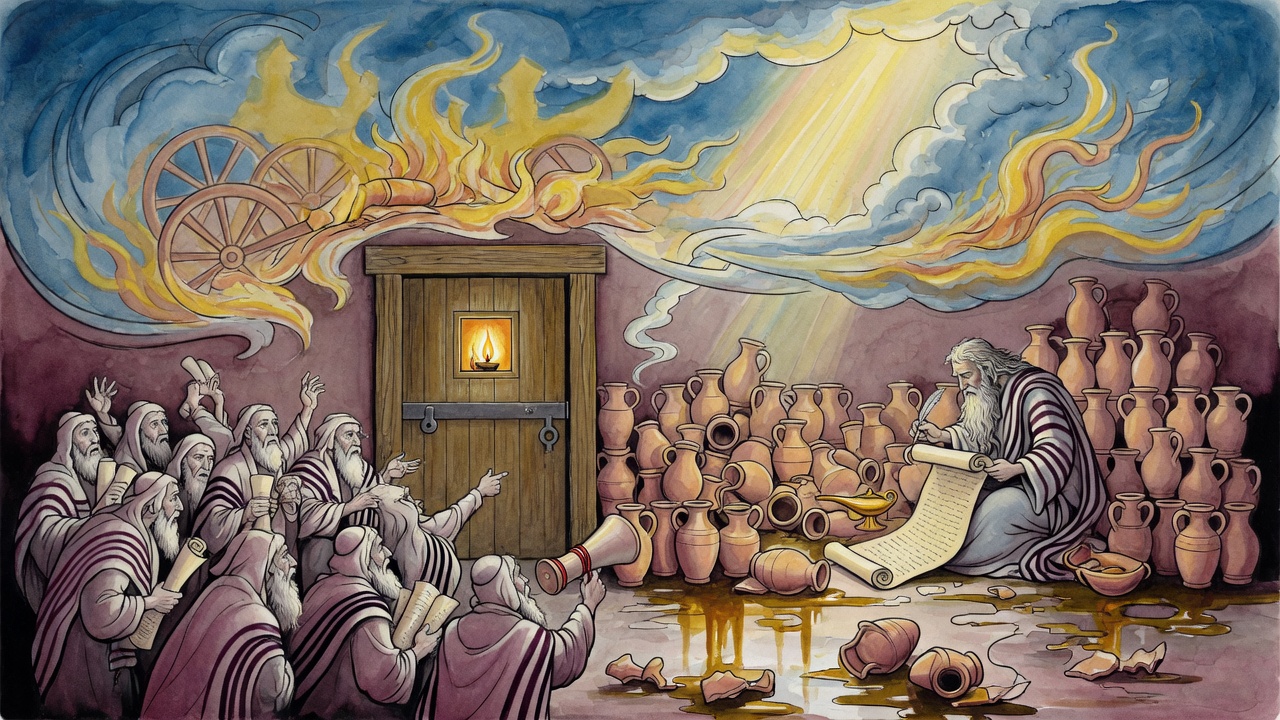
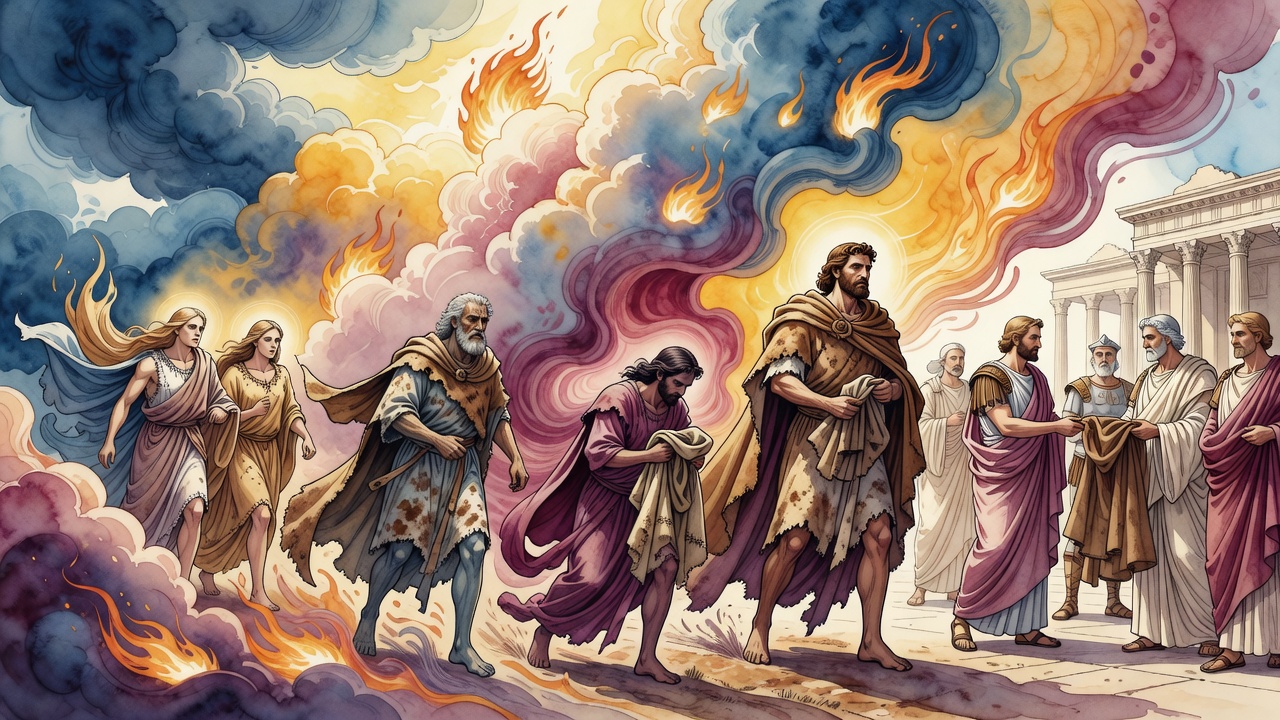
What came instead was a sickness. The kind that wasted slowly, that put her to bed and kept her there, until the physicians of Rome did what Roman physicians did with such cases: they set her apart in a tent, isolated from the household, the standard practice for those whose afflictions had made them unclean. The very word she had thrown at the rabbi like a stone came back to her as a place of confinement.
She sent a message. She wanted to be released from it.
The answer she received was not from any doctor. "Our God gives," it said, "but He does not take back again." She had asked the Creator to perform on command, to build something here, now, for her satisfaction. He had. He was not obliged to undo it at her request. The divine craftsman does not take back His work on demand. The tent held her, and the words held her in them: He gives. He does not take back.
Two Craftsmen and a Dead Man
The second encounter was with the Emperor himself. He had the harder question, one that Roman philosophers had used for generations to make Jewish belief look foolish: the resurrection of the dead.
"The dead will come back to life?" he said. "They are dust. How does dust live again?"
It was his own daughter who answered. She had learned something from her time in the tent. She turned to her father and asked him a craftsman's question: in this palace, which is the greater artisan, the one who shapes objects from clay, or the one who shapes them from water?
"The one who works in water," the Emperor said. Water has no form of its own, no structure to begin from. To shape something that holds together from water alone is harder than pressing soft earth.
"Then consider," she said, "that God made the human body from water." Not from clay, not from stone. From something that runs through your fingers. If an earthly craftsman can fashion a vessel from shapeless water, does it strain belief that the craftsman who formed the body in the first place could form it again from the dust it has become? The Emperor, who had brought the challenge, sat with what his daughter had built out of his own answer.
What God Has Been Doing Since the Sixth Day
A Matrona, a Roman woman of rank, found Rabbi Joshua at another moment and put to him what she took to be a simple question. The week of creation was finished. Six days, then rest. What, she wanted to know, had God been doing ever since?
"Pairing people," Rabbi Joshua told her. "Arranging matches. Joining this one to that one."
She laughed. Not cruelly, but with the laughter of someone who has just been told a trivial answer to a serious question. She had a large household. Men and women both, owned, managed, arranged at her direction. She could pair them herself. She would demonstrate how simple a thing it was.
That evening she lined them up. She chose partners by whatever logic seemed right, matched rank to rank, age to age, or perhaps simply by the order they stood in. By her command, the pairings were made. She told them they were matched and sent them to their quarters.
The Morning After the Matching
In the morning they returned to her. One man had his head broken open. One woman had her eye gouged. Another came with bruised ribs. Every couple she had assembled had spent the night refusing each other, fighting each other, injuring each other. Her slave household, obedient in every other matter she commanded, had broken against the pairings she made for them.
She stood before Rabbi Joshua and said: "Your words are true." She had proved them herself.
What the Matrona had tried to reduce to logistics was, in fact, knowledge. To match two human beings requires knowing both of them from the inside, their inclinations, their wounds, their hungers, the specific shape of what they cannot bear and what they cannot live without (Genesis 2:18). No master of a household has that knowledge of the people she owns. God has been working at it since the sixth day of creation because it does not get finished. Every pairing is a new act of knowing that nothing in the six days of making the world had made simple.
← All myths