Parshat Shemini9 min read

The Leviathan - Judaism's Most Terrifying Sea Monster

God created two Leviathans on the fifth day, killed the female before they could reproduce, and salted her meat. It has been aging ever since, reserved for the banquet at the end of days.

Table of Contents
  1. The Leviathan in the Hebrew Bible
  2. How Big Is the Leviathan?
  3. Why Did God Kill the Female?
  4. The Messianic Feast - Who Gets to Eat the Leviathan?
  5. The Leviathan, Behemoth, and the Ziz - Three Primordial Beasts
  6. The Leviathan in Kabbalah and the Zohar
  7. Explore Leviathan Texts

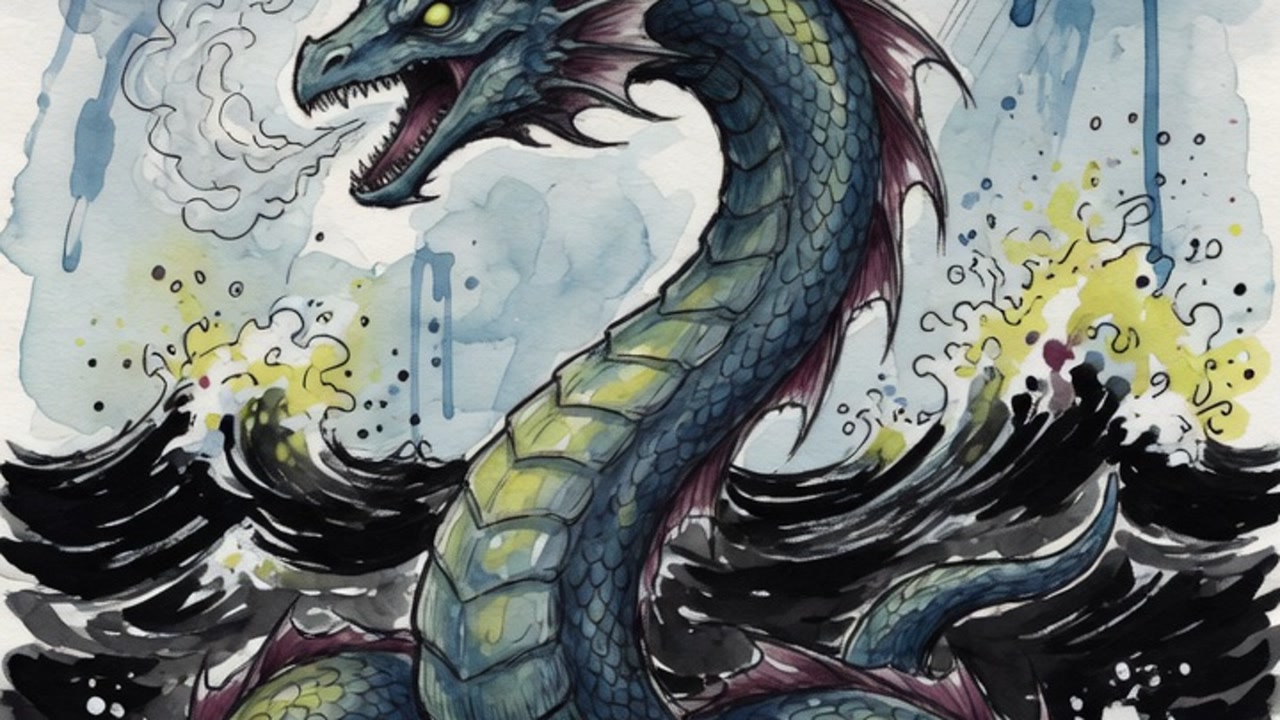
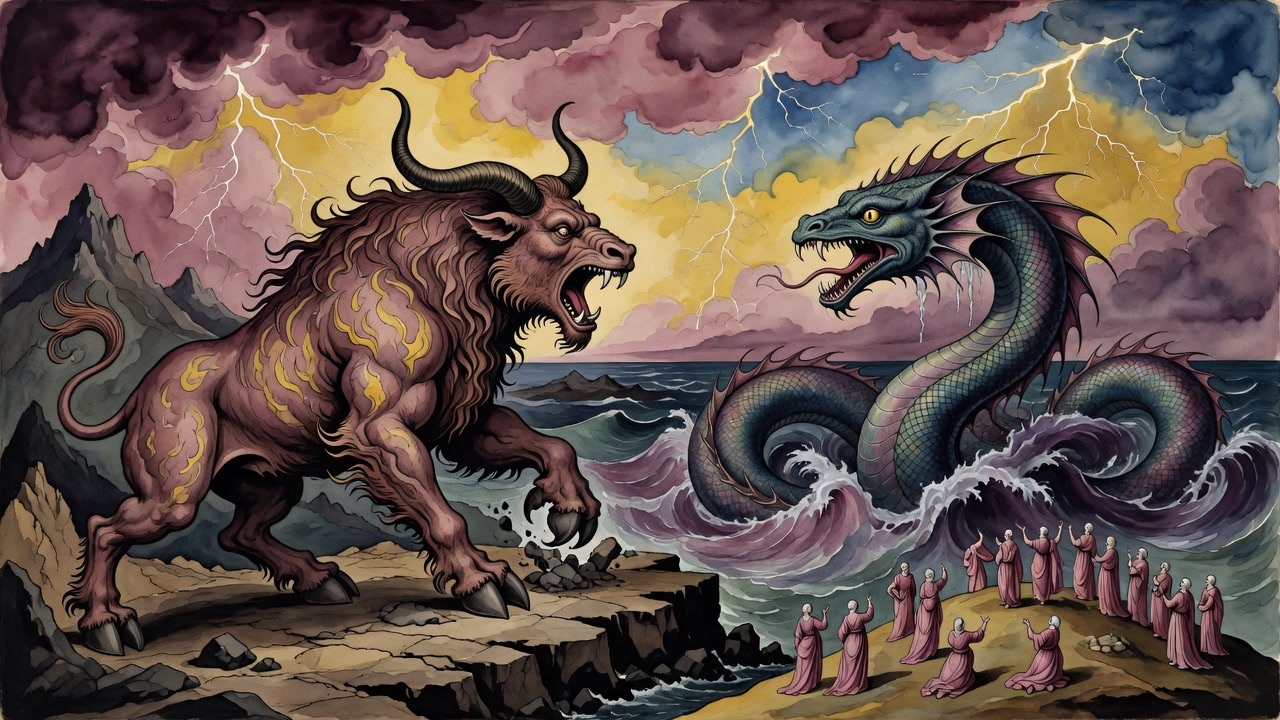
On the fifth day of creation, God made a mistake. Or rather, God made something so dangerous that He had to undo half of it immediately. According to the Babylonian Talmud, tractate Bava Batra 74b (redacted c. 500 CE), God created two Leviathans, a male and a female, and then realized that if they ever mated, their offspring would destroy the world. So God killed the female. He salted her flesh and preserved it. That meat is still waiting, stored away for the messianic banquet at the end of days, when the righteous will sit down and eat the body of the most terrifying creature ever made.

The Leviathan is not a metaphor. In the rabbinic imagination, it is a real creature of staggering physical proportions, living right now beneath the surface of the ocean. Its story runs through the Hebrew Bible, the Talmud, the Midrash Rabbah, Legends of the Jews, and kabbalistic literature, and it connects creation, eschatology, and the nature of divine power into a single mythological arc spanning from the first week of the world to its last day.

The Leviathan in the Hebrew Bible

The Leviathan appears in multiple books of the Hebrew Bible, each time described with a mixture of terror and awe. The most extensive passage is (Job 41:1-34), where God Himself describes the creature in a speech meant to humble Job. The language is extraordinary: "Can you draw out Leviathan with a fishhook?" God asks. "Can you press down his tongue with a cord?" The answer to every question is no. No human can capture, tame, or even approach this beast.

(Job 41:19-21) describes flames shooting from the Leviathan's mouth, smoke pouring from its nostrils, and a body so armored that swords, spears, javelins, and arrows bounce off it like straw. Its underside is covered in jagged potsherds. When it moves through the water, the sea boils behind it like a cauldron. "On earth there is nothing like it," God declares in (Job 41:33), "a creature made without fear."

(Psalm 74:14) adds another detail: God "broke the heads of Leviathan in pieces" and gave its flesh as food to the people of the wilderness. (Psalm 104:26) takes a surprisingly playful tone, describing the Leviathan as a creature God formed "to play with" in the sea. And (Isaiah 27:1) places the Leviathan's final destruction at the end of time: "In that day the LORD with His great and strong sword will punish Leviathan the fleeing serpent, Leviathan the twisted serpent, and He will slay the dragon that is in the sea."

How Big Is the Leviathan?

The rabbis of the Talmud took the biblical descriptions and amplified them to cosmic scale. In Bava Batra 74b, Rabbah bar bar Chana (3rd century CE, Babylonia) reports a series of fantastical travel tales, including an encounter with the Leviathan. He describes a fish so large that it takes three days to sail past its body. The creature's fins are so enormous that they block the sunlight when raised.

Bava Batra 75a continues: the Leviathan devours one whale every single day. All the waters of the ocean flow through its gills. Its eyes emit such intense light that they illuminate the deepest trenches of the sea. Rav Dimi (4th century CE) taught in the name of Rabbi Yochanan that when the Leviathan is hungry, it breathes out such heat that it causes all the water in the deep to boil. And when it is thirsty, it creates furrows in the sea so vast that the waters cannot refill them for 70 years.

Louis Ginzberg's Legends of the Jews (published 1909-1938, 2,650 texts in our database) synthesizes dozens of these sources in the entry on The Fifth Day, describing the Leviathan as resting on the ocean floor with the entire weight of the seas pressing down on its back. Its body is so vast that the ocean itself is merely its swimming pool.

Why Did God Kill the Female?

The decision to kill the female Leviathan is one of the more dramatic moments in the creation narrative. According to Bava Batra 74b, God looked at the two Leviathans He had just created and calculated the consequences of allowing them to reproduce. A single Leviathan was already the most powerful creature in existence. A breeding population of them would be catastrophic. The oceans could not contain them. The land would be crushed. The entire ecosystem of creation would collapse under the weight of their offspring.

So God killed the female and preserved her flesh in salt. The Talmud specifies that God did not merely destroy her, He salted her, the way you would cure meat for long-term storage. This detail matters because the meat has a destination. It is being held in reserve for the messianic banquet, the great feast that God will prepare for the righteous at the end of days.

As for the surviving male Leviathan, God ensured it could never reproduce by rendering it solitary. The Midrash Rabbah (2,921 texts in our collection) adds that God plays with the Leviathan for three hours every day, a tradition derived from (Psalm 104:26). The most terrifying creature in the cosmos is also God's daily entertainment.

The Messianic Feast - Who Gets to Eat the Leviathan?

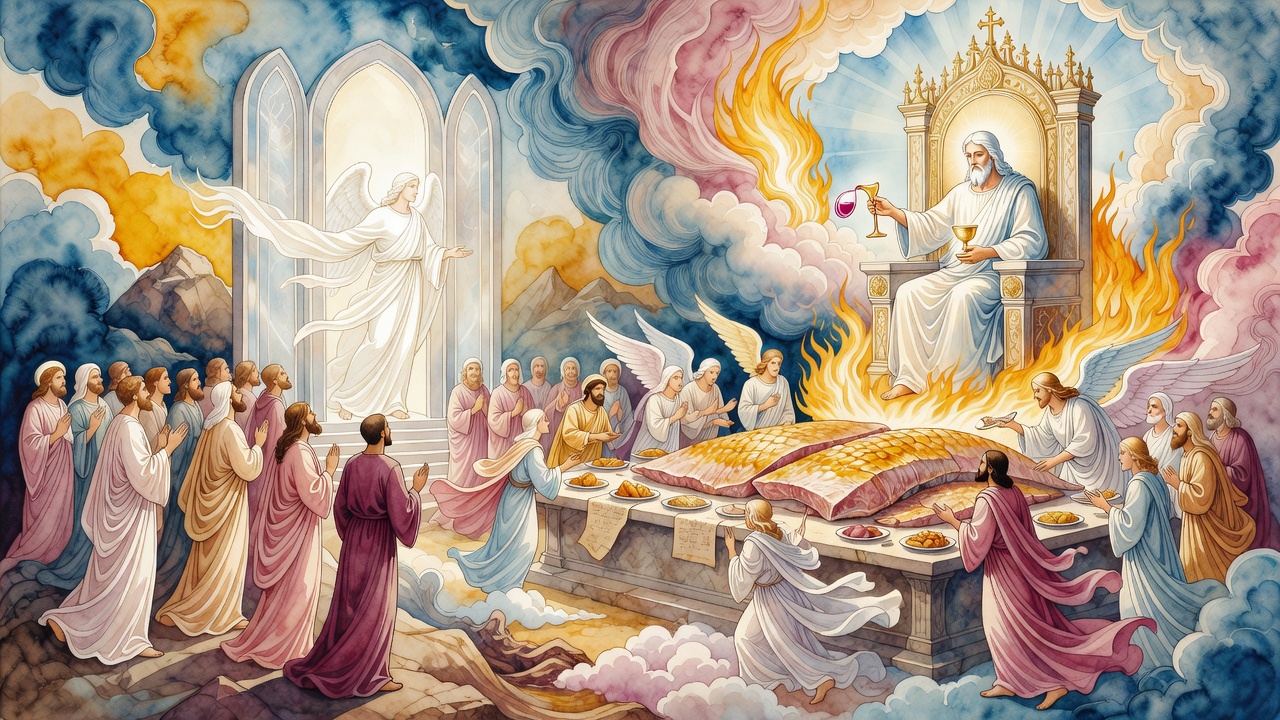
The culmination of the Leviathan story is not its destruction but its consumption. According to Bava Batra 75a, in the messianic age God will slaughter the Leviathan and serve its flesh at a banquet for the righteous. Rav (Abba Arikha, c. 175-247 CE, founder of the Sura academy in Babylonia) taught that the skin of the Leviathan will be used to build a sukkah (booth) over the heads of the righteous at this feast, fulfilling (Isaiah 25:6): "The LORD of hosts will make for all peoples a feast of rich food."

The Messianic Banquet tradition in our database, drawn from our collection, describes the menu in detail. The Leviathan is not the only course. The land beast Behemoth, described in (Job 40:15-24) as a creature whose bones are like tubes of bronze and whose limbs are like bars of iron, will also be slaughtered and served. And the Ziz, the enormous bird whose wingspan blocks out the sun, completes the trio. Sea, land, and sky, three primordial creatures, each created on the fifth day, each reserved for the final meal.

The tradition extends even further. The Feast of Sukkot in the World to Come describes how the wine for this banquet has been aging since the six days of creation. Fat Geese for the World to Come adds additional delicacies. The entire eschatological menu is a mirror image of creation itself, what God made in the first week will be consumed in the last.

The Leviathan, Behemoth, and the Ziz - Three Primordial Beasts

The Leviathan does not exist in isolation. Jewish mythology describes a trio of primordial mega-creatures, each ruling a different domain. The Leviathan rules the sea. Behemoth rules the land. And the Ziz rules the sky. All three were created on the fifth day of creation, according to The Fifth Day in Ginzberg's Legends of the Jews.

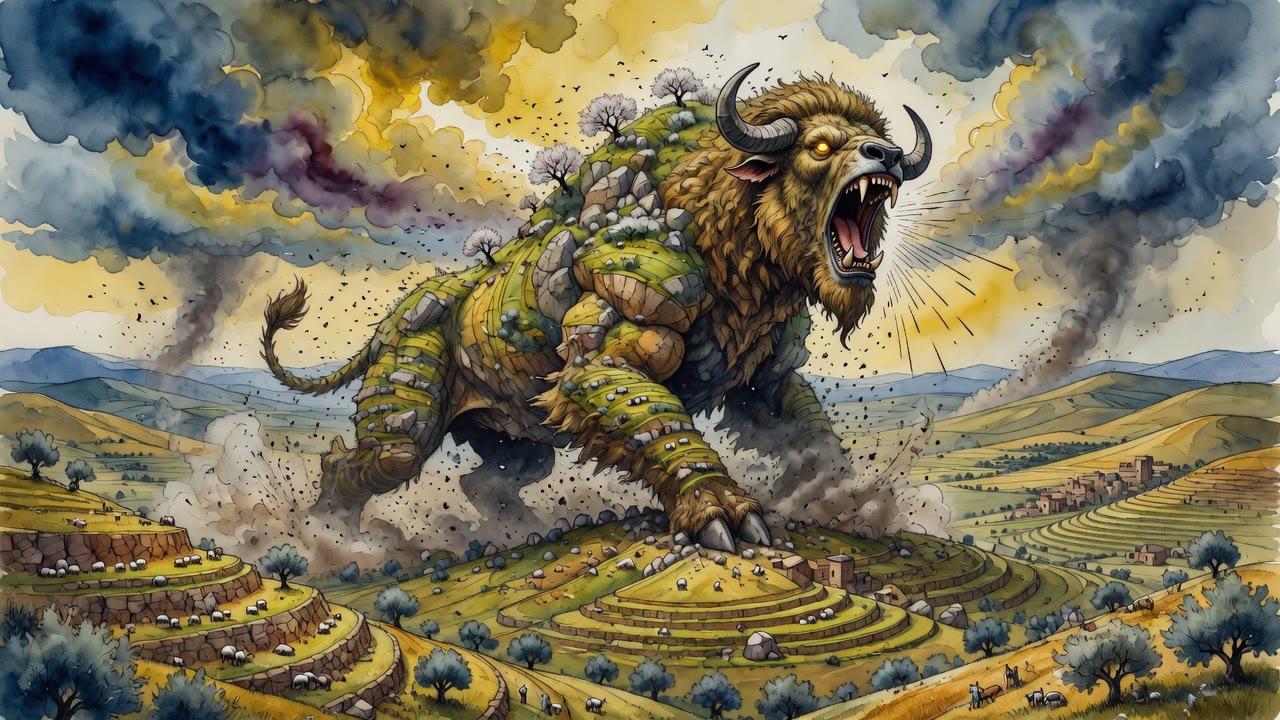
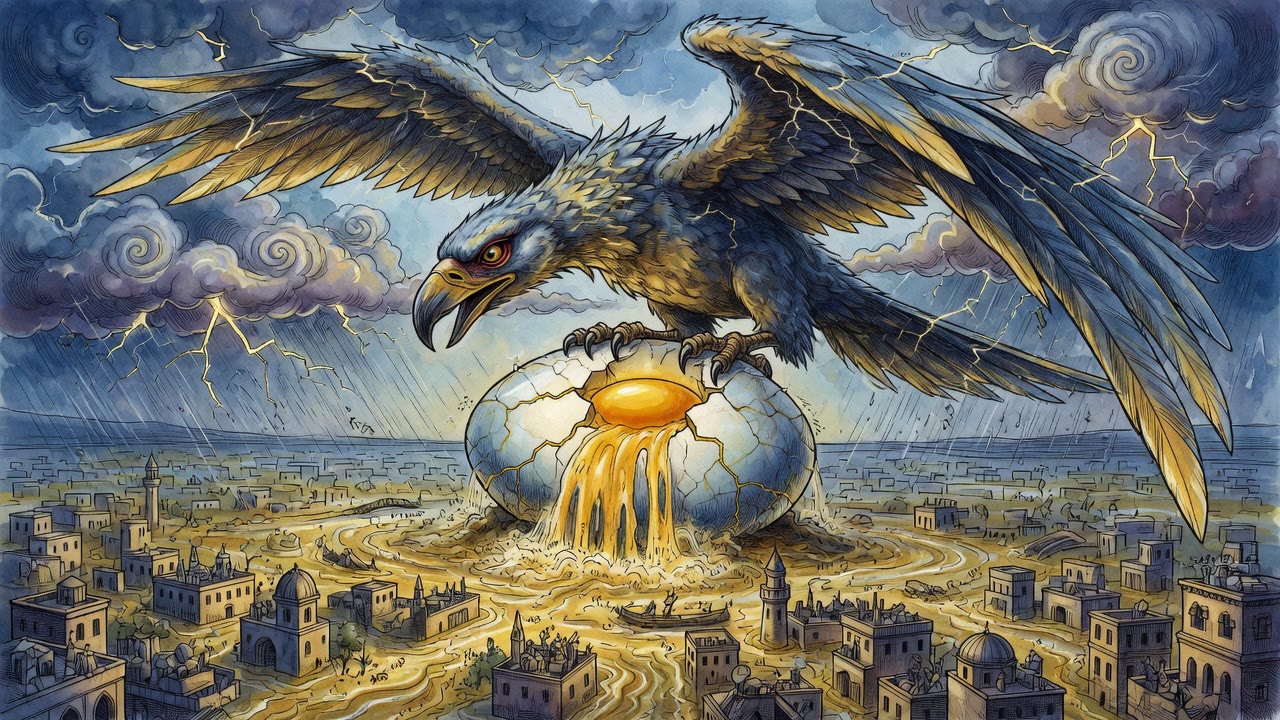
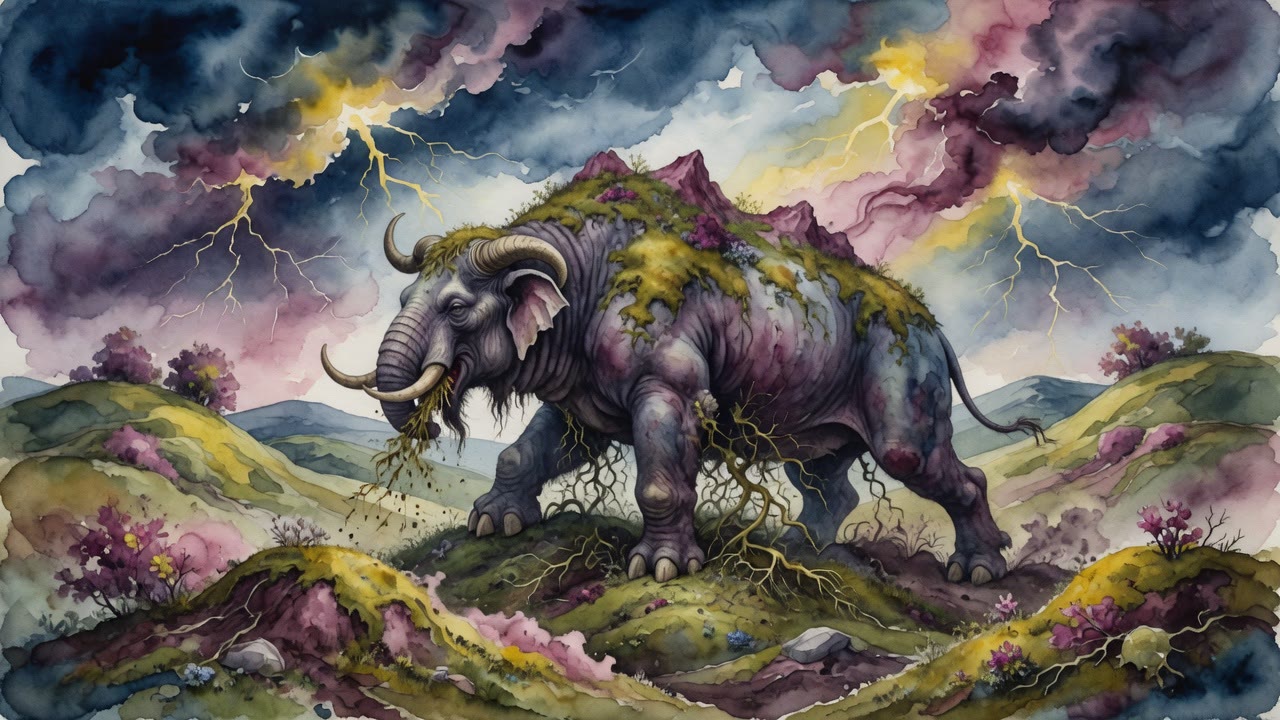
Behemoth, described in (Job 40:15-24), grazes on a thousand mountains every day. The grass regrows each night so there is always enough. Its tail is compared to a cedar tree. According to the Midrash Aggadah (3,763 texts in our database), Behemoth was created male and female just like the Leviathan, and just like the Leviathan, the female was killed to prevent reproduction. The Ziz is less well known but no less enormous. When the Ziz stands in the ocean, the water reaches only to its ankles, and its head touches the sky. Its wingspan is so vast that when spread, it blocks out the sun entirely. The name Ziz comes from the variety of flavors in its flesh, zeh meaning "this", because it tastes like every kind of meat.

Together, these three creatures represent God's total mastery over every domain of the natural world. They are too large for any human to control, too powerful for any army to defeat. Only God can handle them. And in the end, only God will serve them at His table.

The Leviathan in Kabbalah and the Zohar

The kabbalistic tradition (3,260 texts in our database) transforms the Leviathan from a physical monster into a cosmic symbol. The Zohar (composed c. 1280-1290 CE in Castile, Spain, by Rabbi Moshe de Leon, though traditionally attributed to the 2nd-century sage Rabbi Shimon bar Yochai) interprets the Leviathan as a manifestation of the divine attribute of Yesod (Foundation), the ninth sefirah in the kabbalistic tree. The "twisted serpent" of (Isaiah 27:1) is read as a reference to the cosmic forces that channel divine energy through the lower worlds.

The Zohar on Parashat Pinchas elaborates that the slaying of the female Leviathan represents the separation of the cosmic masculine and feminine principles that will only be reunited in the messianic age. The feast of the Leviathan thus becomes not merely a banquet but a symbol of cosmic reunification, the moment when the broken halves of creation are finally made whole. This reading connects the Leviathan directly to the Lurianic concept of tikkun (repair), the idea developed by Rabbi Isaac Luria (1534-1572 CE) in Safed, Galilee, that human actions help gather the scattered sparks of holiness and restore the universe to its intended state.

The Leviathan, in this framework, is not just a monster. It is a symbol of everything that was broken at creation and everything that will be restored at the end. Its death was the first sacrifice. Its consumption will be the last meal. And between those two moments stretches all of human history, lived in the shadow of a creature so vast that all the water in the world flows through its gills.

Explore Leviathan Texts

Our database contains over 18,000 ancient Jewish texts, with dozens related to the Leviathan and the primordial beasts. Start with The Fifth Day from Legends of the Jews for the creation account, then explore Behemoth, The Ziz, and The Messianic Banquet from our collection. Search for all Leviathan texts to trace this creature across the full span of Jewish literature, from the Hebrew Bible through the Talmud, Midrash, and Kabbalah.

← All myths