Why Every Tree in Creation Competed to Hang Haman
Haman told the king that God was asleep. That same night every tree in creation stepped forward, arguing over who would hang him.
Table of Contents
Haman stood before Ahasuerus and made God sound tired. "There is one people," he said. Scattered. Different laws. Not worth keeping. In his mouth the Hebrew word for "there is" bent toward "He is asleep." The Holy One, Haman implied, had closed His eyes on this people, and a king could finish the work.
 Click for full size
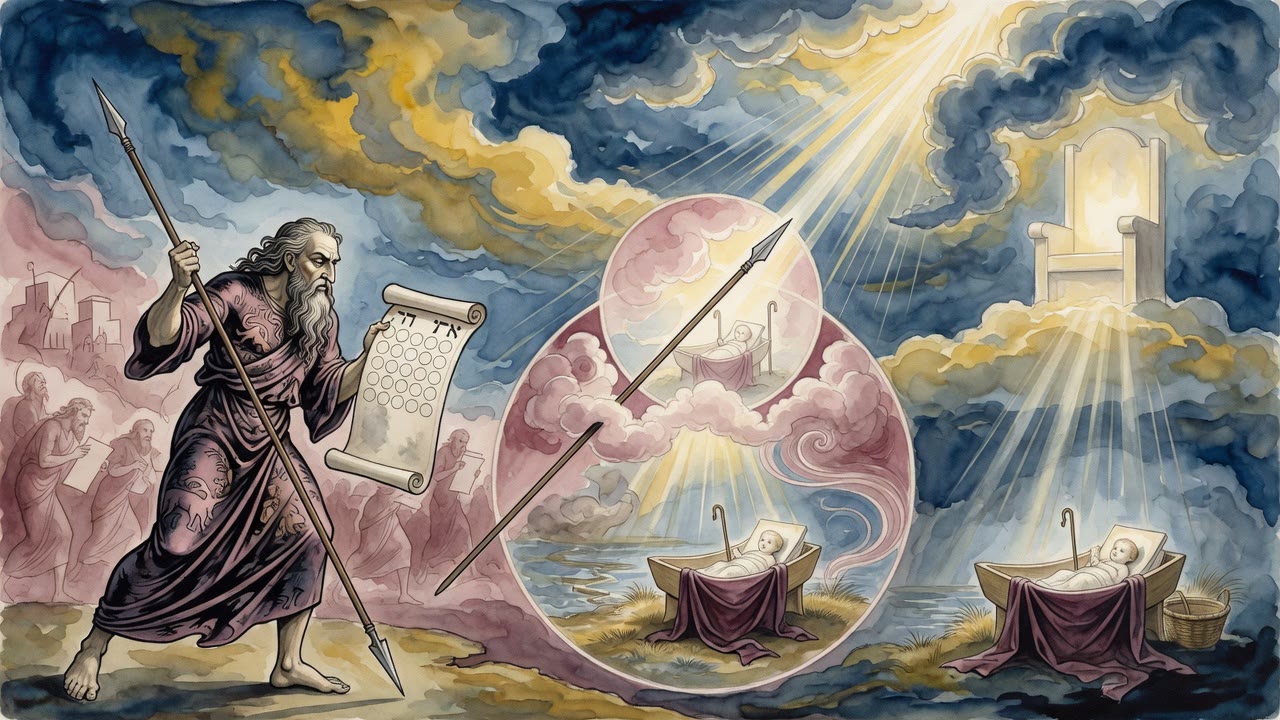
God answered him from above the court. "There is no sleep before Me. The guardian of Israel neither slumbers nor sleeps" (Psalms 121:4). By Haman's life, God would wake against that man and wipe him from the world.
Michael Spoke for the Accused
Below, Haman piled the charges. Their teeth are big, he said. They eat and drink and call it delight in Shabbat, delight in the festivals. Once in seven days a rest. Once in thirty a new moon. Passover, Shavuot, Rosh Hashanah, the great fast, Sukkot. They treat the king's days with contempt. They keep neither calends nor the rest of the palace calendar.
Ahasuerus said they were commanded in their Torah. Haman pressed anyway. It is not worthwhile for the king to tolerate them.
Above, the angel Michael stood and answered every line. "Master of the universe, they are not being denounced for idol worship, or for bloodshed. They are being denounced for keeping Your laws." God said He had not forsaken them and would not. The world cannot stand without Israel. Haman's ten thousand talents of silver, offered to buy a people, counted as scorn in that court.
The Trees Stepped Forward
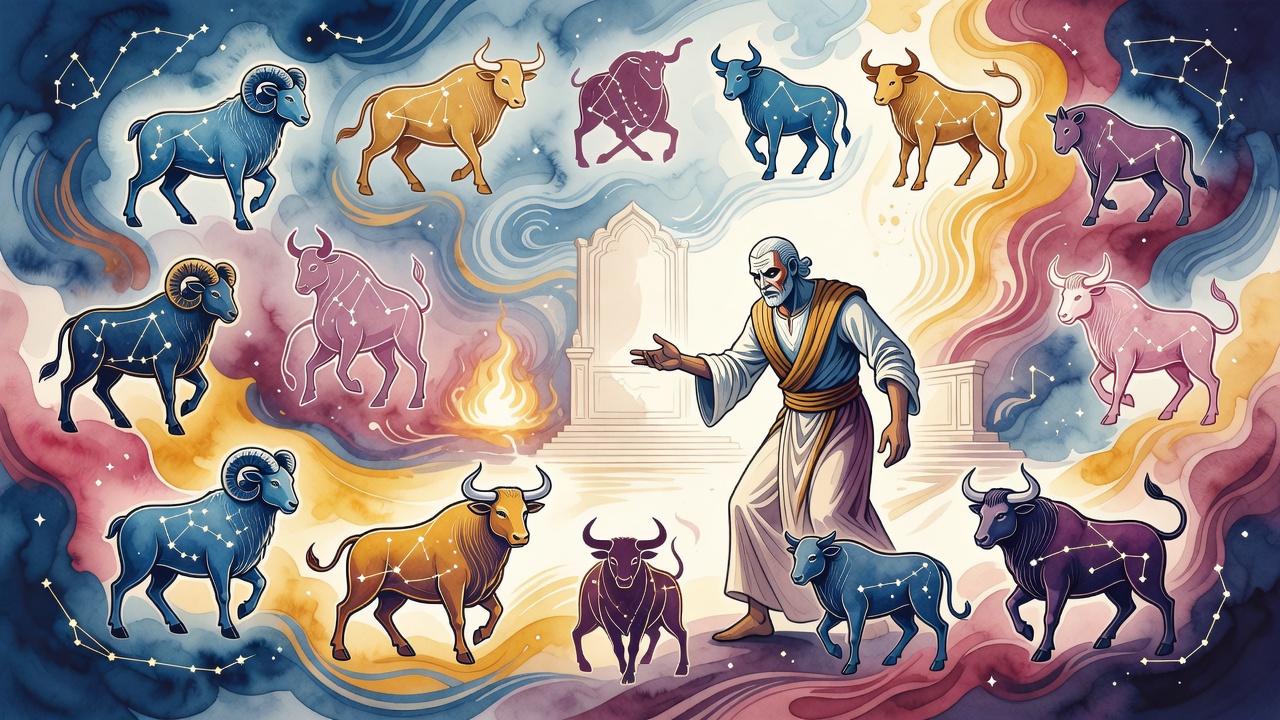
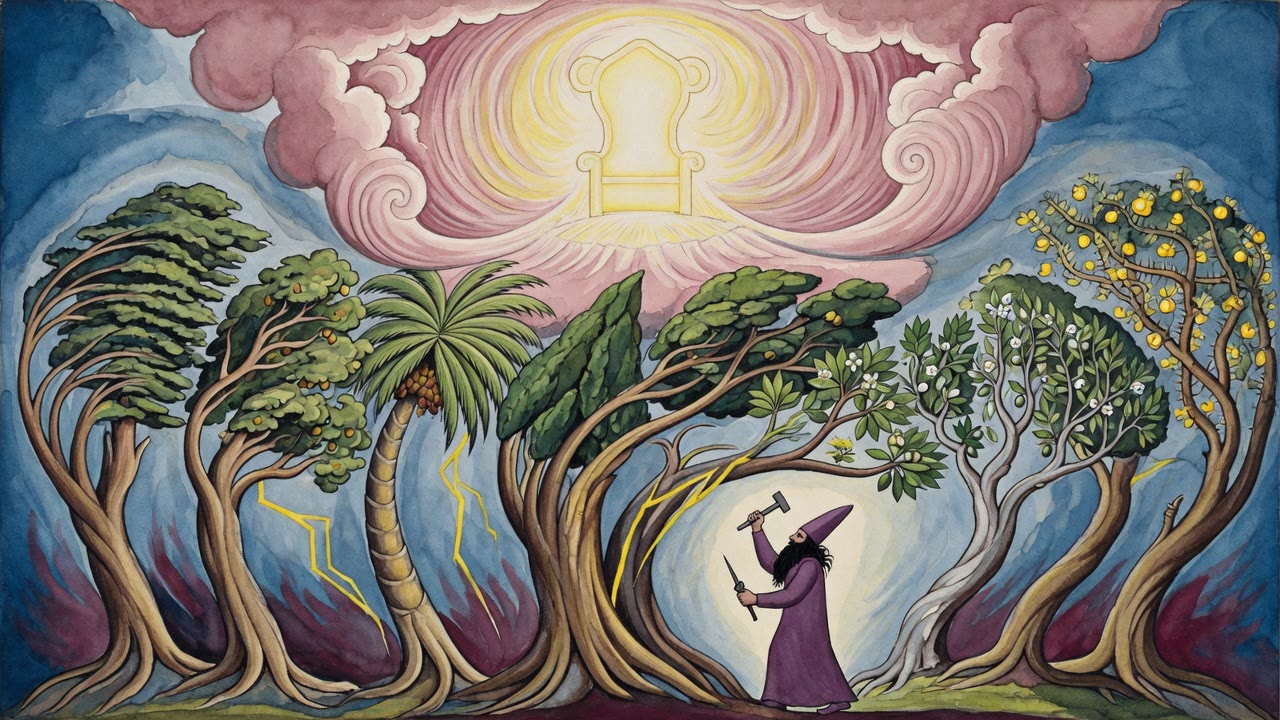
God then called the trees of creation and asked which one would serve as the wood of Haman's hanging. They all volunteered.
The vine came first. "I produce wine for sacred cups. Hang him from me." The fig said its fruit had given sweetness in the garden. The olive offered oil for the menorah. The cedar said it had been cut for the Temple and its lumber was worthy of this work. Each tree made its case from its own history of service. The air of heaven filled with wood arguing for the honor of a corpse.
God did not give the job to the vine or the fig or the cedar. He pointed at a beam already sitting in Haman's own yard. That tree had been taken from the House of the Forest of Lebanon, from the precinct of the Holy of Holies, and hauled into a Persian courtyard. Stolen Temple wood would hold the man who had tried to buy a nation.
Zeresh Said Build It Tonight
Haman had not gone to any forest. He had gone home in a rage because Mordecai still would not bow. He called his wife Zeresh and his friends and counted his wealth and his sons and his hatred. Zeresh and the astrologers warned him. "Have you not heard what happened to Pharaoh? If Mordecai, before whom you have begun to fall, is of the seed of the Jews, you shall not prevail against him" (Esther 6:13).
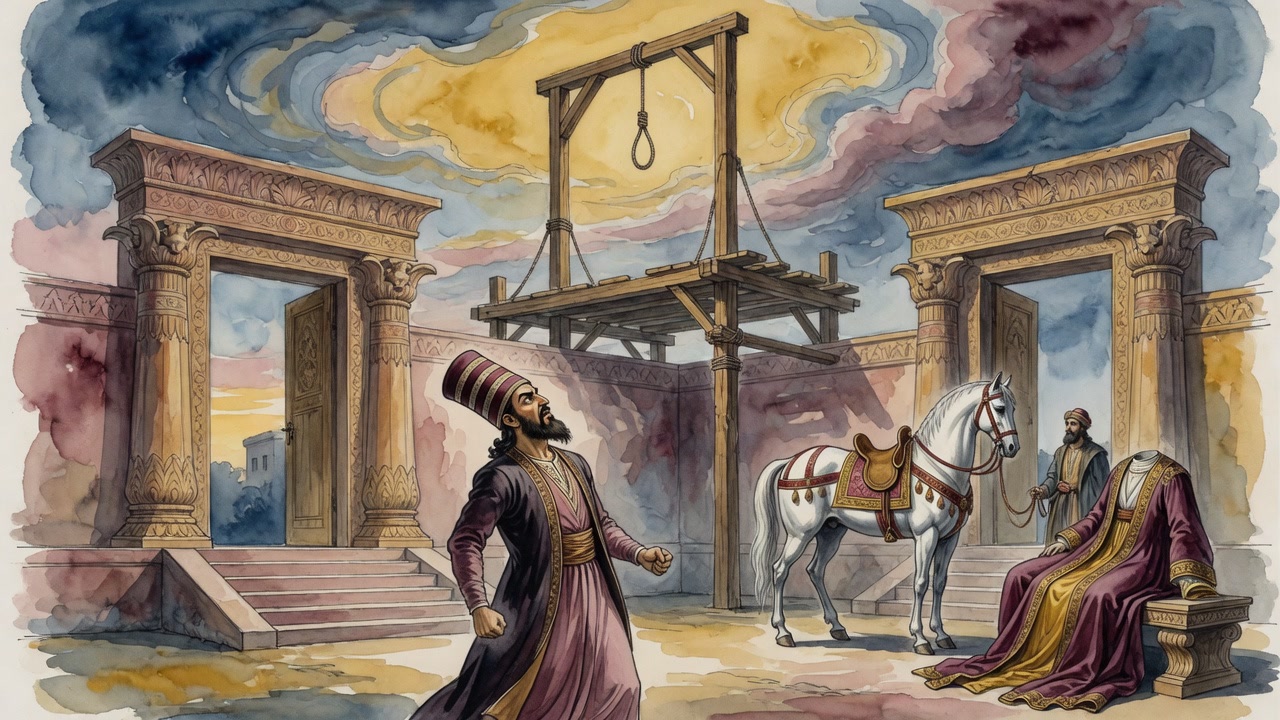
Then they told him to build anyway. Raise a gallows fifty cubits high tonight. Ask the king for Mordecai's death in the morning. Haman took the beam that was already his and built in the dark. The gallows stood over Susa before dawn, a monument to the certainty of what he intended.
The King Could Not Sleep
That same night Ahasuerus could not sleep. God, who does not slumber, kept the king's eyes open. The records were brought. A servant read the old plot of Bigthan and Teresh, the chamberlains who had meant to take the king's head. Mordecai had overheard them at the gate and told Esther, and Esther had told the king. Ahasuerus asked what honor had been done for that man. The answer came back: nothing.
Haman arrived at first light to ask for a death. He walked into a question about honor instead. The king told him to dress Mordecai and lead him through the city. The gallows waited in Haman's courtyard all that day, built and idle, holding no one yet.
Elijah Named the Tree
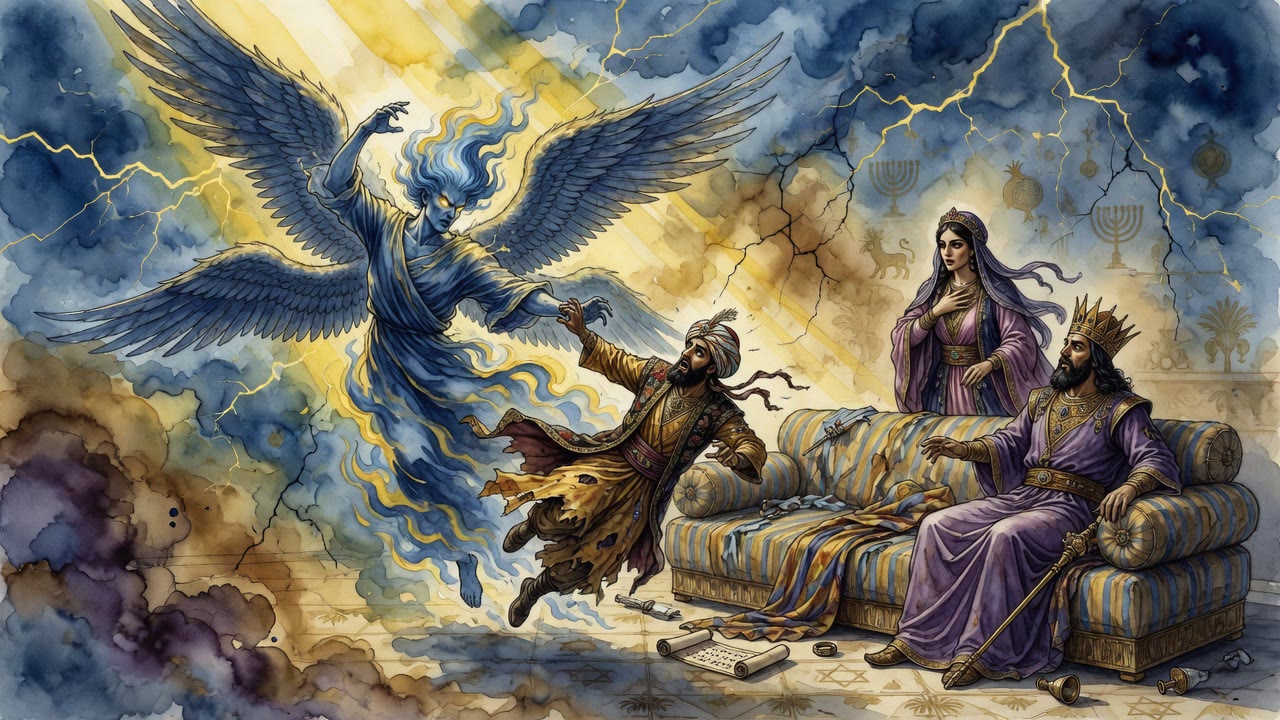
At the banquet Esther pointed. "An adversary and an enemy, even this wicked Haman" (Esther 7:6). The king rose in wrath and went into the garden. The angel Michael cut down the plants there while he walked, a destruction in miniature. When the king came back, Michael lifted Haman from where he had fallen on the queen, and the king read assault in the scene.
Then Elijah, standing in the room as the chamberlain Harbonah, named the tree. A massive beam in Haman's house. Taken from the Holy of Holies. Ready. "They hanged Haman on the gallows that he had prepared for Mordecai" (Esther 7:10).
The trees had volunteered. The stolen Temple wood had taken the work. Haman's own yard held him at last, fifty cubits up, where all of Susa could see who had built the thing.
← All myths