Sodom Burned at the Hour When Both Sun and Moon Were Watching
A girl in Admah gave a stranger bread and water at his request. The town smeared her with honey and left her out where the bees would find her.
Table of Contents
 Click for full size
The Girl Who Gave a Stranger Bread
A traveler came into Admah meaning to sleep one night and move on in the morning.
He asked for something to eat and drink. The daughter of one of the rich men of the town brought him water and brought him bread and handed both to him, and that was the whole of what she did.
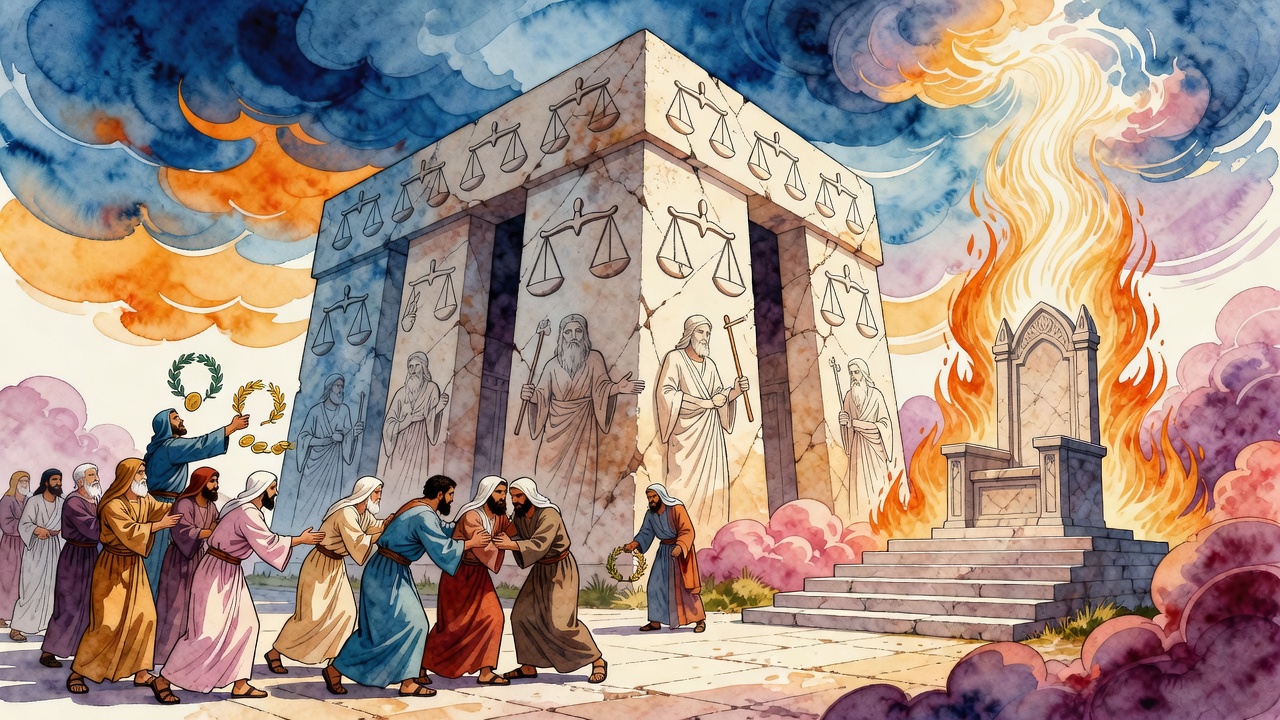
The town found out. They took hold of her and marched her in front of the judge, and the judge heard the charge and sentenced her to death for it.
They did not use a rope or a stone. They took honey and smeared her with it from the crown of her head to the soles of her feet, and then they carried her out and laid her down in the open where the bees would come to the smell. The bees came. She screamed for a long time, and the people of Admah stood there and listened to her scream and went on with their day.
That is when God settled on destroying them.
The Angels Took All Afternoon
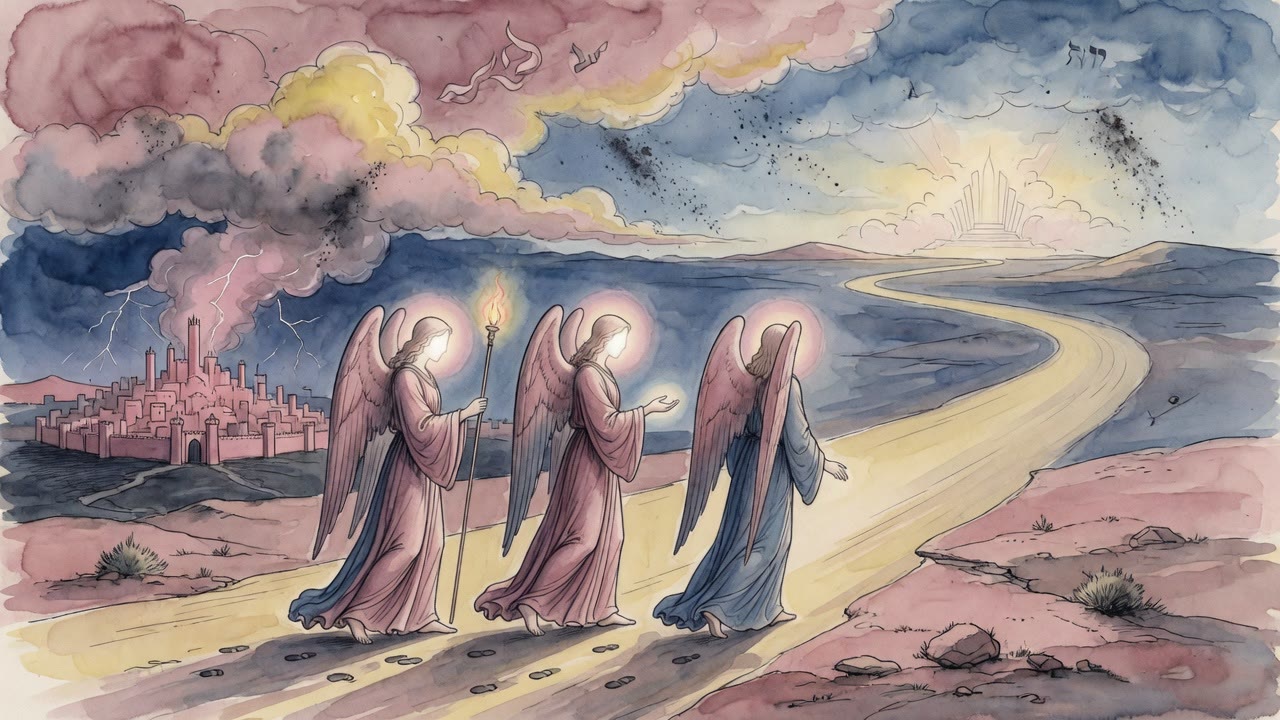
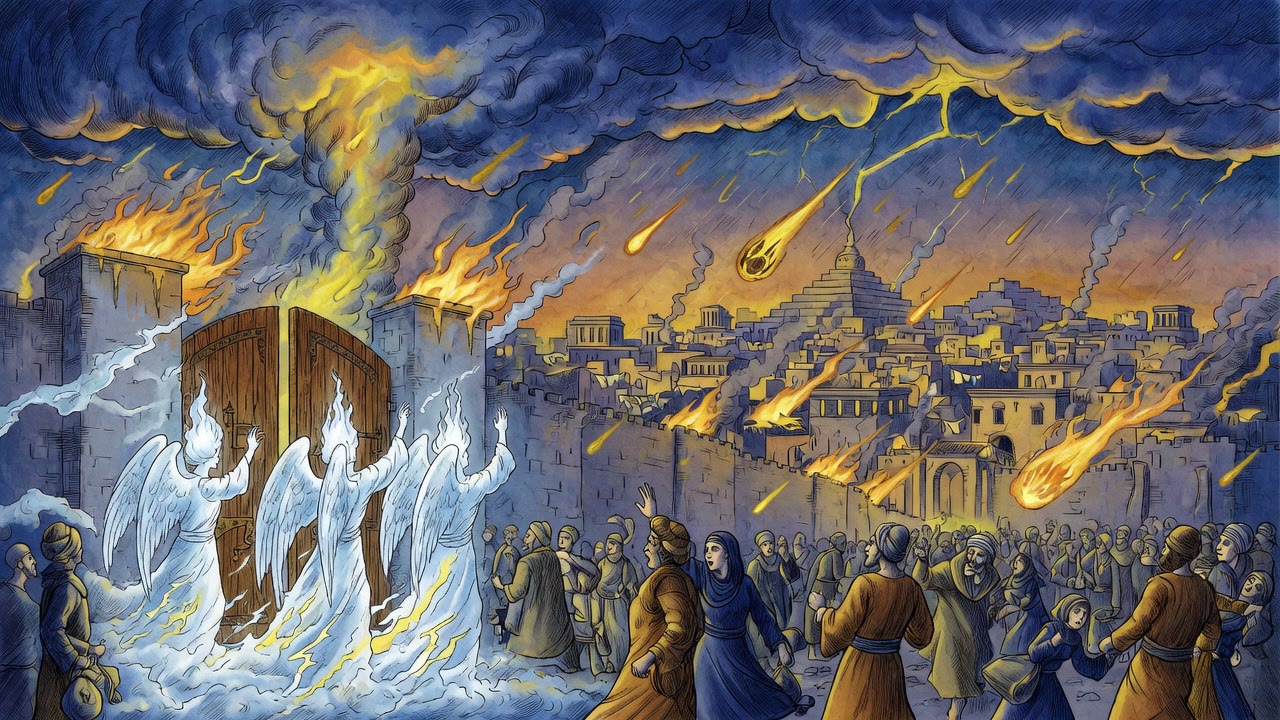
Two angels left Abraham's tent at noon with the sentence to carry out, and the road to Sodom is not a day's walk.
They arrived at the approach of evening.
Angels ordinarily cross the distance like lightning going down. These were angels of mercy, and they had been handed a demolition order, and they dragged every step of it out as long as they could, still expecting word that the thing had been called off. No word came.
With nightfall the case closed and the sentence became final, and only then did they walk in through the gate.
Lot Brought Them Home the Long Way
Lot had grown up in Abraham's house and had learned there what to do when a stranger turns up at dusk with nowhere to sleep. He saw two travelers standing in the square and told them to come home with him and stay the night.
Feeding a stranger in Sodom carried the death penalty. Lot knew the law he was breaking, and he knew what the town had already done to a girl in Admah over a cup of water.
So he waited for full dark before he made the offer, and when they accepted he did not walk them down the main road. He took them through side lanes and back turnings, doubling around, keeping them off the streets where anyone was still awake, and got the two of them through his own door without one neighbor seeing.
The One Hour Nobody Could Argue With
There were sun worshippers in those cities and there were moon worshippers, and God had thought about both of them.
"If I destroy them by day, the moon worshippers will say, if the moon had been here she would have proved herself our savior. And if I destroy them by night, the sun worshippers will say, if the sun had been here he would have proved himself our savior."
So the hour was chosen and set. The sixteenth of Nisan, at dawn, when the moon has not yet gone down and the sun is already up, and the two of them are up there watching at the same time with nothing to do.
No survivor would be able to say his god had stepped out.
Dawn Over the Plain
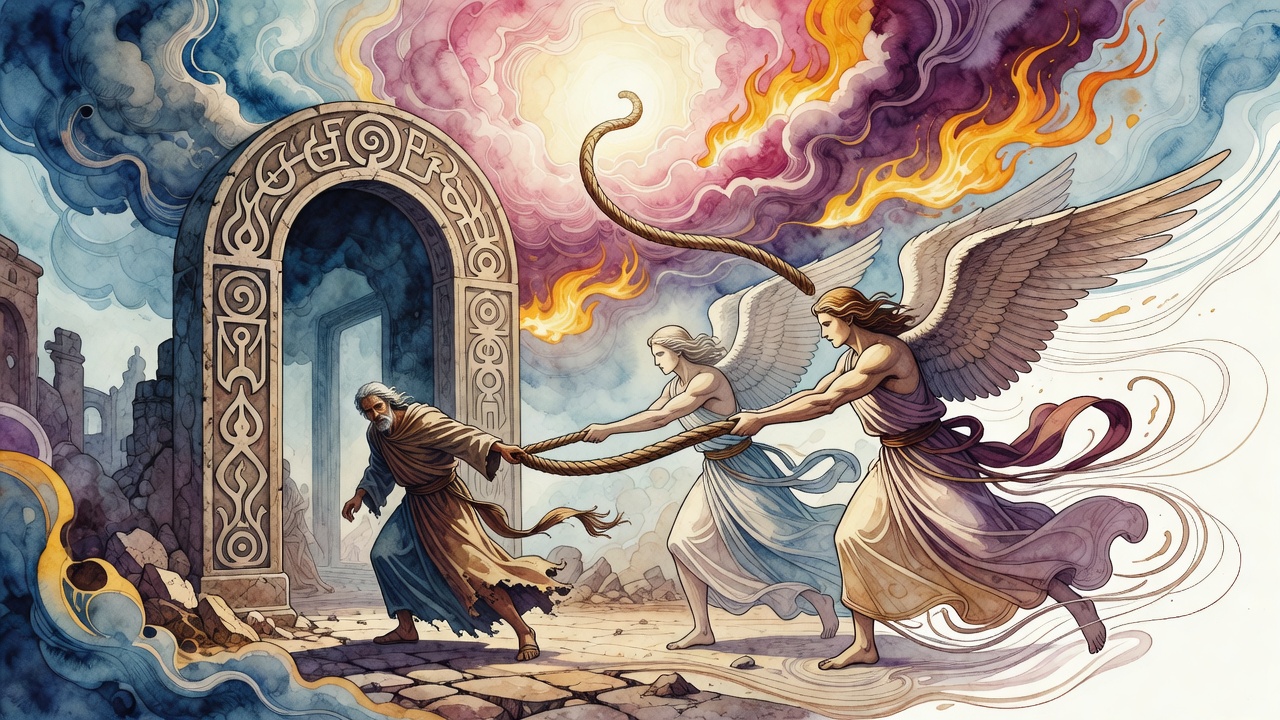
They spent the night getting Lot's household out, and it took work. He argued. He lingered. Hands closed around his wrist and pulled.
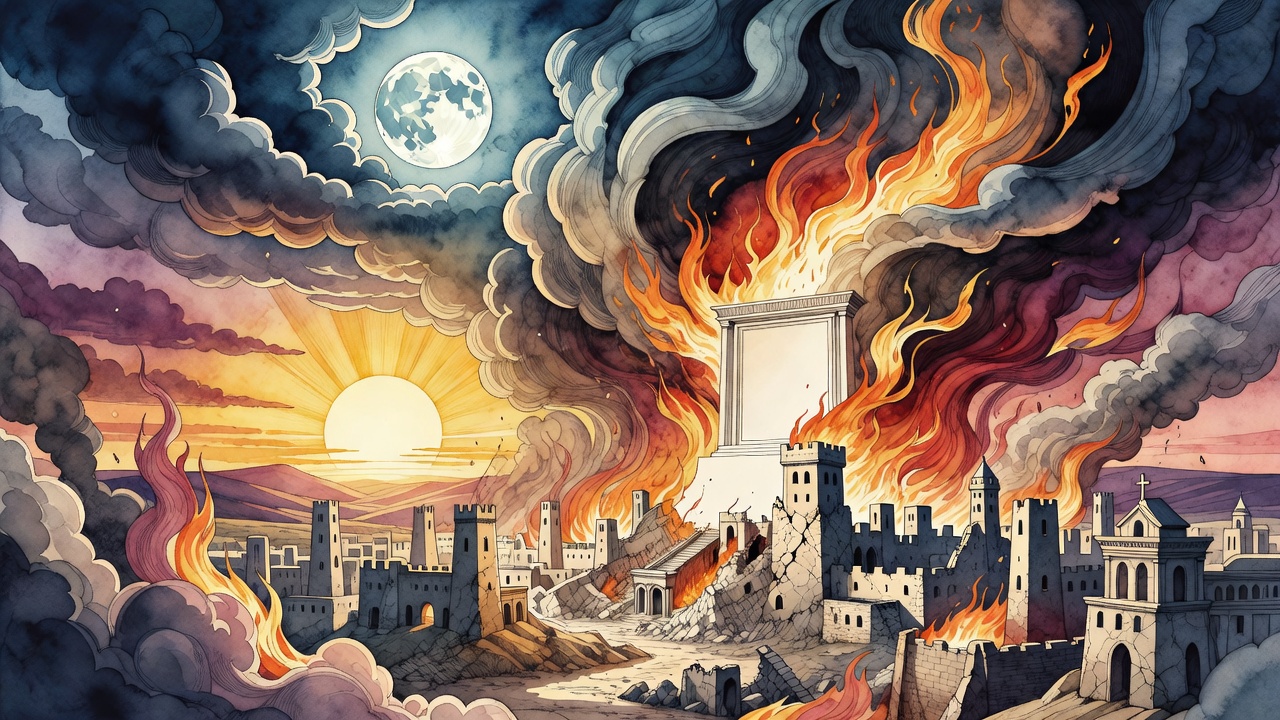
The sun came up over the land as he reached Zoar, and the moon was still there in the west, pale and finished. Both of them watched.
The fire came down between them and Sodom burned. It came down on Sodom and on Gomorrah and on Admah, on the square where the traveler had asked for bread, on the bench where the judge had passed his sentence, and on the house of the rich man whose daughter had gone out with a cup of water in her hand.
← All myths