God Heard Ishmael Cry and Opened Hagar's Eyes to a Well
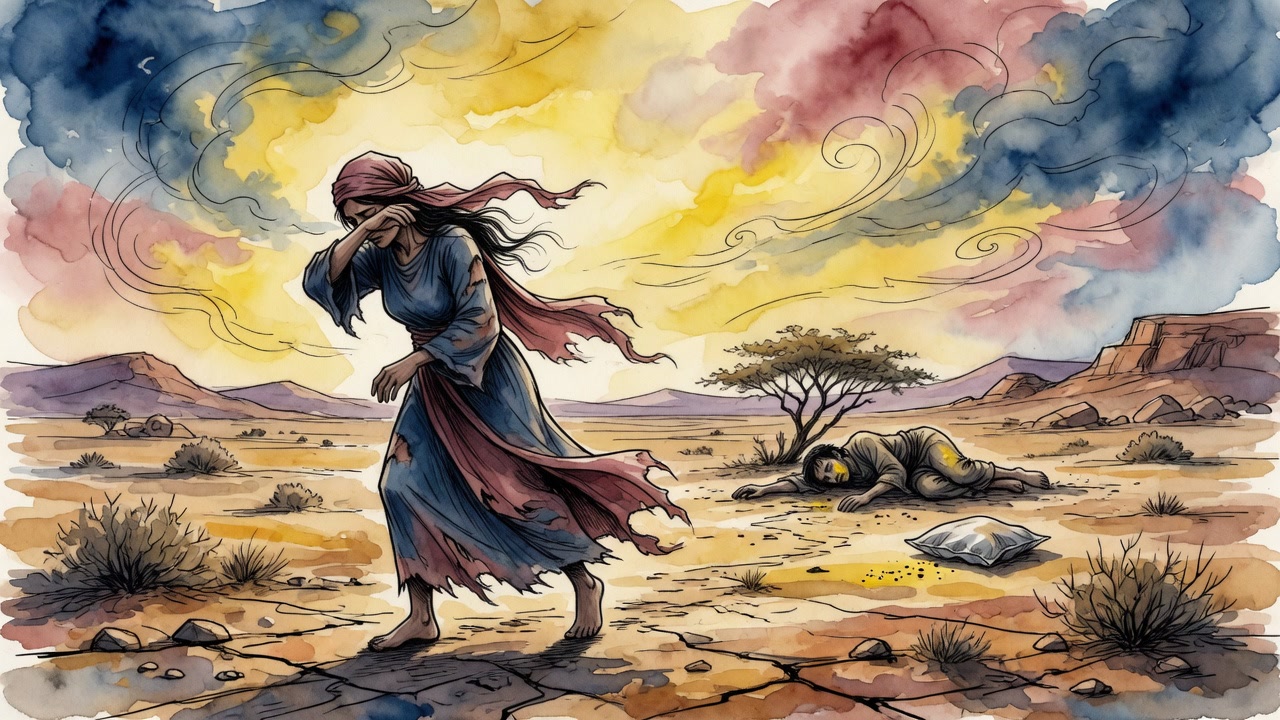
Their water skin was empty in the wilderness. Hagar sat Ishmael under a shrub and went off, because she could not watch the boy die.
Table of Contents
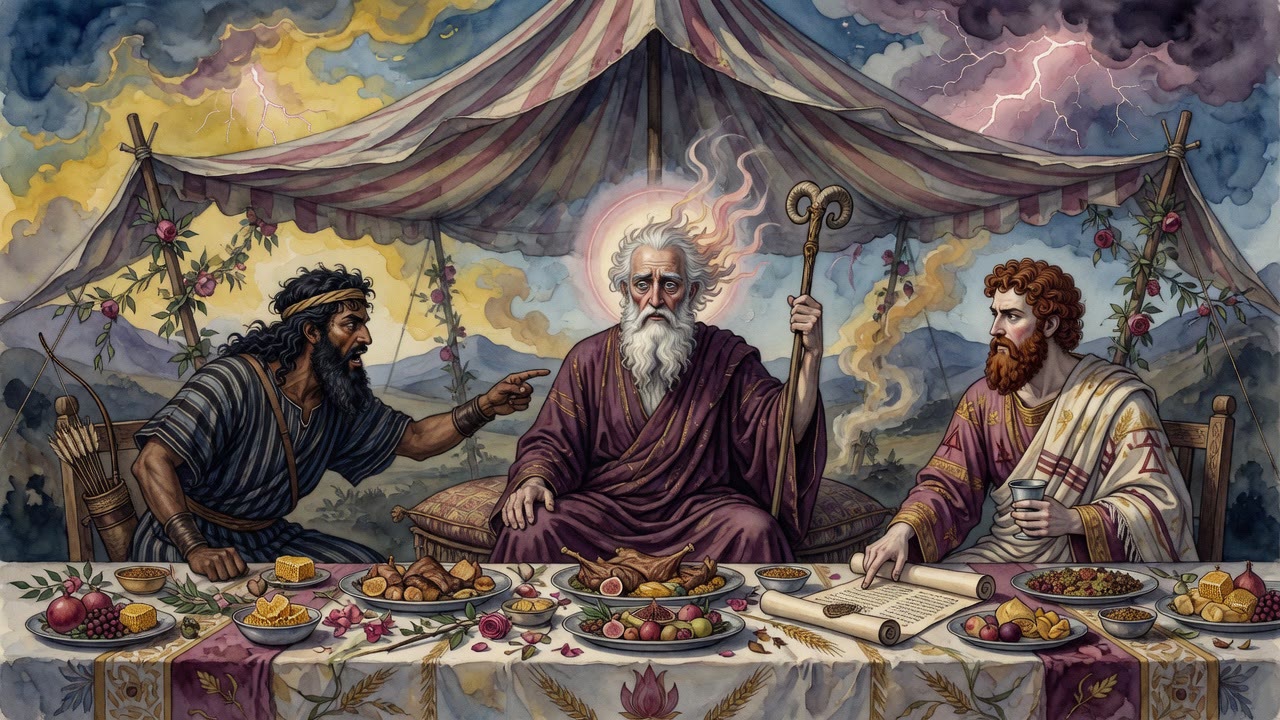
Abraham looked at Ishmael and rejoiced. He had not died childless. Two sons stood in the camp. He blessed the Creator with all his mouth.
 Click for full size
Sarah saw Ishmael playing and dancing, and Abraham's face open over him, and jealousy rose in her.
Get This Bondwoman Out
She went to Abraham. Get this bondwoman and her son out of the house. Ishmael was before Abraham's face in his place, the firstborn, the boy Abraham had already circumcised on the same day he circumcised himself. Sarah would not share the tent with that.
Abraham resisted. Distress sat on him that morning in a way that went past ordinary parting. He loved Ishmael. God's word to him was not that Ishmael did not matter. It was that the covenant line ran through Isaac. Through Isaac, descendants will be called for you (Genesis 21:12). The line was narrow. Abraham's love was not. The two facts did not resolve into each other.
God had already said it once, when He left off speaking and went up from Abraham: My covenant shall I establish with Isaac, whom Sarah will bear to you. Abraham had still taken Ishmael and every male of the house and cut the covenant into their flesh the same day. Obedience had not been a choice between the boys. Sending one of them away was.
Hagar Set the Boy Down
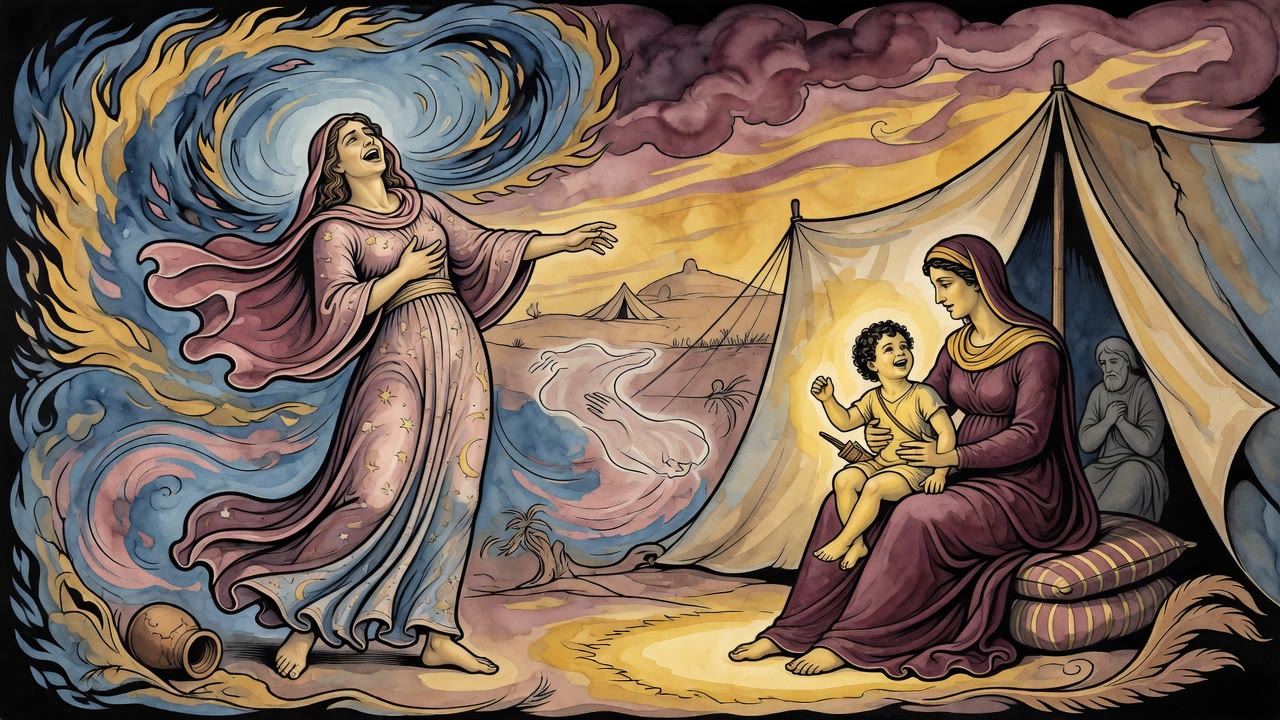
Hagar and Ishmael walked into a desolate stretch with no visible water. The skin ran empty. The boy was dying. Hagar sat him under a shrub and went off, because she could not watch him die.
She moved far enough that the sound would have to travel. A cry without words. A sound below speech. She would not turn her face toward it.
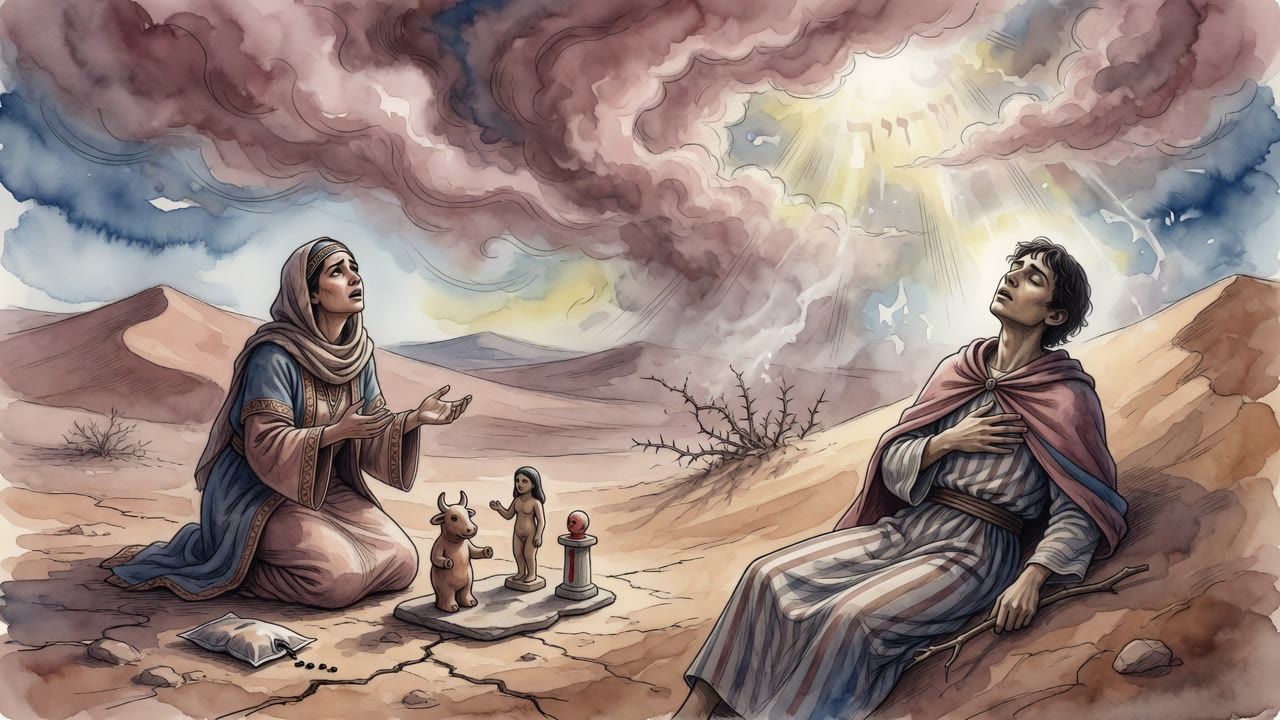
The Torah does not say God heard her prayer, though she was the one who had walked away. God heard the boy.
God Opened Her Eyes
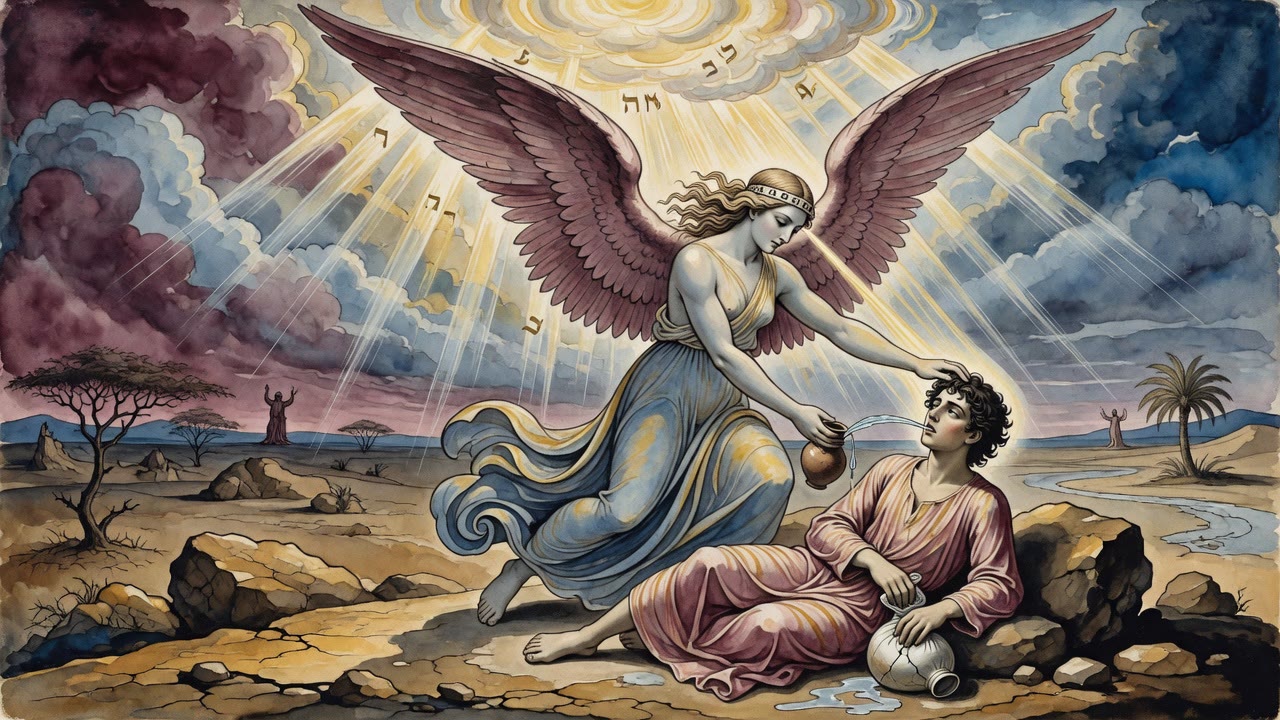
God opened Hagar's eyes to a well of water. She went and filled the skin and gave the boy drink.
God was with the boy, and he grew (Genesis 21:20). The Hebrew is matter-of-fact. God accompanied him. He became a skilled archer in the wilderness of Paran. He took an Egyptian wife. His mother chose her for him.
He was not punished. He was not abandoned. He was not cursed. And he was not chosen. Both things held. The well was real. The covenant still ran through the other tent.
An Angel Walked With Him
Over the nations God placed spirits in authority. Over Israel He appointed no angel and no spirit. He alone is their ruler. For Ishmael, his sons, his brothers, and Esau, God did not cause them to approach Him, and He chose them not, because they are the children of Abraham, because He knew them. He chose Israel as His people.
An angel stayed with Ishmael as he grew. The boy who had cried under a shrub now walked with a messenger at his side, and God still did not draw him into the nearness He kept for Isaac's line. The content of care was similar. The proximity was not. Ishmael heard heaven through a go-between. Isaac's house would hear without one.
That is not the same as God liking one son and discarding the other. Abraham had rejoiced over both. God had heard the discarded one when the water ran out. The structure of the relationship was the difference, and it did not cancel the well.
Hell Already Waited on the Left
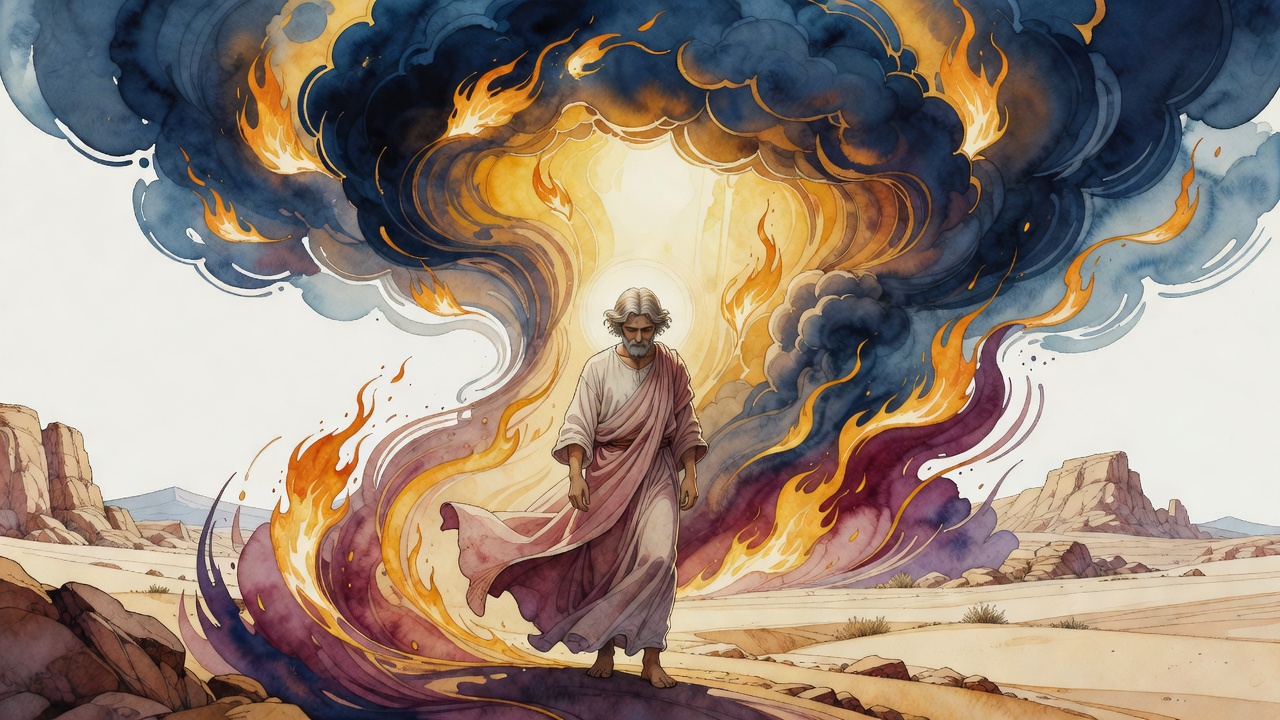
Abraham did not sleep the night they left. Two thousand years before heaven and earth, seven things had already been made: the Torah written with black fire on white fire, lying in the lap of God; the Throne; Paradise on His right; Hell on His left; the Sanctuary; the name of the Messiah on a jewel; a Voice that cries, Return, ye children of men.
Darkness was not an empty gap waiting for light. "I form light and create darkness," God said (Isaiah 45:7). Forming is a craftsman's verb. Creating is a verb for what was not there. Darkness had a nature. Nations under angels had a nature. Ishmael's line, outside the covenant's direct channel, had a place that was not the negation of Isaac's place.
The boy whose cry God heard was inside the world God made, loved, accompanied as he grew. He was not inside the covenant's narrow channel. Ishmael received the world. Isaac received the covenant. God was with both of them. The two things were not the same.
← All myths