Noah Built His Altar on Dry Ground Before the Covenant
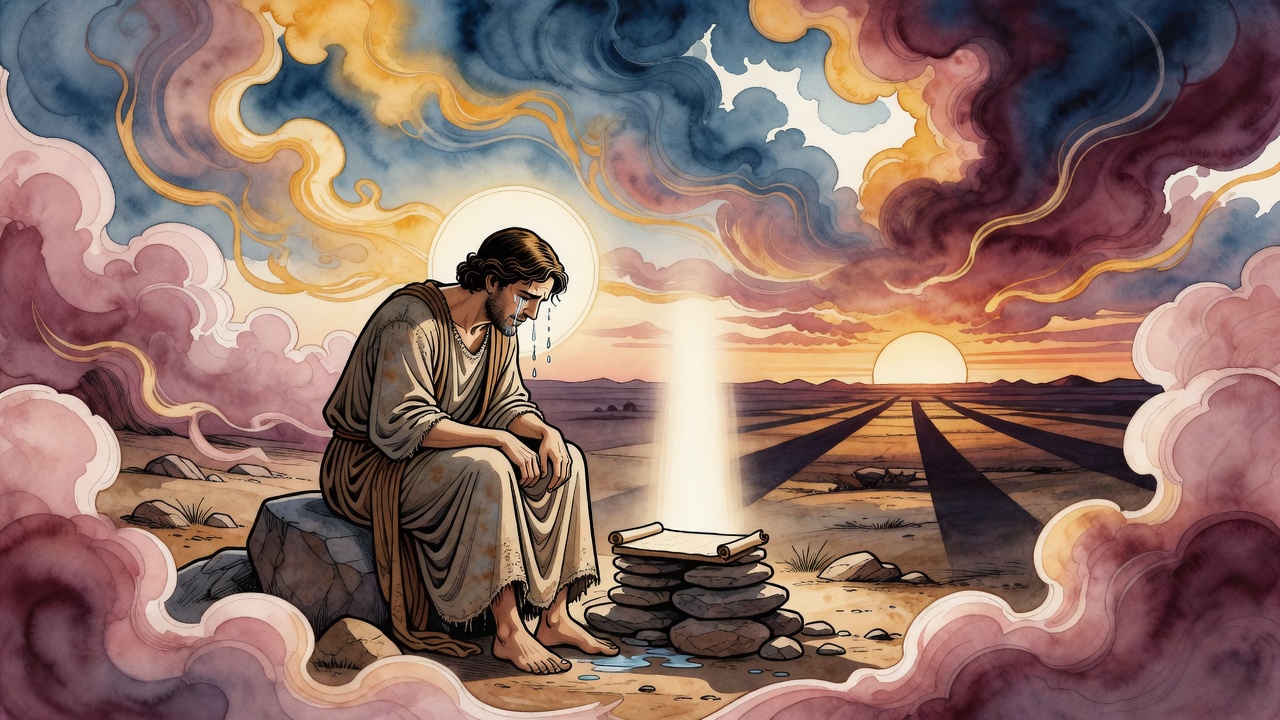
The ark door opened onto mud. Noah stacked stones before he pitched a tent. He burned clean birds, and the smell went up with no rainbow yet.
Table of Contents
 Click for full size
The Door Gave Onto Mud
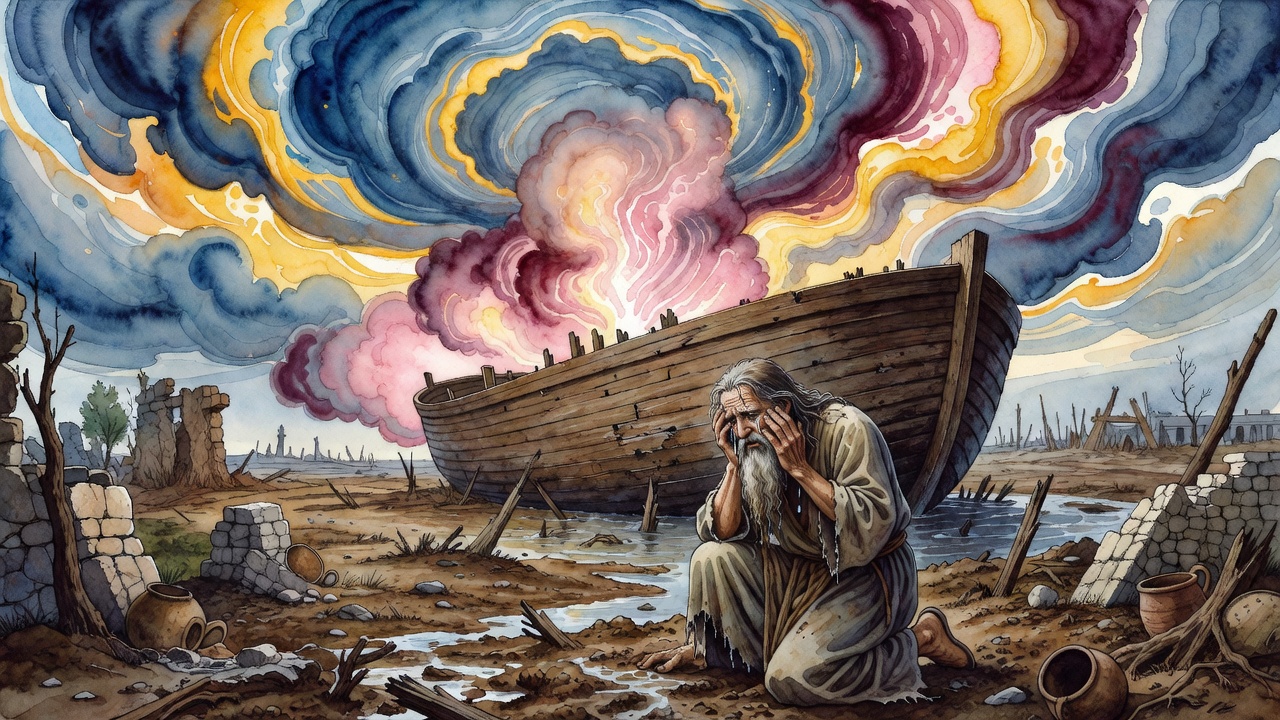
Noah stood in the ark's doorway and pushed. The wood had swollen from a year of water. It gave with a crack. Light hit his face hard enough to make him shut his eyes. When he opened them the world was brown. Mud. Stumps. A hill that had been ocean a week ago.
Behind him his wife waited. His three sons. Their wives. Animals shifting in the dark, smelling earth for the first time since the rain began. He did not look back. He stepped down. The mud took his heel and held it.
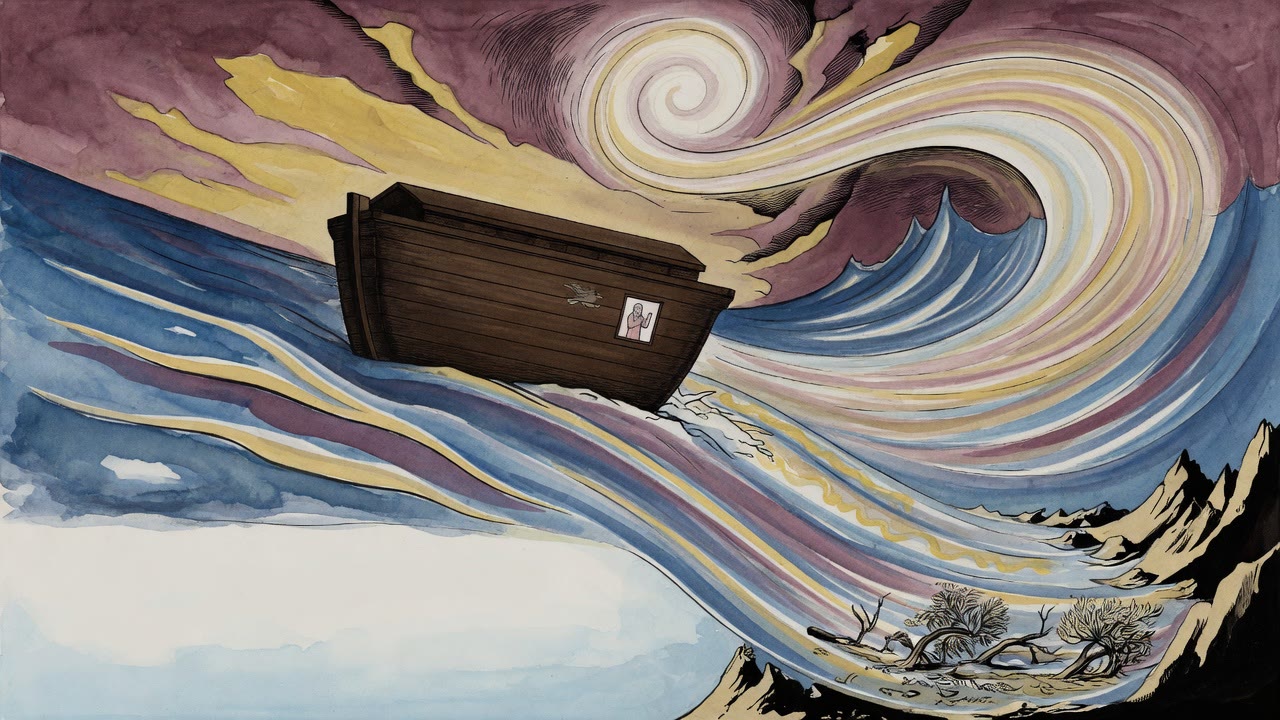
He had been six hundred years old when the windows of heaven opened. He was six hundred and one when they closed. The raven had gone and not come back. The dove had come back with an olive leaf, then gone and stayed gone. Dry ground was supposed to feel like mercy. It felt like a field of graves with no names.
"Father," Shem said. "The tent."
Noah shook his head. Not yet.
Stones Before a Tent
He walked until he found stones the flood had not rolled smooth, and he carried them in his arms. He stacked them. An altar. The first thing the new earth received from his hands was a place to burn.
He took of the clean cattle and of the clean birds, the ones he had kept alive on purpose, and he set them on the wood. Eight people on a wet hill, and he was spending meat. His sons did not stop him. There was no command in his ear. No angel. No voice from the cloud telling him the hour had come to give thanks. He built the fire because the ground was there and he was still on it.
The name in his mouth was God. Elohim (אלהים), the Maker of waters and of dry, the judge of all flesh. He had not been given a people. He had not been given a land. He had not been given the four-letter Name as a private bond. He thanked the One who makes worlds, because a world was what he had just been handed back, empty and dripping.
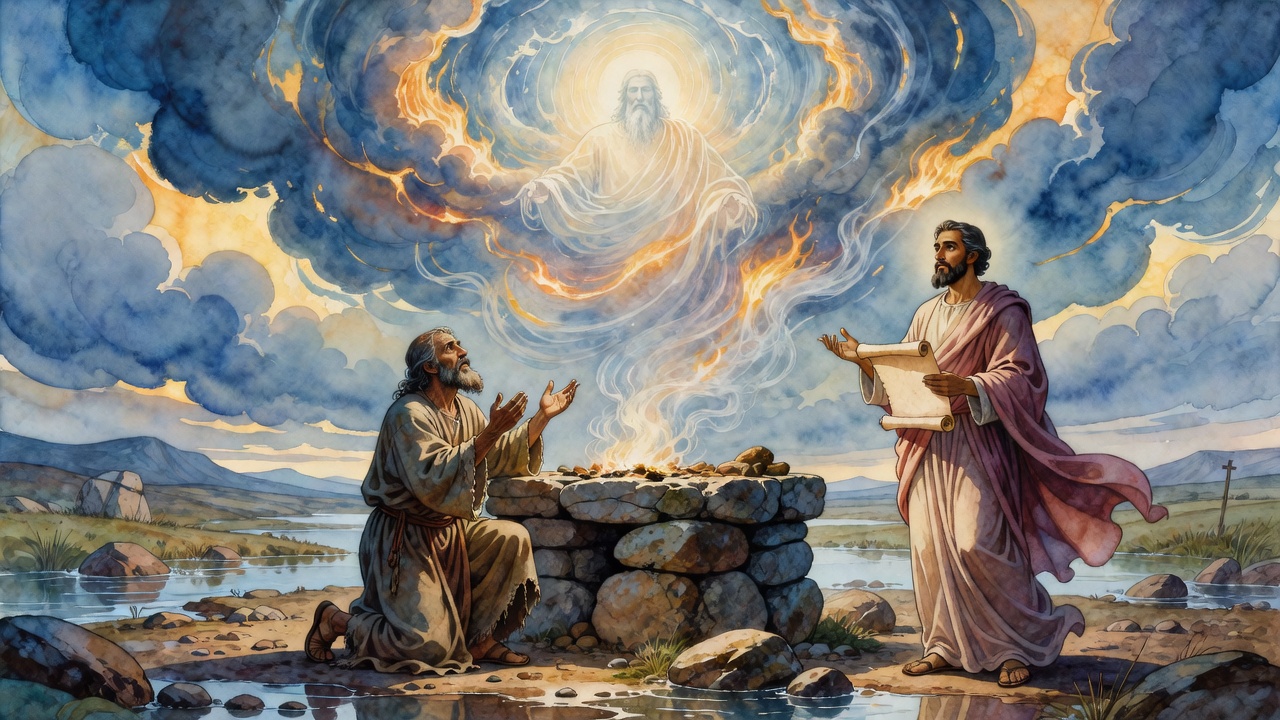
He knelt. He refused to wait for a better word. He called the Name he had, and he lit the wood.
The Smell That Stopped a Curse
Smoke went up. Fat popped. A bird's wing curled in the heat. The smell of it rose off the wet hill, and God smelled the pleasing aroma and said in His heart that He would never again curse the ground for humanity's sake, even though the thoughts of the human heart run to evil from youth (Genesis 8:21).
The vow happened inside God before it happened in the sky. No rainbow yet. No bow set in the cloud. No words spoken to Noah about seasons and seedtime. The thank-you went up first. The promise came down after.
Noah stood in the smoke with his sleeves wet and did not know he had just been answered. He knew the animals were gone into fire. He knew the hill still smelled of flood. He wiped his hands on his robe and looked for a place to sleep.
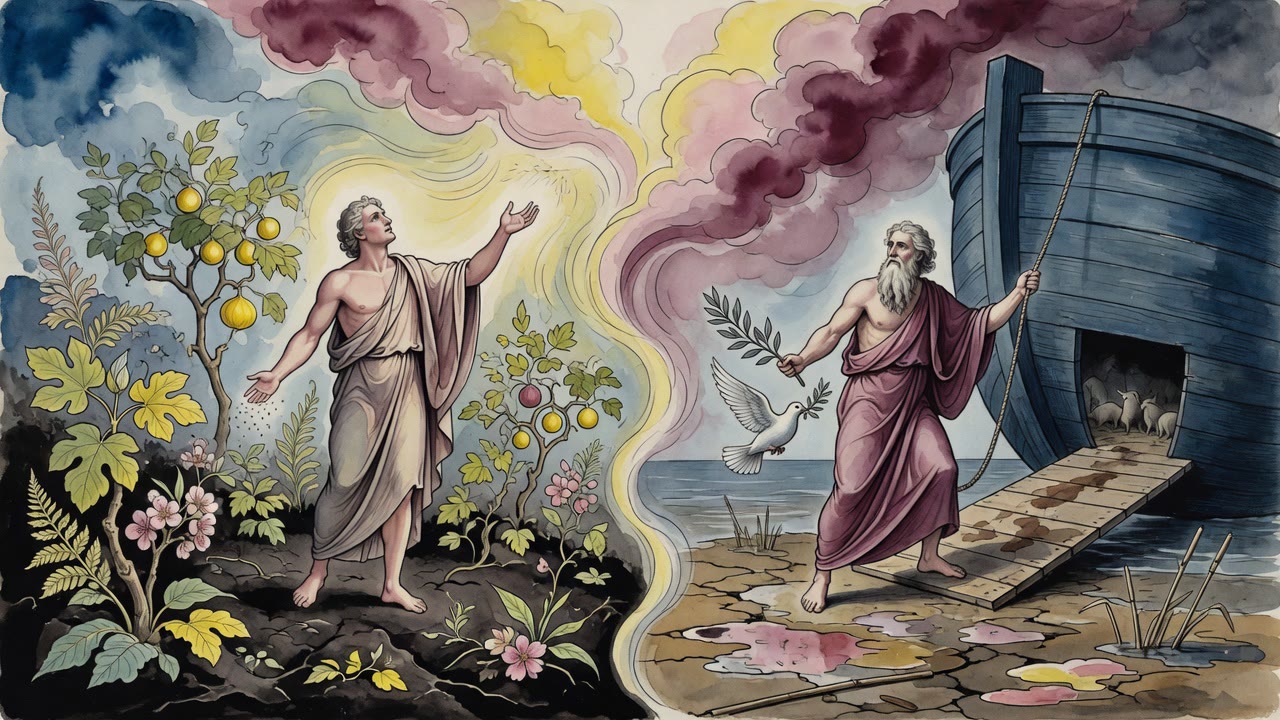
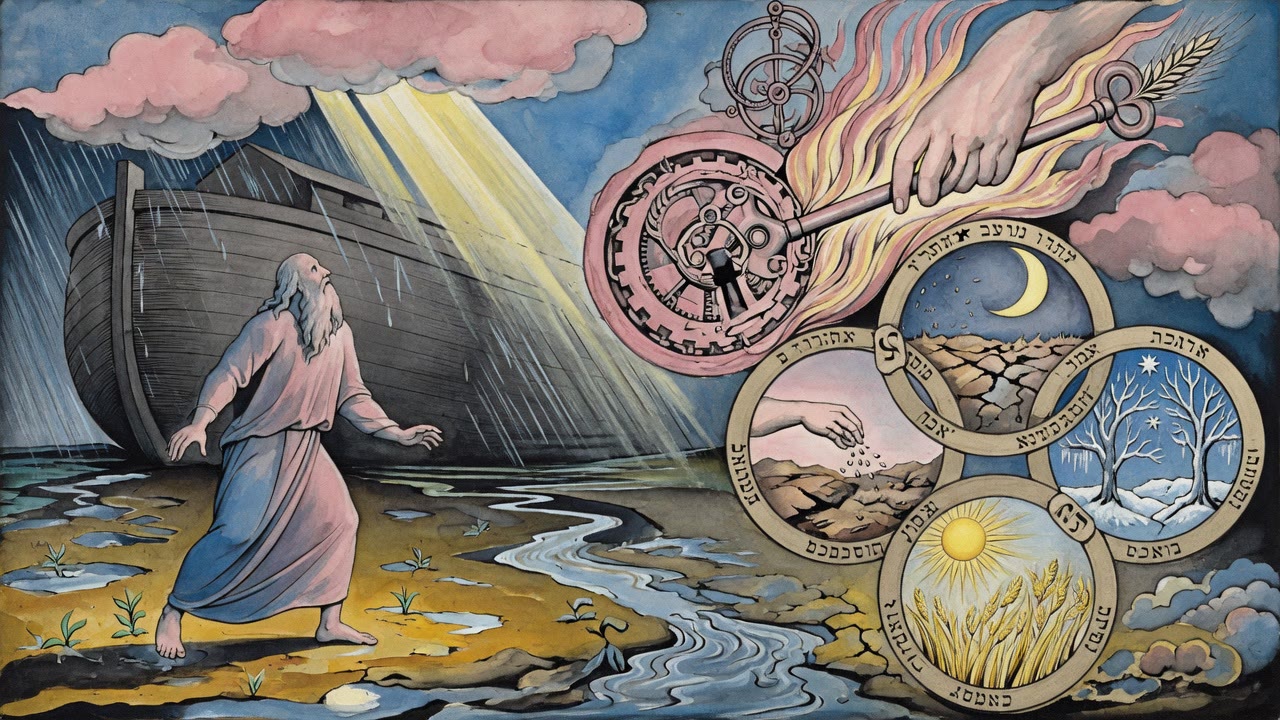
Only later did a bow hang in the cloud. Only later did God speak of seedtime and harvest, cold and heat, summer and winter, day and night, that they should not cease. The covenant found a man who had already burned his thanks on dry ground, before any of that speech arrived.
A Kid in the Fifth Year
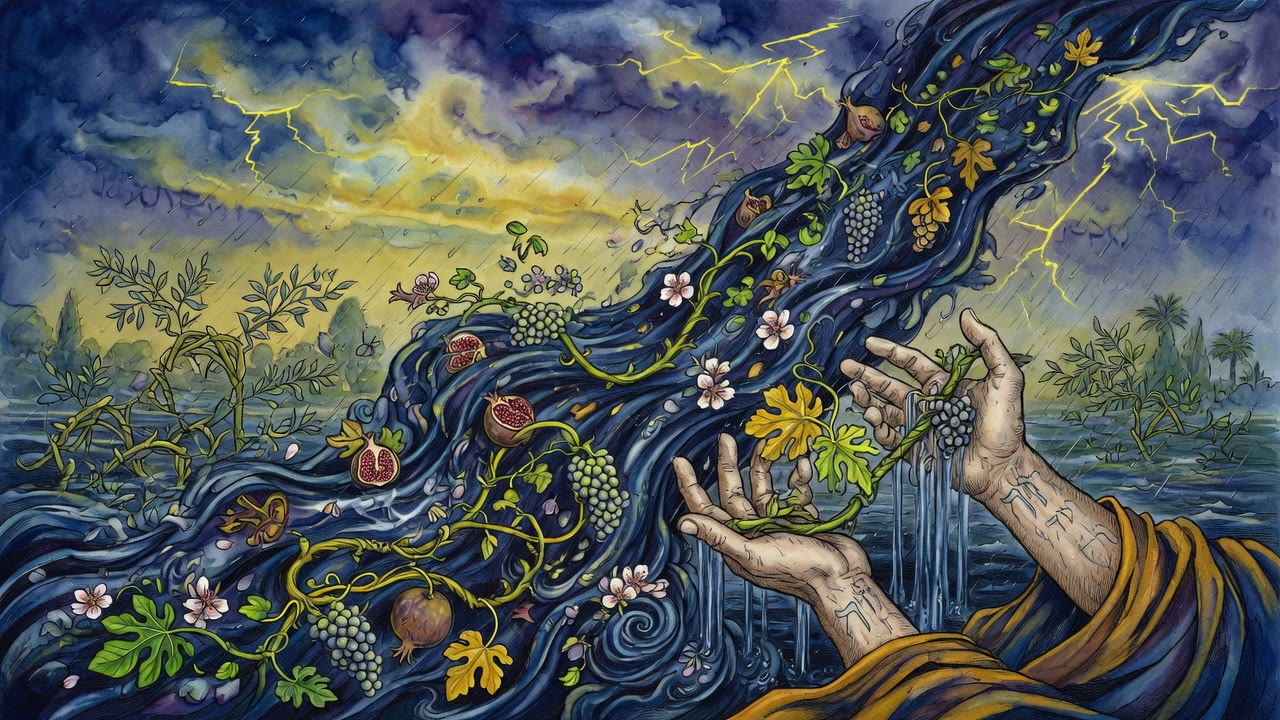
He planted a vineyard. He guarded the fruit. He gathered it in the seventh month and made wine and put it in a vessel, and he kept the vessel until the fifth year, until the first day, on the new moon of the first month.
Then he celebrated. This time the offering had numbers. One young ox. One ram. Seven sheep, each a year old. A kid of the goats, so he might make atonement for himself and his sons. He prepared the kid first. He poured some of its blood on the flesh that lay on the altar he had built. All the fat he set on the altar where the burnt sacrifice was already burning.
The first fire had been a gasp. This one was a count. Ox, ram, seven, kid. Blood on flesh. Fat on stone. Atonement, not only thanks. The man who had walked off a boat and burned whatever he could reach now measured his gifts and named them.
The ground under the altar had been mud. Now it took wine and blood in the same year. Noah drank. His sons ate. The hill that had been ocean held a feast, and the smoke of the second offering went up from stones that already knew the first.
Shem looked at the counted animals and then at his father's face. The first fire had needed no tally. This one did. Between them sat the same stones, and a world that had learned, slowly, how to be thanked.
← All myths